
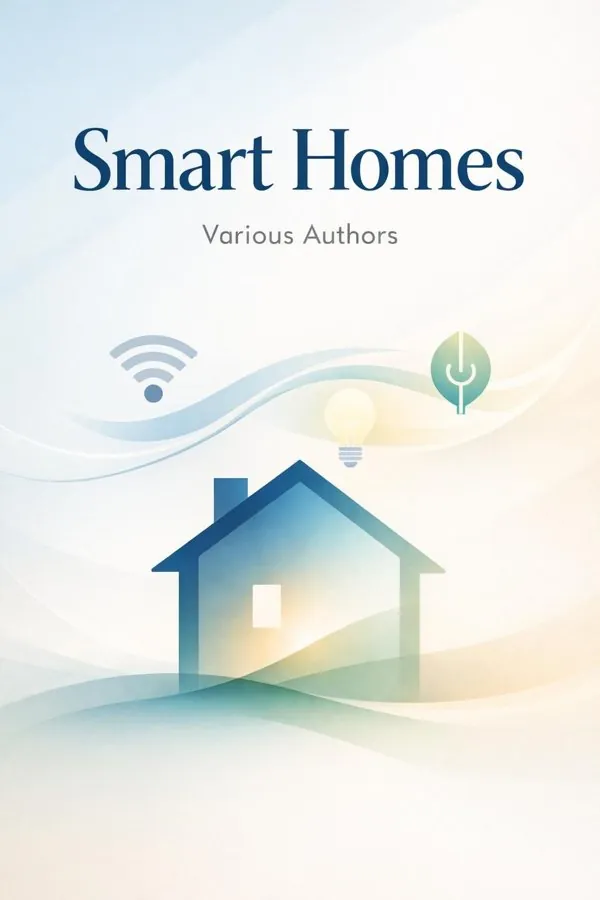
Smart Homes: Summary & Key Insights
 10 min8 chaptersAudio available
Key Takeaways from Smart Homes
A smart home is not defined by a single gadget, but by the relationships between devices.
Homes become intelligent only when they can sense, decide, and act.
One of the strongest arguments for smart homes is not convenience but stewardship.
The smartest home can still feel frustrating if people cannot use it easily.
A connected home offers convenience, but every connection can also create vulnerability.
What Is Smart Homes About?
Smart Homes by Various Authors is a emerging_tech book spanning 3 pages. What if your home could do more than shelter you? What if it could learn your routines, reduce your energy bills, strengthen your security, and adapt itself to your daily life with little effort from you? Smart Homes explores that possibility in a practical and accessible way. Rather than treating connected living as a futuristic luxury, this book shows how automation, sensing technologies, embedded systems, and Internet of Things (IoT) networks are already reshaping the modern household. It explains how devices communicate, how data becomes action, and how design choices influence comfort, efficiency, and trust. The book matters because homes are becoming one of the most important frontiers of emerging technology. From intelligent thermostats and lighting systems to voice assistants, security cameras, and energy dashboards, the connected home affects how we live, spend, and conserve. The contributing authors bring expertise from architecture, engineering, and information technology, giving the book both technical depth and real-world relevance. Their interdisciplinary perspective helps readers understand not only how smart homes work, but also how to design and use them wisely.
This FizzRead summary covers all 8 key chapters of Smart Homes in approximately 10 minutes, distilling the most important ideas, arguments, and takeaways from Various Authors's work. Also available as an audio summary and Key Quotes Podcast.
Smart Homes
What if your home could do more than shelter you? What if it could learn your routines, reduce your energy bills, strengthen your security, and adapt itself to your daily life with little effort from you? Smart Homes explores that possibility in a practical and accessible way. Rather than treating connected living as a futuristic luxury, this book shows how automation, sensing technologies, embedded systems, and Internet of Things (IoT) networks are already reshaping the modern household. It explains how devices communicate, how data becomes action, and how design choices influence comfort, efficiency, and trust.
The book matters because homes are becoming one of the most important frontiers of emerging technology. From intelligent thermostats and lighting systems to voice assistants, security cameras, and energy dashboards, the connected home affects how we live, spend, and conserve. The contributing authors bring expertise from architecture, engineering, and information technology, giving the book both technical depth and real-world relevance. Their interdisciplinary perspective helps readers understand not only how smart homes work, but also how to design and use them wisely.
Who Should Read Smart Homes?
This book is perfect for anyone interested in emerging_tech and looking to gain actionable insights in a short read. Whether you're a student, professional, or lifelong learner, the key ideas from Smart Homes by Various Authors will help you think differently.
- ✓Readers who enjoy emerging_tech and want practical takeaways
- ✓Professionals looking to apply new ideas to their work and life
- ✓Anyone who wants the core insights of Smart Homes in just 10 minutes
Want the full summary?
Get instant access to this book summary and 100K+ more with Fizz Moment.
Get Free SummaryAvailable on App Store • Free to download
Key Chapters
A smart home is not defined by a single gadget, but by the relationships between devices. That is the central insight behind the Internet of Things in domestic life. IoT turns isolated products into a connected ecosystem where sensors, appliances, lights, locks, thermostats, cameras, and speakers can exchange information and respond in coordinated ways. Instead of operating each device separately, the homeowner gains a system that behaves more like an integrated service.
The book explains IoT as the nervous system of the home. Devices collect data about temperature, motion, light levels, occupancy, and user preferences. That information travels through local networks or cloud platforms, where software interprets it and triggers actions. For example, a smart thermostat can detect that no one is home and reduce heating. A door sensor can activate hallway lighting at night. A leak detector can send an alert before a small plumbing issue becomes a major repair bill.
Importantly, the value of IoT comes from interoperability, not novelty. A smart bulb is convenient, but a coordinated lighting, security, and occupancy system is transformative. The book also highlights the role of standards and platforms in making devices communicate reliably. When products cannot connect smoothly, the promise of the smart home weakens.
The practical lesson is simple: build your smart home around use cases, not gadgets. Start by identifying one recurring need such as security, comfort, or energy savings, then choose connected devices that can share data and act together.
Homes become intelligent only when they can sense, decide, and act. That three-part cycle depends on sensors, actuators, and embedded systems. The book presents these technologies as the true foundation of home automation. While apps and voice assistants get most of the attention, the quiet work happens in tiny devices embedded throughout the living space.
Sensors give the home awareness. Motion sensors detect presence, temperature sensors monitor climate, humidity sensors track air conditions, contact sensors notice whether windows or doors are open, and light sensors measure ambient brightness. This stream of information creates the raw material for automation. But sensing alone is not enough. Actuators translate digital decisions into physical outcomes by switching lights on, adjusting blinds, locking doors, opening valves, or changing thermostat settings.
Embedded systems connect these functions. These compact computing components process inputs, apply programmed rules, and issue commands quickly and efficiently. A ventilation system, for instance, may use air quality sensors and embedded logic to increase airflow when carbon dioxide rises. A smart irrigation controller can combine soil moisture readings with weather forecasts to avoid unnecessary watering.
The book makes clear that good smart-home design depends on choosing the right inputs and outputs. Overcomplicated systems can create friction instead of convenience. The goal is not to automate everything, but to automate the right things in reliable ways.
An actionable takeaway is to think in terms of trigger-action logic. Ask: what should the home detect, what should happen next, and what benefit will that create? That mindset helps turn technology into meaningful functionality.
One of the strongest arguments for smart homes is not convenience but stewardship. A connected home can reduce waste in ways that are nearly impossible through manual control alone. This chapter shows how automation and data visibility make energy management more precise, more responsive, and more sustainable.
The book explores how smart thermostats, occupancy sensors, intelligent lighting, and appliance scheduling work together to lower consumption without sacrificing comfort. Heating and cooling systems, which account for a large portion of household energy use, can adapt to actual presence rather than running on static schedules. Lights can dim or switch off automatically in unoccupied rooms. Smart plugs can cut power to devices that would otherwise draw standby electricity. Energy monitoring dashboards can reveal surprising patterns, such as which appliances spike usage or what times of day are most expensive.
The authors also connect smart homes to broader sustainability goals. Integration with solar panels, home batteries, and dynamic electricity pricing allows households to shift consumption to cleaner or cheaper periods. Electric vehicle charging can be timed for off-peak hours. Water-saving systems can monitor flow, detect leaks, and optimize irrigation. In this sense, the smart home becomes part of a larger energy ecosystem rather than a closed domestic environment.
The chapter is careful not to oversell technology. Savings depend on thoughtful setup, occupant behavior, and system reliability. Still, when properly implemented, smart systems make efficiency easier and more consistent.
The practical takeaway is to begin with measurement. Install one or two tools that reveal real-time energy or water use. Once you can see patterns clearly, automation becomes a strategy for targeted improvement rather than a guess.
The smartest home can still feel frustrating if people cannot use it easily. One of the book’s most important insights is that successful smart-home design is as much about user experience as it is about engineering. Technology must disappear into daily life rather than demand constant attention.
The authors emphasize that households are not laboratories. They are shared spaces with children, guests, older adults, and people with different comfort levels around technology. A well-designed smart home balances automation with human control. Lights should still work when someone flips a switch. Door locks should not become inaccessible during a network failure. Notifications should be helpful, not overwhelming. Interfaces should be intuitive enough that users understand what the system is doing and why.
Examples throughout the book illustrate this principle. A morning routine that gradually raises blinds, adjusts temperature, and starts music can feel seamless when tailored properly. The same routine can become annoying if triggered at the wrong time or if there is no easy override. Voice assistants can simplify tasks, but they can also create friction if commands are inconsistent or if privacy concerns make users uneasy.
The book argues that adoption depends on trust, predictability, and simplicity. People embrace automation when it reduces effort and mental load. They resist it when it feels intrusive, confusing, or brittle.
The actionable lesson is to design for the least technical user in the home. Test every automation by asking whether a guest or family member could understand it, override it, and recover from failure without stress. If not, simplify the system.
A connected home offers convenience, but every connection can also create vulnerability. That tension makes security and privacy central to the smart-home conversation. The book treats digital trust not as an optional feature, but as a condition for responsible adoption.
Smart homes gather intimate data: movement patterns, camera feeds, voice recordings, temperature preferences, sleep routines, and entry logs. This information can improve automation, but it can also expose households if devices are poorly secured or if companies handle data irresponsibly. The book explains common risks such as weak passwords, outdated firmware, unsecured Wi-Fi networks, and products that transmit more personal information than users realize.
The authors also distinguish between safety and surveillance. A smart camera may deter intruders, but poorly chosen placement or excessive monitoring can undermine a sense of comfort at home. Similarly, remote access to locks and alarms is powerful, yet it requires careful authentication and permission control. The issue is not whether smart homes should collect data, but whether that collection is proportionate, transparent, and protected.
Practical examples include enabling multi-factor authentication, segmenting smart devices on a separate network, updating firmware regularly, and reviewing privacy settings before installation. The book encourages consumers to evaluate vendors based on support, encryption practices, and clarity about data storage.
The takeaway is to treat smart-home setup like digital home maintenance. Before adding another device, ask three questions: what data does it collect, who can access it, and how will it be secured over time? Convenience is valuable, but trust is what makes it sustainable.
A home filled with smart products is not necessarily a smart system. The difference lies in interoperability, the ability of devices and platforms to communicate and work together. This idea is one of the book’s most practical contributions because it addresses a common frustration in real-world adoption: fragmented ecosystems.
Many homeowners begin with a single device, such as a smart speaker, thermostat, or video doorbell. Problems arise when each new purchase belongs to a separate platform with its own app, rules, and limitations. Instead of creating convenience, the home becomes a patchwork of disconnected controls. The book explains that true smart-home value emerges when devices share context. Occupancy sensors should influence lighting, HVAC, and security modes. Energy data should affect appliance schedules. Door events should connect with cameras and notifications.
The authors discuss the importance of communication protocols, hubs, APIs, and emerging standards that reduce vendor lock-in. Interoperability allows a household to expand gradually without rebuilding from scratch. It also improves resilience because users are not entirely dependent on a single manufacturer’s ecosystem or cloud service.
A practical example is a bedtime routine that checks whether doors are locked, lowers heating, turns off downstairs lights, and arms security mode. If each task requires a different app, the routine loses its elegance. If systems interoperate, a single command or schedule handles everything.
The actionable takeaway is to plan before buying. Choose a core platform or standard that supports broad compatibility, then add devices that can integrate into a larger ecosystem. Long-term flexibility is usually more valuable than short-term novelty.
The most compelling vision in the book is that a home can become adaptive rather than merely automated. Automation follows preset rules. Adaptation responds to patterns, context, and changing needs. This distinction marks the shift from convenience technology to intelligent living environments.
An adaptive home does more than execute instructions at fixed times. It notices recurring behavior and adjusts accordingly. If residents consistently lower blinds in the late afternoon to avoid glare, the system can learn that preference. If indoor air quality declines during cooking, ventilation can increase automatically. If a person returns home later than usual, climate settings can adjust without rigid dependence on a schedule.
The book suggests that this adaptability is built through data, feedback loops, and sometimes machine learning. However, it also warns against treating prediction as magic. The best systems remain transparent and controllable. Residents should understand why changes occur and retain the ability to correct them. Adaptation should feel supportive, not mysterious.
This idea has important implications for accessibility and aging in place. A home that can detect unusual inactivity, monitor environmental conditions, or simplify daily routines can support independent living for older adults or people with mobility limitations. In that context, smartness becomes less about novelty and more about dignity and care.
The practical takeaway is to introduce adaptive features gradually. Start with one area where routine is predictable, such as climate, lighting, or blinds. Then review whether the system is learning usefully or simply creating complexity. The goal is not a home that thinks for you, but one that adjusts with you.
Technology changes a home most effectively when it serves human well-being. This chapter expands the conversation beyond devices and efficiency to include comfort, health, safety, and emotional experience. The book argues that the smart home should be evaluated not only by what it can do, but by how it affects the quality of life of the people inside it.
Smart systems can improve daily living in subtle but meaningful ways. Circadian lighting can align indoor light levels with natural rhythms, supporting sleep and alertness. Indoor air quality sensors can identify poor ventilation, high humidity, or pollution. Automated shading can reduce glare and overheating. Leak detectors and smoke sensors can reduce risk. For families, routines can simplify mornings and evenings. For older adults, fall alerts, medication reminders, and remote caregiving features can add security.
What makes these applications significant is their cumulative effect. A healthier, calmer, more responsive home can reduce friction and create a stronger sense of control. Yet the book also reminds readers that well-being is personal. Some users value quiet automation; others prefer visible control. Some want detailed dashboards; others want simplicity. Good design aligns technology with the household’s habits and values.
The authors repeatedly return to the idea that architecture, digital systems, and human behavior must be considered together. Smart homes are not just engineering projects. They are lived environments.
The actionable takeaway is to define success in human terms before investing in technology. Ask whether a device will improve comfort, safety, health, or peace of mind. If the answer is vague, the purchase may add more complexity than benefit.
All Chapters in Smart Homes
About the Author
Various Authors represents a collaborative group of experts working at the intersection of architecture, engineering, information technology, and sustainable design. Their combined backgrounds reflect the multidisciplinary nature of smart-home innovation, where building design, embedded systems, networking, user experience, and energy management must work together. The contributors bring practical and academic insight into topics such as IoT applications, residential automation, sensor-based systems, digital infrastructure, and environmentally responsive living spaces. By drawing from multiple fields rather than a single viewpoint, they offer a more complete understanding of how smart homes are conceived, implemented, and evaluated. Their collective expertise makes Smart Homes a useful guide for readers seeking both technical clarity and real-world relevance in the rapidly evolving world of connected domestic environments.
Get This Summary in Your Preferred Format
Read or listen to the Smart Homes summary by Various Authors anytime, anywhere. FizzRead offers multiple formats so you can learn on your terms — all free.
Available formats: App · Audio · PDF · EPUB — All included free with FizzRead
Download Smart Homes PDF and EPUB Summary
Key Quotes from Smart Homes
“A smart home is not defined by a single gadget, but by the relationships between devices.”
“Homes become intelligent only when they can sense, decide, and act.”
“One of the strongest arguments for smart homes is not convenience but stewardship.”
“The smartest home can still feel frustrating if people cannot use it easily.”
“A connected home offers convenience, but every connection can also create vulnerability.”
Frequently Asked Questions about Smart Homes
Smart Homes by Various Authors is a emerging_tech book that explores key ideas across 8 chapters. What if your home could do more than shelter you? What if it could learn your routines, reduce your energy bills, strengthen your security, and adapt itself to your daily life with little effort from you? Smart Homes explores that possibility in a practical and accessible way. Rather than treating connected living as a futuristic luxury, this book shows how automation, sensing technologies, embedded systems, and Internet of Things (IoT) networks are already reshaping the modern household. It explains how devices communicate, how data becomes action, and how design choices influence comfort, efficiency, and trust. The book matters because homes are becoming one of the most important frontiers of emerging technology. From intelligent thermostats and lighting systems to voice assistants, security cameras, and energy dashboards, the connected home affects how we live, spend, and conserve. The contributing authors bring expertise from architecture, engineering, and information technology, giving the book both technical depth and real-world relevance. Their interdisciplinary perspective helps readers understand not only how smart homes work, but also how to design and use them wisely.
More by Various Authors




You Might Also Like
Blockchain Technology Guide (Chinese Edition)
Li Qilei
10 min
21st Century Technologies Revisited: What is Happening and What is Next
Organisation for Economic Co-operation and Development (OECD)
10 min
Autonomous Vehicles: Opportunities, Strategies, and Challenges
Various Authors
10 min
Autonomy
Lawrence Burns
10 min
Blockchain Basics: A Non-Technical Introduction in 25 Steps
Daniel Drescher
10 min
Blockchain Revolution: How the Technology Behind Bitcoin and Other Cryptocurrencies Is Changing the World
Don Tapscott & Alex Tapscott
10 minBrowse by Category
Ready to read Smart Homes?
Get the full summary and 100K+ more books with Fizz Moment.