
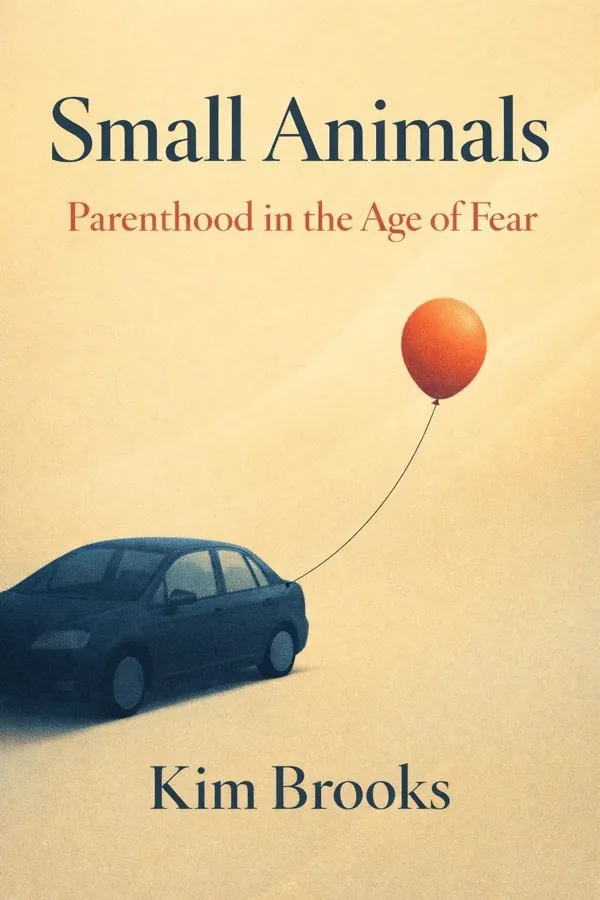
Small Animals: Parenthood in the Age of Fear: Summary & Key Insights
by Kim Brooks
 10 min11 chaptersAudio available
What Is Small Animals: Parenthood in the Age of Fear About?
Small Animals: Parenthood in the Age of Fear by Kim Brooks is a sociology book spanning 11 pages. In this thought-provoking work, Kim Brooks explores the culture of fear surrounding modern American parenting. Sparked by her own experience of being charged with child endangerment after leaving her son briefly in a car, Brooks examines how societal expectations, gender roles, and media-fueled anxieties shape the way parents—especially mothers—are judged and constrained. Through research, interviews, and personal reflection, she questions what it means to be a good parent in a world obsessed with safety and control.
This FizzRead summary covers all 11 key chapters of Small Animals: Parenthood in the Age of Fear in approximately 10 minutes, distilling the most important ideas, arguments, and takeaways from Kim Brooks's work. Also available as an audio summary and Key Quotes Podcast.
Small Animals: Parenthood in the Age of Fear
In this thought-provoking work, Kim Brooks explores the culture of fear surrounding modern American parenting. Sparked by her own experience of being charged with child endangerment after leaving her son briefly in a car, Brooks examines how societal expectations, gender roles, and media-fueled anxieties shape the way parents—especially mothers—are judged and constrained. Through research, interviews, and personal reflection, she questions what it means to be a good parent in a world obsessed with safety and control.
Who Should Read Small Animals: Parenthood in the Age of Fear?
This book is perfect for anyone interested in sociology and looking to gain actionable insights in a short read. Whether you're a student, professional, or lifelong learner, the key ideas from Small Animals: Parenthood in the Age of Fear by Kim Brooks will help you think differently.
- ✓Readers who enjoy sociology and want practical takeaways
- ✓Professionals looking to apply new ideas to their work and life
- ✓Anyone who wants the core insights of Small Animals: Parenthood in the Age of Fear in just 10 minutes
Want the full summary?
Get instant access to this book summary and 100K+ more with Fizz Moment.
Get Free SummaryAvailable on App Store • Free to download
Key Chapters
In the days and months after the incident, I swirled through shame, anger, and disbelief. The legal accusation—"child endangerment"—was almost absurd; no one had been harmed. Yet the sense of public scorn felt profoundly real. The encounter revealed something larger than my individual mistake: it became a mirror reflecting the collective anxiety that mothers carry. I realized how quickly private guilt becomes public spectacle when parenting is treated as performance.
As the story spread, I heard people say that I had it coming, that any risk was unacceptable. Somewhere in those judgments lay an unspoken script: a good mother never lets go, never miscalculates, never relaxes her guard. I began to wrestle with how deeply this script had entered my own thinking. I had internalized it so completely that I didn’t even notice its presence until others enforced it upon me. This was not just about my crime—it was about the moral theater that modern parenting had become.
When mothers are policed, both legally and socially, the line between personal conscience and public expectation blurs. That blur is where fear thrives. I started reaching out to other parents who had faced similar scrutiny—mothers who’d been investigated for letting their kids play at the park, fathers reported for leaving children briefly at home. What I discovered wasn’t a collection of negligent adults; it was a portrait of ordinary, caring people struggling to survive a system that confuses caution with virtue. Guilt, I learned, is not just a feeling—it’s a cultural tool.
To understand the present moment, I needed to look backward, to the eras when parents were not judged by today’s suffocating metrics of safety and control. In mid-twentieth-century America, children roamed freely, communities were porous, and adults collectively assumed the role of supervising and guiding the young. My parents’ generation often recalls walking unsupervised to school or playing outdoors until dusk. That memory isn’t nostalgia—it’s evidence of a different social contract built on trust.
What changed wasn’t just technology or crime rates; it was our philosophy of care. Gradually, the collective became individual. The responsibility to protect children didn’t fade—it intensified—but the burden shifted entirely onto mothers’ shoulders. As family structures narrowed and community life thinned, public space itself began to feel hostile. The moral identity of motherhood became conflated with management, as though every minute unobserved were a lapse in love.
By the 1980s and 1990s, the idea of “stranger danger” took hold, nourished by sensational news stories and widespread myths about abductions. Fears that once belonged to the rare and the unimaginable became part of everyday consciousness. What we inherited was not just vigilance—it was a worldview rooted in suspicion. I wanted to unpack how that worldview colonized our homes and hearts.
+ 9 more chapters — available in the FizzRead app
All Chapters in Small Animals: Parenthood in the Age of Fear
About the Author
Kim Brooks is an American writer and essayist whose work has appeared in publications such as The New York Times, New York Magazine, and Salon. She is also the author of the novel 'The Houseguest.' Brooks often writes about culture, gender, and the complexities of modern parenthood.
Get This Summary in Your Preferred Format
Read or listen to the Small Animals: Parenthood in the Age of Fear summary by Kim Brooks anytime, anywhere. FizzRead offers multiple formats so you can learn on your terms — all free.
Available formats: App · Audio · PDF · EPUB — All included free with FizzRead
Download Small Animals: Parenthood in the Age of Fear PDF and EPUB Summary
Key Quotes from Small Animals: Parenthood in the Age of Fear
“In the days and months after the incident, I swirled through shame, anger, and disbelief.”
“To understand the present moment, I needed to look backward, to the eras when parents were not judged by today’s suffocating metrics of safety and control.”
Frequently Asked Questions about Small Animals: Parenthood in the Age of Fear
Small Animals: Parenthood in the Age of Fear by Kim Brooks is a sociology book that explores key ideas across 11 chapters. In this thought-provoking work, Kim Brooks explores the culture of fear surrounding modern American parenting. Sparked by her own experience of being charged with child endangerment after leaving her son briefly in a car, Brooks examines how societal expectations, gender roles, and media-fueled anxieties shape the way parents—especially mothers—are judged and constrained. Through research, interviews, and personal reflection, she questions what it means to be a good parent in a world obsessed with safety and control.
You Might Also Like

Between the World and Me
Ta-Nehisi Coates
10 min
Half the Sky
Nicholas D. Kristof, Sheryl WuDunn
10 min
Men Explain Things To Me
Rebecca Solnit
10 min
Rational Ritual
Michael Suk-Young Chwe
10 min
The New Jim Crow
Michelle Alexander
10 min
Beyond Culture
Edward T. Hall
10 minBrowse by Category
Ready to read Small Animals: Parenthood in the Age of Fear?
Get the full summary and 100K+ more books with Fizz Moment.