
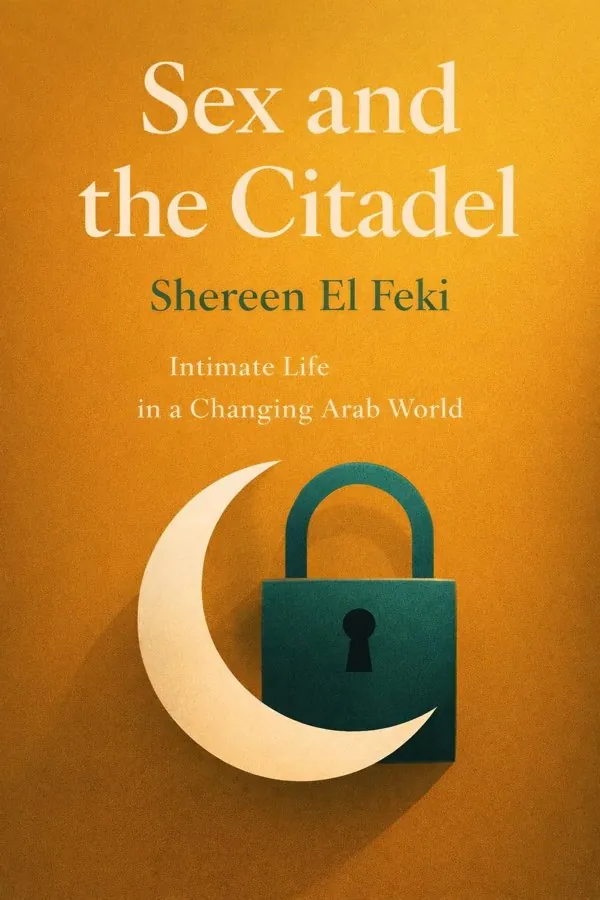
Sex and the Citadel: Intimate Life in a Changing Arab World: Summary & Key Insights
 10 min9 chaptersAudio available
What Is Sex and the Citadel: Intimate Life in a Changing Arab World About?
Sex and the Citadel: Intimate Life in a Changing Arab World by Shereen El Feki is a sociology book spanning 9 pages. In this groundbreaking work, Shereen El Feki explores the intimate lives of men and women across the Arab world, revealing how sexuality reflects broader social, political, and religious transformations. Drawing on extensive interviews and research, she examines topics such as marriage, gender roles, and sexual rights, offering a nuanced portrait of a region in flux.
This FizzRead summary covers all 9 key chapters of Sex and the Citadel: Intimate Life in a Changing Arab World in approximately 10 minutes, distilling the most important ideas, arguments, and takeaways from Shereen El Feki's work. Also available as an audio summary and Key Quotes Podcast.
Sex and the Citadel: Intimate Life in a Changing Arab World
In this groundbreaking work, Shereen El Feki explores the intimate lives of men and women across the Arab world, revealing how sexuality reflects broader social, political, and religious transformations. Drawing on extensive interviews and research, she examines topics such as marriage, gender roles, and sexual rights, offering a nuanced portrait of a region in flux.
Who Should Read Sex and the Citadel: Intimate Life in a Changing Arab World?
This book is perfect for anyone interested in sociology and looking to gain actionable insights in a short read. Whether you're a student, professional, or lifelong learner, the key ideas from Sex and the Citadel: Intimate Life in a Changing Arab World by Shereen El Feki will help you think differently.
- ✓Readers who enjoy sociology and want practical takeaways
- ✓Professionals looking to apply new ideas to their work and life
- ✓Anyone who wants the core insights of Sex and the Citadel: Intimate Life in a Changing Arab World in just 10 minutes
Want the full summary?
Get instant access to this book summary and 100K+ more with Fizz Moment.
Get Free SummaryAvailable on App Store • Free to download
Key Chapters
To understand the present, we must first look backward. Pre-modern Islamic societies were far more open in their discussions of sex than most people today realize. Medieval literature, from poetry to jurisprudence, addressed desire with candor, considering sex a natural, God-created part of human existence. Yet with colonialism came new forces—Victorian morality, imported prudery, and a conservative backlash. These influences blended uneasily with local traditions, producing a modern Arab attitude that often frames sexuality as shameful or dangerous.
What fascinates me is how this transformation was not inevitable but engineered. European notions of purity and female virtue infiltrated educational and legal systems. In tandem, nationalist leaders used modesty and family honor as symbols of resistance against Western domination. Thus, women’s bodies became political ground—controlled, guarded, emblematic of cultural strength. The loss of historical openness toward sexuality is, in fact, a loss of historical confidence. Original Islamic thought, rich and nuanced, emphasized mutual pleasure, consent, and spiritual connection. My research across classical texts and modern testimonies shows how far contemporary societies have drifted from that balanced vision.
Marriage stands as the ultimate cornerstone of Arab social life—the moral and legal citadel for all sexual conduct. In my interviews, whether with newlyweds in Cairo or matchmaking mothers in Amman, the same message echoes: sex outside marriage threatens not only personal reputation but social cohesion. Virginity, for women, becomes symbolic capital, often determining their worth in marriage negotiations. The family unit—respected, revered, but also restrictive—shapes every erotic possibility.
This institution is double-edged. On the one hand, it provides stability, protection, and belonging. On the other, it confines individual desire within rigid gender roles. Women are expected to preserve purity; men, conversely, are permitted to demonstrate virility. Yet modern change complicates this narrative. Economic difficulties delay marriage, leaving young people caught in frustration, seeking emotional or physical release through alternative means—secret relationships, online communication, even temporary forms of marriage sanctioned by certain interpretations of Islamic law. Every deviation, however, carries risk: social ostracism, violence, or loss of future prospects.
What I learned speaking to these couples and singles alike is that marriage remains central not because it thrives but because no other socially acceptable alternative exists. True reform must consider not only the mechanics of marriage laws but the emotional aspirations that people attach to them: longing for love, respect, and self-expression.
+ 7 more chapters — available in the FizzRead app
All Chapters in Sex and the Citadel: Intimate Life in a Changing Arab World
About the Author
Shereen El Feki is a writer, broadcaster, and academic of Egyptian and Welsh descent. A former vice-chair of the United Nations Global Commission on HIV and Law, she has written extensively on health, sexuality, and social change in the Arab world.
Get This Summary in Your Preferred Format
Read or listen to the Sex and the Citadel: Intimate Life in a Changing Arab World summary by Shereen El Feki anytime, anywhere. FizzRead offers multiple formats so you can learn on your terms — all free.
Available formats: App · Audio · PDF · EPUB — All included free with FizzRead
Download Sex and the Citadel: Intimate Life in a Changing Arab World PDF and EPUB Summary
Key Quotes from Sex and the Citadel: Intimate Life in a Changing Arab World
“To understand the present, we must first look backward.”
“Marriage stands as the ultimate cornerstone of Arab social life—the moral and legal citadel for all sexual conduct.”
Frequently Asked Questions about Sex and the Citadel: Intimate Life in a Changing Arab World
Sex and the Citadel: Intimate Life in a Changing Arab World by Shereen El Feki is a sociology book that explores key ideas across 9 chapters. In this groundbreaking work, Shereen El Feki explores the intimate lives of men and women across the Arab world, revealing how sexuality reflects broader social, political, and religious transformations. Drawing on extensive interviews and research, she examines topics such as marriage, gender roles, and sexual rights, offering a nuanced portrait of a region in flux.
You Might Also Like

Between the World and Me
Ta-Nehisi Coates
10 min
Half the Sky
Nicholas D. Kristof, Sheryl WuDunn
10 min
Men Explain Things To Me
Rebecca Solnit
10 min
Rational Ritual
Michael Suk-Young Chwe
10 min
The New Jim Crow
Michelle Alexander
10 min
Beyond Culture
Edward T. Hall
10 minBrowse by Category
Ready to read Sex and the Citadel: Intimate Life in a Changing Arab World?
Get the full summary and 100K+ more books with Fizz Moment.