
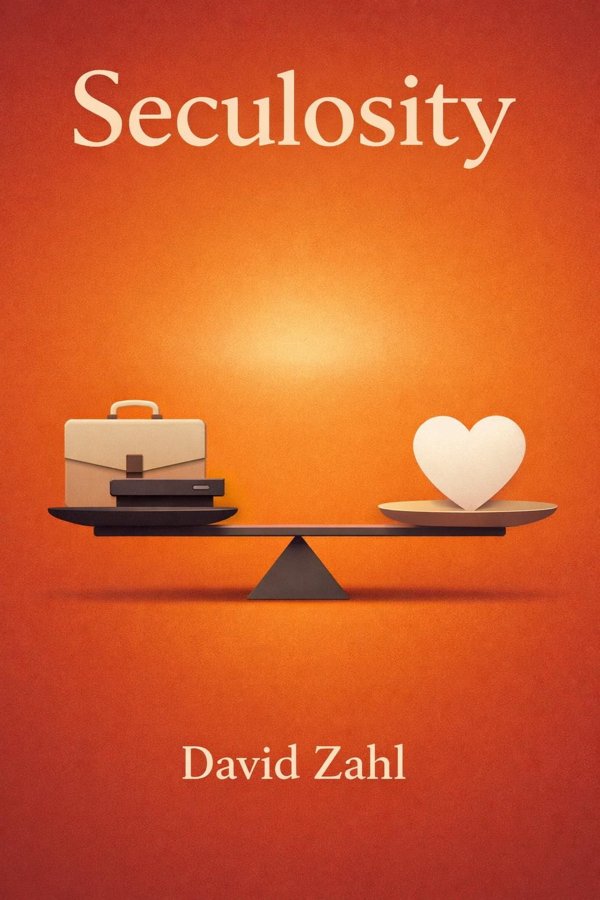
Seculosity: How Career, Parenting, Technology, Food, Politics, and Romance Became Our New Religion and What to Do About It: Summary & Key Insights
by David Zahl
 10 min10 chaptersAudio available
Key Takeaways from Seculosity: How Career, Parenting, Technology, Food, Politics, and Romance Became Our New Religion and What to Do About It
The most powerful religions today often do not look religious at all.
When a culture loses a shared religious framework, it often transfers spiritual expectations onto achievement.
Few modern roles carry as much pressure as parenting, and Zahl argues that this is because parenting has become moral theater.
Technology often presents itself as a tool of freedom, but Zahl shows how easily it becomes a system of judgment and craving.
Modern wellness culture often speaks the language of health, but underneath it can carry the structure of purity.
What Is Seculosity: How Career, Parenting, Technology, Food, Politics, and Romance Became Our New Religion and What to Do About It About?
Seculosity: How Career, Parenting, Technology, Food, Politics, and Romance Became Our New Religion and What to Do About It by David Zahl is a sociology book spanning 11 pages. In Seculosity, David Zahl argues that modern people have not outgrown religion so much as relocated it. Even in a secular age, we still crave meaning, identity, innocence, belonging, and a sense that our lives are justified. The difference is that we now seek those things through ordinary arenas like work, parenting, fitness, diet, romance, technology, and politics. These pursuits become “seculosities,” functional religions that promise salvation through performance, self-optimization, and public approval. Zahl’s central insight is both unsettling and liberating: the more we expect these areas to prove our worth, the more anxious, judgmental, and exhausted we become. What makes the book compelling is its combination of cultural criticism, pastoral sensitivity, and sharp humor. Zahl does not merely diagnose social trends from a distance. As founder of Mockingbird Ministries and a writer deeply engaged with the relationship between faith and culture, he understands how guilt, striving, and self-justification operate in everyday life. Seculosity matters because it names a pressure many people feel but struggle to describe: the burden of having to be enough. By exposing that burden, Zahl opens the door to a different way of living, one grounded not in endless proving but in grace.
This FizzRead summary covers all 10 key chapters of Seculosity: How Career, Parenting, Technology, Food, Politics, and Romance Became Our New Religion and What to Do About It in approximately 10 minutes, distilling the most important ideas, arguments, and takeaways from David Zahl's work. Also available as an audio summary and Key Quotes Podcast.
Seculosity: How Career, Parenting, Technology, Food, Politics, and Romance Became Our New Religion and What to Do About It
In Seculosity, David Zahl argues that modern people have not outgrown religion so much as relocated it. Even in a secular age, we still crave meaning, identity, innocence, belonging, and a sense that our lives are justified. The difference is that we now seek those things through ordinary arenas like work, parenting, fitness, diet, romance, technology, and politics. These pursuits become “seculosities,” functional religions that promise salvation through performance, self-optimization, and public approval. Zahl’s central insight is both unsettling and liberating: the more we expect these areas to prove our worth, the more anxious, judgmental, and exhausted we become.
What makes the book compelling is its combination of cultural criticism, pastoral sensitivity, and sharp humor. Zahl does not merely diagnose social trends from a distance. As founder of Mockingbird Ministries and a writer deeply engaged with the relationship between faith and culture, he understands how guilt, striving, and self-justification operate in everyday life. Seculosity matters because it names a pressure many people feel but struggle to describe: the burden of having to be enough. By exposing that burden, Zahl opens the door to a different way of living, one grounded not in endless proving but in grace.
Who Should Read Seculosity: How Career, Parenting, Technology, Food, Politics, and Romance Became Our New Religion and What to Do About It?
This book is perfect for anyone interested in sociology and looking to gain actionable insights in a short read. Whether you're a student, professional, or lifelong learner, the key ideas from Seculosity: How Career, Parenting, Technology, Food, Politics, and Romance Became Our New Religion and What to Do About It by David Zahl will help you think differently.
- ✓Readers who enjoy sociology and want practical takeaways
- ✓Professionals looking to apply new ideas to their work and life
- ✓Anyone who wants the core insights of Seculosity: How Career, Parenting, Technology, Food, Politics, and Romance Became Our New Religion and What to Do About It in just 10 minutes
Want the full summary?
Get instant access to this book summary and 100K+ more with Fizz Moment.
Get Free SummaryAvailable on App Store • Free to download
Key Chapters
When a culture loses a shared religious framework, it often transfers spiritual expectations onto achievement. Zahl argues that work has become one of the clearest examples. Professional success is no longer just about earning a living or contributing to society. It becomes proof of value. Productivity functions like virtue, ambition like devotion, and busyness like holiness. To be inactive, unaccomplished, or uncertain feels not merely unfortunate but shameful.
This helps explain why modern work culture creates so much emotional pressure. A missed promotion, an uninspiring job title, or a gap in employment can feel like a verdict on one’s identity. The office, the inbox, and the performance review become spaces where people seek approval and absolution. Even leisure gets swallowed up by this mentality. Hobbies become side hustles. Rest becomes recovery for future output. The self is always under construction and under review.
Zahl does not say that work is bad. The problem begins when work becomes salvific, when it is expected to answer the question, “Why am I enough?” That expectation can never be satisfied for long. Every success creates the need for the next one. Every milestone resets the standard. The result is a cycle of striving without rest.
In practical terms, this means people often confuse their role with their identity. They introduce themselves by their function and judge others by visible accomplishment. The cure is not laziness but rehumanization: recovering the truth that value cannot be earned through output.
Actionable takeaway: Notice how often you talk about yourself in terms of productivity. Set one boundary this week, such as protecting an evening from work, and practice being a person rather than a performer.
Few modern roles carry as much pressure as parenting, and Zahl argues that this is because parenting has become moral theater. Children are increasingly treated not only as loved individuals but as reflections of parental competence, ethics, and emotional intelligence. If a child eats the right foods, attends the right schools, develops the right talents, and displays the right manners, the parent feels vindicated. If not, the parent feels exposed.
This is what happens when a good calling becomes a seculosity. Parenting stops being primarily about care and starts becoming about self-justification. Ordinary decisions become loaded with spiritual intensity: screen time, lunch choices, bedtime routines, educational philosophies, and extracurricular schedules all become evidence of who is a “good” parent. Social comparison worsens the dynamic. Through school communities and online culture, parents are constantly shown curated versions of other families, which intensifies guilt and perfectionism.
Zahl’s point is not that effort is useless or that children do not need guidance. It is that the quest to parent perfectly often creates the very anxiety it is trying to prevent. Parents become fearful, controlling, and exhausted. Children may even absorb the message that love is contingent on performance and image. The parent who treats family life as a report card rarely finds peace.
A healthier vision begins with accepting limits. No parent can eliminate risk, guarantee outcomes, or secure a child’s future through technique. Parenting requires presence more than perfection. It involves love, repair, and humility, not omnipotence.
Actionable takeaway: Replace one perfection-driven parenting habit with a connection-driven one. Instead of optimizing everything, choose one small moment of undistracted attention with your child and let that be enough for the day.
Technology often presents itself as a tool of freedom, but Zahl shows how easily it becomes a system of judgment and craving. Devices promise efficiency, access, community, and self-expression. Yet they also create an environment of constant measurement. Likes, replies, views, streaks, and notifications become tiny verdicts about relevance and belonging. The digital world trains people to seek instant affirmation while fearing invisibility.
This is why technology can function like religion. It offers rituals, communities, moral norms, and a vision of transcendence through connection. You can update your identity, broadcast your values, monitor your health, curate your image, and participate in ongoing public confession and condemnation. But the rewards are unstable. The more connected people become, the more they may feel pressure to remain available, informed, impressive, and responsive at all times.
Zahl’s critique is not anti-technology. Email, smartphones, social platforms, and tracking apps can genuinely help people. The issue is what happens when these tools become vehicles for self-justification. If being reachable proves that I matter, I will never put the phone down. If online approval assures me of worth, I will keep refreshing for signs of validation. If information gives me control, I will be unable to rest.
A practical implication is that many people do not use technology intentionally; they submit to its demands. Their attention gets fragmented, their relationships become performative, and silence begins to feel threatening. Recognizing this is the first step toward reclaiming agency.
Actionable takeaway: Create one daily technology-free window, even just 30 minutes, and use it for something unmeasured such as conversation, walking, prayer, reading, or simple rest.
Modern wellness culture often speaks the language of health, but underneath it can carry the structure of purity. Zahl observes that food, fitness, and bodily discipline have become moralized in powerful ways. People no longer just eat, exercise, or manage stress; they signal identity and virtue through these practices. To eat “clean,” train consistently, and follow the latest optimization protocol can feel like righteousness. To indulge, gain weight, or fall off a routine can feel like guilt and contamination.
The appeal is obvious. In an unpredictable world, wellness offers control. It promises that if you consume the right things, avoid the wrong substances, and maintain strict habits, you can secure not only health but also confidence, attractiveness, and moral status. But this mindset can quickly become obsessive. Meals are no longer enjoyed; they are evaluated. Bodies are no longer inhabited; they are managed. Health becomes a lifelong exam with shifting rules.
Zahl is careful to distinguish between caring for the body and worshiping it. Nutrition and exercise are good, but they become cruel when they carry the burden of identity. This is especially clear in how people judge one another. Diet choices become tribal markers. Fitness routines become superiority stories. Wellness can masquerade as wisdom while deepening shame.
The irony is that the pursuit of total control over the body often creates new bondage. Fear, comparison, and self-surveillance replace gratitude. People begin to believe they are only as good as their last meal or latest routine.
Actionable takeaway: Choose one food or wellness habit to practice with gratitude instead of anxiety. Ask not, “Does this make me superior?” but, “Does this help me live more freely, joyfully, and humanely?”
Love has always mattered, but Zahl argues that modern culture has overloaded romance with redemptive hopes. Many people now expect intimate relationships to provide identity, emotional healing, status, adventure, sexual fulfillment, and lifelong self-discovery all at once. A partner is not simply loved; they are expected to complete, validate, and save. This is why dating and marriage often carry such intense pressure.
When romance becomes a seculosity, every relationship setback feels ultimate. Rejection is not just painful; it appears to confirm unworthiness. Conflict is not just normal; it seems like evidence that the relationship has failed its sacred purpose. Singleness can feel like exclusion from full humanity, while coupledom can become its own performance of success. Social media amplifies this by turning relationships into public narratives of desirability and fulfillment.
Zahl’s analysis helps explain why people oscillate between idealizing love and becoming cynical about it. If romance is expected to deliver salvation, it will inevitably disappoint. No human being can bear that burden. The result may be resentment, serial dissatisfaction, or endless searching for a perfect match who will finally remove all loneliness and insecurity.
A healthier understanding of romance is more grounded. Relationships matter deeply, but they are not designed to justify existence. Love flourishes when freed from impossible expectations. It becomes less about extraction and more about mutual care, forgiveness, and reality.
Actionable takeaway: In your closest relationship, name one expectation that may be too ultimate. Replace the demand to be completed by another person with one honest conversation about needs, limits, and appreciation.
Political life has always involved moral questions, but Zahl argues that it now functions for many people as a primary source of identity, purity, and belonging. Political commitments become more than convictions about how society should be organized. They become signals of personal goodness. To hold the right position is to be righteous; to belong to the wrong camp is to be condemned. This makes public life intensely emotional and often unforgiving.
One reason politics becomes a seculosity is that it offers a compelling drama of innocence and guilt. It gives people heroes, villains, rituals of outrage, and communities of affirmation. Participating in that drama can feel deeply meaningful. Posting, protesting, denouncing, and aligning oneself with a cause can provide the sensation of moral clarity in a confusing world. But when politics bears the weight of salvation, it also produces rage, tribalism, and despair.
Zahl does not argue for apathy. Civic engagement matters. Justice matters. The danger lies in turning political action into the primary means by which people prove they are good. Once that happens, opponents stop being neighbors or fellow citizens and become embodiments of evil. Nuance feels like betrayal. Humility disappears. The self becomes addicted to indignation because indignation feels like virtue.
This framework also explains why people are exhausted by political life yet unable to detach from it. Politics has become spiritually charged. To disengage feels like sin, but constant engagement damages peace and perspective.
Actionable takeaway: Stay politically responsible, but practice one act of de-escalation: listen before reacting, limit outrage-driven media consumption, or speak to someone across disagreement without trying to win moral superiority.
One of Zahl’s sharpest observations is that busyness has become a badge of honor. Many people complain about being overwhelmed, yet they also draw identity from it. To be busy implies demand, importance, relevance, and diligence. Saying “I’m slammed” can function as a subtle declaration of worth. In this way, busyness becomes not just a condition but a creed.
Why is this so powerful? Because busyness helps people avoid emptiness. If your schedule is full, you do not have to confront unanswered questions about identity, loneliness, or fear. Constant activity creates the feeling of purpose, even if much of the activity is reactive or unnecessary. It also supplies moral cover. A busy person appears responsible; a restful person may feel guilty or lazy in comparison.
Zahl links this directly to self-justification. In a culture without stable grace, people prove themselves by demonstrating effort. Rest is hard because rest exposes how much of life is uncontrollable and unearned. Slowing down can feel like failure. This is why vacations get filled with itineraries, weekends become productivity zones, and even self-care can turn into one more item to optimize.
The cost is significant. Busyness erodes attention, relationships, creativity, and joy. It keeps people living at the surface of themselves. Most importantly, it reinforces the lie that value comes from visible effort rather than inherent dignity.
The alternative is not inactivity but a different relationship to time. Rest becomes possible when worth no longer depends on constant proof.
Actionable takeaway: Audit your calendar and remove one commitment driven more by image or guilt than by love or necessity. Use that recovered time without trying to justify it.
Beneath all these seculosities lies a common ache: the feeling of never being enough. Zahl argues that modern life is saturated with standards, metrics, and comparisons. No matter the domain, there is always another benchmark to meet. Be more productive. More present. More informed. More fit. More intentional. More enlightened. More available. More successful. The result is a culture of chronic insufficiency.
This is the emotional core of the book. Career pressure, parenting stress, political anger, body anxiety, and relational disappointment all reflect the same inner question: Have I done enough to deserve approval? Seculosities keep that question alive because they offer conditional salvation. They say, “You can be okay if you just achieve, choose, consume, vote, or love correctly.” But the conditions keep changing, so peace remains out of reach.
Zahl’s diagnosis is valuable because it shifts the conversation from isolated habits to the deeper issue of justification. The modern self is tired not simply because life is busy, but because it is burdened with proving itself in every direction. People become both judges and defendants in an endless internal trial.
Recognizing the problem can be profoundly clarifying. It explains why external success does not automatically produce relief. Even after milestones are reached, the sense of enoughness quickly disappears, because the underlying system remains intact.
Actionable takeaway: The next time you feel anxious or ashamed, ask a simple diagnostic question: “What standard am I trying to meet right now, and who do I imagine will finally declare me enough if I meet it?”
Zahl’s ultimate answer to seculosity is not better technique but grace. After examining the many arenas where modern people seek self-justification, he argues that the deepest human need is to receive worth rather than manufacture it. Grace interrupts the endless cycle of proving by declaring that acceptance is given, not earned. This is the theological heart of the book and the reason its cultural critique feels hopeful rather than merely cynical.
In practical terms, grace means that failure is not final condemnation. Limits are not humiliating defects. Weakness does not disqualify a person from love. Instead of living under a permanent performance review, people can begin to inhabit reality honestly. They can admit exhaustion, ambiguity, brokenness, and need without collapsing into despair. Grace creates room for repentance, humor, compassion, and rest.
Zahl is not suggesting withdrawal from ordinary life. People still work, parent, vote, date, eat, and use technology. The difference is that these activities no longer have to carry ultimate significance. They can return to their proper scale. Work becomes service rather than salvation. Politics becomes responsibility rather than identity. Parenting becomes care rather than perfection. Rest becomes possible because enoughness is no longer self-generated.
Even readers who are not religious can recognize the practical wisdom here. Any sustainable life requires some source of worth that lies beyond fluctuating performance. Without that, anxiety will simply relocate from one domain to another.
Actionable takeaway: Build one practice of grace into your week: confess a limitation, receive help without defensiveness, or intentionally stop striving in one area long enough to remember that your value is not on the line.
All Chapters in Seculosity: How Career, Parenting, Technology, Food, Politics, and Romance Became Our New Religion and What to Do About It
About the Author
David Zahl is the founder and director of Mockingbird Ministries and serves as editor-in-chief of the Mockingbird website, where he writes about faith, grace, and contemporary culture. He is known for translating theological ideas into everyday language and for exploring how modern anxieties reveal deeper spiritual longings. Zahl’s work often focuses on the pressures of performance, judgment, and self-justification that shape ordinary life. In Seculosity, he brings together pastoral insight, cultural criticism, and humor to show how secular society still operates with religious intensity. His perspective is especially valuable because he pays close attention to the emotional realities of work, parenting, politics, technology, and relationships. He lives in Charlottesville, Virginia, and is widely read by audiences interested in the intersection of religion and modern culture.
Get This Summary in Your Preferred Format
Read or listen to the Seculosity: How Career, Parenting, Technology, Food, Politics, and Romance Became Our New Religion and What to Do About It summary by David Zahl anytime, anywhere. FizzRead offers multiple formats so you can learn on your terms — all free.
Available formats: App · Audio · PDF · EPUB — All included free with FizzRead
Download Seculosity: How Career, Parenting, Technology, Food, Politics, and Romance Became Our New Religion and What to Do About It PDF and EPUB Summary
Key Quotes from Seculosity: How Career, Parenting, Technology, Food, Politics, and Romance Became Our New Religion and What to Do About It
“The most powerful religions today often do not look religious at all.”
“When a culture loses a shared religious framework, it often transfers spiritual expectations onto achievement.”
“Few modern roles carry as much pressure as parenting, and Zahl argues that this is because parenting has become moral theater.”
“Technology often presents itself as a tool of freedom, but Zahl shows how easily it becomes a system of judgment and craving.”
“Modern wellness culture often speaks the language of health, but underneath it can carry the structure of purity.”
Frequently Asked Questions about Seculosity: How Career, Parenting, Technology, Food, Politics, and Romance Became Our New Religion and What to Do About It
Seculosity: How Career, Parenting, Technology, Food, Politics, and Romance Became Our New Religion and What to Do About It by David Zahl is a sociology book that explores key ideas across 10 chapters. In Seculosity, David Zahl argues that modern people have not outgrown religion so much as relocated it. Even in a secular age, we still crave meaning, identity, innocence, belonging, and a sense that our lives are justified. The difference is that we now seek those things through ordinary arenas like work, parenting, fitness, diet, romance, technology, and politics. These pursuits become “seculosities,” functional religions that promise salvation through performance, self-optimization, and public approval. Zahl’s central insight is both unsettling and liberating: the more we expect these areas to prove our worth, the more anxious, judgmental, and exhausted we become. What makes the book compelling is its combination of cultural criticism, pastoral sensitivity, and sharp humor. Zahl does not merely diagnose social trends from a distance. As founder of Mockingbird Ministries and a writer deeply engaged with the relationship between faith and culture, he understands how guilt, striving, and self-justification operate in everyday life. Seculosity matters because it names a pressure many people feel but struggle to describe: the burden of having to be enough. By exposing that burden, Zahl opens the door to a different way of living, one grounded not in endless proving but in grace.
You Might Also Like

Between the World and Me
Ta-Nehisi Coates
10 min
Half the Sky
Nicholas D. Kristof, Sheryl WuDunn
10 min
Men Explain Things To Me
Rebecca Solnit
10 min
Rational Ritual
Michael Suk-Young Chwe
10 min
The New Jim Crow
Michelle Alexander
10 min
Beyond Culture
Edward T. Hall
10 minBrowse by Category
Ready to read Seculosity: How Career, Parenting, Technology, Food, Politics, and Romance Became Our New Religion and What to Do About It?
Get the full summary and 100K+ more books with Fizz Moment.