
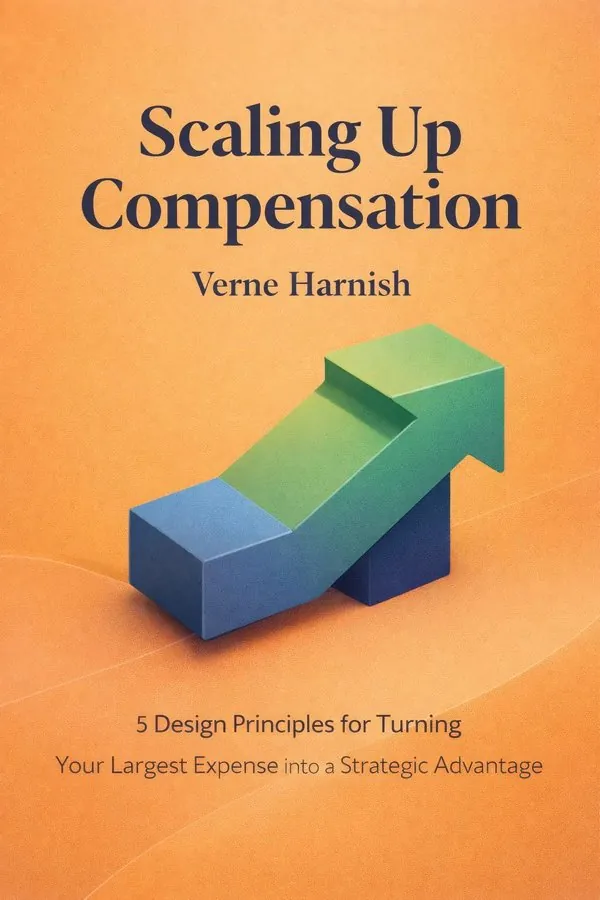
Scaling Up Compensation: 5 Design Principles for Turning Your Largest Expense into a Strategic Advantage: Summary & Key Insights
 10 min10 chaptersAudio available
What Is Scaling Up Compensation: 5 Design Principles for Turning Your Largest Expense into a Strategic Advantage About?
Scaling Up Compensation: 5 Design Principles for Turning Your Largest Expense into a Strategic Advantage by Verne Harnish is a leadership book spanning 10 pages. Scaling Up Compensation offers a practical framework for designing compensation systems that align employee incentives with company growth. Drawing on decades of experience advising high-growth firms, Verne Harnish and Sebastian Ross outline five key principles to transform pay structures into strategic tools that drive performance, engagement, and profitability. The book provides actionable guidance for leaders seeking to scale their organizations sustainably while maintaining fairness and motivation across teams.
This FizzRead summary covers all 10 key chapters of Scaling Up Compensation: 5 Design Principles for Turning Your Largest Expense into a Strategic Advantage in approximately 10 minutes, distilling the most important ideas, arguments, and takeaways from Verne Harnish's work. Also available as an audio summary and Key Quotes Podcast.
Scaling Up Compensation: 5 Design Principles for Turning Your Largest Expense into a Strategic Advantage
Scaling Up Compensation offers a practical framework for designing compensation systems that align employee incentives with company growth. Drawing on decades of experience advising high-growth firms, Verne Harnish and Sebastian Ross outline five key principles to transform pay structures into strategic tools that drive performance, engagement, and profitability. The book provides actionable guidance for leaders seeking to scale their organizations sustainably while maintaining fairness and motivation across teams.
Who Should Read Scaling Up Compensation: 5 Design Principles for Turning Your Largest Expense into a Strategic Advantage?
This book is perfect for anyone interested in leadership and looking to gain actionable insights in a short read. Whether you're a student, professional, or lifelong learner, the key ideas from Scaling Up Compensation: 5 Design Principles for Turning Your Largest Expense into a Strategic Advantage by Verne Harnish will help you think differently.
- ✓Readers who enjoy leadership and want practical takeaways
- ✓Professionals looking to apply new ideas to their work and life
- ✓Anyone who wants the core insights of Scaling Up Compensation: 5 Design Principles for Turning Your Largest Expense into a Strategic Advantage in just 10 minutes
Want the full summary?
Get instant access to this book summary and 100K+ more with Fizz Moment.
Get Free SummaryAvailable on App Store • Free to download
Key Chapters
Compensation sends a message—louder than any memo or speech about values or priorities. Every pay structure reinforces certain behaviors, whether we intend it or not. For example, if bonuses reward short-term sales, we’ll get sales at any cost—even at the expense of future growth. If stock options are tied only to tenure, we’ll get longevity without necessarily driving innovation. Compensation must therefore be understood as communication.
In fast-growing companies, the stakes are higher. Growth introduces complexity. Managers start negotiating one-off deals to keep key people, exceptions multiply, and soon the organization loses clarity. Culture begins to fray. Compensation is the silent architecture that shapes behavior at scale—it either creates alignment and energy or confusion and resentment.
Strategic compensation ties individual motivation to collective progress. That means moving beyond market benchmarking alone (though that remains a hygiene factor) toward crafting a system that sharpens focus. When compensation aligns with core strategy—be it customer intimacy, operational excellence, or product leadership—people know exactly what winning looks like and how they benefit when the company does.
I often remind leaders that cash is finite, but creativity isn’t. Strategic pay design requires both discipline and imagination. It means breaking away from inherited pay structures and asking: what behavior do we truly want to reward? What kind of company do we want to become? Once we anchor compensation around those answers, everything else falls into place.
Alignment begins with clarity. If your company strategy isn’t explicitly linked to how people get paid, you are leaving results to chance. The best pay systems draw a straight line from company priorities to individual rewards.
This starts with defining the core drivers of your business model—revenue growth, margin protection, customer retention, innovation speed—and mapping them to measurable metrics that employees can influence. For example, in a customer service-driven company, bonus pools might be tied to net promoter scores or renewal rates, not just revenue. In a manufacturer, production teams might share in the savings from efficiency improvements.
When compensation reflects strategy, it builds trust. Employees see that leadership is consistent: what you say in meetings is backed by how you pay. In turn, they begin to think like owners—not because you gave them stock, but because they know the better the company performs, the better they do too.
Crafting this alignment requires more than spreadsheets; it demands storytelling. You must communicate the 'why' so clearly that every team member understands what matters most to the company. Leaders who master this connection find that compensation ceases to be a tug-of-war and instead becomes a shared rallying point for progress.
+ 8 more chapters — available in the FizzRead app
All Chapters in Scaling Up Compensation: 5 Design Principles for Turning Your Largest Expense into a Strategic Advantage
About the Author
Verne Harnish is an entrepreneur, author, and founder of the Entrepreneurs’ Organization (EO). He is also the founder and CEO of Scaling Up, a global executive education and coaching company. Harnish is known for his expertise in helping companies grow through strategic planning, leadership development, and organizational alignment.
Get This Summary in Your Preferred Format
Read or listen to the Scaling Up Compensation: 5 Design Principles for Turning Your Largest Expense into a Strategic Advantage summary by Verne Harnish anytime, anywhere. FizzRead offers multiple formats so you can learn on your terms — all free.
Available formats: App · Audio · PDF · EPUB — All included free with FizzRead
Download Scaling Up Compensation: 5 Design Principles for Turning Your Largest Expense into a Strategic Advantage PDF and EPUB Summary
Key Quotes from Scaling Up Compensation: 5 Design Principles for Turning Your Largest Expense into a Strategic Advantage
“Compensation sends a message—louder than any memo or speech about values or priorities.”
“If your company strategy isn’t explicitly linked to how people get paid, you are leaving results to chance.”
Frequently Asked Questions about Scaling Up Compensation: 5 Design Principles for Turning Your Largest Expense into a Strategic Advantage
Scaling Up Compensation: 5 Design Principles for Turning Your Largest Expense into a Strategic Advantage by Verne Harnish is a leadership book that explores key ideas across 10 chapters. Scaling Up Compensation offers a practical framework for designing compensation systems that align employee incentives with company growth. Drawing on decades of experience advising high-growth firms, Verne Harnish and Sebastian Ross outline five key principles to transform pay structures into strategic tools that drive performance, engagement, and profitability. The book provides actionable guidance for leaders seeking to scale their organizations sustainably while maintaining fairness and motivation across teams.
More by Verne Harnish

You Might Also Like

Extreme Ownership
Jocko Willink
10 min
Dare to Lead
Brene Brown
10 min
Leaders Eat Last
Simon Sinek
10 min
The 21 Irrefutable Laws of Leadership
John Maxwell
10 min
Start With Why
Simon Sinek
10 min
How to Lead When You're Not in Charge
Clay Scroggins
10 minBrowse by Category
Ready to read Scaling Up Compensation: 5 Design Principles for Turning Your Largest Expense into a Strategic Advantage?
Get the full summary and 100K+ more books with Fizz Moment.