
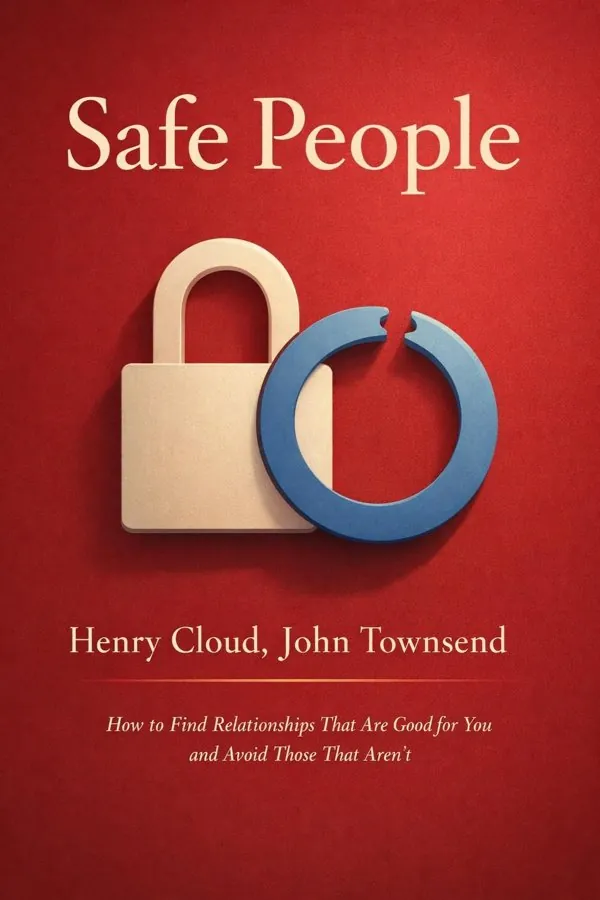
Safe People: How to Find Relationships That Are Good for You and Avoid Those That Aren’t: Summary & Key Insights
 10 min10 chaptersAudio available
What Is Safe People: How to Find Relationships That Are Good for You and Avoid Those That Aren’t About?
Safe People: How to Find Relationships That Are Good for You and Avoid Those That Aren’t by Henry Cloud, John Townsend is a relationships book spanning 10 pages. Safe People explora cómo identificar relaciones saludables y evitar aquellas que son emocionalmente dañinas. Los autores, psicólogos clínicos, ofrecen principios prácticos para reconocer personas seguras, establecer límites y sanar heridas relacionales desde una perspectiva cristiana y psicológica.
This FizzRead summary covers all 10 key chapters of Safe People: How to Find Relationships That Are Good for You and Avoid Those That Aren’t in approximately 10 minutes, distilling the most important ideas, arguments, and takeaways from Henry Cloud, John Townsend's work. Also available as an audio summary and Key Quotes Podcast.
Safe People: How to Find Relationships That Are Good for You and Avoid Those That Aren’t
Safe People explora cómo identificar relaciones saludables y evitar aquellas que son emocionalmente dañinas. Los autores, psicólogos clínicos, ofrecen principios prácticos para reconocer personas seguras, establecer límites y sanar heridas relacionales desde una perspectiva cristiana y psicológica.
Who Should Read Safe People: How to Find Relationships That Are Good for You and Avoid Those That Aren’t?
This book is perfect for anyone interested in relationships and looking to gain actionable insights in a short read. Whether you're a student, professional, or lifelong learner, the key ideas from Safe People: How to Find Relationships That Are Good for You and Avoid Those That Aren’t by Henry Cloud, John Townsend will help you think differently.
- ✓Readers who enjoy relationships and want practical takeaways
- ✓Professionals looking to apply new ideas to their work and life
- ✓Anyone who wants the core insights of Safe People: How to Find Relationships That Are Good for You and Avoid Those That Aren’t in just 10 minutes
Want the full summary?
Get instant access to this book summary and 100K+ more with Fizz Moment.
Get Free SummaryAvailable on App Store • Free to download
Key Chapters
Our journey begins not by judging others but by understanding the dynamics that make relationships unsafe. Unsafe people aren’t simply villains—they’re often wounded selves acting out of denial, control, or self-deception. What makes a person unsafe is not imperfection but irresponsibility toward truth and empathy. They refuse to acknowledge their flaws, rarely apologize, and often project their issues onto others.
Denial is a cornerstone of unsafety. An unsafe person can’t handle reality as it is. Instead of facing pain, they rewrite it. They say, “I didn’t do that,” or “You’re too sensitive.” Denial keeps them from growth and leaves you trapped in confusion. A safe person, by contrast, welcomes feedback, doesn’t fear truth, and values honesty even when it hurts.
Control is another signal. Unsafe people often fear losing power, so they manipulate, demand, or guilt others to maintain dominance. Whether through emotional intimidation or constant criticizing, their need to control reveals insecurity, not strength. True safety frees both parties to be autonomous and responsible adults.
And then there is empathy—the ability to feel with and for another. Unsafe people lack empathy. They listen only to answer, not to understand. They minimize your pain or make it about themselves. Safe people, on the other hand, step into your experience, validate your emotions, and walk beside you rather than above you. When relationships miss empathy, they slowly deform the soul. Recognizing this difference is the first step toward freedom.
Throughout our counseling work, we’ve noticed recognizable patterns in unsafe relationships. We call them the abandoners, the critics, and the irresponsibles.
Abandoners are those who start strong but cannot stay. They may love you at the beginning but flee when intimacy reveals need, vulnerability, or commitment. Their leaving is often wrapped in excuses—busyness, discomfort, or emotional overload—but the result is the same: they disappear when you most need presence. Healing begins by understanding that their leaving says more about their fear than your worth.
Critics are those who use truth without grace. They are quick to judge, diagnose, and advise but slow to understand. Critics may hide behind righteousness or authority, but their words cut deeper than they realize. They mistake correction for connection. In contrast, safe correction builds up rather than tears down—it holds compassion and accountability together.
The irresponsibles are unreliable people who live without boundaries or ownership. They make promises they don’t keep, avoid consequences, and blame others for their failures. Their chaos becomes contagious; you find yourself managing their life instead of your own. Safe people are different not because they never fail but because they take responsibility when they do.
Recognizing these patterns doesn’t mean labeling others harshly—it means seeing clearly so you can respond wisely. Once you see the pattern, you can stop personalizing the pain and start protecting your heart.
+ 8 more chapters — available in the FizzRead app
All Chapters in Safe People: How to Find Relationships That Are Good for You and Avoid Those That Aren’t
About the Authors
Henry Cloud y John Townsend son psicólogos clínicos y autores reconocidos por sus obras sobre crecimiento personal y relaciones. Ambos son conocidos por su serie de libros 'Boundaries' y por integrar principios psicológicos y espirituales en su trabajo.
Get This Summary in Your Preferred Format
Read or listen to the Safe People: How to Find Relationships That Are Good for You and Avoid Those That Aren’t summary by Henry Cloud, John Townsend anytime, anywhere. FizzRead offers multiple formats so you can learn on your terms — all free.
Available formats: App · Audio · PDF · EPUB — All included free with FizzRead
Download Safe People: How to Find Relationships That Are Good for You and Avoid Those That Aren’t PDF and EPUB Summary
Key Quotes from Safe People: How to Find Relationships That Are Good for You and Avoid Those That Aren’t
“Our journey begins not by judging others but by understanding the dynamics that make relationships unsafe.”
“Throughout our counseling work, we’ve noticed recognizable patterns in unsafe relationships.”
Frequently Asked Questions about Safe People: How to Find Relationships That Are Good for You and Avoid Those That Aren’t
Safe People: How to Find Relationships That Are Good for You and Avoid Those That Aren’t by Henry Cloud, John Townsend is a relationships book that explores key ideas across 10 chapters. Safe People explora cómo identificar relaciones saludables y evitar aquellas que son emocionalmente dañinas. Los autores, psicólogos clínicos, ofrecen principios prácticos para reconocer personas seguras, establecer límites y sanar heridas relacionales desde una perspectiva cristiana y psicológica.
More by Henry Cloud, John Townsend
Boundaries in Marriage
Henry Cloud, John Townsend
10 min
Boundaries: When to Say Yes, How to Say No to Take Control of Your Life
Henry Cloud, John Townsend
10 min
Boundaries: When to Say Yes, When to Say No, to Take Control of Your Life
Henry Cloud, John Townsend
10 minYou Might Also Like

The 5 Love Languages
Gary Chapman
10 min
Men Are from Mars, Women Are from Venus
John Gray
10 min
She Comes First
Ian Kerner
10 min
No More Mr Nice Guy
Robert Glover
10 min
Hold Me Tight
Sue Johnson
10 min
Mating in Captivity
Esther Perel
10 minBrowse by Category
Ready to read Safe People: How to Find Relationships That Are Good for You and Avoid Those That Aren’t?
Get the full summary and 100K+ more books with Fizz Moment.