
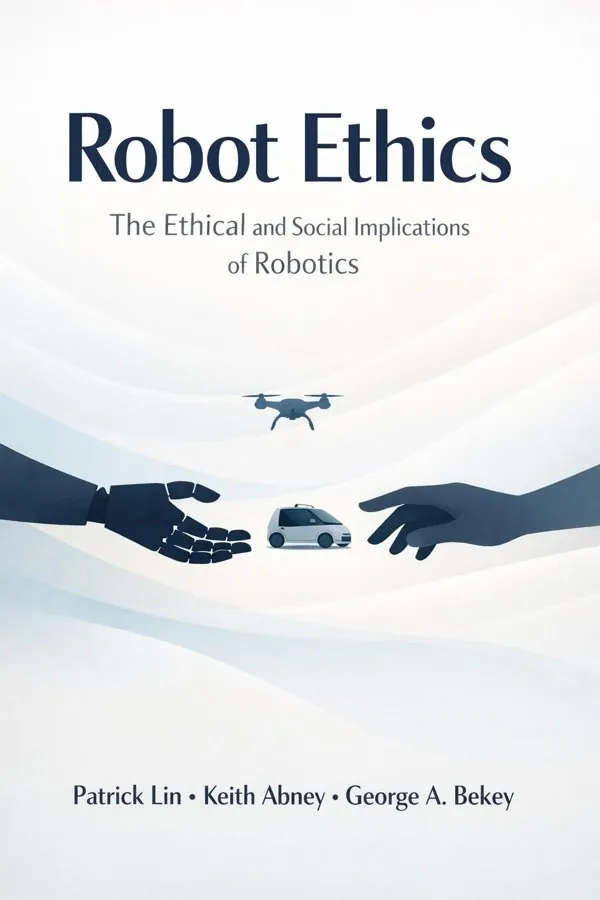
Robot Ethics: The Ethical and Social Implications of Robotics: Summary & Key Insights
by Patrick Lin, Keith Abney, George A. Bekey
 10 min5 chaptersAudio available
What Is Robot Ethics: The Ethical and Social Implications of Robotics About?
Robot Ethics: The Ethical and Social Implications of Robotics by Patrick Lin, Keith Abney, George A. Bekey is a ethics book spanning 5 pages. This book explores the ethical and social questions that arise from the increasing use of robots in society, including industrial robots, robot companions, and autonomous vehicles. It brings together leading scholars from science, engineering, philosophy, and the humanities to discuss topics such as robot rights, warfare, privacy, and the moral status of artificial agents.
This FizzRead summary covers all 5 key chapters of Robot Ethics: The Ethical and Social Implications of Robotics in approximately 10 minutes, distilling the most important ideas, arguments, and takeaways from Patrick Lin, Keith Abney, George A. Bekey's work. Also available as an audio summary and Key Quotes Podcast.
Robot Ethics: The Ethical and Social Implications of Robotics
This book explores the ethical and social questions that arise from the increasing use of robots in society, including industrial robots, robot companions, and autonomous vehicles. It brings together leading scholars from science, engineering, philosophy, and the humanities to discuss topics such as robot rights, warfare, privacy, and the moral status of artificial agents.
Who Should Read Robot Ethics: The Ethical and Social Implications of Robotics?
This book is perfect for anyone interested in ethics and looking to gain actionable insights in a short read. Whether you're a student, professional, or lifelong learner, the key ideas from Robot Ethics: The Ethical and Social Implications of Robotics by Patrick Lin, Keith Abney, George A. Bekey will help you think differently.
- ✓Readers who enjoy ethics and want practical takeaways
- ✓Professionals looking to apply new ideas to their work and life
- ✓Anyone who wants the core insights of Robot Ethics: The Ethical and Social Implications of Robotics in just 10 minutes
Want the full summary?
Get instant access to this book summary and 100K+ more with Fizz Moment.
Get Free SummaryAvailable on App Store • Free to download
Key Chapters
The roots of robot ethics stretch back not only to the dawn of the robotic age but to the very origins of our moral reflection on invention. From Asimov’s fictional laws of robotics to the first industrial machines, society has always wrestled with how human responsibility extends through our creations. In our work, we trace how ethical questions evolved alongside robotics, from the mechanical automation of factories to the intelligent systems of today.
As robotics matured in laboratories and industries, concerns once confined to science fiction became pressing realities. Industrial robots revolutionized efficiency, but they also replaced workers and reshaped labor ethics. Military robots promised reduced human casualties but raised questions about accountability and the morality of delegating lethal decisions to algorithms. The field of robot ethics—what we now call roboethics—emerged as an interdisciplinary response to these tensions.
This discipline, we argue, must exist not at the periphery but at the core of technological progress. Ethics cannot follow innovation; it must evolve with it. Robot ethics brings together engineers, philosophers, policymakers, and psychologists to anticipate consequences before they unfold. The aim is to infuse human values into robotic systems, recognizing that the design of technology is inherently a moral act. As the editors, we see this as a necessary shift: the ethical analysis of robotics must accompany every phase of design, deployment, and policy-making. Only in this way can robots become genuine partners in a just and sustainable society.
At the heart of robot ethics lies one persistent question: can a robot be a moral agent? In human ethics, moral agency requires two capacities—the ability to understand right and wrong, and the freedom to act upon that knowledge. Robots, however advanced, operate within programmed parameters and constraints. So, are they moral actors like us, or mere extensions of human intention?
In this book, we caution against simplistic answers. On one hand, as autonomous systems grow more sophisticated, they make decisions that can have profound moral consequences. A drone pilot might not directly choose a target if the drone’s onboard system performs that function. A medical robot could prioritize a patient’s life over another’s based on probability calculations. But on the other hand, moral understanding—the comprehension of harm, empathy, duty—is still a human property. No robot experiences intention or remorse in the way moral accountability demands.
Nevertheless, moral responsibility cannot disappear in the chain of automation. The burden shifts upstream—to designers, programmers, commanders, and policy architects. Responsibility, we suggest, should be viewed as distributed: each level of creation and operation carries part of the ethical weight. The challenge ahead is not only technological, but conceptual—creating systems transparent enough for accountability to remain traceable. To mistake autonomy for moral independence would be a dangerous error.
Our exploration concludes that while robots may become moral agents in a limited sense—agents acting within ethical frameworks—we must continue grounding moral responsibility firmly in human context. Ethical design becomes, therefore, not optional but essential, ensuring that autonomy in machines translates not to moral detachment, but to morally informed decision processes aligned with human oversight.
+ 3 more chapters — available in the FizzRead app
All Chapters in Robot Ethics: The Ethical and Social Implications of Robotics
About the Authors
Patrick Lin is a professor of philosophy at California Polytechnic State University, specializing in ethics and emerging technologies. Keith Abney is a lecturer in philosophy at the same institution, focusing on applied ethics. George A. Bekey is professor emeritus of computer science at the University of Southern California and a pioneer in robotics research.
Get This Summary in Your Preferred Format
Read or listen to the Robot Ethics: The Ethical and Social Implications of Robotics summary by Patrick Lin, Keith Abney, George A. Bekey anytime, anywhere. FizzRead offers multiple formats so you can learn on your terms — all free.
Available formats: App · Audio · PDF · EPUB — All included free with FizzRead
Download Robot Ethics: The Ethical and Social Implications of Robotics PDF and EPUB Summary
Key Quotes from Robot Ethics: The Ethical and Social Implications of Robotics
“The roots of robot ethics stretch back not only to the dawn of the robotic age but to the very origins of our moral reflection on invention.”
“At the heart of robot ethics lies one persistent question: can a robot be a moral agent?”
Frequently Asked Questions about Robot Ethics: The Ethical and Social Implications of Robotics
Robot Ethics: The Ethical and Social Implications of Robotics by Patrick Lin, Keith Abney, George A. Bekey is a ethics book that explores key ideas across 5 chapters. This book explores the ethical and social questions that arise from the increasing use of robots in society, including industrial robots, robot companions, and autonomous vehicles. It brings together leading scholars from science, engineering, philosophy, and the humanities to discuss topics such as robot rights, warfare, privacy, and the moral status of artificial agents.
You Might Also Like

What We Owe the Future
William MacAskill
10 min
Abortion
David Boonin
10 min
Blind Spots: Why We Fail to Do What's Right and What to Do About It
Max H. Bazerman, Ann E. Tenbrunsel
10 min
Digital Ethics: Research and Practice
Christopher Burr, Luciano Floridi (Editors)
10 min
Doing Good Better: Effective Altruism and a Radical New Way to Make a Difference
William MacAskill
10 min
Eating Animals
Jonathan Safran Foer
10 minBrowse by Category
Ready to read Robot Ethics: The Ethical and Social Implications of Robotics?
Get the full summary and 100K+ more books with Fizz Moment.