
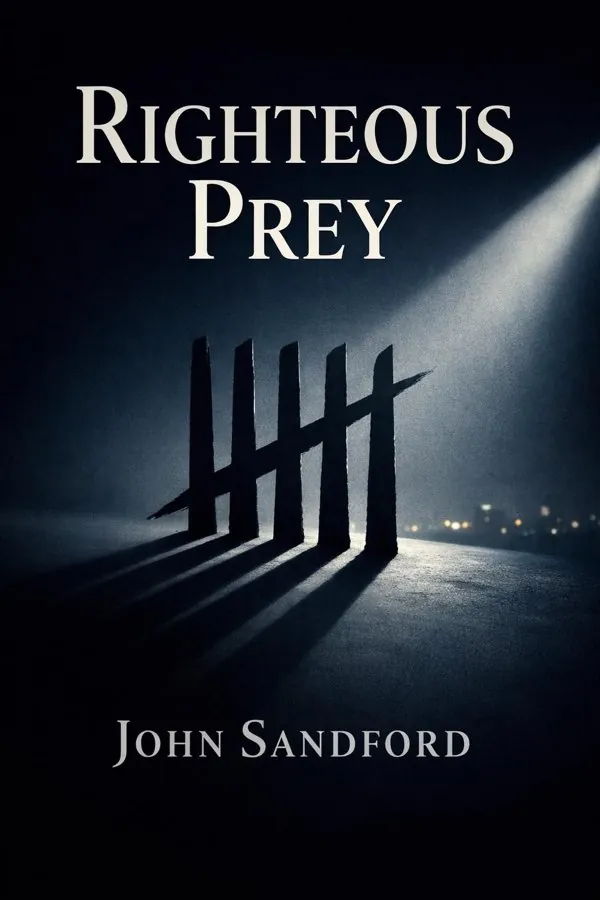
Righteous Prey: Summary & Key Insights
 10 min3 chaptersAudio available
What Is Righteous Prey About?
Righteous Prey by John Sandford is a mystery book spanning 3 pages. In this 32nd installment of John Sandford’s long-running Prey series, Lucas Davenport and Virgil Flowers team up to investigate a string of murders committed by a vigilante group calling themselves 'The Five.' The killers target criminals who have escaped justice, leaving behind cryptic messages and taunting the authorities. As Davenport and Flowers dig deeper, they uncover a complex web of motivations and moral ambiguity that challenges their own sense of right and wrong.
This FizzRead summary covers all 3 key chapters of Righteous Prey in approximately 10 minutes, distilling the most important ideas, arguments, and takeaways from John Sandford's work. Also available as an audio summary and Key Quotes Podcast.
Righteous Prey
In this 32nd installment of John Sandford’s long-running Prey series, Lucas Davenport and Virgil Flowers team up to investigate a string of murders committed by a vigilante group calling themselves 'The Five.' The killers target criminals who have escaped justice, leaving behind cryptic messages and taunting the authorities. As Davenport and Flowers dig deeper, they uncover a complex web of motivations and moral ambiguity that challenges their own sense of right and wrong.
Who Should Read Righteous Prey?
This book is perfect for anyone interested in mystery and looking to gain actionable insights in a short read. Whether you're a student, professional, or lifelong learner, the key ideas from Righteous Prey by John Sandford will help you think differently.
- ✓Readers who enjoy mystery and want practical takeaways
- ✓Professionals looking to apply new ideas to their work and life
- ✓Anyone who wants the core insights of Righteous Prey in just 10 minutes
Want the full summary?
Get instant access to this book summary and 100K+ more with Fizz Moment.
Get Free SummaryAvailable on App Store • Free to download
Key Chapters
The first stirrings of the case arrive almost ceremonially. Bodies appear—people with sordid histories, their punishments never fully delivered. Each killing is accompanied by a cryptic note, more manifesto than confession, and each points to a moral outrage that the killers believe they’ve rectified. The group calls itself *The Five*, and their name spreads across social media like a contagion of fascination and fear.
When I first sketched this narrative, I wanted *The Five* to represent a certain strain of contemporary anger: the belief that institutions have failed us so completely that the only recourse is direct action. Yet these killers are not rabble; they are investors, entrepreneurs, philanthropists—people who live behind gated estates and donate money to ethical causes by day while hunting in the dark. That paradox—the comfort of privilege married to the hunger for moral violence—defined their psychology.
Lucas Davenport enters their orbit as both hunter and skeptic. He’s been around too long to trust the world’s sudden clarity of morality. He knows that once blood enters an argument, reason leaves it. Virgil Flowers, on the other hand, starts from curiosity. He doesn’t just want to stop them; he wants to understand them, to dismantle the intellectual armor that justifies murder through philosophy.
Together they trace the first killing—a man with a vicious criminal record who escaped trial through legal loopholes. The message left behind references ‘restitution’ and ‘balance’, invoking moral law over juridical law. Before Lucas even fully understands the pattern, the media does; broadcasts frame *The Five* as a mixture of saints and monsters. The story polarizes a nation. Some applaud their ruthlessness, others call for their heads. What begins as a criminal investigation morphs into a cultural reckoning.
For Lucas and Virgil, each step forward in the investigation peels away another layer of deception. The Five’s mastery of technology—anonymous cryptocurrency transfers, encrypted communication networks, deepfake diversions—makes them ghosts in a hyperconnected age. Yet Lucas knows ghosts leave traces, not in code, but in guilt, ego, and the inevitable cracks of human impulse. And he begins to feel the first tremor of danger that this case is not only about catching killers—it’s about preventing the idea of them from spreading.
The story of *Righteous Prey* is, at its core, an expanding puzzle of motive and method. Lucas and Virgil follow trails that modern criminals leave: financial ledgers, offshore transactions, and private networks cloaked in benevolent façades. Each lead brings them closer to a deception both intricate and deeply ironic—the same systems that allow rich people to evade taxes or responsibility also enable them to become vigilantes of their own making.
In crafting this section, I wanted to highlight the intersection of wealth and justice. The Five use technology as both weapon and theater; each act of killing is followed by a public announcement, a digitized sermon about the failures of the courts. The spectacle of their righteousness becomes part of their intoxication.
While Virgil follows a lead to California, chasing one member connected to a so-called philanthropic initiative, Lucas coordinates with the FBI and local agencies. Their partnership embodies a rhythm of intuition and analysis. Virgil drifts through California’s sunshine, interviewing people who believe they’re talking about charitable donors but are, in fact, describing killers. Lucas, ever calculating, starts cross-referencing financial movements with unsolved crimes nationwide.
The cracks soon show. Within *The Five*, not everyone shares the same appetite for blood. One of them, shaken by the moral cost, leaves a trail too human to hide. Doubt begins to infect the group like rust creeping through metal. When Virgil uncovers that a prominent tech philanthropist has quietly funded certain ‘justice-oriented’ operations, Lucas follows the chain to a hidden financing network smuggled beneath the mask of a charitable foundation.
And this is where the novel’s ethical dilemma matures. Lucas begins to see reflections of himself in their logic. Hadn’t he, in past cases, crossed lines in the pursuit of justice? Hadn’t Virgil prized truth over protocol more than once? The mirror the killers hold up becomes uncomfortably clear. They are not monsters born from madness—they are logical extensions of society’s own obsession with control.
The investigation accelerates toward confrontation. Federal pressure mounts, mistakes multiply, and The Five turn inward, suspecting one another. The human qualities they tried to suppress—fear, guilt, love—erupt. When one member decides to turn against the group, the entire edifice of moral superiority begins to collapse under the weight of actual consequence.
+ 1 more chapters — available in the FizzRead app
All Chapters in Righteous Prey
About the Author
John Sandford is the pen name of John Roswell Camp, an American novelist and journalist best known for his Prey and Virgil Flowers series. A Pulitzer Prize–winning reporter before turning to fiction, Sandford is celebrated for his fast-paced thrillers, sharp dialogue, and psychologically rich characters.
Get This Summary in Your Preferred Format
Read or listen to the Righteous Prey summary by John Sandford anytime, anywhere. FizzRead offers multiple formats so you can learn on your terms — all free.
Available formats: App · Audio · PDF · EPUB — All included free with FizzRead
Download Righteous Prey PDF and EPUB Summary
Key Quotes from Righteous Prey
“The first stirrings of the case arrive almost ceremonially.”
“The story of *Righteous Prey* is, at its core, an expanding puzzle of motive and method.”
Frequently Asked Questions about Righteous Prey
Righteous Prey by John Sandford is a mystery book that explores key ideas across 3 chapters. In this 32nd installment of John Sandford’s long-running Prey series, Lucas Davenport and Virgil Flowers team up to investigate a string of murders committed by a vigilante group calling themselves 'The Five.' The killers target criminals who have escaped justice, leaving behind cryptic messages and taunting the authorities. As Davenport and Flowers dig deeper, they uncover a complex web of motivations and moral ambiguity that challenges their own sense of right and wrong.
You Might Also Like




Browse by Category
Ready to read Righteous Prey?
Get the full summary and 100K+ more books with Fizz Moment.