
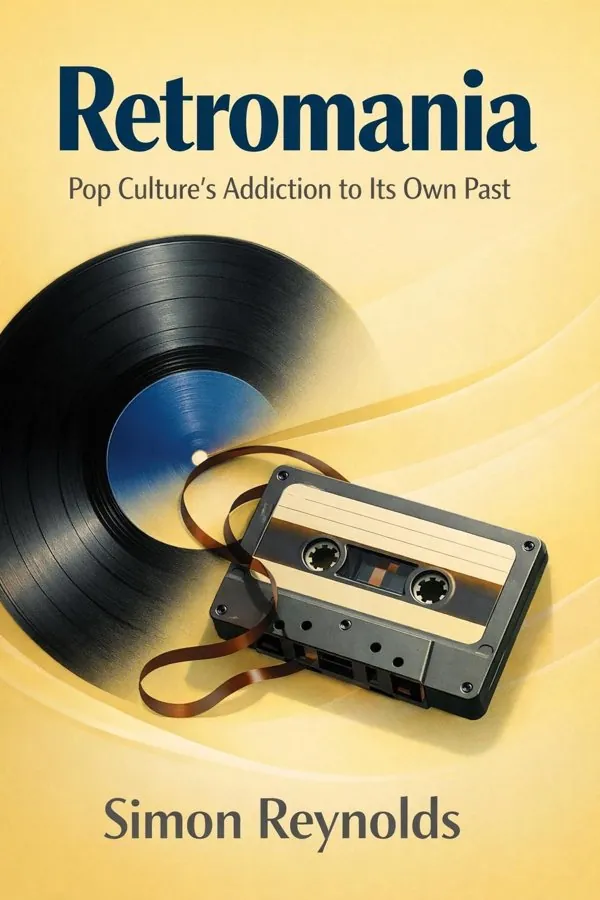
Retromania: Pop Culture's Addiction to Its Own Past: Summary & Key Insights
 10 min3 chaptersAudio available
What Is Retromania: Pop Culture's Addiction to Its Own Past About?
Retromania: Pop Culture's Addiction to Its Own Past by Simon Reynolds is a music_film book spanning 3 pages. Retromania explores how contemporary pop culture has become obsessed with its own past, recycling styles, sounds, and aesthetics from previous decades. Simon Reynolds examines the phenomenon of nostalgia in music, fashion, and art, arguing that the constant revival of old trends has led to a creative stagnation. Through detailed analysis of genres like indie rock, electronic music, and pop, Reynolds investigates how digital technology and the internet have accelerated this retro fixation.
This FizzRead summary covers all 3 key chapters of Retromania: Pop Culture's Addiction to Its Own Past in approximately 10 minutes, distilling the most important ideas, arguments, and takeaways from Simon Reynolds's work. Also available as an audio summary and Key Quotes Podcast.
Retromania: Pop Culture's Addiction to Its Own Past
Retromania explores how contemporary pop culture has become obsessed with its own past, recycling styles, sounds, and aesthetics from previous decades. Simon Reynolds examines the phenomenon of nostalgia in music, fashion, and art, arguing that the constant revival of old trends has led to a creative stagnation. Through detailed analysis of genres like indie rock, electronic music, and pop, Reynolds investigates how digital technology and the internet have accelerated this retro fixation.
Who Should Read Retromania: Pop Culture's Addiction to Its Own Past?
This book is perfect for anyone interested in music_film and looking to gain actionable insights in a short read. Whether you're a student, professional, or lifelong learner, the key ideas from Retromania: Pop Culture's Addiction to Its Own Past by Simon Reynolds will help you think differently.
- ✓Readers who enjoy music_film and want practical takeaways
- ✓Professionals looking to apply new ideas to their work and life
- ✓Anyone who wants the core insights of Retromania: Pop Culture's Addiction to Its Own Past in just 10 minutes
Want the full summary?
Get instant access to this book summary and 100K+ more with Fizz Moment.
Get Free SummaryAvailable on App Store • Free to download
Key Chapters
To understand how we arrived at this point of cultural self-absorption, we need to trace nostalgia’s roots in pop music. This journey begins not with the internet age, but with rock itself. Even the supposedly rebellious energy of 1960s rock carried a fascination with its own ancestry: blues revivalists, rockabilly throwbacks, and folk purists were already seeking authenticity in past forms. The British Invasion bands drew inspiration from 1950s American rock and roll, turning imitation into reinvention. This was retro before we had a word for it.
By the late 1960s, record collectors had begun to shape a subculture of musical archaeology, hunting for lost gems and forgotten sounds. These early archivists saw the past as a treasure trove waiting to be reactivated. The move from innovation to excavation was subtle but significant: the collector’s impulse nurtured nostalgia as a legitimate creative stance. Pop music, which had initially been about immediacy and novelty, started to look backward as much as forward.
What interests me is how nostalgia became fused with notions of authenticity. The worn textures of analog sound, the imperfections of old recordings, began to stand as symbols of truth against the polish of modern production. This emotional attachment to the past transformed listening from an experience of discovery into one of recovery. The sixties laid the groundwork for a continuous cycle of revival, and every subsequent generation of musicians found itself referencing the eras before it. Retromania had begun its long evolution, gathering emotional, aesthetic, and technological momentum over decades.
The 1970s and 1980s marked crucial decades when the logic of revival became embedded in popular culture. Punk’s explosive energy is often remembered as an act of rupture—a rejection of the bloated excess of rock. Yet even punk was haunted by its predecessors. The raw minimalism of punk echoed the primal force of early rock and roll; its DIY ethos recalled the self-made spirit of the 1950s garage bands. Retro, disguised as rebellion, was already there.
Then came post-punk and new wave, movements that deliberately hybridized historical fragments into new forms. These artists were not simply nostalgic; they used the past as a toolkit. Groups like Joy Division and Talking Heads embraced modernist aesthetics while simultaneously mining the moods and textures of earlier eras. Style recycling became an art unto itself. The grand paradox of the 1980s was that technological innovation—synthesizers, drum machines, digital effects—went hand in hand with imagery and sonic references from the 1950s and 1960s. As MTV spread globally, music videos crystallized the visual language of retro—neon futurism mixed with nostalgia, thrift-store chic mixed with cybernetic imagery.
This period crystallized the idea that the pop artist was not merely a performer but a curator of history. The concept of “heritage rock” took shape, and the museum mentality began to creep in. Concert tours featuring aging legends were rebranded as celebrations of timeless artistry, rather than as continuations of a living movement. The revolutionary impulse of rock seemed to transform into self-referential monument-building. The cultural machinery of hindsight was now fully operational.
+ 1 more chapters — available in the FizzRead app
All Chapters in Retromania: Pop Culture's Addiction to Its Own Past
About the Author
Simon Reynolds is a British music journalist and critic known for his influential writings on post-punk, electronic music, and cultural theory. He has contributed to publications such as The Guardian, The Wire, and Pitchfork, and authored several acclaimed books including 'Rip It Up and Start Again' and 'Energy Flash'.
Get This Summary in Your Preferred Format
Read or listen to the Retromania: Pop Culture's Addiction to Its Own Past summary by Simon Reynolds anytime, anywhere. FizzRead offers multiple formats so you can learn on your terms — all free.
Available formats: App · Audio · PDF · EPUB — All included free with FizzRead
Download Retromania: Pop Culture's Addiction to Its Own Past PDF and EPUB Summary
Key Quotes from Retromania: Pop Culture's Addiction to Its Own Past
“To understand how we arrived at this point of cultural self-absorption, we need to trace nostalgia’s roots in pop music.”
“The 1970s and 1980s marked crucial decades when the logic of revival became embedded in popular culture.”
Frequently Asked Questions about Retromania: Pop Culture's Addiction to Its Own Past
Retromania: Pop Culture's Addiction to Its Own Past by Simon Reynolds is a music_film book that explores key ideas across 3 chapters. Retromania explores how contemporary pop culture has become obsessed with its own past, recycling styles, sounds, and aesthetics from previous decades. Simon Reynolds examines the phenomenon of nostalgia in music, fashion, and art, arguing that the constant revival of old trends has led to a creative stagnation. Through detailed analysis of genres like indie rock, electronic music, and pop, Reynolds investigates how digital technology and the internet have accelerated this retro fixation.
You Might Also Like
Beethoven: A Documentary Study
H. C. Robbins Landon
10 min
Cinema Speculation
Quentin Tarantino
10 min
Deep Listening: A Composer's Sound Practice
Pauline Oliveros
10 min
Dylan Goes Electric!: Newport, Seeger, Dylan, and the Night That Split the Sixties
Elijah Wald
10 min
Future Frames
Maria Walsh
10 min
Hamilton: The Revolution: Being the Complete Libretto of the Broadway Musical, with a True Account of Its Creation, and Concise Remarks on Hip-Hop, the Power of Stories, and the New America
Lin-Manuel Miranda, Jeremy McCarter
10 minBrowse by Category
Ready to read Retromania: Pop Culture's Addiction to Its Own Past?
Get the full summary and 100K+ more books with Fizz Moment.