
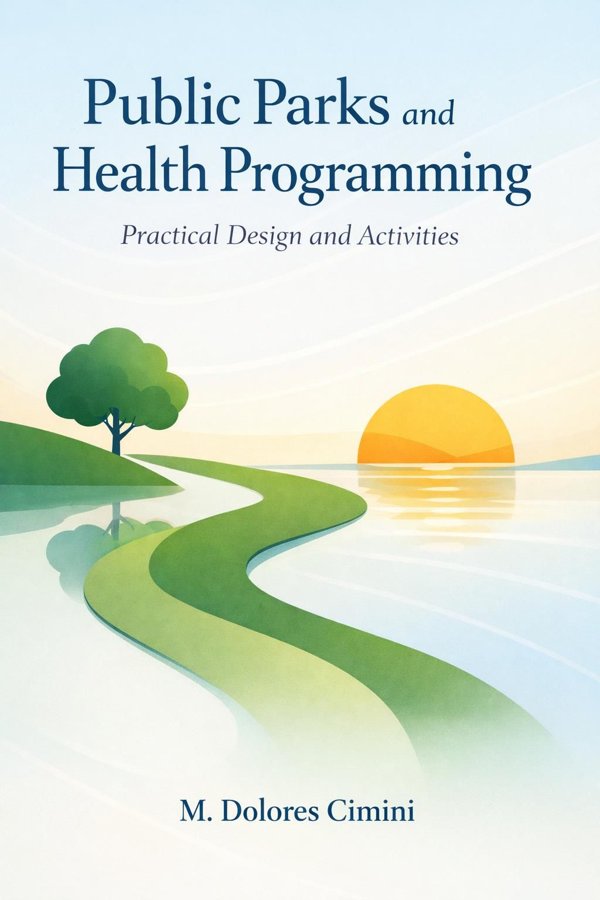
Public Parks and Health Programming: Practical Design and Activities: Summary & Key Insights
 10 min9 chaptersAudio available
Key Takeaways from Public Parks and Health Programming: Practical Design and Activities
A park is never just a patch of land; it is a daily exposure that quietly shapes how people move, recover, and connect.
The most effective health programs begin with humility, not assumptions.
If a park cannot be comfortably used by a wide range of people, it cannot truly function as a public health resource.
Mental health support does not always begin with a diagnosis or a clinic visit; sometimes it begins with a safe place to breathe, move, and reconnect.
Even the best-designed program fails if it ignores how people actually live.
What Is Public Parks and Health Programming: Practical Design and Activities About?
Public Parks and Health Programming: Practical Design and Activities by M. Dolores Cimini is a health_med book spanning 8 pages. Public parks are often treated as amenities, but M. Dolores Cimini argues they should be understood as frontline public health assets. In Public Parks and Health Programming: Practical Design and Activities, she shows how parks can be intentionally designed and programmed to improve physical activity, emotional resilience, social connection, and community equity. Rather than seeing health promotion as something confined to clinics or formal institutions, the book reframes everyday outdoor spaces as powerful settings for prevention, recovery, and belonging. What makes this book especially valuable is its practical orientation. Cimini brings together research from public health, environmental psychology, recreation management, and community planning, then translates that evidence into usable strategies for real-world implementation. She addresses how to assess local needs, build inclusive programs, form cross-sector partnerships, evaluate outcomes, and sustain initiatives over time. The result is both a conceptual guide and a working manual. For park leaders, public health professionals, planners, educators, and community advocates, this book offers a compelling answer to a timely question: how can shared public spaces become healthier, safer, and more meaningful for everyone?
This FizzRead summary covers all 9 key chapters of Public Parks and Health Programming: Practical Design and Activities in approximately 10 minutes, distilling the most important ideas, arguments, and takeaways from M. Dolores Cimini's work. Also available as an audio summary and Key Quotes Podcast.
Public Parks and Health Programming: Practical Design and Activities
Public parks are often treated as amenities, but M. Dolores Cimini argues they should be understood as frontline public health assets. In Public Parks and Health Programming: Practical Design and Activities, she shows how parks can be intentionally designed and programmed to improve physical activity, emotional resilience, social connection, and community equity. Rather than seeing health promotion as something confined to clinics or formal institutions, the book reframes everyday outdoor spaces as powerful settings for prevention, recovery, and belonging.
What makes this book especially valuable is its practical orientation. Cimini brings together research from public health, environmental psychology, recreation management, and community planning, then translates that evidence into usable strategies for real-world implementation. She addresses how to assess local needs, build inclusive programs, form cross-sector partnerships, evaluate outcomes, and sustain initiatives over time. The result is both a conceptual guide and a working manual.
For park leaders, public health professionals, planners, educators, and community advocates, this book offers a compelling answer to a timely question: how can shared public spaces become healthier, safer, and more meaningful for everyone?
Who Should Read Public Parks and Health Programming: Practical Design and Activities?
This book is perfect for anyone interested in health_med and looking to gain actionable insights in a short read. Whether you're a student, professional, or lifelong learner, the key ideas from Public Parks and Health Programming: Practical Design and Activities by M. Dolores Cimini will help you think differently.
- ✓Readers who enjoy health_med and want practical takeaways
- ✓Professionals looking to apply new ideas to their work and life
- ✓Anyone who wants the core insights of Public Parks and Health Programming: Practical Design and Activities in just 10 minutes
Want the full summary?
Get instant access to this book summary and 100K+ more with Fizz Moment.
Get Free SummaryAvailable on App Store • Free to download
Key Chapters
A park is never just a patch of land; it is a daily exposure that quietly shapes how people move, recover, and connect. One of the book’s central insights is that access to green and recreational space influences health in measurable ways, from physical activity and stress reduction to social cohesion and neighborhood safety perceptions. Cimini draws on public health and behavioral research to show that well-maintained parks can increase walking, reduce sedentary time, support children’s play, and offer older adults opportunities for gentle movement and social interaction.
The key point is not simply that parks are “nice to have.” They function as preventive infrastructure, especially in communities where healthcare access is limited or where residents face chronic stress, isolation, and environmental burdens. A park with trails, benches, shade, restrooms, and visible programming can become a low-cost, high-reach setting for blood pressure walks, family fitness events, mindfulness sessions, or informal social contact. By contrast, neglected or inaccessible parks often fail to deliver these benefits, even when they physically exist.
Cimini also emphasizes that the health impact of parks depends on usability, safety, and cultural relevance. A beautiful space that feels unwelcoming, unsafe, or disconnected from local routines will remain underused. Health-oriented park planning therefore requires attention to design, maintenance, transportation access, and trust.
A practical application might include mapping local chronic disease burdens against park access, then prioritizing investment in areas with the greatest need. Actionable takeaway: treat parks as essential health systems infrastructure and evaluate them by how well they support regular, inclusive, real-life use.
The most effective health programs begin with humility, not assumptions. Cimini stresses that successful park-based initiatives are rooted in community assessment because residents already understand the barriers, patterns, and possibilities of the places they use. Before launching classes, events, or capital improvements, planners and program leaders need to ask basic but revealing questions: Who uses the park now? Who does not? At what times? What safety concerns exist? Which health issues matter most locally? What cultural practices should shape programming?
The book outlines assessment as both a technical and relational process. Quantitative tools such as surveys, GIS mapping, demographic analysis, and utilization counts can identify gaps in access and usage. Qualitative methods such as listening sessions, walking audits, youth focus groups, and resident interviews reveal why those gaps exist. A neighborhood may appear to have a park on paper, but residents might avoid it because of poor lighting, lack of transportation, inaccessible paths, or activities that do not reflect community interests.
Cimini makes clear that needs assessments should also identify assets, not just deficits. Community leaders, schools, faith groups, health clinics, and volunteer networks can all become programming partners. For example, if seniors want low-impact exercise and social support, a walking club paired with blood pressure screenings may be more effective than installing expensive new equipment no one requested.
Actionable takeaway: before designing any park health initiative, conduct a structured community assessment that identifies needs, barriers, local strengths, and trusted partners, then let those findings guide every subsequent decision.
If a park cannot be comfortably used by a wide range of people, it cannot truly function as a public health resource. Cimini expands the idea of access beyond proximity. Real access includes physical accessibility, emotional safety, cultural welcome, affordability, transportation, visibility, and comfort across age groups and abilities. In other words, a park may be open to all in theory while remaining usable for only a few in practice.
The book highlights inclusive design as a foundation for effective health programming. Features such as smooth and connected pathways, ramps, shaded seating, multilingual signage, stroller-friendly routes, sensory-sensitive areas, adequate lighting, drinking fountains, and accessible restrooms all influence whether people participate. Design also affects how long visitors stay, whether caregivers feel supported, and whether older adults or people with disabilities can engage without fear or frustration.
Cimini also connects inclusion to psychological experience. People are more likely to join programs in spaces that feel orderly, welcoming, and socially safe. Small design details matter: clear sightlines can reduce anxiety, seating arranged for conversation can encourage social connection, and visible staff or volunteers can help users feel protected and oriented. Programming should reflect local cultures as well, such as dance-based fitness, family events, nature walks, or multilingual health education.
A practical example is redesigning a park entrance to improve wayfinding, add shade, and create an obvious gathering point for group activities. Those changes can dramatically increase participation. Actionable takeaway: audit park environments for physical, social, and cultural barriers, then design every element so that diverse users can enter, stay, participate, and return.
Mental health support does not always begin with a diagnosis or a clinic visit; sometimes it begins with a safe place to breathe, move, and reconnect. One of the book’s most valuable contributions is its integration of behavioral health into park programming. Cimini argues that parks can serve as low-stigma environments for stress relief, emotional regulation, trauma recovery support, and social reconnection, especially when programs are designed intentionally.
Natural settings have long been associated with reduced stress, improved mood, and better attention restoration. Cimini builds on that evidence by showing how recreation programs can make those benefits more consistent and equitable. Guided walks, yoga in the park, gardening programs, mindfulness sessions, therapeutic recreation, family play events, and arts-based outdoor gatherings all create opportunities for emotional wellness. For youth, structured recreation can reduce isolation and provide positive routines. For older adults, gentle group activity can protect against loneliness and depression. For communities under chronic stress, parks can offer restorative experiences that feel accessible rather than clinical.
Importantly, the book does not romanticize parks as a substitute for formal mental healthcare. Instead, it positions them as complementary settings that can lower barriers to engagement and expand the reach of prevention. Cross-referrals between behavioral health providers and park programs are one promising strategy. For instance, a counselor might recommend participation in a nature-based walking group as part of a broader wellness plan.
Actionable takeaway: include emotional well-being goals in park programming and design offerings that reduce stress, encourage connection, and create supportive routines without requiring people to enter formal treatment spaces first.
Even the best-designed program fails if it ignores how people actually live. Cimini repeatedly returns to a practical truth: participation depends less on promotional slogans than on whether a program fits residents’ schedules, needs, and habits. Health programming in parks must be convenient, flexible, and relevant to daily life, especially for families juggling work, caregiving, transportation constraints, or financial pressure.
This means timing matters. Early morning walking groups may attract older adults or shift workers finishing overnight schedules, while after-school movement sessions may better serve children and teens. Weekend family fitness events, stroller walks, culturally familiar dance classes, lunchtime stress-reduction sessions, and seasonal pop-up activities can all increase engagement when aligned with local rhythms. Cimini also encourages multilayered programming: combining health education with recreation, or pairing movement with food access, screenings, or social services.
The book emphasizes the importance of reducing participation friction. Free or low-cost activities, easy registration, multilingual outreach, childcare options, transportation support, and recurring schedules all make programs more accessible. A six-week tai chi series in a shaded area may be highly effective for one community, while another might respond better to informal drop-in activities and intergenerational play days.
Practical examples include partnering with schools for youth fitness trails, working with clinics to host preventive health fairs, or organizing neighborhood walking prescriptions tied to park routes. The most sustainable programs become part of local routine rather than isolated events. Actionable takeaway: design park programming around when, how, and why residents can realistically participate, and remove every unnecessary barrier between interest and attendance.
No single department can unlock the full health potential of a public park. Cimini shows that strong health programming depends on cross-sector partnerships because parks sit at the intersection of recreation, planning, education, social services, transportation, and public health. When these sectors work in isolation, programs tend to be small, fragmented, or difficult to sustain. When they collaborate, parks become platforms for broad community impact.
The book explores how different partners contribute distinct strengths. Public health agencies offer epidemiological data, prevention expertise, and evaluation tools. Park and recreation departments provide site management, staffing, and activity infrastructure. Schools can connect youth and families. Clinics and hospitals may support screenings, referrals, or wellness campaigns. Nonprofits often bring trusted relationships with specific populations, while local businesses and philanthropies can help with funding or equipment. Residents themselves remain essential co-creators, not just recipients.
Cimini also notes that collaboration works best when roles are explicit and shared goals are concrete. A vague commitment to “community wellness” is less effective than a defined plan to increase senior walking participation by 25 percent, provide monthly health screenings in two underserved parks, or create trauma-informed recreation training for staff. Written agreements, regular meetings, and shared metrics help keep partnerships functional.
A useful example is a park district teaming with a hospital, a senior center, and a transit provider to run an accessible walking and falls-prevention program. Each partner solves a piece of the puzzle. Actionable takeaway: build formal partnerships around complementary strengths, shared data, and specific health goals so park programs become more trusted, better funded, and more durable.
There is no universal template for a healthy park because every community brings its own geography, demographics, history, and needs. Cimini uses case studies to demonstrate that effective programming emerges from adaptation, not replication. What works in a dense urban neighborhood with high youth populations may fail in a rural area serving older adults, and a strategy successful in one cultural setting may need major revision in another.
These examples are valuable because they move the discussion beyond theory. The reader sees how projects succeed or struggle under real constraints such as limited budgets, underused spaces, political turnover, staffing shortages, or skepticism from residents. Some case studies show how targeted programming activated parks that had been perceived as unsafe. Others illustrate how community partnerships expanded services, or how simple design changes improved participation more than expensive installations.
A recurring lesson is that small, well-matched interventions often outperform ambitious but poorly grounded plans. For example, a neighborhood may not need a large formal wellness campaign as much as it needs a reliable weekly walking club led by trusted local volunteers. Another area may benefit most from multilingual outreach and family-centered events that make first-time use feel comfortable. Case studies also reveal the importance of iteration: programs improve when leaders observe patterns, gather feedback, and make adjustments instead of treating initial design as final.
The broader message is that evidence-based practice still requires local translation. Actionable takeaway: study examples for principles rather than imitation, then tailor design, staffing, messaging, and activities to the lived realities of the specific park and community you serve.
Good intentions are not enough; if a program cannot show what it changes, it will struggle to improve or survive. Cimini argues that evaluation should be built into park health programming from the beginning, not treated as an afterthought once funding is at risk. Measuring outcomes helps practitioners understand whether a program is attracting the intended participants, improving health behaviors, and using resources effectively.
The book encourages both process and outcome evaluation. Process measures include attendance, participant demographics, retention, satisfaction, frequency of park use, and partnership engagement. Outcome measures might assess changes in physical activity, self-reported stress, social connectedness, perceived safety, or health knowledge. Depending on program goals, evaluation may also include environmental indicators such as increased use of walking paths, reduced vandalism, or broader neighborhood activation.
Cimini is careful to recommend realistic measurement. Not every park program can demonstrate dramatic clinical outcomes, but many can show meaningful shifts in behavior, confidence, routine, or community engagement. For example, a modest family activity series may increase weekly park use and strengthen neighborhood relationships, both of which matter for long-term health. The book also notes that evaluation findings can be used for advocacy, grant applications, partner reports, and internal improvement.
A practical approach might combine sign-in data, short participant surveys, observational counts, and periodic interviews with staff and residents. That mix often gives a richer picture than numbers alone. Actionable takeaway: define success early, collect simple but relevant data consistently, and use evaluation not just to justify programs, but to refine and strengthen them over time.
The hardest part of health programming is not launching it; it is keeping it relevant, equitable, and resilient over time. In its later themes, the book turns to the challenges that often undermine promising efforts: unstable funding, uneven political support, maintenance problems, staff burnout, safety concerns, and persistent inequities in who feels welcome in public space. Cimini argues that sustainability is not merely financial. It also depends on trust, flexibility, and a willingness to respond to changing community conditions.
Equity is especially important here. Historically underserved neighborhoods may have the greatest potential to benefit from park-based health initiatives, yet they often face the weakest infrastructure and the most barriers to consistent programming. Cimini urges leaders to prioritize these communities intentionally, rather than distributing resources in ways that reinforce existing advantages. This means considering language access, disability inclusion, transportation, digital divides, and local histories of exclusion.
Adaptation is the companion principle. Programs should evolve with seasons, demographics, public health conditions, and feedback. A successful initiative might begin with guided exercise but expand to social prescribing, gardening, intergenerational recreation, or trauma-informed staff training. External shocks such as extreme heat, infectious disease outbreaks, or economic pressure may also require new formats and safety approaches.
The book’s future-oriented vision is pragmatic: healthy parks will succeed where leaders combine evidence, participation, flexibility, and equity-minded investment. Actionable takeaway: plan for sustainability from the start by diversifying support, embedding equity into resource decisions, and revising programs continuously as community needs and conditions change.
All Chapters in Public Parks and Health Programming: Practical Design and Activities
About the Author
M. Dolores Cimini is a public health and behavioral science researcher whose work focuses on community-based wellness, prevention, and health promotion in everyday settings. She is especially interested in how social environments and public spaces can be used to support healthier behaviors, stronger social ties, and more equitable access to well-being. Her writing and practice draw from an interdisciplinary base that includes public health, recreation programming, behavioral research, and community engagement. In Public Parks and Health Programming: Practical Design and Activities, she applies that background to show how parks can function as practical health assets when thoughtfully designed and managed. Cimini is recognized for translating evidence into usable strategies, helping professionals connect research with action in ways that benefit diverse communities.
Get This Summary in Your Preferred Format
Read or listen to the Public Parks and Health Programming: Practical Design and Activities summary by M. Dolores Cimini anytime, anywhere. FizzRead offers multiple formats so you can learn on your terms — all free.
Available formats: App · Audio · PDF · EPUB — All included free with FizzRead
Download Public Parks and Health Programming: Practical Design and Activities PDF and EPUB Summary
Key Quotes from Public Parks and Health Programming: Practical Design and Activities
“A park is never just a patch of land; it is a daily exposure that quietly shapes how people move, recover, and connect.”
“The most effective health programs begin with humility, not assumptions.”
“If a park cannot be comfortably used by a wide range of people, it cannot truly function as a public health resource.”
“Mental health support does not always begin with a diagnosis or a clinic visit; sometimes it begins with a safe place to breathe, move, and reconnect.”
“Even the best-designed program fails if it ignores how people actually live.”
Frequently Asked Questions about Public Parks and Health Programming: Practical Design and Activities
Public Parks and Health Programming: Practical Design and Activities by M. Dolores Cimini is a health_med book that explores key ideas across 9 chapters. Public parks are often treated as amenities, but M. Dolores Cimini argues they should be understood as frontline public health assets. In Public Parks and Health Programming: Practical Design and Activities, she shows how parks can be intentionally designed and programmed to improve physical activity, emotional resilience, social connection, and community equity. Rather than seeing health promotion as something confined to clinics or formal institutions, the book reframes everyday outdoor spaces as powerful settings for prevention, recovery, and belonging. What makes this book especially valuable is its practical orientation. Cimini brings together research from public health, environmental psychology, recreation management, and community planning, then translates that evidence into usable strategies for real-world implementation. She addresses how to assess local needs, build inclusive programs, form cross-sector partnerships, evaluate outcomes, and sustain initiatives over time. The result is both a conceptual guide and a working manual. For park leaders, public health professionals, planners, educators, and community advocates, this book offers a compelling answer to a timely question: how can shared public spaces become healthier, safer, and more meaningful for everyone?
You Might Also Like

On Immunity
Eula Biss
10 min
The Three-Body Problem
Liu Cixin
10 min
Community Health Volunteer Toolkit: Training and Practical Activities
World Health Organization
10 min
Healing Back Pain: The Mind-Body Connection
John E. Sarno
10 min
Health Literacy for All: Practical Guides to Communicate Health Information (Compilations)
World Health Organization
10 min
The Complete Guide to Sports Supplements: An Evidence-Based Review
Anita Bean
10 minBrowse by Category
Ready to read Public Parks and Health Programming: Practical Design and Activities?
Get the full summary and 100K+ more books with Fizz Moment.