
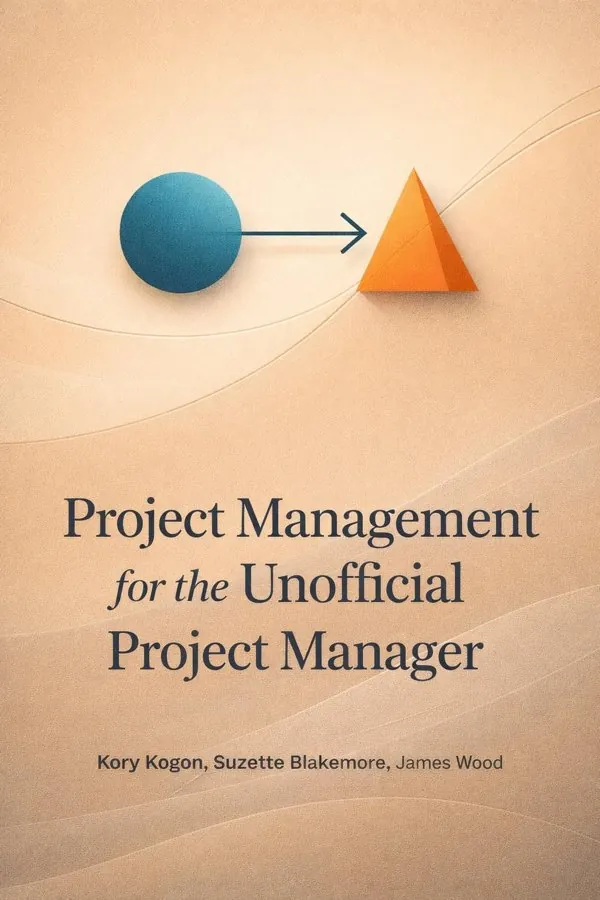
Project Management for the Unofficial Project Manager: Summary & Key Insights
by Kory Kogon, Suzette Blakemore, James Wood
 10 min10 chaptersAudio available
What Is Project Management for the Unofficial Project Manager About?
Project Management for the Unofficial Project Manager by Kory Kogon, Suzette Blakemore, James Wood is a leadership book spanning 10 pages. This book provides practical guidance for individuals who manage projects without formal project management training. It introduces essential project management principles—such as initiating, planning, executing, monitoring, and closing projects—using real-world examples and accessible language. The authors emphasize people-centered management, communication, and accountability to help readers deliver successful outcomes even in informal project settings.
This FizzRead summary covers all 10 key chapters of Project Management for the Unofficial Project Manager in approximately 10 minutes, distilling the most important ideas, arguments, and takeaways from Kory Kogon, Suzette Blakemore, James Wood's work. Also available as an audio summary and Key Quotes Podcast.
Project Management for the Unofficial Project Manager
This book provides practical guidance for individuals who manage projects without formal project management training. It introduces essential project management principles—such as initiating, planning, executing, monitoring, and closing projects—using real-world examples and accessible language. The authors emphasize people-centered management, communication, and accountability to help readers deliver successful outcomes even in informal project settings.
Who Should Read Project Management for the Unofficial Project Manager?
This book is perfect for anyone interested in leadership and looking to gain actionable insights in a short read. Whether you're a student, professional, or lifelong learner, the key ideas from Project Management for the Unofficial Project Manager by Kory Kogon, Suzette Blakemore, James Wood will help you think differently.
- ✓Readers who enjoy leadership and want practical takeaways
- ✓Professionals looking to apply new ideas to their work and life
- ✓Anyone who wants the core insights of Project Management for the Unofficial Project Manager in just 10 minutes
Want the full summary?
Get instant access to this book summary and 100K+ more with Fizz Moment.
Get Free SummaryAvailable on App Store • Free to download
Key Chapters
Early in my career, I used to believe that project management was a specialized profession, reserved for technical experts certified by professional bodies. But as I worked with hundreds of organizations, I discovered that project management is, in fact, the language of getting things done in every discipline. Whether you’re coordinating a product launch, redesigning a school curriculum, or handling a budget initiative, you’re managing a project. The moment you accept accountability for a specific outcome through a series of tasks performed by a group of people, you have stepped into the role of project manager—whether your title says so or not.
The case for learning informal project management is clear. In today’s organizations, work happens in teams, across boundaries, often without formal hierarchy. Projects are temporary structures that give shape to collaboration. If you can manage projects well, you become indispensable—not because you wield authority but because you create clarity. You help people see the end goal, understand their part in it, and stay coordinated even amidst change.
Through experience and teaching, I’ve seen that the biggest gap between professional and informal project managers isn’t the tools—it’s the awareness of process. Certified managers might follow a structured framework like PMBOK, but the essence is universal: define purpose, plan realistically, execute with discipline, monitor progress, and close thoughtfully. We take this structure and translate it into practical habits that anyone can adopt.
The benefits of mastering informal project management extend far beyond any single job. It shapes how you communicate, how you solve problems, and how you hold yourself accountable. It teaches you to think systemically—to anticipate consequences, adjust plans dynamically, and always keep stakeholders aligned. In short, it’s a leadership skill disguised as a technical one. And in a professional landscape that values autonomy and collaboration more than hierarchy, these skills are your true power base.
Every successful project begins with clarity of purpose. I always say that if you can’t articulate the 'why,' the 'what' will never fall into place. During the initiation phase, our goal is to establish shared understanding: What are we trying to achieve? What does success look like? Who are the people whose support or involvement is essential?
Too often, projects fail because teams jump straight into action without aligning on purpose. At FranklinCovey, we’ve witnessed brilliant teams waste months solving the wrong problem. I encourage everyone to begin by crafting a clear project statement or charter—simple but powerful. It defines the outcome and the boundaries. It’s not bureaucracy; it’s alignment.
As an unofficial project manager, one of your first challenges is stakeholder identification. Who cares about this project? Who will be affected? Who can make it succeed—or fail? These stakeholders hold the keys to resources and influence. Engaging them early is not a mere courtesy; it’s a strategic necessity. The initiation process builds trust, manages expectations, and anchors everyone in a common vision.
Success criteria are equally vital. I like to ask: When this project is finished, what will make everyone agree we’ve succeeded? Sometimes it’s measurable—like hitting a target date or cost; sometimes it’s perceptual—like improved morale or customer experience. Whatever it is, writing it down makes success visible and gives the team a benchmark. As a leader without formal authority, clarity becomes your main source of power. It allows you to lead by purpose rather than position.
+ 8 more chapters — available in the FizzRead app
All Chapters in Project Management for the Unofficial Project Manager
About the Authors
Kory Kogon is a global productivity expert and executive at FranklinCovey. Suzette Blakemore is a project management consultant and speaker specializing in leadership and execution. James Wood is a certified project management professional (PMP) with extensive experience in training and consulting on project execution and organizational effectiveness.
Get This Summary in Your Preferred Format
Read or listen to the Project Management for the Unofficial Project Manager summary by Kory Kogon, Suzette Blakemore, James Wood anytime, anywhere. FizzRead offers multiple formats so you can learn on your terms — all free.
Available formats: App · Audio · PDF · EPUB — All included free with FizzRead
Download Project Management for the Unofficial Project Manager PDF and EPUB Summary
Key Quotes from Project Management for the Unofficial Project Manager
“Early in my career, I used to believe that project management was a specialized profession, reserved for technical experts certified by professional bodies.”
“Every successful project begins with clarity of purpose.”
Frequently Asked Questions about Project Management for the Unofficial Project Manager
Project Management for the Unofficial Project Manager by Kory Kogon, Suzette Blakemore, James Wood is a leadership book that explores key ideas across 10 chapters. This book provides practical guidance for individuals who manage projects without formal project management training. It introduces essential project management principles—such as initiating, planning, executing, monitoring, and closing projects—using real-world examples and accessible language. The authors emphasize people-centered management, communication, and accountability to help readers deliver successful outcomes even in informal project settings.
You Might Also Like

Extreme Ownership
Jocko Willink
10 min
Dare to Lead
Brene Brown
10 min
Leaders Eat Last
Simon Sinek
10 min
The 21 Irrefutable Laws of Leadership
John Maxwell
10 min
Start With Why
Simon Sinek
10 min
How to Lead When You're Not in Charge
Clay Scroggins
10 minBrowse by Category
Ready to read Project Management for the Unofficial Project Manager?
Get the full summary and 100K+ more books with Fizz Moment.