
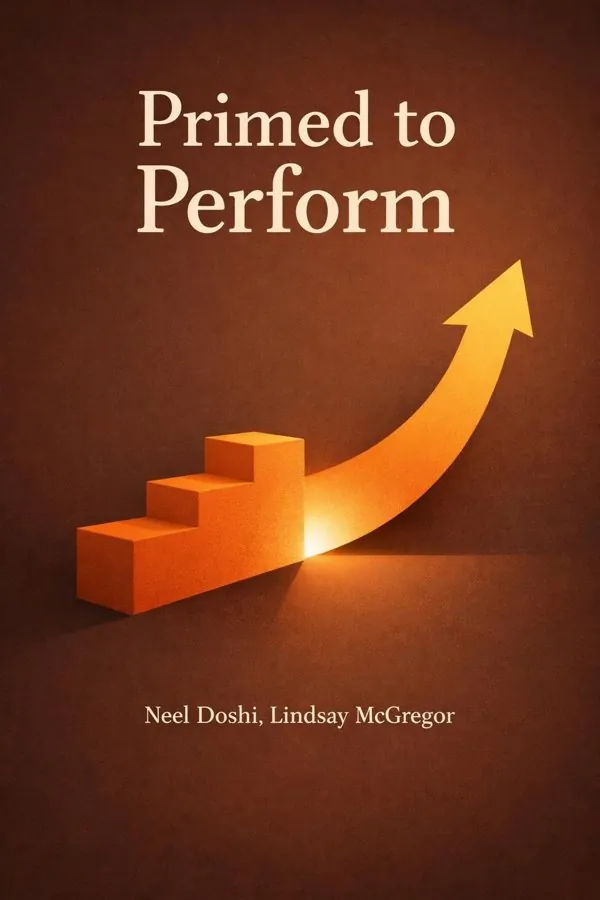
Primed to Perform: How to Build the Highest Performing Cultures Through the Science of Total Motivation: Summary & Key Insights
by Neel Doshi, Lindsay McGregor
 10 min5 chaptersAudio available
What Is Primed to Perform: How to Build the Highest Performing Cultures Through the Science of Total Motivation About?
Primed to Perform: How to Build the Highest Performing Cultures Through the Science of Total Motivation by Neel Doshi, Lindsay McGregor is a leadership book spanning 5 pages. Primed to Perform explores how leaders can build high-performing organizations by understanding and leveraging the science of motivation. The authors introduce the concept of Total Motivation (ToMo), explaining how different types of motivation—play, purpose, and potential—drive performance, while emotional pressure, economic pressure, and inertia hinder it. Drawing on research and case studies, the book provides practical frameworks for creating cultures that inspire people to perform at their best.
This FizzRead summary covers all 5 key chapters of Primed to Perform: How to Build the Highest Performing Cultures Through the Science of Total Motivation in approximately 10 minutes, distilling the most important ideas, arguments, and takeaways from Neel Doshi, Lindsay McGregor's work. Also available as an audio summary and Key Quotes Podcast.
Primed to Perform: How to Build the Highest Performing Cultures Through the Science of Total Motivation
Primed to Perform explores how leaders can build high-performing organizations by understanding and leveraging the science of motivation. The authors introduce the concept of Total Motivation (ToMo), explaining how different types of motivation—play, purpose, and potential—drive performance, while emotional pressure, economic pressure, and inertia hinder it. Drawing on research and case studies, the book provides practical frameworks for creating cultures that inspire people to perform at their best.
Who Should Read Primed to Perform: How to Build the Highest Performing Cultures Through the Science of Total Motivation?
This book is perfect for anyone interested in leadership and looking to gain actionable insights in a short read. Whether you're a student, professional, or lifelong learner, the key ideas from Primed to Perform: How to Build the Highest Performing Cultures Through the Science of Total Motivation by Neel Doshi, Lindsay McGregor will help you think differently.
- ✓Readers who enjoy leadership and want practical takeaways
- ✓Professionals looking to apply new ideas to their work and life
- ✓Anyone who wants the core insights of Primed to Perform: How to Build the Highest Performing Cultures Through the Science of Total Motivation in just 10 minutes
Want the full summary?
Get instant access to this book summary and 100K+ more with Fizz Moment.
Get Free SummaryAvailable on App Store • Free to download
Key Chapters
Throughout our research, we discovered six key motives that influence every human behavior. Three of these—play, purpose, and potential—are what we call direct motives. They energize people from within, causing them to engage deeply and adapt to challenges. The other three—emotional pressure, economic pressure, and inertia—are indirect motives. They push people to act, but often in rigid, reactive ways that undermine long-term performance.
Play is the joy of the work itself. When you discover something new, experiment freely, and enjoy the challenge, you experience play. Purpose arises when your work feels meaningful and connected to a larger impact. Potential reflects the belief that your current effort helps you build capabilities or reach future goals. These three motives create energy, creativity, and resilience—the hallmarks of adaptive performance.
But many workplaces rely instead on the indirect motives. Emotional pressure is the need to avoid disappointment—working to please others or escape guilt. Economic pressure is performing to gain a reward or avoid punishment. Inertia is the dullness of routine—working because you’ve always done so. These can trigger action but drain adaptability. The more organizations lean on indirect motives, the more they sacrifice engagement and innovation.
We found that these six motives exist along a continuum. Cultures heavy on play, purpose, and potential generate enthusiasm and self-driven excellence. Cultures dominated by pressure and inertia create fatigue and narrow thinking. When you understand this continuum, you start to see every decision—every system, incentive, and interaction—as capable of boosting or damaging motivation. That’s where transformation begins.
A crucial insight from our research is that there are two types of performance that govern success: tactical and adaptive. Tactical performance is about following known procedures—doing what you’re told with accuracy and consistency. Adaptive performance, by contrast, is about responding effectively when conditions change, thinking creatively, and solving new problems. Modern organizations, especially in a world driven by innovation and rapid change, cannot rely on tactical performance alone.
ToMo directly shapes both forms of performance, but especially adaptive performance. When people are motivated by play, purpose, and potential, they’re more likely to experiment, learn quickly, and collaborate. When they’re driven by pressure or inertia, they stick to routines, avoid risks, and resist creativity. This distinction explains why companies with high ToMo cultures—like Pixar, Southwest Airlines, and Starbucks—consistently outperform their peers. Their employees don’t just execute; they adapt.
Consider a customer service team. If members are driven by economic pressure (fear of losing bonuses), they’ll stick to scripts. But if they’re motivated by play (solving problems creatively) or purpose (making customers happy), they’ll find innovative ways to delight clients. That’s adaptive performance in action.
Understanding this dynamic helps leaders see that sustainable excellence depends less on control and more on motivation quality. Great cultures elevate ToMo by removing pressure and building meaning into every task. When motivation changes, productivity follows.
+ 3 more chapters — available in the FizzRead app
All Chapters in Primed to Perform: How to Build the Highest Performing Cultures Through the Science of Total Motivation
About the Authors
Neel Doshi and Lindsay McGregor are co-founders of Vega Factor, a company focused on building high-performing cultures. Both have backgrounds in organizational psychology and business strategy, and their work centers on applying motivation science to improve workplace performance and engagement.
Get This Summary in Your Preferred Format
Read or listen to the Primed to Perform: How to Build the Highest Performing Cultures Through the Science of Total Motivation summary by Neel Doshi, Lindsay McGregor anytime, anywhere. FizzRead offers multiple formats so you can learn on your terms — all free.
Available formats: App · Audio · PDF · EPUB — All included free with FizzRead
Download Primed to Perform: How to Build the Highest Performing Cultures Through the Science of Total Motivation PDF and EPUB Summary
Key Quotes from Primed to Perform: How to Build the Highest Performing Cultures Through the Science of Total Motivation
“Throughout our research, we discovered six key motives that influence every human behavior.”
“A crucial insight from our research is that there are two types of performance that govern success: tactical and adaptive.”
Frequently Asked Questions about Primed to Perform: How to Build the Highest Performing Cultures Through the Science of Total Motivation
Primed to Perform: How to Build the Highest Performing Cultures Through the Science of Total Motivation by Neel Doshi, Lindsay McGregor is a leadership book that explores key ideas across 5 chapters. Primed to Perform explores how leaders can build high-performing organizations by understanding and leveraging the science of motivation. The authors introduce the concept of Total Motivation (ToMo), explaining how different types of motivation—play, purpose, and potential—drive performance, while emotional pressure, economic pressure, and inertia hinder it. Drawing on research and case studies, the book provides practical frameworks for creating cultures that inspire people to perform at their best.
You Might Also Like

Extreme Ownership
Jocko Willink
10 min
Dare to Lead
Brene Brown
10 min
Leaders Eat Last
Simon Sinek
10 min
The 21 Irrefutable Laws of Leadership
John Maxwell
10 min
Start With Why
Simon Sinek
10 min
How to Lead When You're Not in Charge
Clay Scroggins
10 minBrowse by Category
Ready to read Primed to Perform: How to Build the Highest Performing Cultures Through the Science of Total Motivation?
Get the full summary and 100K+ more books with Fizz Moment.