
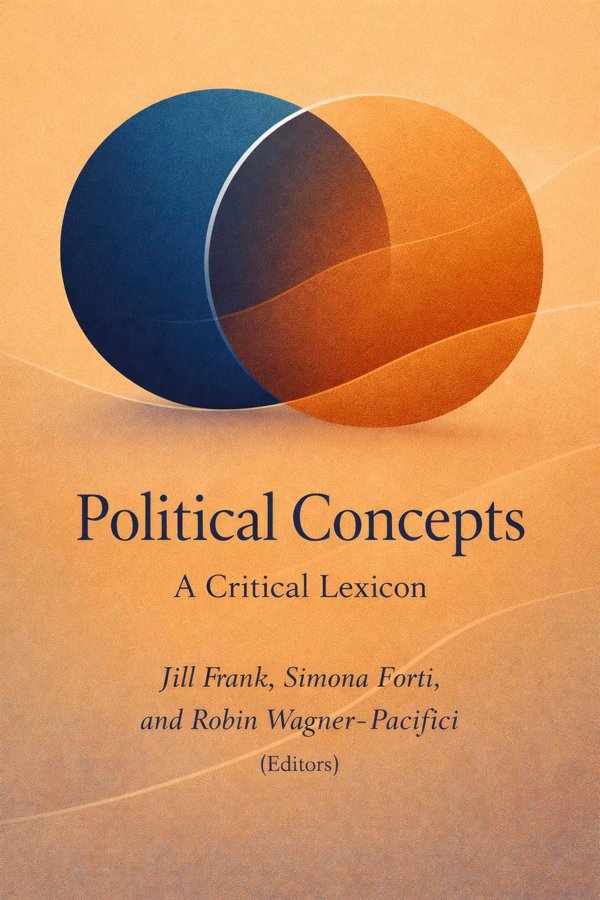
Political Concepts: A Critical Lexicon: Summary & Key Insights
by Jill Frank, Simona Forti, and Robin Wagner-Pacifici (Editors)
 10 min12 chaptersAudio available
What Is Political Concepts: A Critical Lexicon About?
Political Concepts: A Critical Lexicon by Jill Frank, Simona Forti, and Robin Wagner-Pacifici (Editors) is a politics book spanning 12 pages. Political Concepts: A Critical Lexicon is a scholarly collection that reexamines foundational ideas in political theory. Each entry explores a key concept—such as democracy, sovereignty, or freedom—through critical and interdisciplinary perspectives, challenging conventional definitions and proposing new frameworks for understanding political life.
This FizzRead summary covers all 12 key chapters of Political Concepts: A Critical Lexicon in approximately 10 minutes, distilling the most important ideas, arguments, and takeaways from Jill Frank, Simona Forti, and Robin Wagner-Pacifici (Editors)'s work. Also available as an audio summary and Key Quotes Podcast.
Political Concepts: A Critical Lexicon
Political Concepts: A Critical Lexicon is a scholarly collection that reexamines foundational ideas in political theory. Each entry explores a key concept—such as democracy, sovereignty, or freedom—through critical and interdisciplinary perspectives, challenging conventional definitions and proposing new frameworks for understanding political life.
Who Should Read Political Concepts: A Critical Lexicon?
This book is perfect for anyone interested in politics and looking to gain actionable insights in a short read. Whether you're a student, professional, or lifelong learner, the key ideas from Political Concepts: A Critical Lexicon by Jill Frank, Simona Forti, and Robin Wagner-Pacifici (Editors) will help you think differently.
- ✓Readers who enjoy politics and want practical takeaways
- ✓Professionals looking to apply new ideas to their work and life
- ✓Anyone who wants the core insights of Political Concepts: A Critical Lexicon in just 10 minutes
Want the full summary?
Get instant access to this book summary and 100K+ more with Fizz Moment.
Get Free SummaryAvailable on App Store • Free to download
Key Chapters
Every political concept lives a double life. It has a genealogical past—inherited from the thinkers, institutions, and conflicts that shaped it—and a performative present, where it is invoked to act, to authorize, to challenge. In framing this lexicon, we began with the conviction that political language is neither neutral nor static. Concepts do not merely describe the world; they produce it. To engage critically with them is to intervene in politics itself.
Thus, our approach departs from traditional encyclopedic methods. Instead of seeking stable meanings, we explore how concepts move, mutate, and migrate across contexts. Their meanings depend on historical moments: 'sovereignty' in Hobbes’s seventeenth century cannot be the same as 'sovereignty' in the age of supranational governance. Likewise, 'freedom' after the experience of totalitarianism or in the registers of biopolitics carries a different affective weight than it did in classical liberalism. These shifts matter, because they trace the changing contours of political struggle.
To understand concepts as dynamic is also to acknowledge their contestation. Every political act of naming involves inclusion and exclusion. To claim the mantle of 'justice' is to mark the unjust; to name a 'community' is to define its borders. The lexicon therefore becomes a critical site—where words can be wrested from abuse or complacency and reopened to thought. Through this framework, each essay in the volume performs a double gesture: it excavates the sedimented histories of a concept and imagines alternative futures for its use.
What unites the project is not consensus but dialogue. The entries echo one another, forming an intertextual conversation that mirrors political life itself: fractured, plural, yet bound by a shared commitment to reflection. In reclaiming concepts as living, contested entities, we resist the closure of political imagination and reaffirm the centrality of language in constituting political reality.
Democracy’s power resides in its multiplicity. No single genealogy can contain it—from the assembly of citizens in classical Athens to participatory movements that disrupt contemporary liberal institutions. Democracy, we argue, has always exceeded the frameworks built to define or constrain it. In modern discourse it often becomes synonymous with procedural governance: elections, representation, rights. But beneath these institutions pulse alternative visions—democracy as resistance, as equality in action, as the demand for visibility and voice beyond the state’s codified mechanisms.
This entry traces how democracy has been invoked simultaneously as an institutional form and as an emancipatory promise. Its classical roots remind us that demos and kratos—people and power—are in constant tension. The people emerge as both subject and object of political power, agents of decision but also potential victims of exclusion. Modern theory has often tried to stabilize this tension by legal frameworks, yet it reappears whenever marginalized groups claim the right to speak as 'the people' anew.
To think democracy critically today is to confront its paradoxes: the proliferation of democratic rhetoric alongside growing inequality and disenchantment. Globalization, digital media, and populist movements have transformed how collective will is expressed and mediated. Democracy thus demands reinvention—not as a static ideal but as a continuous act of political imagination. Our task, as this lexicon proposes, is not to safeguard democracy’s purity but to sustain its becoming—a restless process of reconstitution in which every claim, every protest, every demand for equality redefines who 'the people' are.
+ 10 more chapters — available in the FizzRead app
All Chapters in Political Concepts: A Critical Lexicon
About the Authors
Jill Frank is a professor of government at Cornell University specializing in ancient political thought. Simona Forti is a professor of political philosophy at the University of Eastern Piedmont, known for her work on biopolitics and ethics. Robin Wagner-Pacifici is a professor of sociology at The New School, focusing on political discourse and events.
Get This Summary in Your Preferred Format
Read or listen to the Political Concepts: A Critical Lexicon summary by Jill Frank, Simona Forti, and Robin Wagner-Pacifici (Editors) anytime, anywhere. FizzRead offers multiple formats so you can learn on your terms — all free.
Available formats: App · Audio · PDF · EPUB — All included free with FizzRead
Download Political Concepts: A Critical Lexicon PDF and EPUB Summary
Key Quotes from Political Concepts: A Critical Lexicon
“Every political concept lives a double life.”
“Democracy’s power resides in its multiplicity.”
Frequently Asked Questions about Political Concepts: A Critical Lexicon
Political Concepts: A Critical Lexicon by Jill Frank, Simona Forti, and Robin Wagner-Pacifici (Editors) is a politics book that explores key ideas across 12 chapters. Political Concepts: A Critical Lexicon is a scholarly collection that reexamines foundational ideas in political theory. Each entry explores a key concept—such as democracy, sovereignty, or freedom—through critical and interdisciplinary perspectives, challenging conventional definitions and proposing new frameworks for understanding political life.
You Might Also Like
Antifa: The Anti-Fascist Handbook
Mark Bray
10 min
Attack from Within: How Disinformation Is Sabotaging America
Barbara McQuade
10 min
Coercion, Capital, and European States, AD 990–1992
Charles Tilly
10 min
Digital Democracy: Concepts, Methodologies, Tools, and Applications
Various Authors
10 min
Fascism
Stanley G. Payne
10 min
Fire And Fury: Inside The Trump White House
Michael Wolff
10 minBrowse by Category
Ready to read Political Concepts: A Critical Lexicon?
Get the full summary and 100K+ more books with Fizz Moment.