
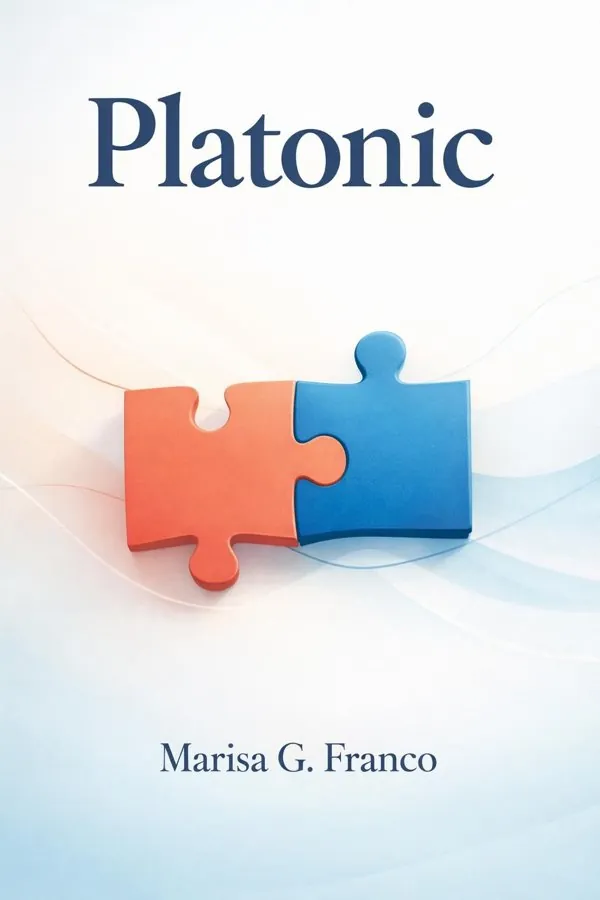
Platonic: How the Science of Attachment Can Help You Make—and Keep—Friends: Summary & Key Insights
 10 min12 chaptersAudio available
What Is Platonic: How the Science of Attachment Can Help You Make—and Keep—Friends About?
Platonic: How the Science of Attachment Can Help You Make—and Keep—Friends by Marisa G. Franco is a psychology book spanning 12 pages. In this insightful and research-based book, psychologist Marisa G. Franco explores the science of attachment and how it shapes our friendships. Drawing on psychological studies and personal stories, Franco explains how understanding our attachment styles can help us form deeper, more fulfilling platonic relationships. The book offers practical advice for making and maintaining friendships in adulthood, emphasizing the importance of vulnerability, consistency, and emotional connection.
This FizzRead summary covers all 12 key chapters of Platonic: How the Science of Attachment Can Help You Make—and Keep—Friends in approximately 10 minutes, distilling the most important ideas, arguments, and takeaways from Marisa G. Franco's work. Also available as an audio summary and Key Quotes Podcast.
Platonic: How the Science of Attachment Can Help You Make—and Keep—Friends
In this insightful and research-based book, psychologist Marisa G. Franco explores the science of attachment and how it shapes our friendships. Drawing on psychological studies and personal stories, Franco explains how understanding our attachment styles can help us form deeper, more fulfilling platonic relationships. The book offers practical advice for making and maintaining friendships in adulthood, emphasizing the importance of vulnerability, consistency, and emotional connection.
Who Should Read Platonic: How the Science of Attachment Can Help You Make—and Keep—Friends?
This book is perfect for anyone interested in psychology and looking to gain actionable insights in a short read. Whether you're a student, professional, or lifelong learner, the key ideas from Platonic: How the Science of Attachment Can Help You Make—and Keep—Friends by Marisa G. Franco will help you think differently.
- ✓Readers who enjoy psychology and want practical takeaways
- ✓Professionals looking to apply new ideas to their work and life
- ✓Anyone who wants the core insights of Platonic: How the Science of Attachment Can Help You Make—and Keep—Friends in just 10 minutes
Want the full summary?
Get instant access to this book summary and 100K+ more with Fizz Moment.
Get Free SummaryAvailable on App Store • Free to download
Key Chapters
Attachment theory was originally conceived to explain how infants bond with caregivers, but its wisdom ripples through every relationship in our adult lives. In *Platonic*, I reinterpret this science for the domain of friendship. I ask readers to see their patterns not as fixed identities but as learned responses that can evolve.
The securely attached person generally feels safe initiating and maintaining friendships. When conflict arises, they trust that repair is possible. The anxiously attached friend, meanwhile, may crave closeness yet fear abandonment, reading small silences as signs of rejection. The avoidantly attached person prizes independence and may minimize their need for others, keeping emotional distance even when craving deeper bonds. These styles, while rooted in early life, are not prisons—they are blueprints we can revise with awareness and skill.
Through real-life examples and psychological evidence, I show how becoming conscious of your attachment style allows you to transform how you relate. The secure attachment mindset can be practiced even if it wasn’t modeled for you. It begins with consistency, empathy, and a willingness to stay when discomfort arises. When we interact from a secure base, we signal safety; in turn, our friends feel safe enough to be genuine. Recognizing how attachment patterns operate within friendship gives us language for what previously felt mysterious. It empowers us to build relationships that soothe rather than trigger.
Belonging isn’t merely a social luxury; it is an emotional necessity. In my research, I’ve found that loneliness activates the same regions of the brain as physical pain. When we feel excluded, our identity trembles. *Platonic* confronts this truth directly: our longing for connection is not weakness—it is biology.
Belonging occurs when we experience resonance with others—when they recognize us as we wish to be recognized. Friendships form the microcosm where this belonging is sustained day after day. Yet many people misunderstand belonging as fitting in. Fitting in is conditional; belonging is unconditional. It emerges when you show up as yourself and are accepted.
When we stop minimizing our need for others, we begin to heal the subtle shame culture imposes around friendship. Modern life often frames adulthood as self-sufficiency, but independence without connection breeds isolation. I share studies illustrating how social ties buffer against depression, improve immune function, and extend longevity. Friendship is not frivolous; it’s a form of self-care that supports mental health at its core.
In rebuilding belonging, we learn to approach people not from fear but from curiosity. Every genuine act of attention—remembering a friend’s story, sending a message just to check in—reinforces the neural pathways of connection. Over time, these small acts make belonging not an abstract concept but a lived, daily experience.
+ 10 more chapters — available in the FizzRead app
All Chapters in Platonic: How the Science of Attachment Can Help You Make—and Keep—Friends
About the Author
Marisa G. Franco, Ph.D., is a psychologist, speaker, and friendship expert. She has taught at the University of Maryland and contributes to major publications such as The New York Times and Psychology Today. Her work focuses on the psychology of connection, belonging, and friendship.
Get This Summary in Your Preferred Format
Read or listen to the Platonic: How the Science of Attachment Can Help You Make—and Keep—Friends summary by Marisa G. Franco anytime, anywhere. FizzRead offers multiple formats so you can learn on your terms — all free.
Available formats: App · Audio · PDF · EPUB — All included free with FizzRead
Download Platonic: How the Science of Attachment Can Help You Make—and Keep—Friends PDF and EPUB Summary
Key Quotes from Platonic: How the Science of Attachment Can Help You Make—and Keep—Friends
“Attachment theory was originally conceived to explain how infants bond with caregivers, but its wisdom ripples through every relationship in our adult lives.”
“Belonging isn’t merely a social luxury; it is an emotional necessity.”
Frequently Asked Questions about Platonic: How the Science of Attachment Can Help You Make—and Keep—Friends
Platonic: How the Science of Attachment Can Help You Make—and Keep—Friends by Marisa G. Franco is a psychology book that explores key ideas across 12 chapters. In this insightful and research-based book, psychologist Marisa G. Franco explores the science of attachment and how it shapes our friendships. Drawing on psychological studies and personal stories, Franco explains how understanding our attachment styles can help us form deeper, more fulfilling platonic relationships. The book offers practical advice for making and maintaining friendships in adulthood, emphasizing the importance of vulnerability, consistency, and emotional connection.
You Might Also Like
The Body Keeps the Score
Bessel van der Kolk
10 min
Surrounded by Idiots
Thomas Erikson
10 min
Emotional Intelligence
Daniel Goleman
10 min
Attached
Amir Levine
10 min
Why Does He Do That
Lundy Bancroft
10 min
Women Who Run with the Wolves
Clarissa Pinkola Estés
10 minBrowse by Category
Ready to read Platonic: How the Science of Attachment Can Help You Make—and Keep—Friends?
Get the full summary and 100K+ more books with Fizz Moment.