
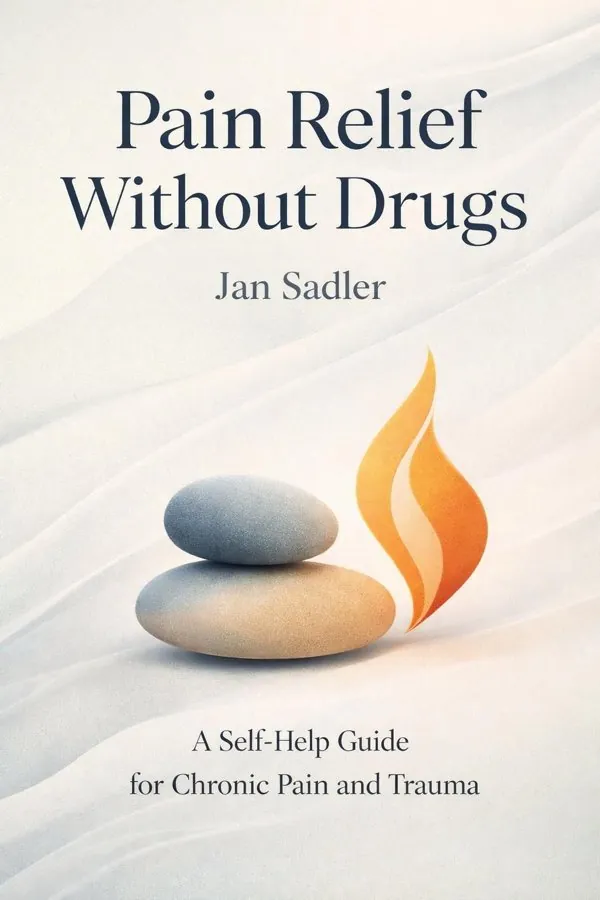
Pain Relief Without Drugs: A Self-Help Guide for Chronic Pain and Trauma: Summary & Key Insights
by Jan Sadler
 10 min9 chaptersAudio available
Key Takeaways from Pain Relief Without Drugs: A Self-Help Guide for Chronic Pain and Trauma
Pain is never just about injured tissue.
The body remembers what the mind may struggle to explain.
Many people in pain try to push through discomfort, but the body often heals better when it feels safe enough to soften.
Pain becomes harder to bear when it is mixed with resistance, fear, and constant mental commentary.
What we tell ourselves about pain can either calm the nervous system or inflame it.
What Is Pain Relief Without Drugs: A Self-Help Guide for Chronic Pain and Trauma About?
Pain Relief Without Drugs: A Self-Help Guide for Chronic Pain and Trauma by Jan Sadler is a health_med book spanning 8 pages. Chronic pain can make life feel small. It drains energy, disrupts sleep, fuels anxiety, and often leaves people trapped in a cycle of symptoms, fear, and frustration. In Pain Relief Without Drugs, Jan Sadler offers a practical alternative to the idea that pain can only be managed through medication. Her message is not that pain is imaginary or that medical care is unnecessary, but that the nervous system, emotions, habits, and beliefs all influence how pain is experienced—and that this means sufferers have more tools available than they may realize. Drawing on her work in pain support and self-help education, Sadler explains how stress, trauma, muscle tension, poor sleep, and negative thought patterns can intensify pain. She then introduces simple, usable techniques such as relaxation, mindfulness, pacing, gentle movement, and cognitive reframing to reduce that intensity and restore a sense of control. The strength of the book lies in its compassionate, nontechnical approach. It speaks directly to people who are tired of feeling helpless and want realistic, drug-free strategies they can use every day. For anyone living with chronic pain, trauma-related symptoms, or stress-driven physical suffering, this book offers hope grounded in practical action.
This FizzRead summary covers all 9 key chapters of Pain Relief Without Drugs: A Self-Help Guide for Chronic Pain and Trauma in approximately 10 minutes, distilling the most important ideas, arguments, and takeaways from Jan Sadler's work. Also available as an audio summary and Key Quotes Podcast.
Pain Relief Without Drugs: A Self-Help Guide for Chronic Pain and Trauma
Chronic pain can make life feel small. It drains energy, disrupts sleep, fuels anxiety, and often leaves people trapped in a cycle of symptoms, fear, and frustration. In Pain Relief Without Drugs, Jan Sadler offers a practical alternative to the idea that pain can only be managed through medication. Her message is not that pain is imaginary or that medical care is unnecessary, but that the nervous system, emotions, habits, and beliefs all influence how pain is experienced—and that this means sufferers have more tools available than they may realize.
Drawing on her work in pain support and self-help education, Sadler explains how stress, trauma, muscle tension, poor sleep, and negative thought patterns can intensify pain. She then introduces simple, usable techniques such as relaxation, mindfulness, pacing, gentle movement, and cognitive reframing to reduce that intensity and restore a sense of control. The strength of the book lies in its compassionate, nontechnical approach. It speaks directly to people who are tired of feeling helpless and want realistic, drug-free strategies they can use every day. For anyone living with chronic pain, trauma-related symptoms, or stress-driven physical suffering, this book offers hope grounded in practical action.
Who Should Read Pain Relief Without Drugs: A Self-Help Guide for Chronic Pain and Trauma?
This book is perfect for anyone interested in health_med and looking to gain actionable insights in a short read. Whether you're a student, professional, or lifelong learner, the key ideas from Pain Relief Without Drugs: A Self-Help Guide for Chronic Pain and Trauma by Jan Sadler will help you think differently.
- ✓Readers who enjoy health_med and want practical takeaways
- ✓Professionals looking to apply new ideas to their work and life
- ✓Anyone who wants the core insights of Pain Relief Without Drugs: A Self-Help Guide for Chronic Pain and Trauma in just 10 minutes
Want the full summary?
Get instant access to this book summary and 100K+ more with Fizz Moment.
Get Free SummaryAvailable on App Store • Free to download
Key Chapters
Pain is never just about injured tissue. One of the book’s central insights is that pain is shaped by the entire person: the nervous system, emotions, memory, attention, and environment. This does not mean the pain is “all in your head.” It means that the brain and body continuously interpret signals, and that interpretation affects intensity, duration, and suffering.
Sadler helps readers understand that two people can have similar physical conditions but very different pain experiences. Why? Stress levels, fear, sleep quality, prior trauma, and beliefs about pain all influence the nervous system’s sensitivity. When the body remains on alert, normal sensations can feel threatening, muscles may tighten, breathing can become shallow, and pain signals may be amplified. That is why chronic pain often continues even after the original injury has healed or when no clear structural explanation is found.
This perspective can be liberating. If pain involves the whole system, then relief can come from multiple directions—not only from medicine or procedures, but also from calming the body, shifting attention, improving sleep, and changing how one responds to symptoms. For example, someone with back pain may notice flare-ups are worse after conflict, poor sleep, or rushing through the day. Another person with migraines may see that tension, overstimulation, and worry often build before the pain does.
Instead of asking only, “What is wrong with my body?” Sadler encourages readers to ask, “What is happening in my whole system right now?” That broader question opens the door to self-help.
Actionable takeaway: Begin a daily pain log that tracks symptoms alongside stress, sleep, mood, movement, and major events so you can identify what amplifies or eases your pain.
The body remembers what the mind may struggle to explain. Sadler emphasizes that stress and unresolved trauma do not merely accompany chronic pain; they often intensify it. When the nervous system senses danger—whether from external pressure, emotional overload, or trauma reminders—it activates the fight-or-flight response. Stress hormones rise, muscles tighten, the heart rate speeds up, and the body prepares to protect itself. If that state becomes frequent or chronic, pain can become louder and more persistent.
This helps explain why people with long-term pain often report worsening symptoms during emotional strain, grief, overwork, or after being startled or overwhelmed. Trauma can leave the nervous system hypervigilant, scanning constantly for threat. In such a state, even minor discomfort may be experienced as severe. The body is not malfunctioning; it is overprotecting.
Sadler’s approach is compassionate because it removes blame. Readers are not weak, dramatic, or failing. Their systems may simply be stuck in survival mode. Recognizing this allows a shift from self-criticism to self-regulation. Practical methods include noticing when the body is braced, learning to relax the jaw and shoulders, slowing exhalation, creating routines that signal safety, and seeking trauma-informed support when needed.
For example, someone with fibromyalgia may find symptoms flare after family conflict. A person with pelvic pain may notice symptoms spike during periods of fear or emotional suppression. These patterns are not coincidences; they are clues.
Actionable takeaway: When pain increases, pause and ask, “What stress, emotion, or trigger is my body reacting to right now?” Then spend five minutes on slow breathing or a grounding exercise before doing anything else.
Many people in pain try to push through discomfort, but the body often heals better when it feels safe enough to soften. Sadler presents relaxation not as a luxury, but as a core pain-management tool. Chronic pain commonly keeps muscles guarded and the nervous system activated. Relaxation techniques interrupt that pattern by lowering arousal, reducing muscular tension, and making pain feel less overwhelming.
The methods she recommends are simple and accessible: progressive muscle relaxation, slow breathing, guided imagery, and body scanning. These practices teach readers to notice tension they may have stopped recognizing—tight shoulders, clenched hands, a rigid stomach, a locked jaw. Once awareness increases, releasing tension becomes possible.
A powerful aspect of relaxation is repetition. The goal is not to eliminate pain in one perfect session, but to train the body to return more easily to a calmer baseline. A few minutes done regularly can be more effective than occasional long sessions. Someone with neck pain might practice relaxing the shoulders and breathing into the abdomen three times a day. A person with arthritis may use guided imagery before sleep to reduce both discomfort and anxiety. During a flare-up, simply lengthening the out-breath can lessen panic and prevent the spiral that often makes symptoms worse.
Sadler also highlights that relaxation is a skill. At first, some people feel restless or frustrated. That is normal. The nervous system may not be used to slowing down. With practice, however, relaxation becomes more natural and more beneficial.
Actionable takeaway: Choose one relaxation practice—such as five minutes of progressive muscle relaxation or slow 4-6 breathing—and do it at the same time every day for two weeks.
Pain becomes harder to bear when it is mixed with resistance, fear, and constant mental commentary. Sadler shows how mindfulness can soften that struggle. Mindfulness does not ask people to enjoy pain or deny suffering. Instead, it teaches them to observe sensations, thoughts, and emotions without immediately tensing against them.
This matters because much of chronic pain is intensified by anticipation and alarm. A small sensation appears, and the mind instantly says, “Here it comes again. This will ruin my day.” The body reacts with more tension and stress, which can heighten the pain itself. Mindfulness creates a pause in that chain reaction. It helps people notice, “There is burning in my shoulder,” rather than, “This is unbearable and will never stop.”
Sadler’s approach is practical rather than mystical. Mindfulness may begin with paying attention to the breath, noticing contact with the chair, or observing sensations with curiosity. People can also practice mindful walking, mindful eating, or a brief check-in during stressful moments. Over time, this reduces reactivity and helps distinguish between the physical sensation and the emotional suffering wrapped around it.
For example, someone with chronic headaches might learn to notice early pressure without panicking, then respond with hydration, rest, reduced stimulation, and calm breathing. A person with trauma-related body pain may use grounding to stay in the present instead of being pulled into fearful memories.
Mindfulness does not always reduce pain immediately, but it often reduces the secondary suffering that makes pain consume the entire day.
Actionable takeaway: Spend three minutes daily observing your breath and bodily sensations without trying to change them. When pain appears, label it gently—“tightness,” “heat,” “aching”—rather than reacting with catastrophic thoughts.
What we tell ourselves about pain can either calm the nervous system or inflame it. Sadler explores how thoughts such as “I’ll never cope,” “This is getting worse,” or “My life is over” increase fear, hopelessness, and bodily tension. These thought patterns are understandable, especially after months or years of suffering, but they can become part of the pain cycle.
This is where cognitive change becomes useful. Sadler does not suggest unrealistic positivity or pretending everything is fine. Instead, she encourages balanced thinking. A more helpful response might be, “This flare is hard, but I’ve managed flare-ups before,” or “My pain is real, and I have tools that may help.” Such thoughts reduce panic and support better choices.
Catastrophizing is especially important to address. When the mind jumps to worst-case outcomes, the body often reacts as though immediate danger is present. The result can be more muscle tension, shallow breathing, sleep disruption, and increased pain sensitivity. By questioning automatic thoughts, readers gain more emotional stability.
Practical strategies include writing down distressing thoughts, asking whether they are fully true, and replacing them with something more accurate and compassionate. For example, a person who misses one walk due to pain may think, “I’m going backwards.” A more grounded thought is, “Today is difficult. Resting today may help me restart tomorrow.”
Changing thoughts takes practice because the mind often defaults to fear under stress. But even small shifts in language can influence the body’s stress response and improve resilience.
Actionable takeaway: Notice one recurring negative thought about your pain this week and rewrite it into a calmer, more balanced statement you can repeat during flare-ups.
One of the cruelest features of chronic pain is that it disrupts the very things that help relieve it: rest, sleep, and movement. Sadler explains that these three are deeply connected. Poor sleep lowers pain tolerance. Too little rest increases exhaustion and irritability. Too little movement leads to stiffness, weakness, and more discomfort. The challenge is to find a sustainable balance rather than swinging between overactivity and collapse.
Rest is not the same as giving up. It means allowing the body recovery time before it becomes overwhelmed. Sleep support may include a calming evening routine, reducing stimulation before bed, practicing relaxation, and limiting habits that keep the mind alert. While pain may still interrupt sleep, a more regular rhythm can improve energy and resilience.
Movement is equally important, but Sadler favors gentle, realistic activity over aggressive exercise plans. Stretching, walking, swimming, or simple mobility work can improve circulation, reduce stiffness, and rebuild confidence. For many people, pain leads to fear of movement, and fear creates more guarding. Gentle activity helps prove to the nervous system that movement is possible and not always dangerous.
A person with chronic fatigue and pain may benefit from short walks rather than intense workouts. Someone with joint pain may alternate light activity with scheduled rest instead of waiting until complete exhaustion. The goal is consistency, not perfection.
Sadler’s message is humane: listen to the body, but do not let fear make life smaller than necessary.
Actionable takeaway: Create a basic daily rhythm with one sleep-support habit, one planned rest break, and one form of gentle movement you can maintain even on lower-energy days.
Doing too much on a good day can create three bad days after it. Sadler addresses a common pattern among people with chronic pain: the boom-bust cycle. When pain temporarily eases, many rush to catch up on chores, work, errands, and social obligations. But overexertion often triggers a flare-up, leading to forced rest, frustration, and guilt. Then, once symptoms settle, the pattern repeats.
Pacing is the skill of using energy more wisely. It means breaking tasks into smaller parts, taking planned pauses, and stopping before the body is completely depleted. This can feel unnatural, especially for people who are driven, caregiving, or used to measuring worth by productivity. Yet pacing often leads to more total function over time because it reduces severe crashes.
Sadler encourages readers to think in terms of consistency rather than intensity. Instead of cleaning the whole house in one burst, clean one room and rest. Instead of exercising hard twice a week and being immobilized afterward, walk gently for ten minutes each day. Instead of saying yes to everything on a good day, leave space in the schedule for recovery.
Pacing also includes emotional pacing. Stressful conversations, overstimulating environments, and nonstop responsibilities can drain energy as much as physical tasks. Planning with awareness can reduce flare-ups.
This idea is empowering because it shifts focus from reacting to pain after the fact to preventing unnecessary escalation before it happens.
Actionable takeaway: Pick one activity that regularly triggers a flare-up and experiment with doing only 70 percent of what you think you can manage, with a short break built in before symptoms intensify.
Pain does not happen in isolation, and neither does healing. Sadler broadens the conversation beyond symptoms to include daily lifestyle habits and social environment. Food, routine, stress load, relationships, and the presence or absence of support all affect how manageable pain feels.
A chaotic lifestyle can keep the nervous system in a constant state of pressure. Skipped meals, overwork, overstimulation, and lack of boundaries make it harder for the body to regulate. In contrast, regular habits—steady mealtimes, hydration, fresh air, time to unwind, and manageable commitments—create a more stable foundation. Sadler is not prescribing perfection. She is showing that small lifestyle changes can reduce strain on an already burdened system.
Support networks are equally important. Chronic pain can be isolating, particularly when others do not understand invisible symptoms. Feeling dismissed or disbelieved can increase stress and emotional pain. Supportive friends, family, therapists, groups, or online communities can provide practical help and a sense of being seen. Even one validating relationship can reduce the loneliness that often worsens suffering.
Sadler also acknowledges the importance of communicating needs clearly. Instead of waiting until collapse, people may need to ask for help with transport, childcare, chores, or simply understanding. Recovery is not only an individual task; it is often a relational one.
The broader lesson is that pain management is easier when life itself becomes less punishing.
Actionable takeaway: Identify one lifestyle pressure you can reduce this week and one person or group you can reach out to for understanding, encouragement, or practical support.
There is no single technique that works for everyone, because chronic pain is personal, layered, and constantly changing. Sadler’s final and most practical contribution is the idea of creating an individualized self-help plan. Instead of searching for one miracle cure, readers are encouraged to combine several manageable strategies into a routine that suits their body, schedule, and triggers.
A good self-help plan begins with observation. What makes pain worse? What helps even slightly? When are energy levels highest? Which techniques feel calming rather than frustrating? From there, readers can create a toolkit: perhaps morning stretching, a midday breathing exercise, pacing household tasks, an evening wind-down routine, and a list of flare-up responses. The plan should be simple enough to use under stress, because complicated systems often collapse when pain peaks.
Sadler also implies that self-help is a process of adjustment. What works during one season may need changing later. Someone recovering from trauma may first focus on grounding and safety, then later add gentle movement. A person with severe fatigue may begin with micro-practices of rest and breath before taking on longer meditations or walks.
The real goal is not perfection, but agency. Chronic pain often makes people feel powerless. A personal plan restores a sense of participation in one’s own care. It helps turn scattered ideas into repeatable habits and gives structure during uncertain days.
Actionable takeaway: Write a one-page pain-relief plan with three daily practices, three common triggers, and three steps you will use during flare-ups so you are not forced to decide in the middle of distress.
All Chapters in Pain Relief Without Drugs: A Self-Help Guide for Chronic Pain and Trauma
About the Author
Jan Sadler is a British author, speaker, and pain management specialist known for her work in non-drug approaches to chronic pain and stress reduction. She is closely associated with PainSupport, a resource created to help people better understand and cope with persistent pain conditions. Sadler’s writing focuses on the relationship between pain, emotional health, nervous system regulation, and everyday self-care. Rather than relying on technical jargon, she is known for presenting complex ideas in a clear, supportive, and practical way. Her books and educational work aim to empower readers with tools such as relaxation, mindfulness, pacing, and cognitive strategies that complement medical treatment. She has become a trusted voice for readers seeking compassionate, accessible guidance on living better with long-term pain.
Get This Summary in Your Preferred Format
Read or listen to the Pain Relief Without Drugs: A Self-Help Guide for Chronic Pain and Trauma summary by Jan Sadler anytime, anywhere. FizzRead offers multiple formats so you can learn on your terms — all free.
Available formats: App · Audio · PDF · EPUB — All included free with FizzRead
Download Pain Relief Without Drugs: A Self-Help Guide for Chronic Pain and Trauma PDF and EPUB Summary
Key Quotes from Pain Relief Without Drugs: A Self-Help Guide for Chronic Pain and Trauma
“Pain is never just about injured tissue.”
“The body remembers what the mind may struggle to explain.”
“Many people in pain try to push through discomfort, but the body often heals better when it feels safe enough to soften.”
“Pain becomes harder to bear when it is mixed with resistance, fear, and constant mental commentary.”
“What we tell ourselves about pain can either calm the nervous system or inflame it.”
Frequently Asked Questions about Pain Relief Without Drugs: A Self-Help Guide for Chronic Pain and Trauma
Pain Relief Without Drugs: A Self-Help Guide for Chronic Pain and Trauma by Jan Sadler is a health_med book that explores key ideas across 9 chapters. Chronic pain can make life feel small. It drains energy, disrupts sleep, fuels anxiety, and often leaves people trapped in a cycle of symptoms, fear, and frustration. In Pain Relief Without Drugs, Jan Sadler offers a practical alternative to the idea that pain can only be managed through medication. Her message is not that pain is imaginary or that medical care is unnecessary, but that the nervous system, emotions, habits, and beliefs all influence how pain is experienced—and that this means sufferers have more tools available than they may realize. Drawing on her work in pain support and self-help education, Sadler explains how stress, trauma, muscle tension, poor sleep, and negative thought patterns can intensify pain. She then introduces simple, usable techniques such as relaxation, mindfulness, pacing, gentle movement, and cognitive reframing to reduce that intensity and restore a sense of control. The strength of the book lies in its compassionate, nontechnical approach. It speaks directly to people who are tired of feeling helpless and want realistic, drug-free strategies they can use every day. For anyone living with chronic pain, trauma-related symptoms, or stress-driven physical suffering, this book offers hope grounded in practical action.
You Might Also Like
On Immunity
Eula Biss
10 min
The Three-Body Problem
Liu Cixin
10 min
Community Health Volunteer Toolkit: Training and Practical Activities
World Health Organization
10 min
Healing Back Pain: The Mind-Body Connection
John E. Sarno
10 min
Health Literacy for All: Practical Guides to Communicate Health Information (Compilations)
World Health Organization
10 min
The Complete Guide to Sports Supplements: An Evidence-Based Review
Anita Bean
10 minBrowse by Category
Ready to read Pain Relief Without Drugs: A Self-Help Guide for Chronic Pain and Trauma?
Get the full summary and 100K+ more books with Fizz Moment.