
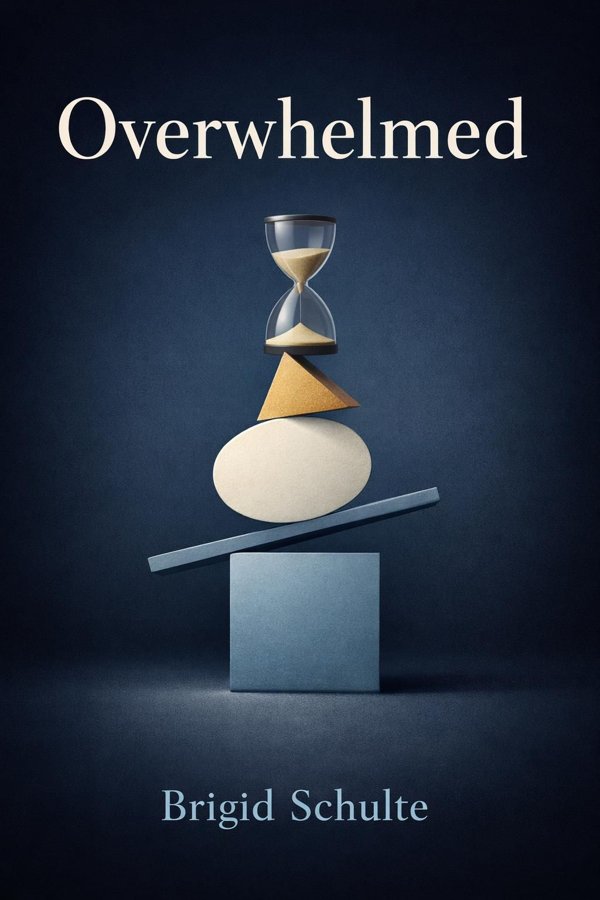
Overwhelmed: Work, Love, and Play When No One Has the Time: Summary & Key Insights
 10 min10 chaptersAudio available
What Is Overwhelmed: Work, Love, and Play When No One Has the Time About?
Overwhelmed: Work, Love, and Play When No One Has the Time by Brigid Schulte is a sociology book spanning 10 pages. In Overwhelmed, journalist Brigid Schulte explores the modern epidemic of busyness and time pressure, investigating how work, family, and leisure have become increasingly difficult to balance. Drawing on research in sociology, psychology, and neuroscience, Schulte examines cultural expectations and gender roles that contribute to the feeling of being constantly behind, and offers insights into how individuals and societies can reclaim time for meaningful living.
This FizzRead summary covers all 10 key chapters of Overwhelmed: Work, Love, and Play When No One Has the Time in approximately 10 minutes, distilling the most important ideas, arguments, and takeaways from Brigid Schulte's work. Also available as an audio summary and Key Quotes Podcast.
Overwhelmed: Work, Love, and Play When No One Has the Time
In Overwhelmed, journalist Brigid Schulte explores the modern epidemic of busyness and time pressure, investigating how work, family, and leisure have become increasingly difficult to balance. Drawing on research in sociology, psychology, and neuroscience, Schulte examines cultural expectations and gender roles that contribute to the feeling of being constantly behind, and offers insights into how individuals and societies can reclaim time for meaningful living.
Who Should Read Overwhelmed: Work, Love, and Play When No One Has the Time?
This book is perfect for anyone interested in sociology and looking to gain actionable insights in a short read. Whether you're a student, professional, or lifelong learner, the key ideas from Overwhelmed: Work, Love, and Play When No One Has the Time by Brigid Schulte will help you think differently.
- ✓Readers who enjoy sociology and want practical takeaways
- ✓Professionals looking to apply new ideas to their work and life
- ✓Anyone who wants the core insights of Overwhelmed: Work, Love, and Play When No One Has the Time in just 10 minutes
Want the full summary?
Get instant access to this book summary and 100K+ more with Fizz Moment.
Get Free SummaryAvailable on App Store • Free to download
Key Chapters
When sociologist Arlie Hochschild coined the phrase 'the time bind,' she described the paradox of modern life where work feels like home and home feels like work. That paradox is the world we inhabit. In talking to hundreds of working mothers and fathers, I found the same pattern: people feel pulled in every direction, leaving no part of life untouched by exhaustion. Our calendars are full, yet our hearts feel empty.
I explore how the culture of busyness became a badge of honor in the United States. The 'ideal worker'—a person always available, always productive, and never distracted by family or play—has come to define commitment and success. This ideal punishes those who cannot conform, especially caregivers. When I interviewed women in demanding professions, they spoke of guilt and self-doubt, of having to prove themselves twice over. Even leisure became something to schedule, manage, and feel guilty about.
Through this lens, time itself becomes gendered. Women are expected to stretch themselves thin between work and home, carrying invisible labor that never ends. Men, too, are trapped by the expectation that devotion to work defines masculinity. The result is a collective feeling of scarcity—a perception that there is never enough time.
I share how this time bind leads to fragmented attention, chronic stress, and even health consequences. Yet, as I discovered, it is not just personal failure but systemic design: the very structure of our workplaces, school schedules, and cultural ideals conspires against genuine balance. The question then becomes: what might it look like if the culture valued time for care and connection as much as productivity?
In the course of my research, I realized how deeply the 'ideal mother' myth shapes women’s lives. From the outside, she is supposed to thrive at work, nurture her children flawlessly, maintain her home, and keep herself perfectly composed. Beneath that surface lies the exhaustion of trying to be everything at once. This impossible ideal emerged from decades of cultural conditioning—from postwar domestic ideals to modern media spectacles of 'having it all.'
In my own life, I felt the burden of these expectations acutely. Every choice—working late or missing a school event—came with guilt attached. The myth of maternal perfection isolates women instead of empowering them, turning every unwashed dish into a moral failure. Yet research shows that children thrive not from perpetual parental presence but from the quality of connection they experience.
The women I met struggling with this ideal echoed the same refrain: they felt they were never enough. The book dives into how gender norms and social policies reinforce this narrative. In countries with better parental leave and flexible work, mothers report less guilt and greater satisfaction. But in the United States, with its minimal safety nets, each individual woman is left to fix a systemic problem on her own.
Breaking this myth demands courage—the courage to redefine what 'good' looks like. It is about shifting focus from perfection to presence, from doing it all to doing what matters. In sharing these stories, I wanted to invite every parent, especially mothers, to step back from the performance and recognize their worth beyond endless productivity.
+ 8 more chapters — available in the FizzRead app
All Chapters in Overwhelmed: Work, Love, and Play When No One Has the Time
About the Author
Brigid Schulte is an American journalist and author known for her work on work-life balance and time use. She has written for The Washington Post and directs The Better Life Lab at New America, focusing on issues of gender equality, work, and family.
Get This Summary in Your Preferred Format
Read or listen to the Overwhelmed: Work, Love, and Play When No One Has the Time summary by Brigid Schulte anytime, anywhere. FizzRead offers multiple formats so you can learn on your terms — all free.
Available formats: App · Audio · PDF · EPUB — All included free with FizzRead
Download Overwhelmed: Work, Love, and Play When No One Has the Time PDF and EPUB Summary
Key Quotes from Overwhelmed: Work, Love, and Play When No One Has the Time
“When sociologist Arlie Hochschild coined the phrase 'the time bind,' she described the paradox of modern life where work feels like home and home feels like work.”
“In the course of my research, I realized how deeply the 'ideal mother' myth shapes women’s lives.”
Frequently Asked Questions about Overwhelmed: Work, Love, and Play When No One Has the Time
Overwhelmed: Work, Love, and Play When No One Has the Time by Brigid Schulte is a sociology book that explores key ideas across 10 chapters. In Overwhelmed, journalist Brigid Schulte explores the modern epidemic of busyness and time pressure, investigating how work, family, and leisure have become increasingly difficult to balance. Drawing on research in sociology, psychology, and neuroscience, Schulte examines cultural expectations and gender roles that contribute to the feeling of being constantly behind, and offers insights into how individuals and societies can reclaim time for meaningful living.
You Might Also Like

Between the World and Me
Ta-Nehisi Coates
10 min
Half the Sky
Nicholas D. Kristof, Sheryl WuDunn
10 min
Men Explain Things To Me
Rebecca Solnit
10 min
Rational Ritual
Michael Suk-Young Chwe
10 min
The New Jim Crow
Michelle Alexander
10 min
Beyond Culture
Edward T. Hall
10 minBrowse by Category
Ready to read Overwhelmed: Work, Love, and Play When No One Has the Time?
Get the full summary and 100K+ more books with Fizz Moment.