
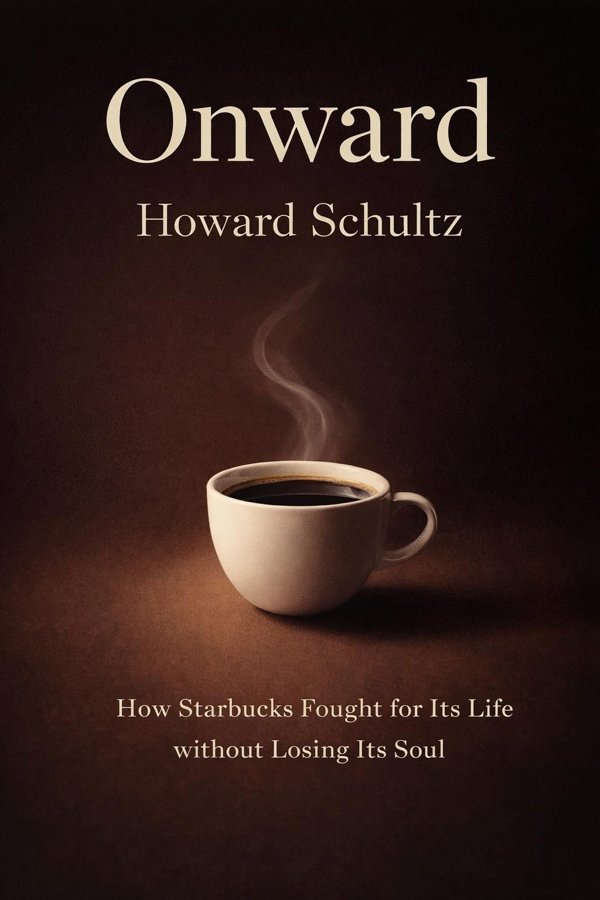
Onward: How Starbucks Fought for Its Life without Losing Its Soul: Summary & Key Insights
 10 min5 chaptersAudio available
What Is Onward: How Starbucks Fought for Its Life without Losing Its Soul About?
Onward: How Starbucks Fought for Its Life without Losing Its Soul by Howard Schultz is a leadership book spanning 5 pages. In this memoir and business leadership book, Howard Schultz, CEO of Starbucks, recounts the company’s dramatic turnaround during the 2008 financial crisis. He shares insights into values-driven leadership, corporate culture, and the importance of staying true to a brand’s mission while navigating adversity.
This FizzRead summary covers all 5 key chapters of Onward: How Starbucks Fought for Its Life without Losing Its Soul in approximately 10 minutes, distilling the most important ideas, arguments, and takeaways from Howard Schultz's work. Also available as an audio summary and Key Quotes Podcast.
Onward: How Starbucks Fought for Its Life without Losing Its Soul
In this memoir and business leadership book, Howard Schultz, CEO of Starbucks, recounts the company’s dramatic turnaround during the 2008 financial crisis. He shares insights into values-driven leadership, corporate culture, and the importance of staying true to a brand’s mission while navigating adversity.
Who Should Read Onward: How Starbucks Fought for Its Life without Losing Its Soul?
This book is perfect for anyone interested in leadership and looking to gain actionable insights in a short read. Whether you're a student, professional, or lifelong learner, the key ideas from Onward: How Starbucks Fought for Its Life without Losing Its Soul by Howard Schultz will help you think differently.
- ✓Readers who enjoy leadership and want practical takeaways
- ✓Professionals looking to apply new ideas to their work and life
- ✓Anyone who wants the core insights of Onward: How Starbucks Fought for Its Life without Losing Its Soul in just 10 minutes
Want the full summary?
Get instant access to this book summary and 100K+ more with Fizz Moment.
Get Free SummaryAvailable on App Store • Free to download
Key Chapters
It had been more than eight years since I stepped down as CEO, confident that Starbucks’ culture would continue to thrive on its own. But by 2007, I saw something I could no longer ignore. The Starbucks experience—once intimate, sensory, almost sacred—was fading. Customers were no longer greeted by the comforting smell of coffee beans roasted in-house. Automatic espresso machines had replaced the old ones, silencing the rhythmic hiss of milk steaming and the artistry of a handcrafted drink. Our baristas, once proud artisans, had been reduced to assembly-line workers. And while we had stores in nearly every corner of the globe, our own heart seemed to be missing.
I had always believed that growth and values could coexist. But rapid expansion had blinded us to a painful truth: in chasing size, we had started to compromise essence. Growth had become a seductive measure of success, and our decisions reflected fear—the fear of missing opportunities, of disappointing shareholders. Yet true leadership sometimes requires standing still in a race that has lost its meaning.
When I returned as CEO in January 2008, the mood was bleak. Comps were down, morale was sinking, and the word 'Starbucks' was no longer synonymous with quality. I could feel the disconnect in every store I visited. What struck me most was that we had forgotten the power of our own story—the story of how a small Seattle coffee roaster aimed to bring human connection to every corner café. I knew that restoring that spirit would take more than cost-cutting or clever marketing. It would take an act of faith, and faith is often the least convenient form of courage.
In my first address back as CEO, I stood before thousands of partners—what we call our employees—and confessed the truth: we had lost our way. Some leaders might hide behind numbers or strategies, but I needed them to know this revival would be built on honesty. Admitting our loss wasn’t a sign of weakness. It was the beginning of renewal.
Our first real act of defiance against mediocrity came in a decision that baffled Wall Street but thrilled my conscience: closing over 7,000 stores nationwide for one evening so our baristas could be retrained in the art of espresso. Analysts called it theatrics. To me, it was an act of respect. A company cannot reclaim excellence without first reminding its people what excellence feels like.
To understand Starbucks is to understand that our craft is the heartbeat of the brand. It’s not the logo, nor the ubiquity of our cafés—it’s the ritual of coffee made with care. That moment when a barista pulls a perfect shot, when the first sip meets the customer’s smile, that’s where trust lives. We had to make our stores taste, smell, and sound like Starbucks again.
This commitment to quality extended beyond coffee. We introduced the Pike Place Roast—a blend that honored our roots in Seattle’s Pike Place Market. It wasn’t just a product launch; it was a statement: that Starbucks would once again lead with taste, not trend. Every bean, every roast, and every cup had to carry our values, because values are not what you claim—they’re what your customers taste every day.
Inside the company, we reignited a culture of accountability and pride. I told partners that we weren’t in the coffee business serving people; we were in the people business serving coffee. It wasn’t just a slogan. It meant investing in training, improving benefits, and empowering baristas to bring their personality into each customer interaction. The human connection—eye contact, warmth, care—was our most undervalued asset. To rebuild Starbucks, I needed every partner to understand they weren’t employees in a global brand; they were custodians of something deeply human.
+ 3 more chapters — available in the FizzRead app
All Chapters in Onward: How Starbucks Fought for Its Life without Losing Its Soul
About the Author
Howard Schultz is an American businessman best known for his long tenure as CEO and chairman of Starbucks. He is recognized for transforming Starbucks into a global brand and for his advocacy of ethical business practices and social responsibility.
Get This Summary in Your Preferred Format
Read or listen to the Onward: How Starbucks Fought for Its Life without Losing Its Soul summary by Howard Schultz anytime, anywhere. FizzRead offers multiple formats so you can learn on your terms — all free.
Available formats: App · Audio · PDF · EPUB — All included free with FizzRead
Download Onward: How Starbucks Fought for Its Life without Losing Its Soul PDF and EPUB Summary
Key Quotes from Onward: How Starbucks Fought for Its Life without Losing Its Soul
“It had been more than eight years since I stepped down as CEO, confident that Starbucks’ culture would continue to thrive on its own.”
Frequently Asked Questions about Onward: How Starbucks Fought for Its Life without Losing Its Soul
Onward: How Starbucks Fought for Its Life without Losing Its Soul by Howard Schultz is a leadership book that explores key ideas across 5 chapters. In this memoir and business leadership book, Howard Schultz, CEO of Starbucks, recounts the company’s dramatic turnaround during the 2008 financial crisis. He shares insights into values-driven leadership, corporate culture, and the importance of staying true to a brand’s mission while navigating adversity.
More by Howard Schultz
You Might Also Like
Extreme Ownership
Jocko Willink
10 min
Dare to Lead
Brene Brown
10 min
Leaders Eat Last
Simon Sinek
10 min
The 21 Irrefutable Laws of Leadership
John Maxwell
10 min
Start With Why
Simon Sinek
10 min
How to Lead When You're Not in Charge
Clay Scroggins
10 minBrowse by Category
Ready to read Onward: How Starbucks Fought for Its Life without Losing Its Soul?
Get the full summary and 100K+ more books with Fizz Moment.