
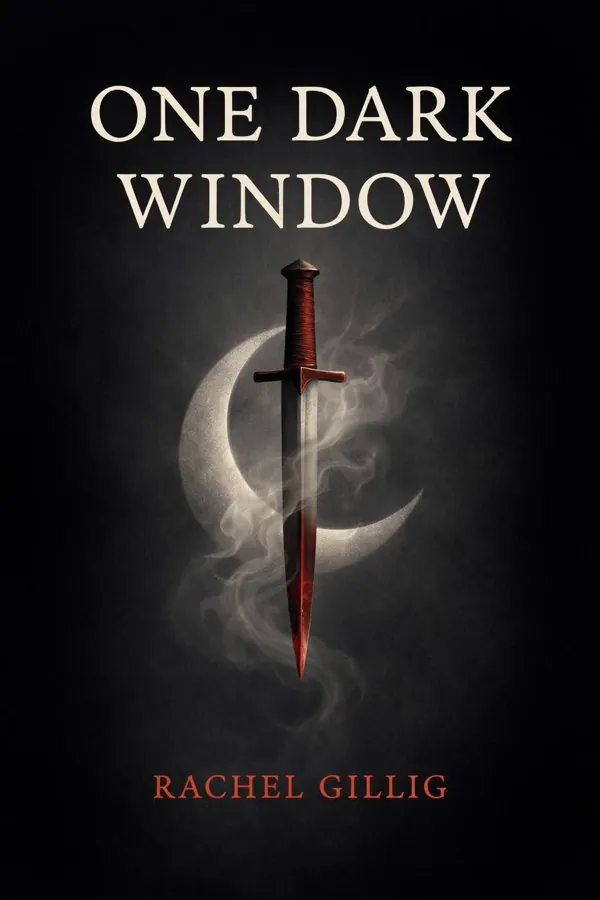
One Dark Window: Summary & Key Insights
 10 min9 chaptersAudio available
Key Takeaways from One Dark Window
Some worlds are ruled by laws, but Blunder is ruled by fear.
The most frightening forces are often the ones that know us best.
A quiet life can be its own kind of prison.
Magic in One Dark Window is fascinating because it never feels free.
Legends rarely stay in the past; they become tools in the hands of the living.
What Is One Dark Window About?
One Dark Window by Rachel Gillig is a fantasy book published in 2022 spanning 6 pages. One Dark Window is a gothic fantasy set in the mist-bound kingdom of Blunder, where magic is both coveted and feared, and survival often depends on what you can hide. At the center of the story is Elspeth Spindle, a young woman carrying a secret so dangerous it could cost her life: years earlier, she was infected by a forbidden fever and became host to an ancient, uncanny spirit known as the Nightmare. When she is pulled into the orbit of Ravyn Yew, a captain and outlaw hunting the twelve Providence Cards that may free the kingdom from its curse, Elspeth is forced to choose between concealment and courage. Rachel Gillig turns this premise into more than a dark fairy tale. She builds a story about power, inherited fear, political control, and the uneasy bargains people make to protect the ones they love. With lyrical prose, eerie folklore, romantic tension, and a haunting psychological edge, Gillig establishes herself as a striking voice in fantasy. This novel matters because it blends atmosphere and emotional depth into a story that feels intimate even as it unfolds against a kingdom-wide curse.
This FizzRead summary covers all 9 key chapters of One Dark Window in approximately 10 minutes, distilling the most important ideas, arguments, and takeaways from Rachel Gillig's work. Also available as an audio summary and Key Quotes Podcast.
One Dark Window
One Dark Window is a gothic fantasy set in the mist-bound kingdom of Blunder, where magic is both coveted and feared, and survival often depends on what you can hide. At the center of the story is Elspeth Spindle, a young woman carrying a secret so dangerous it could cost her life: years earlier, she was infected by a forbidden fever and became host to an ancient, uncanny spirit known as the Nightmare. When she is pulled into the orbit of Ravyn Yew, a captain and outlaw hunting the twelve Providence Cards that may free the kingdom from its curse, Elspeth is forced to choose between concealment and courage. Rachel Gillig turns this premise into more than a dark fairy tale. She builds a story about power, inherited fear, political control, and the uneasy bargains people make to protect the ones they love. With lyrical prose, eerie folklore, romantic tension, and a haunting psychological edge, Gillig establishes herself as a striking voice in fantasy. This novel matters because it blends atmosphere and emotional depth into a story that feels intimate even as it unfolds against a kingdom-wide curse.
Who Should Read One Dark Window?
This book is perfect for anyone interested in fantasy and looking to gain actionable insights in a short read. Whether you're a student, professional, or lifelong learner, the key ideas from One Dark Window by Rachel Gillig will help you think differently.
- ✓Readers who enjoy fantasy and want practical takeaways
- ✓Professionals looking to apply new ideas to their work and life
- ✓Anyone who wants the core insights of One Dark Window in just 10 minutes
Want the full summary?
Get instant access to this book summary and 100K+ more with Fizz Moment.
Get Free SummaryAvailable on App Store • Free to download
Key Chapters
Some worlds are ruled by laws, but Blunder is ruled by fear. In One Dark Window, the mist that blankets the kingdom is not merely atmospheric decoration; it symbolizes a society clouded by superstition, secrecy, and inherited violence. Long before Elspeth’s story begins, rulers in Blunder sought to master fate through the Providence Cards, twelve magical objects tied to different abilities and costs. That desire for control fractured the kingdom’s moral center. Magic became both essential and corrupting, and the kingdom’s institutions turned increasingly oppressive in response.
Gillig uses Blunder’s curse to show how collective fear reshapes culture. Families hide vulnerabilities. Powerful houses hoard influence. Ordinary people learn that survival means silence. The result is a social order where danger is not only supernatural but political. The mist therefore functions on two levels: it is a literal condition of the land and a metaphor for what people refuse to see clearly about power, history, and complicity.
This idea applies far beyond fantasy. In real life, communities often normalize harmful systems when those systems have existed for generations. People adapt to dysfunction until it feels inevitable. Gillig’s setting reminds readers to question what has been accepted simply because it is old, feared, or enforced from above.
As you read, pay attention to how atmosphere reveals ideology. A practical takeaway is this: when a system seems unchangeable, start by asking who benefits from the fog and who is forced to live inside it.
The most frightening forces are often the ones that know us best. Elspeth’s defining secret is that she carries the Nightmare inside her mind, a presence born from the infection of the fever that should have killed her. He is dangerous, unpredictable, and deeply entwined with her survival. Yet he is not simply a monster living within the heroine. He is also a mirror that reflects her fear, anger, loneliness, and capacity for power.
What makes this relationship so compelling is its ambiguity. The Nightmare protects Elspeth at times, manipulates her at others, and constantly threatens the boundaries of her identity. Gillig avoids making him a straightforward villain or a comforting companion. Instead, he represents the psychological cost of surviving trauma in a world that would condemn her if it knew the truth. Elspeth’s internal life becomes a battleground over agency: if a voice inside you can act for you, speak through you, and influence your choices, where does the self begin and end?
Readers can connect this to ordinary emotional experience. Many people live with inner voices shaped by fear, shame, or old wounds. Those voices may seem protective, yet they can also trap us. The novel dramatizes this tension through fantasy, turning internal conflict into something vivid and dangerous.
A useful way to read this thread is to ask not only what the Nightmare does, but what he allows Elspeth to avoid feeling. The actionable takeaway: examine the inner narratives that claim to protect you. Some may help you survive, but they should not be allowed to define who you are.
Magic in One Dark Window is fascinating because it never feels free. The Providence Cards grant extraordinary abilities, but every gift carries a cost, and every use raises ethical questions. These cards are woven into Blunder’s economy of power: rulers, nobles, soldiers, and schemers all understand that whoever controls the deck controls destiny. That makes the search for the twelve cards more than a treasure hunt. It is a struggle over who gets to define justice, legitimacy, and the future of the kingdom.
Gillig builds a compelling magical system by grounding it in consequence. Rather than presenting power as inherently liberating, she asks what people are willing to sacrifice to obtain it and what systems arise when rare tools become instruments of hierarchy. The cards do not just solve problems; they create dependencies, tempt corruption, and expose character. A person’s relationship to power becomes a test of integrity.
This concept translates easily beyond fantasy. In modern life, any scarce resource—money, information, technology, influence—can function like a Providence Card. It can be used to serve others or to consolidate control. The critical question is not only who possesses power but whether they believe they are accountable for its effects.
As you read, notice how different characters justify what they seek. Their reasons matter as much as their actions. The practical takeaway: whenever you pursue power, ask two questions before acting—what will this cost, and who will pay the price if I misuse it?
Legends rarely stay in the past; they become tools in the hands of the living. The story of the Shepherd King hangs over One Dark Window like a prophecy and a warning. He is not merely a figure from folklore but a symbol through which characters interpret the kingdom’s curse, the cards, and the possibility of restoration. Gillig uses this legend to explore how history becomes myth and how myth becomes political leverage.
What makes the Shepherd King thread effective is that it destabilizes certainty. Characters do not inherit a clean, authoritative account of what happened. They inherit fragments, stories, and competing interpretations. That uncertainty matters because societies often use simplified narratives to justify present power. Whoever controls the meaning of the past can influence what people believe is possible in the future.
This dynamic is familiar in real life. Nations, families, and institutions all tell origin stories that shape identity. Some are honest and useful; others hide injustice beneath grandeur. Gillig invites readers to treat legends with curiosity rather than blind reverence. The past may contain wisdom, but it can also be manipulated.
For readers, this key idea adds depth to the novel’s mystery. The cards are not just magical objects; they are tied to a broken historical memory. The actionable takeaway is to examine the stories that define your world. Ask where they came from, what they omit, and whose interests they serve. Understanding legacy is often the first step toward changing it.
Evil rarely appears first as open brutality; more often, it grows through silence, deference, and rules people stop questioning. One Dark Window examines this through its court politics, family loyalties, and systems of magical enforcement. Blunder’s corruption is not sustained by one villain alone. It is maintained by people who comply, rationalize, conceal, and prioritize order over justice.
This is one of the novel’s strongest contributions. Gillig resists the simplistic idea that darkness belongs only to obviously monstrous individuals. Instead, she shows how institutions become cruel when fear makes ordinary people value safety, status, or reputation more than truth. Characters are pressured to protect bloodlines, preserve appearances, and submit to authority even when they know something is deeply wrong.
The fantasy frame helps clarify a real-world pattern: harmful systems persist because many people benefit from not looking too closely. Secrecy creates distance from consequences. Obedience distributes responsibility until no one feels fully accountable. That is why uncovering truth in the novel is both personal and political. To reveal a secret is to threaten the architecture of control.
Readers can take from this a sharper awareness of complicity. It is easy to imagine we would resist corruption if it were dramatic and obvious. Harder is admitting how often injustice is bureaucratic, familiar, and socially rewarded. The actionable takeaway: when you encounter an unfair rule or harmful norm, do not ask only who created it. Ask who continues to uphold it, and what courage would be required to interrupt that pattern.
Every meaningful choice in One Dark Window comes with a price. Gillig repeatedly returns to the idea that power cannot be separated from sacrifice. Whether the issue is using the Providence Cards, relying on the Nightmare, or pursuing political change, characters must weigh immediate survival against long-term moral cost. This creates a tense ethical atmosphere in which there are few clean decisions.
What distinguishes the novel is that sacrifice is not treated as automatically noble. Some sacrifices are loving; others are avoidable; still others are disguised forms of control. A character may claim to suffer for the greater good while actually preserving personal authority. Another may risk everything not out of duty but out of fear of loss. Gillig asks readers to look beneath heroic language and examine motive.
This has practical resonance. In life, people often frame difficult decisions as unavoidable trade-offs, but the framing itself can obscure alternatives. The question is not only what must be given up, but whether the sacrifice is chosen freely, distributed fairly, and directed toward a just end.
For readers, this theme sharpens the emotional impact of the climax. Victories matter because they cost something real. The actionable takeaway is useful beyond fiction: whenever you face a difficult decision, define the sacrifice in concrete terms. Then ask three things—Is it necessary? Is it mine to make? Does it serve fear, ego, or genuine care? Moral clarity begins with honest naming.
The novel’s climactic power comes from an insight that many fantasy stories circle but do not fully earn: redemption is impossible without self-confrontation. External enemies matter, but the deepest turning points in One Dark Window happen when characters stop hiding from what they are, what they want, and what they have become. Elspeth’s final trials are not only about defeating a curse or gathering cards. They are about identity, consent, and the terrifying work of reclaiming herself from forces that have long shaped her.
Gillig treats redemption as costly because truth is costly. To heal Blunder, characters must challenge inherited lies, expose corruption, and relinquish comforting illusions. No one gets out unchanged. This gives the ending emotional weight. The book does not offer a simplistic message that love or bravery alone can erase damage. Instead, it suggests that repair begins when denial ends.
That idea has broad relevance. Personal growth often stalls when people remain attached to narratives that protect their self-image. Institutions do the same. Change becomes possible only when reality is faced without ornament.
For readers, the conclusion provides both catharsis and unease, which is fitting for a story about haunted power. The practical takeaway is this: if you want transformation, begin with ruthless honesty. Name the truth you avoid because it threatens your identity. Redemption, whether personal or collective, starts there.
All Chapters in One Dark Window
About the Author
Rachel Gillig is an American author best known for writing dark fantasy with strong romantic and gothic elements. With a background in English literature and creative writing, she brings a literary sensibility to genre storytelling, combining atmospheric prose with emotionally layered characters and mythic worldbuilding. Her fiction often explores identity, inherited fear, transformation, and the seductive dangers of power. Gillig rose to prominence with One Dark Window, a novel that earned attention for its eerie setting, inventive magical system, and psychologically charged romance. She has quickly become a notable voice among contemporary fantasy readers who appreciate stories that are both haunting and intimate. Her work stands out for blending folklore-inspired imagination with modern emotional depth.
Get This Summary in Your Preferred Format
Read or listen to the One Dark Window summary by Rachel Gillig anytime, anywhere. FizzRead offers multiple formats so you can learn on your terms — all free.
Available formats: App · Audio · PDF · EPUB — All included free with FizzRead
Download One Dark Window PDF and EPUB Summary
Key Quotes from One Dark Window
“Some worlds are ruled by laws, but Blunder is ruled by fear.”
“The most frightening forces are often the ones that know us best.”
“A quiet life can be its own kind of prison.”
“Magic in One Dark Window is fascinating because it never feels free.”
“Legends rarely stay in the past; they become tools in the hands of the living.”
Frequently Asked Questions about One Dark Window
One Dark Window by Rachel Gillig is a fantasy book that explores key ideas across 9 chapters. One Dark Window is a gothic fantasy set in the mist-bound kingdom of Blunder, where magic is both coveted and feared, and survival often depends on what you can hide. At the center of the story is Elspeth Spindle, a young woman carrying a secret so dangerous it could cost her life: years earlier, she was infected by a forbidden fever and became host to an ancient, uncanny spirit known as the Nightmare. When she is pulled into the orbit of Ravyn Yew, a captain and outlaw hunting the twelve Providence Cards that may free the kingdom from its curse, Elspeth is forced to choose between concealment and courage. Rachel Gillig turns this premise into more than a dark fairy tale. She builds a story about power, inherited fear, political control, and the uneasy bargains people make to protect the ones they love. With lyrical prose, eerie folklore, romantic tension, and a haunting psychological edge, Gillig establishes herself as a striking voice in fantasy. This novel matters because it blends atmosphere and emotional depth into a story that feels intimate even as it unfolds against a kingdom-wide curse.
You Might Also Like
Featured In
Browse by Category
Ready to read One Dark Window?
Get the full summary and 100K+ more books with Fizz Moment.