
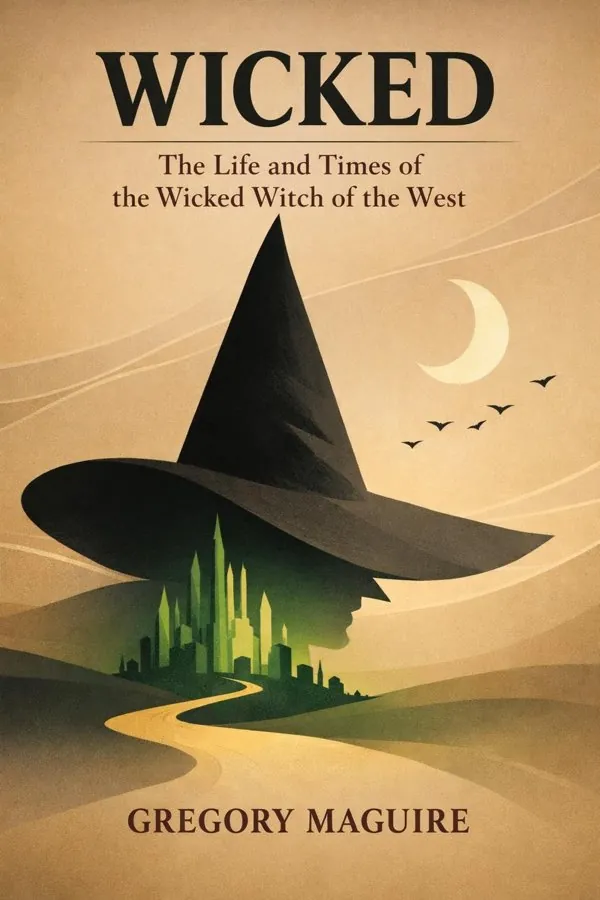
The Wicked King: Summary & Key Insights
by Holly Black
 10 min9 chapters
Key Takeaways from The Wicked King
One of the novel’s sharpest insights is that gaining power is only the beginning; keeping it requires a relentless performance of confidence, authority, and control.
Few relationships in modern fantasy are as charged as the one between Jude and Cardan, and the novel’s brilliance lies in its refusal to simplify attraction into trust.
At the heart of Jude’s ambition lies an old wound: she has never fully belonged.
In Elfhame, cruelty is not merely personal malice; it is frequently a public language of dominance.
Secrets are the currency of The Wicked King.
What Is The Wicked King About?
The Wicked King by Holly Black is a fantasy book published in 1995 spanning 5 pages. Power is rarely held by the strongest person in the room; more often, it belongs to whoever can read fear, shape perception, and act before others understand the game. Holly Black’s The Wicked King, the second novel in The Folk of the Air series, plunges readers deeper into the dangerous politics of Elfhame, where beauty masks brutality and every promise hides a blade. The story follows Jude Duarte, a mortal girl who has fought her way into the center of Faerie power after placing the cruel but charismatic Cardan on the throne. Yet ruling through a king she cannot fully trust proves far more treacherous than winning the crown in the first place. Black turns court intrigue into emotional warfare, exploring ambition, desire, betrayal, and the cost of control. What makes the novel matter is not only its gripping plot, but its sharp understanding of power itself: authority is unstable, loyalty is conditional, and survival demands both strategy and self-knowledge. As one of contemporary fantasy’s most acclaimed writers, Holly Black brings a masterful command of faerie lore, political tension, and morally complex character work to this dark, compelling sequel.
This FizzRead summary covers all 9 key chapters of The Wicked King in approximately 10 minutes, distilling the most important ideas, arguments, and takeaways from Holly Black's work.
The Wicked King
Power is rarely held by the strongest person in the room; more often, it belongs to whoever can read fear, shape perception, and act before others understand the game. Holly Black’s The Wicked King, the second novel in The Folk of the Air series, plunges readers deeper into the dangerous politics of Elfhame, where beauty masks brutality and every promise hides a blade. The story follows Jude Duarte, a mortal girl who has fought her way into the center of Faerie power after placing the cruel but charismatic Cardan on the throne. Yet ruling through a king she cannot fully trust proves far more treacherous than winning the crown in the first place. Black turns court intrigue into emotional warfare, exploring ambition, desire, betrayal, and the cost of control. What makes the novel matter is not only its gripping plot, but its sharp understanding of power itself: authority is unstable, loyalty is conditional, and survival demands both strategy and self-knowledge. As one of contemporary fantasy’s most acclaimed writers, Holly Black brings a masterful command of faerie lore, political tension, and morally complex character work to this dark, compelling sequel.
Who Should Read The Wicked King?
This book is perfect for anyone interested in fantasy and looking to gain actionable insights in a short read. Whether you're a student, professional, or lifelong learner, the key ideas from The Wicked King by Holly Black will help you think differently.
- ✓Readers who enjoy fantasy and want practical takeaways
- ✓Professionals looking to apply new ideas to their work and life
- ✓Anyone who wants the core insights of The Wicked King in just 10 minutes
Want the full summary?
Get instant access to this book summary and 100K+ more with Fizz Moment.
Get Free SummaryAvailable on App Store • Free to download
Key Chapters
One of the novel’s sharpest insights is that gaining power is only the beginning; keeping it requires a relentless performance of confidence, authority, and control. At the opening of The Wicked King, Jude appears triumphant. She has outmaneuvered her enemies, placed Cardan on the throne, and secured secret leverage over him. Yet Holly Black quickly shows that political victory is fragile. Jude must manage appearances, conceal vulnerabilities, and make rapid calculations in a court where any sign of weakness invites attack. In Elfhame, authority is not a stable possession but an ongoing act.
This idea reaches beyond fantasy. In workplaces, family systems, or leadership roles, people often assume that earning status solves the problem. In reality, a promotion, title, or position simply changes the nature of the pressure. Leaders must communicate certainty even while navigating doubt. They must know when to reveal information, when to remain unreadable, and when to let others underestimate them. Jude survives because she understands that image shapes outcomes. If others believe she is in control, they behave differently around her.
The book also warns that performance has a cost. Jude’s constant vigilance isolates her emotionally and makes trust difficult. She becomes so skilled at manipulation that sincerity starts to feel dangerous. This is the paradox of power: the more effectively you manage perception, the harder it becomes to know where the performance ends and the self begins.
A practical application is to examine the roles in your own life where you are maintaining authority through image alone. Ask what parts of your influence come from substance, and what parts depend on perception. Then strengthen the substance. Actionable takeaway: do not assume power is secure once achieved; regularly reinforce it through competence, clarity, and disciplined self-control.
Few relationships in modern fantasy are as charged as the one between Jude and Cardan, and the novel’s brilliance lies in its refusal to simplify attraction into trust. The Wicked King suggests that desire does not automatically create safety. Two people can be magnetically drawn to each other while still withholding, deceiving, and testing one another. Jude and Cardan are bound by political necessity, emotional fascination, and mutual recognition. Yet each knows the other is capable of betrayal. Their intimacy grows in the same space as their suspicion.
This dynamic matters because it reflects a truth many stories ignore: complicated bonds are often built on contradictory emotions. We may admire someone’s strength while fearing their unpredictability. We may crave closeness while protecting ourselves from harm. Black does not present love as a cure for strategic thinking. Instead, attraction intensifies the stakes. Every confession becomes a risk. Every vulnerable moment can be weaponized.
In practical terms, this key idea encourages emotional clarity. Strong chemistry should not be confused with trustworthiness. A compelling personality, shared tension, or intense connection can distort judgment, especially when power is uneven. Jude repeatedly faces this problem. Her feelings for Cardan make her more dangerous and more exposed at once.
The novel does not argue against vulnerability, but it does insist that vulnerability without discernment is reckless. Healthy connection requires more than passion; it requires evidence, consistency, and earned confidence. Whether in romance, friendship, or partnership, it is wise to separate what you feel from what you know.
Actionable takeaway: when emotions run high, pause and evaluate behavior rather than fantasy. Ask yourself not just whether someone moves you, but whether they have shown themselves worthy of your trust.
At the heart of Jude’s ambition lies an old wound: she has never fully belonged. Raised in Faerie after the murder of her parents, she grows up surrounded by beings who are stronger, older, more magical, and often openly contemptuous of mortals. The Wicked King builds on this foundation by showing how childhood exclusion can transform into an adult hunger for control. Jude does not seek power merely for glory. She seeks it because power promises what acceptance never did: security, leverage, and the right not to be dismissed.
This is one of the book’s most psychologically rich ideas. People often pursue achievement for reasons deeper than success itself. The driven employee may be chasing respect denied in childhood. The perfectionist may be building armor against shame. The person who insists on control may once have had none. Jude’s strategic brilliance is inseparable from her fear of helplessness. Her cleverness is not just talent; it is adaptation.
Black handles this with nuance. Jude’s outsider status gives her resilience, creativity, and ferocity. But it also leaves her vulnerable to overcompensation. Because she has been underestimated for so long, she sometimes overvalues winning and undervalues rest, trust, and emotional honesty. The survival strategy that once protected her begins to shape her identity too completely.
Readers can apply this insight by looking beneath their strongest ambitions. What need is hidden underneath the goal? Recognition, safety, dignity, belonging? Understanding the root does not weaken ambition; it makes it more conscious and sustainable. Without that self-awareness, success may still leave the original wound untouched.
Actionable takeaway: identify one area where your drive may be fueled by old exclusion or insecurity, and ask how you can pursue excellence without letting the wound dictate every decision.
In Elfhame, cruelty is not merely personal malice; it is frequently a public language of dominance. Cardan’s earlier viciousness, the court’s humiliations, and the endless social games all reveal a culture where people perform superiority through pain. The Wicked King expands this idea by showing that insults, seductions, punishments, and displays of indifference are often strategic. To wound someone publicly is to define rank. To provoke a reaction is to gather information. To appear untouchable is to discourage challenge.
This does not excuse cruelty, but it helps explain it. In many real-world settings, hostility is also performative. A manager belittles someone in front of others to reinforce hierarchy. A social group excludes a newcomer to protect its internal order. Online, mockery can become a way to signal belonging to a tribe. The target suffers, but the audience is the real point. Cruelty often functions as communication directed at the wider room.
Jude’s strength is that she learns to interpret the theater rather than simply react to the sting. She studies who benefits from a slight, who is watching, and what response will alter the balance of power. Sometimes the wisest move is retaliation. Sometimes it is strategic calm. The lesson is not passivity; it is literacy. If you cannot read the social logic beneath aggression, you are easier to manipulate.
At the same time, the novel reminds us that cultures built on humiliation eventually poison everyone inside them. Even the powerful become trapped in performance. A system sustained by fear cannot produce genuine loyalty.
Actionable takeaway: when confronted with public hostility, ask what status game is being played before you respond. Address the structure behind the cruelty, not just the emotional surface.
Secrets are the currency of The Wicked King. Jude survives by hiding plans, concealing alliances, and manipulating what others know. In a realm where truth can be deadly, secrecy is practical, even necessary. Yet Holly Black explores the darker side of this habit: the more Jude relies on concealment, the more isolated and morally compromised she becomes. Secrets keep her alive, but they also reshape her relationships and sense of self.
This tension is deeply relevant beyond fantasy. Privacy is healthy; strategic discretion is often wise. But there is a threshold where guardedness turns into disconnection. A professional may withhold too much to preserve influence. A friend may avoid honesty to maintain control. A partner may believe that managing information is the same as protecting love. Over time, secrecy can become less about safety and more about power.
Jude illustrates this progression. Because she cannot afford transparency, she starts treating emotional openness as a weakness. That instinct gives her tactical advantages, but it also ensures that when betrayal comes, she has few places to land. People cannot fully support a self they are not allowed to know. The tragic irony is that the methods that secure her political position also deepen her loneliness.
Black does not suggest that truth should be offered indiscriminately. In dangerous environments, boundaries matter. But the novel asks an important question: what are you sacrificing to remain unreadable? If you hide everything, you may not only evade enemies, but also lose allies.
A useful practical rule is to distinguish between protective privacy and controlling secrecy. Privacy safeguards dignity; controlling secrecy manages others from a distance. Actionable takeaway: choose one important relationship and consider whether greater honesty would strengthen trust more than continued concealment protects you.
Another major lesson of The Wicked King is that individual brilliance cannot substitute for durable alliances. Jude is courageous, observant, and astonishingly resourceful, but she repeatedly discovers that no amount of personal competence can eliminate the need for trusted support. Courts, kingdoms, and even households run on networks of loyalty. The lone strategist may win spectacular victories, but lasting stability depends on people who choose to stand with you when leverage fails.
This is especially important because Jude often behaves as though self-reliance is the safest option. Given her history, that instinct is understandable. Dependence feels dangerous. Yet the novel repeatedly undercuts the fantasy of total control. Information must be shared. Risks must be delegated. And in moments of crisis, survival depends not only on cleverness, but on whether anyone is willing to act on your behalf.
The same principle applies in everyday life. A founder who refuses to build trust within a team may achieve short-term speed but create long-term collapse. A student who never asks for help can become high-performing but brittle. A person navigating hardship alone may preserve pride while exhausting themselves. Competence matters, but so does interdependence.
The book also sharpens our understanding of alliances by showing that not all allies are intimate friends. Some are transactional, temporary, or bound by shared interests rather than affection. Building a strong network does not require naive idealism. It requires clarity about motives, mutual benefit, and reliability under pressure.
Actionable takeaway: map the key relationships that support your goals. Identify where you are overdependent on your own effort and intentionally strengthen one alliance through trust, reciprocity, or clearer communication.
Jude’s mortality is never incidental. In Faerie, being human makes her vulnerable, suspect, and perpetually underestimated. But The Wicked King reveals that identity can be weaponized in more than one direction. Others use Jude’s humanity to diminish her, while Jude turns others’ assumptions into tactical advantages. What seems like weakness becomes camouflage. The very trait that excludes her also allows her to move unpredictably through a system built by and for the Folk.
This idea resonates strongly in real life. People are often categorized before they speak: by class, nationality, gender, age, race, profession, or background. Those labels shape expectation, and expectation shapes behavior. Sometimes prejudice closes doors. Sometimes it causes powerful people to misread who poses a threat. The challenge is not to romanticize marginalization, but to recognize that imposed identities can be resisted, reinterpreted, and strategically leveraged.
Black’s portrayal is nuanced because Jude never transcends prejudice through simple confidence. Her humanity still places real limits on her power and safety. The point is not that exclusion is secretly beneficial, but that imposed inferiority does not determine destiny. Intelligence includes understanding how others see you and deciding when to disrupt that script.
There is also a warning here. When identity becomes political, people may start performing versions of themselves that are legible, useful, or intimidating to others. That can be empowering, but it can also become constraining. The self turns into an instrument.
Actionable takeaway: identify one assumption people often make about you. Instead of merely resenting it, decide how to counter it deliberately—through preparation, reframing, or strategic surprise—while staying grounded in who you actually are.
A comforting fantasy says good leaders remain pure while bad leaders compromise. The Wicked King rejects that simplicity. Jude operates in conditions where honorable intentions do not guarantee ethical options. To protect the realm, preserve her position, and outmaneuver enemies, she lies, manipulates, threatens, and withholds. The novel does not celebrate these choices uncritically, but it insists that leadership in a corrupt system often involves morally gray action.
This makes the book especially compelling for readers interested in power beyond slogans. Jude cannot afford the luxury of being visibly virtuous at all times. She must weigh harms, choose among imperfect outcomes, and accept responsibility without certainty. Black captures a difficult truth: when stakes are high, leadership often means choosing the least dangerous path rather than the cleanest one.
In practical settings, this appears whenever people manage competing obligations. A leader may need to protect confidentiality, make unpopular decisions, or negotiate with difficult personalities to preserve something larger. Moral maturity is not the absence of compromise; it is the ability to recognize compromise without becoming numb to its cost.
The danger, of course, is drift. Once a person becomes comfortable justifying every questionable act as necessary, conscience erodes. Jude walks that edge constantly. The novel’s power comes from making readers ask not only whether her actions are effective, but what they are doing to her soul.
A healthy application of this insight is to build reflection into responsibility. If your role requires difficult tradeoffs, create habits of moral review. Ask what line you crossed, why, and whether it truly served a larger purpose.
Actionable takeaway: when facing a hard decision, stop asking whether it is perfectly clean and start asking which option minimizes harm, protects what matters most, and leaves your integrity as intact as possible.
All Chapters in The Wicked King
About the Author
Holly Black is an American bestselling author celebrated for her dark, imaginative fantasy fiction, especially stories rooted in faerie mythology. She has written acclaimed novels for children, teens, and adults, and is widely known for combining lyrical prose with sharp psychological insight and intricate power dynamics. Among her most popular works are The Spiderwick Chronicles, created with Tony DiTerlizzi, and The Folk of the Air series, which brought her major international recognition. Black’s fiction often explores ambition, deception, desire, and the dangerous allure of enchanted worlds. Her ability to create morally complex characters and tense political relationships has made her one of the most influential voices in contemporary fantasy. She is particularly admired by readers who enjoy rich worldbuilding paired with emotional intensity and high-stakes intrigue.
Get This Summary in Your Preferred Format
Read or listen to the The Wicked King summary by Holly Black anytime, anywhere. FizzRead offers multiple formats so you can learn on your terms — all free.
Available formats: App · Audio · PDF · EPUB — All included free with FizzRead
Download The Wicked King PDF and EPUB Summary
Key Quotes from The Wicked King
“One of the novel’s sharpest insights is that gaining power is only the beginning; keeping it requires a relentless performance of confidence, authority, and control.”
“Few relationships in modern fantasy are as charged as the one between Jude and Cardan, and the novel’s brilliance lies in its refusal to simplify attraction into trust.”
“At the heart of Jude’s ambition lies an old wound: she has never fully belonged.”
“In Elfhame, cruelty is not merely personal malice; it is frequently a public language of dominance.”
“Secrets are the currency of The Wicked King.”
Frequently Asked Questions about The Wicked King
The Wicked King by Holly Black is a fantasy book that explores key ideas across 9 chapters. Power is rarely held by the strongest person in the room; more often, it belongs to whoever can read fear, shape perception, and act before others understand the game. Holly Black’s The Wicked King, the second novel in The Folk of the Air series, plunges readers deeper into the dangerous politics of Elfhame, where beauty masks brutality and every promise hides a blade. The story follows Jude Duarte, a mortal girl who has fought her way into the center of Faerie power after placing the cruel but charismatic Cardan on the throne. Yet ruling through a king she cannot fully trust proves far more treacherous than winning the crown in the first place. Black turns court intrigue into emotional warfare, exploring ambition, desire, betrayal, and the cost of control. What makes the novel matter is not only its gripping plot, but its sharp understanding of power itself: authority is unstable, loyalty is conditional, and survival demands both strategy and self-knowledge. As one of contemporary fantasy’s most acclaimed writers, Holly Black brings a masterful command of faerie lore, political tension, and morally complex character work to this dark, compelling sequel.
More by Holly Black
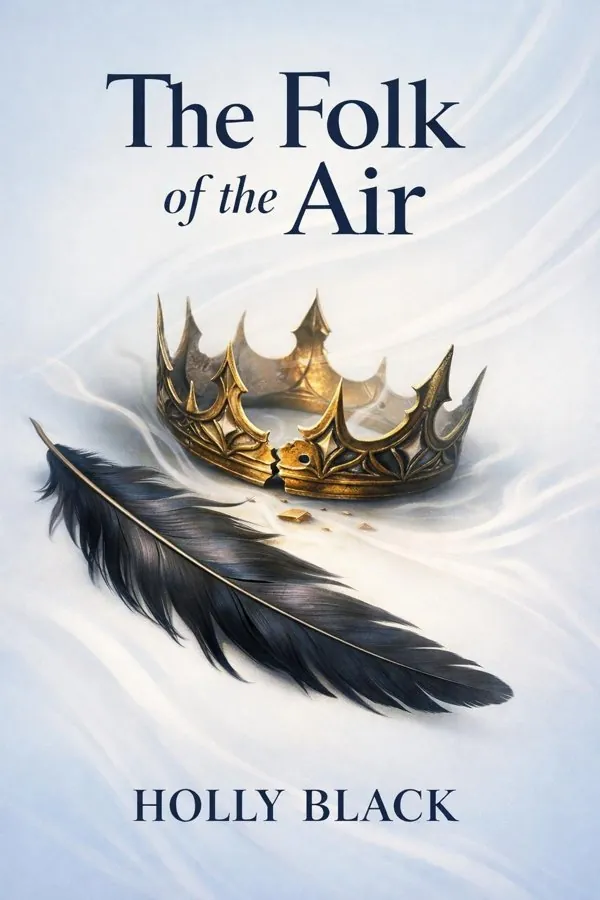
You Might Also Like
Browse by Category
Ready to read The Wicked King?
Get the full summary and 100K+ more books with Fizz Moment.