
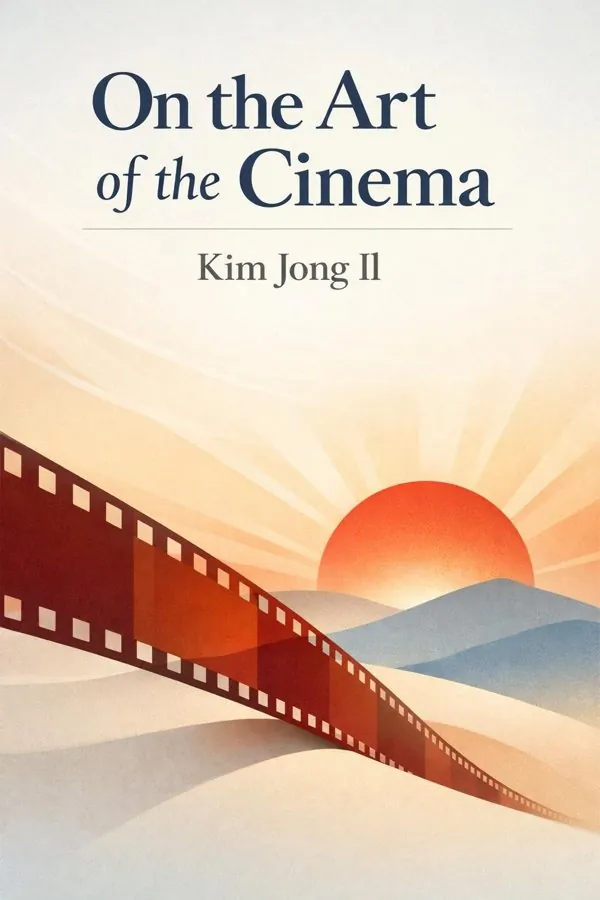
On the Art of the Cinema: Summary & Key Insights
by Kim Jong Il
 10 min12 chaptersAudio available
What Is On the Art of the Cinema About?
On the Art of the Cinema by Kim Jong Il is a film book spanning 12 pages. On the Art of the Cinema is a film theory book written by Kim Jong Il, first published in 1973 in Pyongyang. It systematically outlines the principles of film creation based on socialist realism and the Juche ideology. The author emphasizes that cinema serves as a means of ideological education and as an art form that elevates the revolutionary consciousness of the masses. He argues that all elements of filmmaking—script, direction, cinematography, and music—must serve the ideological core.
This FizzRead summary covers all 12 key chapters of On the Art of the Cinema in approximately 10 minutes, distilling the most important ideas, arguments, and takeaways from Kim Jong Il's work. Also available as an audio summary and Key Quotes Podcast.
On the Art of the Cinema
On the Art of the Cinema is a film theory book written by Kim Jong Il, first published in 1973 in Pyongyang. It systematically outlines the principles of film creation based on socialist realism and the Juche ideology. The author emphasizes that cinema serves as a means of ideological education and as an art form that elevates the revolutionary consciousness of the masses. He argues that all elements of filmmaking—script, direction, cinematography, and music—must serve the ideological core.
Who Should Read On the Art of the Cinema?
This book is perfect for anyone interested in film and looking to gain actionable insights in a short read. Whether you're a student, professional, or lifelong learner, the key ideas from On the Art of the Cinema by Kim Jong Il will help you think differently.
- ✓Readers who enjoy film and want practical takeaways
- ✓Professionals looking to apply new ideas to their work and life
- ✓Anyone who wants the core insights of On the Art of the Cinema in just 10 minutes
Want the full summary?
Get instant access to this book summary and 100K+ more with Fizz Moment.
Get Free SummaryAvailable on App Store • Free to download
Key Chapters
In our epoch, cinema must not be separated from the revolutionary struggle of the people. It is a weapon far more powerful than any gun because it fires ideas—ideas that change minds, fortify loyalties, and build consciousness. A film has the ability to show not just what exists, but what ought to exist; not just human reality, but human potential.
The Juche idea teaches that man is the master of everything and decides everything. Cinema must express that idea through vivid human stories, through faces and gestures that reveal man’s creative power and independence. When the masses see themselves reflected as heroes—not by accident, but as products of their own struggle—they learn the dignity of self-reliance. That is why revolutionary cinema never seeks to shock for effect, nor does it indulge in pessimism or despair; its role is to teach courage and pride.
For a socialist filmmaker, this means that one’s film must be rooted in life among the people. One must know their labor, their laughter, their tears, and their hopes. Only then can the screen express truth. Revolutionary art arises not in studios, but in the rhythm of the people’s lives. When we follow this path, cinema becomes not a mirror of society but a beacon guiding it forward.
Film art is a unity. It is both ideological and artistic, inseparable in its nature. An idea, no matter how profound, cannot communicate itself unless clothed in artistry; and artistry without clear ideological direction becomes hollow decoration. The greatness of cinema lies precisely in its ability to fuse these dimensions.
When I speak of content and form, I stress not abstract categories but living harmony. Ideological content is the soul—it determines direction and meaning. Artistic form is the body—it carries the soul and gives it movement. To divorce them is to destroy life itself. The director must therefore see every frame as a moral act and every scene as an ideological revelation.
True art is born when the filmmaker captures the essence of reality. Socialist realism does not imitate life mechanically; it reveals its inner truth—the truth of progress, of collective endeavor, of man’s transformation through struggle. The camera must show not only faces but forces, not only events but the spirit driving them. In this artistic synthesis, cinema achieves its highest function: educating through beauty, inspiring through truth.
+ 10 more chapters — available in the FizzRead app
All Chapters in On the Art of the Cinema
About the Author
Kim Jong Il (1941–2011) was a North Korean political leader, the son and successor of Kim Il Sung. He showed deep interest in cultural and artistic matters, particularly in the role of film and literature in ideological education. On the Art of the Cinema is regarded as his most significant theoretical work on culture and film.
Get This Summary in Your Preferred Format
Read or listen to the On the Art of the Cinema summary by Kim Jong Il anytime, anywhere. FizzRead offers multiple formats so you can learn on your terms — all free.
Available formats: App · Audio · PDF · EPUB — All included free with FizzRead
Download On the Art of the Cinema PDF and EPUB Summary
Key Quotes from On the Art of the Cinema
“In our epoch, cinema must not be separated from the revolutionary struggle of the people.”
“It is both ideological and artistic, inseparable in its nature.”
Frequently Asked Questions about On the Art of the Cinema
On the Art of the Cinema by Kim Jong Il is a film book that explores key ideas across 12 chapters. On the Art of the Cinema is a film theory book written by Kim Jong Il, first published in 1973 in Pyongyang. It systematically outlines the principles of film creation based on socialist realism and the Juche ideology. The author emphasizes that cinema serves as a means of ideological education and as an art form that elevates the revolutionary consciousness of the masses. He argues that all elements of filmmaking—script, direction, cinematography, and music—must serve the ideological core.
You Might Also Like
Cinematic Motion: A Workshop for Staging Scenes
Steven D. Katz
10 min
Film Directing: Shot by Shot: Visualizing from Concept to Screen
Steven D. Katz
10 min
In the Blink of an Eye: A Perspective on Film Editing
Walter Murch
10 min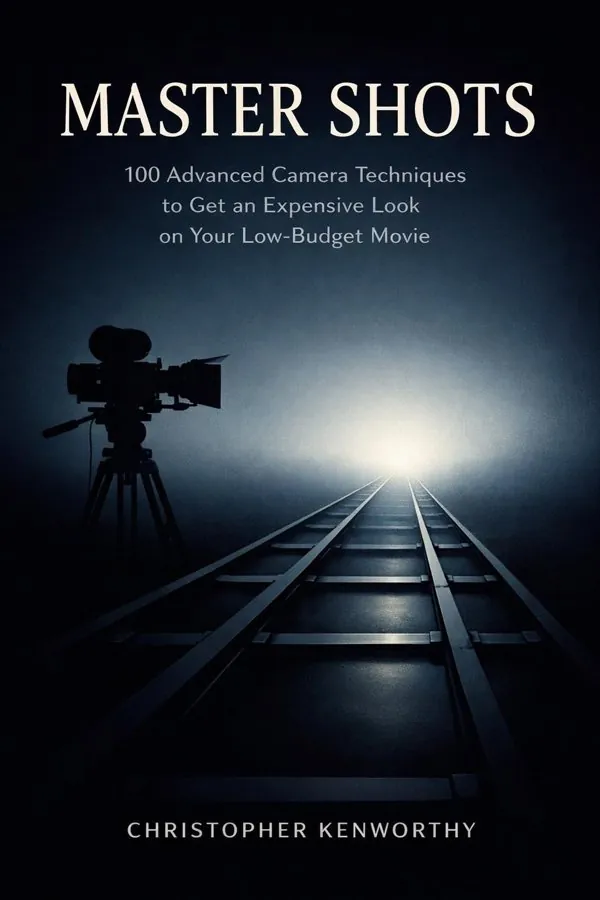
Master Shots: 100 Advanced Camera Techniques to Get an Expensive Look on Your Low-Budget Movie
Christopher Kenworthy
10 min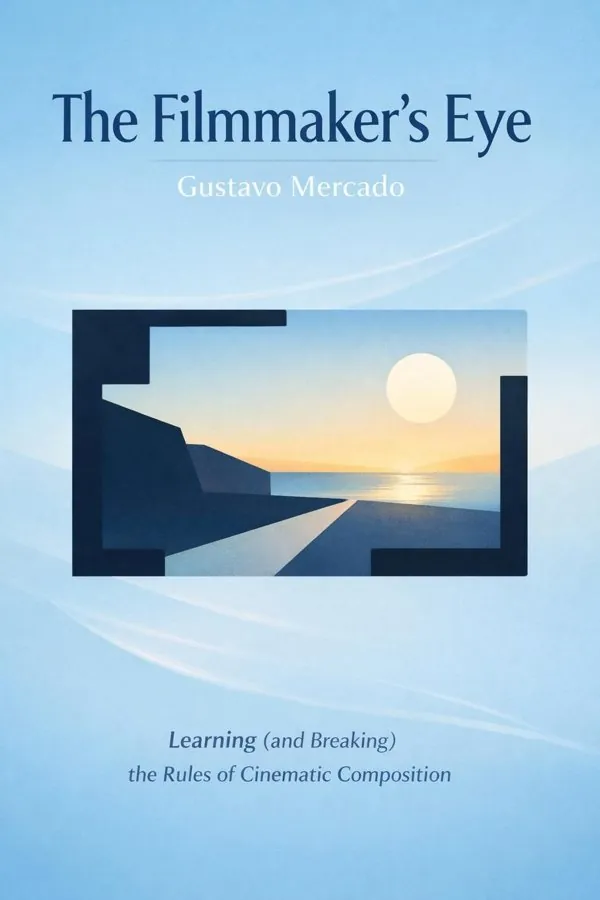
The Filmmaker's Eye: Learning (and Breaking) the Rules of Cinematic Composition
Gustavo Mercado
10 minBrowse by Category
Ready to read On the Art of the Cinema?
Get the full summary and 100K+ more books with Fizz Moment.