
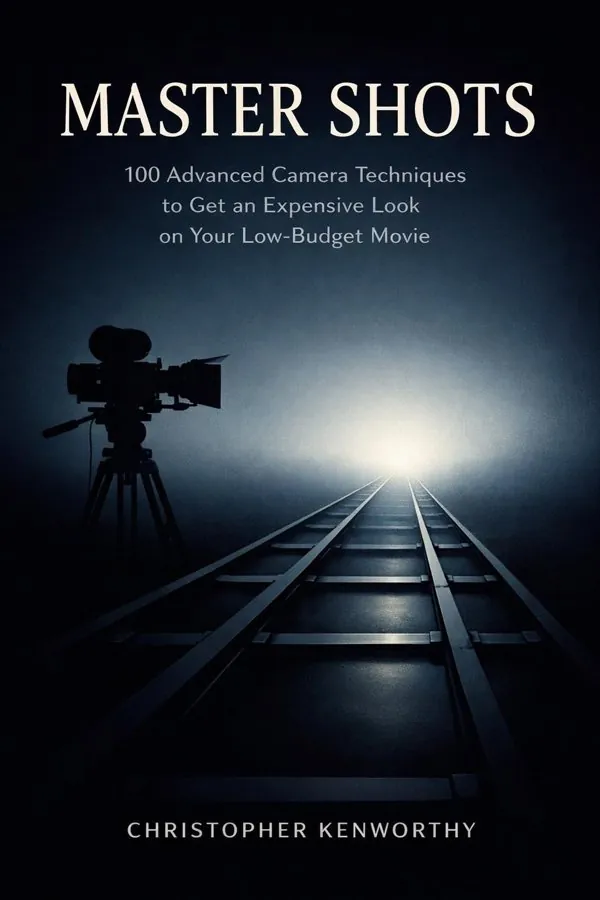
Master Shots: 100 Advanced Camera Techniques to Get an Expensive Look on Your Low-Budget Movie: Summary & Key Insights
 10 min9 chaptersAudio available
Key Takeaways from Master Shots: 100 Advanced Camera Techniques to Get an Expensive Look on Your Low-Budget Movie
A camera is never neutral: the moment you decide where to place it, how to move it, and what to include, you are telling the audience how to feel.
What appears inside the frame is only half the story; how it is arranged determines what the audience notices, values, and remembers.
Motion has power largely because stillness exists.
The audience does not merely watch a scene; it experiences a point of view.
Expensive-looking filmmaking is less about owning premium equipment than about making disciplined visual decisions.
What Is Master Shots: 100 Advanced Camera Techniques to Get an Expensive Look on Your Low-Budget Movie About?
Master Shots: 100 Advanced Camera Techniques to Get an Expensive Look on Your Low-Budget Movie by Christopher Kenworthy is a film book spanning 5 pages. Christopher Kenworthy’s Master Shots is a hands-on filmmaking guide for directors, cinematographers, students, and indie creators who want their movies to look polished without spending like a studio production. Rather than treating cinematography as vague visual magic, Kenworthy breaks it down into 100 repeatable camera setups that can be used to build tension, reveal character, control pacing, and make scenes feel dramatically alive. The book focuses on the practical relationship between framing, movement, blocking, and story, showing how professional-looking images come from deliberate choices rather than expensive gear alone. What makes this book matter is its usefulness. It does not simply celebrate great shots from cinema; it explains how and why they work, then translates them into diagrams, staging patterns, and production-friendly methods that filmmakers can adapt on set. Kenworthy writes with the authority of a working director and visual storyteller who understands both film grammar and low-budget reality. His central promise is empowering: cinematic images are not reserved for massive crews and cranes. With careful planning, smart composition, and strong visual intent, even modest productions can achieve a sophisticated, expensive look.
This FizzRead summary covers all 9 key chapters of Master Shots: 100 Advanced Camera Techniques to Get an Expensive Look on Your Low-Budget Movie in approximately 10 minutes, distilling the most important ideas, arguments, and takeaways from Christopher Kenworthy's work. Also available as an audio summary and Key Quotes Podcast.
Master Shots: 100 Advanced Camera Techniques to Get an Expensive Look on Your Low-Budget Movie
Christopher Kenworthy’s Master Shots is a hands-on filmmaking guide for directors, cinematographers, students, and indie creators who want their movies to look polished without spending like a studio production. Rather than treating cinematography as vague visual magic, Kenworthy breaks it down into 100 repeatable camera setups that can be used to build tension, reveal character, control pacing, and make scenes feel dramatically alive. The book focuses on the practical relationship between framing, movement, blocking, and story, showing how professional-looking images come from deliberate choices rather than expensive gear alone.
What makes this book matter is its usefulness. It does not simply celebrate great shots from cinema; it explains how and why they work, then translates them into diagrams, staging patterns, and production-friendly methods that filmmakers can adapt on set. Kenworthy writes with the authority of a working director and visual storyteller who understands both film grammar and low-budget reality. His central promise is empowering: cinematic images are not reserved for massive crews and cranes. With careful planning, smart composition, and strong visual intent, even modest productions can achieve a sophisticated, expensive look.
Who Should Read Master Shots: 100 Advanced Camera Techniques to Get an Expensive Look on Your Low-Budget Movie?
This book is perfect for anyone interested in film and looking to gain actionable insights in a short read. Whether you're a student, professional, or lifelong learner, the key ideas from Master Shots: 100 Advanced Camera Techniques to Get an Expensive Look on Your Low-Budget Movie by Christopher Kenworthy will help you think differently.
- ✓Readers who enjoy film and want practical takeaways
- ✓Professionals looking to apply new ideas to their work and life
- ✓Anyone who wants the core insights of Master Shots: 100 Advanced Camera Techniques to Get an Expensive Look on Your Low-Budget Movie in just 10 minutes
Want the full summary?
Get instant access to this book summary and 100K+ more with Fizz Moment.
Get Free SummaryAvailable on App Store • Free to download
Key Chapters
A camera is never neutral: the moment you decide where to place it, how to move it, and what to include, you are telling the audience how to feel. One of the core insights of Master Shots is that cinematography is not decoration added after the script is written. It is part of the storytelling itself. A low angle can make a character appear powerful or threatening. A slow push-in can turn a quiet conversation into a moment of emotional revelation. A wide shot can isolate a person in a hostile environment before a single line of dialogue is spoken.
Kenworthy emphasizes that every shot should have narrative purpose. Instead of asking, “What looks cool here?” filmmakers should ask, “What does the audience need to understand, feel, or anticipate?” This shift transforms camera work from visual habit into dramatic design. For example, in a confrontation scene, holding a static master shot may stress emotional distance and discomfort. Cutting to increasingly tight close-ups can heighten conflict. Introducing movement only when the emotional stakes rise can signal that the scene has changed.
This approach is especially useful for independent filmmakers because it replaces expensive spectacle with clarity of intent. You do not need elaborate equipment if your shot choices reveal power shifts, relationships, and hidden tension. Even a simple two-character scene can feel rich if the camera language tracks who controls the interaction and when that control changes.
Actionable takeaway: Before filming any scene, write one sentence describing its emotional turning point, then choose camera position and movement that make that shift visible on screen.
What appears inside the frame is only half the story; how it is arranged determines what the audience notices, values, and remembers. Kenworthy treats composition not as a matter of prettiness, but as a system for directing attention and shaping emotion. Framing tells viewers where to look, what to infer, and how characters relate to each other and their environment.
In practical terms, composition can express hierarchy, intimacy, instability, and conflict. A character centered symmetrically may seem controlled, trapped, or dominant, depending on context. A figure pushed to one side of the frame can suggest imbalance or emotional vulnerability. Foreground objects can create layers that add depth and make a low-budget set feel more substantial. Doorways, windows, mirrors, and furniture can be used as natural frames, helping scenes look designed rather than casually recorded.
Kenworthy also shows that framing choices can support performance. If two people are seated at a table, you can stage one larger in the foreground while the other recedes into the background, subtly indicating who has authority. In a moment of uncertainty, headroom and empty space can imply psychological pressure. Even the choice between a close-up and a medium shot changes how intensely we read a face.
For filmmakers with limited resources, thoughtful composition is one of the cheapest ways to create production value. You may not have a lavish location, but if you build depth, control lines and shapes, and frame with intention, the image can feel far more cinematic.
Actionable takeaway: For each planned shot, identify the single most important piece of visual information, then compose the frame so every other element supports rather than distracts from it.
Motion has power largely because stillness exists. One of Kenworthy’s most valuable lessons is that camera movement should not be constant, but motivated. A moving camera creates expectation, energy, and emphasis, while a static camera can generate tension, realism, or emotional restraint. The key is choosing the right tool for the dramatic moment rather than moving the camera simply because movement feels cinematic.
A locked-off shot can make an awkward exchange feel painfully honest, forcing the audience to sit with the discomfort. A dolly move can reveal information gradually, pulling viewers deeper into the scene. A tracking shot that follows a character through space can make us share their urgency or anxiety. A slow arc around two actors can intensify emotional complexity by subtly shifting perspective as they speak. These are not technical tricks for their own sake. They are storytelling devices.
Kenworthy’s examples help filmmakers think in terms of effect. If a character begins a scene calm and ends in panic, the camera can evolve with them. You might start with steady, balanced framing, then introduce handheld instability or quicker reframing as pressure builds. Conversely, if the scene is already chaotic, stillness may feel more confident and dramatic than frantic camera work.
On low-budget productions, this principle saves time and money. You do not need a crane shot in every scene. Sometimes the strongest choice is a tripod. At other times, a carefully executed slider move or simple walk-and-follow shot can add sophistication without complexity.
Actionable takeaway: Assign a dramatic reason to every camera move; if you cannot explain what emotional or narrative change the movement expresses, keep the camera still.
The audience does not merely watch a scene; it experiences a point of view. Kenworthy shows how camera angle, lens depth, and focus control that experience by determining how intimate, subjective, or unstable a moment feels. These choices are subtle, yet they profoundly affect the emotional texture of a film.
Camera angle is one of the simplest but most expressive tools. Looking down on a character can make them seem diminished, exposed, or defeated. Looking up can grant power, grandeur, or menace. Shooting at eye level often creates neutrality or empathy, which is why it works well in dialogue-driven scenes. But angle alone is only part of the equation. Depth within the frame allows filmmakers to show relationships between characters and spaces. By placing one actor in the foreground and another deep in the background, you can suggest distance, imbalance, or divided attention.
Focus adds another layer of control. Shallow depth of field isolates a face and tells the audience exactly what matters. Deep focus can preserve the environment and force viewers to notice multiple planes of action. Rack focus becomes a storytelling gesture when attention shifts from one subject to another, such as revealing that a supposedly private confession is being overheard.
These techniques are especially useful when budgets limit scale. Emotional sophistication can come from selective focus and spatial design rather than expensive sets. A simple room becomes richer when foreground objects, background movement, and depth cues create a sense of lived-in reality.
Actionable takeaway: When designing a shot, choose angle, depth, and focus based on whose perspective the audience should emotionally inhabit in that moment.
Expensive-looking filmmaking is less about owning premium equipment than about making disciplined visual decisions. Kenworthy’s book is built around this democratic idea: a film can look far more costly than it was if the director understands shot design, blocking, and scene coverage. In other words, audiences read confidence and coherence as quality.
Many low-budget films look cheap because they rely on generic shot-reverse-shot setups, flat staging, and arbitrary camera placement. Kenworthy counters this by showing how filmmakers can design scenes around strong masters, dynamic entrances and exits, layered backgrounds, and camera positions that make locations feel larger and more textured than they are. A hallway can become suspenseful if you use perspective and depth. A small apartment can feel elegant if you shoot through door frames, separate actors into foreground and background planes, and control where movement occurs.
He also encourages filmmakers to maximize what they have. Instead of trying to imitate a large-scale production literally, use visual strategy to imply scale. Hide limitations. Shoot fewer setups, but make them stronger. Let blocking do some of the work that editing often has to rescue. Use composition to turn simple spaces into designed environments. Even modest camera support tools, used thoughtfully, can create a polished result.
This is ultimately a mindset shift. The polished look of professional cinema comes from preparation and intent, not just hardware. The audience notices whether the camera seems to know why it is there.
Actionable takeaway: In pre-production, identify your budget limitations, then design shots that emphasize depth, blocking, and selective detail so the frame highlights strengths instead of exposing weaknesses.
Many filmmakers think first about camera placement and only later about actor movement, but Kenworthy makes clear that blocking is often the foundation of a great shot. A camera setup becomes dramatically potent when actors move through the frame in ways that reveal status, conflict, and intention. Without blocking, even technically polished cinematography can feel lifeless.
Blocking gives shape to emotional change. If one character stands while another remains seated, the power dynamic shifts instantly. If two people begin a scene close together and gradually separate, the staging visualizes emotional distance. If a character crosses between the camera and another person, that interruption can create tension or momentarily assert control. Kenworthy’s shot designs often depend on this choreography: camera movement works best when it complements movement within the frame.
This is especially important for low-budget filmmakers because good blocking increases production value without requiring additional resources. Instead of covering a scene with many static angles, you can create one visually rich shot by having actors enter different planes, move toward or away from the camera, or reveal information through staging. For example, in a family argument in a kitchen, one actor might retreat into the background while another dominates the foreground, turning a familiar location into an expressive dramatic space.
Strong blocking also helps editing. Shots with purposeful movement give editors more natural transition points and create rhythm internally, reducing reliance on excessive cutting.
Actionable takeaway: Rehearse each scene without a camera first, watching how actor movement changes power and emotion, then place the camera where that transformation becomes clearest.
Filmmaking can become expensive and chaotic when coverage is gathered without a plan. Kenworthy argues that smart directors do not simply collect options; they design shots that already contain the rhythm and meaning of the final scene. This approach saves time on set and gives the finished film a more deliberate visual style.
Traditional coverage often means shooting a wide shot, mediums, close-ups, and inserts for safety. While that can work, it can also produce bland scenes if every moment is covered identically. Kenworthy encourages filmmakers to think about which shot truly carries the scene and which additional angles are necessary to support transitions, reactions, and emphasis. A carefully staged master shot may handle most of the action, while one or two close-ups punctuate emotional turns. In another scene, a key moving shot may replace several static setups.
This strategy also helps maintain continuity of mood. When the coverage plan reflects the dramatic structure, the edit feels cohesive rather than assembled from unrelated fragments. For example, if a suspense scene relies on delayed revelation, you may avoid obvious inserts until the exact moment you want the audience to notice a clue. If a breakup scene hinges on a silent reaction, you ensure that the reaction shot is designed with enough space and timing to land emotionally.
For low-budget productions, efficient coverage is a survival skill. Every extra setup costs time, energy, and money. The goal is not less footage for its own sake, but more intentional footage.
Actionable takeaway: Before shooting, map the emotional beats of the scene and decide which specific shots are essential to communicate them, eliminating any setup that does not strengthen story or edit.
Suspense often comes from what the audience does not see yet. Kenworthy repeatedly demonstrates that camera placement can turn ordinary spaces into engines of curiosity, dread, and anticipation. By managing what is hidden, revealed, obstructed, or delayed, filmmakers can create tension without expensive effects or elaborate action.
Spatial withholding is one of the simplest techniques. If a character hears a noise off-screen and the camera stays with their face rather than showing the source, audience anxiety rises. If a doorway occupies the background while a conversation happens in the foreground, viewers may scan the frame, waiting for something to appear. A slow reveal, such as panning to expose a threatening figure or dollied movement that uncovers a key object, can make information feel earned and dramatic.
Kenworthy’s shot logic here is rooted in audience psychology. We are always trying to predict what matters. Good visual storytelling guides that instinct. A frame with negative space can make us fear an intrusion. A shot that hides one character while another speaks can suggest surveillance or emotional disconnection. Even in non-thriller scenes, reveal can be used to deliver comedy, romance, or surprise.
For budget-conscious filmmakers, this is liberating. You do not need costly spectacle to grip an audience. A corridor, a corner of a room, or an unseen area beyond the frame can become dramatically potent if you control the reveal properly.
Actionable takeaway: In scenes that need tension or surprise, decide exactly when the audience should receive key visual information, then compose and move the camera to delay that reveal until the strongest possible moment.
The deepest lesson in Master Shots is that shot design is ultimately a directing skill, not just a cinematography skill. Cameras, lenses, and movement systems matter, but they are secondary to interpretation. Kenworthy teaches readers to think in terms of intention: what does this scene mean, what are the actors doing beneath the words, and how can the visuals embody that subtext?
This directorial mindset unifies the book’s many practical setups. The 100 shots are not meant to be copied mechanically. They are models for problem-solving. A director learns to recognize when a scene needs separation versus intimacy, observation versus immersion, restraint versus momentum. Once you understand the purpose of a shot, you can adapt it to different genres, spaces, and resources. A setup used for menace in a thriller might become seduction in a romance or vulnerability in a drama, depending on staging and performance.
Kenworthy therefore offers more than a catalog of camera tricks. He provides a visual vocabulary. As with spoken language, fluency comes from using the right expression at the right moment. Directors who rely only on instinct may occasionally get beautiful images, but directors who understand visual grammar can build coherence across an entire film.
This is where the book becomes especially valuable for students and emerging filmmakers. It bridges the gap between theory and execution. It teaches you not only how to get a shot, but why to choose it.
Actionable takeaway: For every scene, define the subtext in plain language, then select shots that express that hidden meaning visually rather than merely recording dialogue.
All Chapters in Master Shots: 100 Advanced Camera Techniques to Get an Expensive Look on Your Low-Budget Movie
About the Author
Christopher Kenworthy is an Australian writer, director, and visual artist recognized for making filmmaking techniques accessible to working creators. He has directed short films, produced visual storytelling projects, and written extensively about the craft of directing and cinematography. Kenworthy is best known for the Master Shots series, which breaks down professional film language into practical shot designs that independent filmmakers can use on real productions. His work stands out for combining artistic sensitivity with on-set realism: he understands both how films should feel and how they are actually made under time and budget pressure. Through his books, he has become a trusted guide for film students, aspiring directors, and low-budget creators seeking to make their work look more cinematic, intentional, and emotionally effective.
Get This Summary in Your Preferred Format
Read or listen to the Master Shots: 100 Advanced Camera Techniques to Get an Expensive Look on Your Low-Budget Movie summary by Christopher Kenworthy anytime, anywhere. FizzRead offers multiple formats so you can learn on your terms — all free.
Available formats: App · Audio · PDF · EPUB — All included free with FizzRead
Download Master Shots: 100 Advanced Camera Techniques to Get an Expensive Look on Your Low-Budget Movie PDF and EPUB Summary
Key Quotes from Master Shots: 100 Advanced Camera Techniques to Get an Expensive Look on Your Low-Budget Movie
“A camera is never neutral: the moment you decide where to place it, how to move it, and what to include, you are telling the audience how to feel.”
“What appears inside the frame is only half the story; how it is arranged determines what the audience notices, values, and remembers.”
“Motion has power largely because stillness exists.”
“The audience does not merely watch a scene; it experiences a point of view.”
“Expensive-looking filmmaking is less about owning premium equipment than about making disciplined visual decisions.”
Frequently Asked Questions about Master Shots: 100 Advanced Camera Techniques to Get an Expensive Look on Your Low-Budget Movie
Master Shots: 100 Advanced Camera Techniques to Get an Expensive Look on Your Low-Budget Movie by Christopher Kenworthy is a film book that explores key ideas across 9 chapters. Christopher Kenworthy’s Master Shots is a hands-on filmmaking guide for directors, cinematographers, students, and indie creators who want their movies to look polished without spending like a studio production. Rather than treating cinematography as vague visual magic, Kenworthy breaks it down into 100 repeatable camera setups that can be used to build tension, reveal character, control pacing, and make scenes feel dramatically alive. The book focuses on the practical relationship between framing, movement, blocking, and story, showing how professional-looking images come from deliberate choices rather than expensive gear alone. What makes this book matter is its usefulness. It does not simply celebrate great shots from cinema; it explains how and why they work, then translates them into diagrams, staging patterns, and production-friendly methods that filmmakers can adapt on set. Kenworthy writes with the authority of a working director and visual storyteller who understands both film grammar and low-budget reality. His central promise is empowering: cinematic images are not reserved for massive crews and cranes. With careful planning, smart composition, and strong visual intent, even modest productions can achieve a sophisticated, expensive look.
You Might Also Like
Cinematic Motion: A Workshop for Staging Scenes
Steven D. Katz
10 min
Film Directing: Shot by Shot: Visualizing from Concept to Screen
Steven D. Katz
10 min
In the Blink of an Eye: A Perspective on Film Editing
Walter Murch
10 min
On the Art of the Cinema
Kim Jong Il
10 min
The Filmmaker's Eye: Learning (and Breaking) the Rules of Cinematic Composition
Gustavo Mercado
10 minBrowse by Category
Ready to read Master Shots: 100 Advanced Camera Techniques to Get an Expensive Look on Your Low-Budget Movie?
Get the full summary and 100K+ more books with Fizz Moment.