
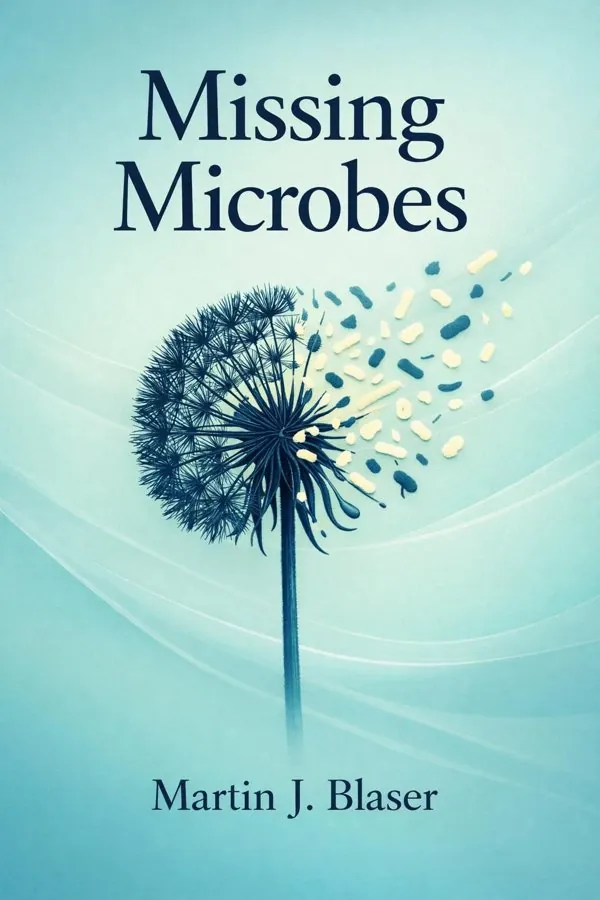
Missing Microbes: How the Overuse of Antibiotics Is Fueling Our Modern Plagues: Summary & Key Insights
 10 min9 chaptersAudio available
Key Takeaways from Missing Microbes: How the Overuse of Antibiotics Is Fueling Our Modern Plagues
The most important part of your body may be the part you were never taught to think about.
Few medical discoveries have saved more lives than antibiotics, but few have been used with less restraint.
The danger Blaser describes is not only individual.
Sometimes a microbe can be both dangerous and useful, and that complexity sits at the heart of Blaser’s argument.
A disturbance that lasts a few days can shape a life that lasts decades.
What Is Missing Microbes: How the Overuse of Antibiotics Is Fueling Our Modern Plagues About?
Missing Microbes: How the Overuse of Antibiotics Is Fueling Our Modern Plagues by Martin J. Blaser is a life_science book spanning 6 pages. What if some of our most stubborn modern illnesses are not caused only by what invades the body, but also by what has quietly disappeared from it? In Missing Microbes, physician and microbiologist Martin J. Blaser argues that the rise of antibiotics, antiseptic living, processed diets, and overly aggressive medical practices has altered the human microbiome in profound and dangerous ways. The invisible organisms that once helped regulate digestion, metabolism, immunity, and development are vanishing, and Blaser believes their loss is contributing to obesity, asthma, allergies, diabetes, and other chronic disorders that now define modern life. This is not an anti-medicine manifesto. Blaser repeatedly acknowledges that antibiotics have saved millions of lives and remain essential tools. His warning is more subtle and more urgent: when we use them carelessly, especially early in life, we may be damaging ancient biological partnerships we do not yet fully understand. Drawing on decades of research, including his groundbreaking work on Helicobacter pylori and the human microbiome, Blaser offers a powerful rethink of health, disease, and our complicated relationship with microbes.
This FizzRead summary covers all 9 key chapters of Missing Microbes: How the Overuse of Antibiotics Is Fueling Our Modern Plagues in approximately 10 minutes, distilling the most important ideas, arguments, and takeaways from Martin J. Blaser's work. Also available as an audio summary and Key Quotes Podcast.
Missing Microbes: How the Overuse of Antibiotics Is Fueling Our Modern Plagues
What if some of our most stubborn modern illnesses are not caused only by what invades the body, but also by what has quietly disappeared from it? In Missing Microbes, physician and microbiologist Martin J. Blaser argues that the rise of antibiotics, antiseptic living, processed diets, and overly aggressive medical practices has altered the human microbiome in profound and dangerous ways. The invisible organisms that once helped regulate digestion, metabolism, immunity, and development are vanishing, and Blaser believes their loss is contributing to obesity, asthma, allergies, diabetes, and other chronic disorders that now define modern life. This is not an anti-medicine manifesto. Blaser repeatedly acknowledges that antibiotics have saved millions of lives and remain essential tools. His warning is more subtle and more urgent: when we use them carelessly, especially early in life, we may be damaging ancient biological partnerships we do not yet fully understand. Drawing on decades of research, including his groundbreaking work on Helicobacter pylori and the human microbiome, Blaser offers a powerful rethink of health, disease, and our complicated relationship with microbes.
Who Should Read Missing Microbes: How the Overuse of Antibiotics Is Fueling Our Modern Plagues?
This book is perfect for anyone interested in life_science and looking to gain actionable insights in a short read. Whether you're a student, professional, or lifelong learner, the key ideas from Missing Microbes: How the Overuse of Antibiotics Is Fueling Our Modern Plagues by Martin J. Blaser will help you think differently.
- ✓Readers who enjoy life_science and want practical takeaways
- ✓Professionals looking to apply new ideas to their work and life
- ✓Anyone who wants the core insights of Missing Microbes: How the Overuse of Antibiotics Is Fueling Our Modern Plagues in just 10 minutes
Want the full summary?
Get instant access to this book summary and 100K+ more with Fizz Moment.
Get Free SummaryAvailable on App Store • Free to download
Key Chapters
Few medical discoveries have saved more lives than antibiotics, but few have been used with less restraint. Blaser is careful not to deny their enormous value. Penicillin and the drugs that followed transformed medicine by turning once-fatal infections into treatable conditions. Surgery became safer, childbirth less deadly, and routine injuries less terrifying. Antibiotics remain indispensable, especially in acute bacterial infections.
The problem is not that antibiotics exist. The problem is that they are often used when they are unnecessary, too broad, or too frequent. Antibiotics do not target only the harmful bacteria causing an infection. Many of them also wipe out beneficial microbes throughout the body, especially in the gut. This is like bombing a city to eliminate a small criminal group. The collateral damage can be extensive and long-lasting.
Blaser also highlights how routine prescribing for viral illnesses, preventive overuse in medicine, and massive agricultural use have normalized antibiotic exposure. A child who receives multiple courses of antibiotics early in life may experience changes in the microbiome during a critical developmental window. Those changes may not cause immediate illness, but they may alter metabolism or immune function for years.
A familiar example is a child with a cold who receives antibiotics “just in case,” even though the illness is viral. The child may recover, but their microbial community may be unnecessarily disrupted. Actionable takeaway: use antibiotics when they are clearly needed, ask whether a prescription is essential, and prefer the narrowest effective treatment rather than assuming more medication is always better.
The danger Blaser describes is not only individual. It is generational. Every time microbial diversity is reduced in one generation, less may be passed to the next. This is one of the book’s most unsettling ideas: modern humans may be inheriting a biologically diminished microbial legacy.
Microbes are transferred through birth, breastfeeding, close contact, shared environments, and daily living. For most of human history, newborns acquired maternal microbes during vaginal birth and continued developing a rich internal ecosystem through feeding and family contact. Today, however, cesarean births are more common, formula feeding is widespread, antibiotic exposure begins earlier, and families often live in cleaner, more isolated environments. Each of these changes can alter which microbes children receive.
Blaser suggests that this gradual loss may help explain the growing prevalence of chronic diseases in industrialized societies. If each generation starts with a less diverse microbial inheritance, then vulnerability may accumulate. The body may still function, but it may do so with fewer ecological tools for regulating inflammation, processing food, or resisting harmful colonization.
A practical example is the contrast between children raised with frequent antibiotic use and limited environmental exposure versus those raised with more microbial contact from siblings, pets, outdoor play, and less medication. The difference may influence immune education in subtle but important ways.
This does not mean returning to unsafe conditions. It means recognizing that health is transmitted biologically and ecologically, not just genetically. Actionable takeaway: support early-life microbial development through careful antibiotic decisions, informed birth and feeding choices when possible, and healthy exposure to diverse everyday environments.
Sometimes a microbe can be both dangerous and useful, and that complexity sits at the heart of Blaser’s argument. His work on Helicobacter pylori, a bacterium that colonizes the human stomach, helped reveal how simplistic our good-bug versus bad-bug thinking can be. H. pylori is associated with ulcers and stomach cancer in some people, and eliminating it has brought real medical benefits. Yet Blaser’s research suggests that the story is more complicated.
For much of human history, H. pylori was a common member of the human microbiota. As antibiotics and hygiene practices spread, the bacterium became less common in developed countries. That sounds like progress, but Blaser notes possible trade-offs. The disappearance of H. pylori may be linked to rising rates of acid reflux, esophageal disease, and even asthma, because the bacterium may help regulate stomach acidity, hormones, and immune responses.
This does not mean everyone should keep H. pylori. Rather, it illustrates a larger principle: removing a long-standing microbial partner may solve one problem while creating others. Biology is full of balances, and microbes often play multiple roles at once.
In practical terms, H. pylori reminds us that medicine should aim for precision, not blanket eradication. A bacterium’s value depends on context, host factors, and timing. The goal is not to romanticize microbes but to understand them better before destroying them. Actionable takeaway: adopt a more nuanced view of microbes and support medical decisions that weigh both the benefits and unintended consequences of eliminating specific organisms.
A disturbance that lasts a few days can shape a life that lasts decades. One of Blaser’s strongest warnings concerns infancy and early childhood, when the microbiome is still forming and the immune system is learning how to distinguish friend from foe. During this period, microbial exposures help calibrate metabolism, digestion, and immune tolerance. Interfering with that process may have lifelong effects.
Blaser points to research showing associations between early antibiotic use and later risks of obesity, asthma, allergies, inflammatory bowel conditions, and metabolic disorders. While association is not always proof of causation, the pattern is striking enough to demand caution. In animal studies, low-dose antibiotics can alter weight gain and metabolic pathways. In humans, children who receive repeated antibiotics early in life may face elevated risks that cannot be explained only by genetics or lifestyle.
This idea is especially important because many antibiotic prescriptions in childhood are issued for ear infections, sore throats, and respiratory illnesses that may resolve on their own or are caused by viruses. In such cases, a quick prescription may bring short-term reassurance while quietly disrupting long-term development.
Parents and doctors often feel pressure to act, but action is not always the same as wisdom. Watchful waiting, accurate diagnosis, and symptom relief can sometimes be safer than immediate medication.
Blaser’s message is not to avoid treatment when necessary. A true bacterial infection should be treated. But developmental timing matters. Actionable takeaway: treat antibiotics in infancy and early childhood as precious tools, not routine defaults, and discuss alternatives or confirmation of need before using them.
Many features of modern life that seem to signal progress may also be narrowing our biological resilience. Blaser connects microbial decline not only to antibiotics, but also to processed diets, sanitized homes, reduced contact with soil and animals, chlorinated water systems, smaller families, and urban living patterns that limit microbial exchange. Each factor alone may seem minor. Together, they reshape the ecosystem of the human body.
Processed foods often lack the complexity that nourishes beneficial gut bacteria. Diets low in fiber and high in additives may favor a less diverse intestinal community. At the same time, antibacterial soaps, disinfectants, and sterile habits can reduce harmless exposures that once helped the immune system learn tolerance. Children who rarely play outdoors, interact with animals, or encounter natural environments may be missing microbial inputs that humans historically received every day.
Blaser does not argue against cleanliness or modern infrastructure. Safe water, sanitation, and food preservation have saved countless lives. His point is that public health victories can coexist with new biological costs. The challenge is finding a healthier balance between protection from deadly pathogens and preservation of beneficial microbial contact.
Examples include choosing whole foods over heavily processed meals, allowing children regular outdoor play, and resisting the urge to sanitize every surface in ordinary situations. The healthiest home is not a dirty home, but neither is it a laboratory.
Actionable takeaway: create a lifestyle that supports microbial diversity by eating fiber-rich foods, spending time in nature, limiting unnecessary antibacterial products, and allowing normal everyday exposure to the wider living world.
What if the epidemics we call modern are, in part, ecological diseases of the body? Blaser argues that rising rates of obesity, type 1 diabetes, asthma, allergies, celiac disease, and inflammatory disorders may be linked to disruptions in the microbiome. Rather than viewing these conditions as isolated problems with separate causes, he suggests they may share a common background: the loss of microbes that once helped regulate key biological systems.
The immune system is one major example. Without sufficient microbial training, it may become overreactive, attacking harmless pollen, food proteins, or even the body’s own tissues. Metabolism is another. Gut microbes help extract energy, influence fat storage, and shape hormones related to hunger and insulin sensitivity. Alter the community, and the body may begin processing food differently.
This framework helps explain why chronic diseases have risen so rapidly in a relatively short span of history. Human genes have not changed that quickly, but our microbial environment has. Antibiotics, cesarean delivery, formula feeding, and low-diversity diets can all shift the microbiome far faster than evolution can compensate.
Blaser does not claim the microbiome explains everything. Genetics, pollution, diet, stress, and behavior still matter. But he insists that microbial loss belongs in the conversation. That insight broadens medicine from a focus on isolated organs to a systems-level view of health.
Actionable takeaway: when thinking about chronic disease prevention, include microbiome-supportive habits alongside exercise, sleep, and nutrition, because long-term health may depend on maintaining internal ecological balance.
The body is not a machine with replaceable parts. It is an ecosystem, and ecosystems cannot be managed well with purely short-term thinking. One of Blaser’s deepest contributions is philosophical: he asks medicine to adopt an ecological mindset. In ecology, interventions are judged not only by immediate outcomes but by ripple effects, unintended consequences, and system-wide balance. That mindset is urgently needed in healthcare.
A doctor may successfully eliminate a bacterial infection, but if the treatment also disrupts a child’s microbiome at a critical stage, the long-term cost may be invisible for years. Likewise, public health systems that reward quick prescribing may solve a short-term problem while increasing antibiotic resistance and microbial depletion. Ecological thinking does not reject intervention. It insists on precision, proportion, and humility.
This perspective also changes research priorities. Instead of studying pathogens alone, scientists must study microbial communities, host interactions, timing of exposure, and recovery after disruption. Hospitals may need antibiotic stewardship programs not only to prevent resistance but to protect microbiome integrity. Patients may need better education on when treatment is necessary and when rest, monitoring, or targeted care is enough.
In daily life, ecological thinking encourages people to ask broader questions: What else does this drug affect? What kind of microbial environment am I creating at home? How do my choices influence long-term resilience?
Actionable takeaway: adopt a systems view of health by favoring treatments and habits that solve problems while minimizing collateral damage to the body’s microbial ecosystem.
If microbes are being lost, the natural question is whether they can be restored. Blaser ends not with despair but with a call for smarter stewardship. He believes the first priority is preservation: avoid needless microbial damage before trying to repair it later. That means more responsible antibiotic prescribing, reduced use of antibiotics in agriculture, better diagnostics to distinguish bacterial from viral illness, and more awareness among parents, physicians, and policymakers.
Restoration is more challenging. Probiotics may help in some situations, but Blaser suggests they are often too simple to replace the complexity of a healthy microbiome. A few strains in a capsule cannot easily recreate a lost ecosystem built over generations. More advanced approaches, including targeted microbial therapies, microbiome mapping, and in some cases fecal microbiota transplantation, point toward future possibilities, but the science is still evolving.
Meanwhile, everyday practices still matter. Breastfeeding when possible, eating fiber-rich and minimally processed foods, spending time in natural environments, and reserving antibiotics for clear medical need can all support microbial recovery and maintenance. On the policy side, agricultural systems that use antibiotics for growth promotion deserve serious scrutiny because they affect both resistance and human microbial exposure.
Blaser’s hope is that medicine can move from indiscriminate killing to intelligent cultivation. We do not need to become anti-modern to do this. We need to become more biologically literate.
Actionable takeaway: treat the microbiome as something to preserve first and restore thoughtfully, using informed healthcare decisions and daily habits that encourage long-term microbial resilience.
All Chapters in Missing Microbes: How the Overuse of Antibiotics Is Fueling Our Modern Plagues
About the Author
Martin J. Blaser is an American physician, microbiologist, and leading voice in the study of the human microbiome. Trained in both medicine and infectious disease research, he built an influential career investigating how microbes shape human health across the lifespan. He is especially known for his pioneering work on Helicobacter pylori, which helped reveal that bacteria long viewed only as threats can also play important roles in the body’s biological balance. Blaser has held major academic leadership roles, including serving as director of the Human Microbiome Program at New York University. Through his research, teaching, and writing, he has pushed medicine to think more ecologically about antibiotics, immunity, and chronic disease. Missing Microbes reflects decades of scientific work and public-health concern.
Get This Summary in Your Preferred Format
Read or listen to the Missing Microbes: How the Overuse of Antibiotics Is Fueling Our Modern Plagues summary by Martin J. Blaser anytime, anywhere. FizzRead offers multiple formats so you can learn on your terms — all free.
Available formats: App · Audio · PDF · EPUB — All included free with FizzRead
Download Missing Microbes: How the Overuse of Antibiotics Is Fueling Our Modern Plagues PDF and EPUB Summary
Key Quotes from Missing Microbes: How the Overuse of Antibiotics Is Fueling Our Modern Plagues
“The most important part of your body may be the part you were never taught to think about.”
“Few medical discoveries have saved more lives than antibiotics, but few have been used with less restraint.”
“The danger Blaser describes is not only individual.”
“Sometimes a microbe can be both dangerous and useful, and that complexity sits at the heart of Blaser’s argument.”
“A disturbance that lasts a few days can shape a life that lasts decades.”
Frequently Asked Questions about Missing Microbes: How the Overuse of Antibiotics Is Fueling Our Modern Plagues
Missing Microbes: How the Overuse of Antibiotics Is Fueling Our Modern Plagues by Martin J. Blaser is a life_science book that explores key ideas across 9 chapters. What if some of our most stubborn modern illnesses are not caused only by what invades the body, but also by what has quietly disappeared from it? In Missing Microbes, physician and microbiologist Martin J. Blaser argues that the rise of antibiotics, antiseptic living, processed diets, and overly aggressive medical practices has altered the human microbiome in profound and dangerous ways. The invisible organisms that once helped regulate digestion, metabolism, immunity, and development are vanishing, and Blaser believes their loss is contributing to obesity, asthma, allergies, diabetes, and other chronic disorders that now define modern life. This is not an anti-medicine manifesto. Blaser repeatedly acknowledges that antibiotics have saved millions of lives and remain essential tools. His warning is more subtle and more urgent: when we use them carelessly, especially early in life, we may be damaging ancient biological partnerships we do not yet fully understand. Drawing on decades of research, including his groundbreaking work on Helicobacter pylori and the human microbiome, Blaser offers a powerful rethink of health, disease, and our complicated relationship with microbes.
You Might Also Like
The Selfish Gene
Richard Dawkins
10 min
Awakenings
Oliver Sacks
10 min
Parasite Rex: Inside the Bizarre World of Nature's Most Dangerous Creatures
Carl Zimmer
10 min
The Atlas of Life on Earth
Various
10 min
The Book of Humans: The Story of How We Became Us
Adam Rutherford
10 min
The Horse
Wendy Williams
10 minBrowse by Category
Ready to read Missing Microbes: How the Overuse of Antibiotics Is Fueling Our Modern Plagues?
Get the full summary and 100K+ more books with Fizz Moment.