
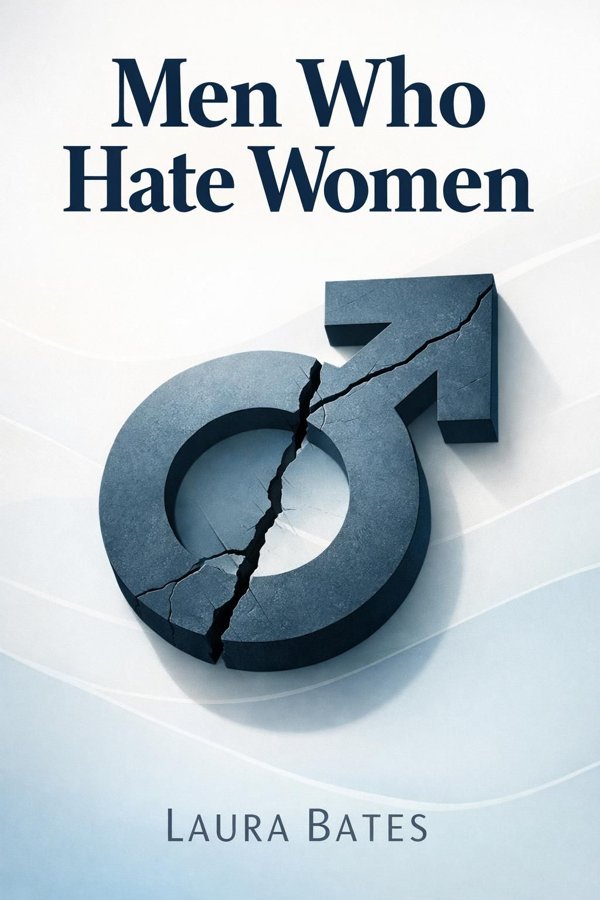
Men Who Hate Women: From Incels to Pickup Artists: The Truth About Extreme Misogyny and How It Affects Us All: Summary & Key Insights
by Laura Bates
 10 min8 chaptersAudio available
What Is Men Who Hate Women: From Incels to Pickup Artists: The Truth About Extreme Misogyny and How It Affects Us All About?
Men Who Hate Women: From Incels to Pickup Artists: The Truth About Extreme Misogyny and How It Affects Us All by Laura Bates is a sociology book spanning 8 pages. In this investigative work, Laura Bates explores the hidden online communities of men who express hatred toward women, including incels, pickup artists, and men's rights activists. Drawing on years of research and interviews, Bates reveals how these movements spread misogyny, influence mainstream culture, and pose real-world dangers to women and society. The book calls for awareness and collective action to confront and dismantle these toxic ideologies.
This FizzRead summary covers all 8 key chapters of Men Who Hate Women: From Incels to Pickup Artists: The Truth About Extreme Misogyny and How It Affects Us All in approximately 10 minutes, distilling the most important ideas, arguments, and takeaways from Laura Bates's work. Also available as an audio summary and Key Quotes Podcast.
Men Who Hate Women: From Incels to Pickup Artists: The Truth About Extreme Misogyny and How It Affects Us All
In this investigative work, Laura Bates explores the hidden online communities of men who express hatred toward women, including incels, pickup artists, and men's rights activists. Drawing on years of research and interviews, Bates reveals how these movements spread misogyny, influence mainstream culture, and pose real-world dangers to women and society. The book calls for awareness and collective action to confront and dismantle these toxic ideologies.
Who Should Read Men Who Hate Women: From Incels to Pickup Artists: The Truth About Extreme Misogyny and How It Affects Us All?
This book is perfect for anyone interested in sociology and looking to gain actionable insights in a short read. Whether you're a student, professional, or lifelong learner, the key ideas from Men Who Hate Women: From Incels to Pickup Artists: The Truth About Extreme Misogyny and How It Affects Us All by Laura Bates will help you think differently.
- ✓Readers who enjoy sociology and want practical takeaways
- ✓Professionals looking to apply new ideas to their work and life
- ✓Anyone who wants the core insights of Men Who Hate Women: From Incels to Pickup Artists: The Truth About Extreme Misogyny and How It Affects Us All in just 10 minutes
Want the full summary?
Get instant access to this book summary and 100K+ more with Fizz Moment.
Get Free SummaryAvailable on App Store • Free to download
Key Chapters
When I first began delving into the online underworld of misogyny, I encountered not one community but a constellation of forums, subreddits, and message boards that fed off one another. The 'manosphere' is not a single entity—it is a network of interconnected movements that share the narrative of male victimhood. Incels, pickup artists, men’s rights activists, 'Men Going Their Own Way,' and various YouTube pundits all operate under different banners, but their worldviews are woven together by the same toxic thread: resentment toward women and feminism.
Each community performs a different function. Incels claim sexual deprivation as oppression. Pickup artists weaponize charm as control. Men’s rights activists frame equality movements as attacks on masculinity. Though they often disagree with one another, these groups cross-pollinate constantly. The algorithmic nature of the internet feeds this process—each post, each click leads deeper into the same tunnel.
What makes the manosphere especially dangerous is its seductive logic of grievance. It invites men in with promises of belonging and empowerment, then ruthlessly redirects their frustrations toward women. Once inside, users are exposed to language that dehumanizes women, jokes that normalize assault, and memes that glorify violence. I saw boys as young as fourteen immersed in threads discussing 'enforced monogamy' and 'female submission' as if these were intellectual debates rather than fantasies of control.
Mapping this space was essential, not simply to analyze where hatred hides, but to recognize its coherence. It is not fringe; it is systemic. The manosphere operates with its own lexicon, hierarchy, and heroes—and it thrives precisely because society has treated misogyny as harmless banter rather than an organized ideology.
Among all the communities I explored, incels—short for 'involuntary celibates'—stood out for their extremity. To many outside observers, incels are lonely men dealing with rejection. But inside their spaces, loneliness transforms into entitlement. They construct elaborate pseudo-scientific theories like the 'Chad and Stacy' hierarchy to justify the belief that women who reject them are villains denying them their rightful access to sex.
This ideology is not without consequence. Time after time, we’ve seen members of this community cross into violence. The Isla Vista killer, who left behind a manifesto railing against women’s refusal to sleep with him, was hailed as a hero by incels. Forums traced his attack not with horror, but admiration. The underlying message is chillingly consistent: women are to blame for men’s pain, and punishment is deserved.
But incel culture is not confined to attack manifestos. It seeps into mainstream humor, into the memes shared on school playgrounds, where teenage boys repeat lines about 'femoids' or 'sexual hierarchy' with little understanding of their origins. The incel worldview presents itself as realism: the idea that women’s liberation has destroyed natural order. By reframing hatred as 'truth-telling,' it becomes self-reinforcing.
In writing this section, I wanted to confront not only the extremism but the emotional vacuum that drives it. Many of these men are genuinely lonely. Yet their pain is weaponized by forums that transform isolation into ideology. The challenge for society is not only to expose the violence but to reach the lonely before they are radicalized—to replace misogynistic myths with genuine connection and empathy.
+ 6 more chapters — available in the FizzRead app
All Chapters in Men Who Hate Women: From Incels to Pickup Artists: The Truth About Extreme Misogyny and How It Affects Us All
About the Author
Laura Bates is a British writer, activist, and founder of the Everyday Sexism Project. She is known for her work on gender equality and for raising awareness about everyday discrimination and violence against women. Bates has written several books and contributes regularly to major publications on issues of feminism and social justice.
Get This Summary in Your Preferred Format
Read or listen to the Men Who Hate Women: From Incels to Pickup Artists: The Truth About Extreme Misogyny and How It Affects Us All summary by Laura Bates anytime, anywhere. FizzRead offers multiple formats so you can learn on your terms — all free.
Available formats: App · Audio · PDF · EPUB — All included free with FizzRead
Download Men Who Hate Women: From Incels to Pickup Artists: The Truth About Extreme Misogyny and How It Affects Us All PDF and EPUB Summary
Key Quotes from Men Who Hate Women: From Incels to Pickup Artists: The Truth About Extreme Misogyny and How It Affects Us All
“When I first began delving into the online underworld of misogyny, I encountered not one community but a constellation of forums, subreddits, and message boards that fed off one another.”
“Among all the communities I explored, incels—short for 'involuntary celibates'—stood out for their extremity.”
Frequently Asked Questions about Men Who Hate Women: From Incels to Pickup Artists: The Truth About Extreme Misogyny and How It Affects Us All
Men Who Hate Women: From Incels to Pickup Artists: The Truth About Extreme Misogyny and How It Affects Us All by Laura Bates is a sociology book that explores key ideas across 8 chapters. In this investigative work, Laura Bates explores the hidden online communities of men who express hatred toward women, including incels, pickup artists, and men's rights activists. Drawing on years of research and interviews, Bates reveals how these movements spread misogyny, influence mainstream culture, and pose real-world dangers to women and society. The book calls for awareness and collective action to confront and dismantle these toxic ideologies.
You Might Also Like
Between the World and Me
Ta-Nehisi Coates
10 min
Half the Sky
Nicholas D. Kristof, Sheryl WuDunn
10 min
Men Explain Things To Me
Rebecca Solnit
10 min
Rational Ritual
Michael Suk-Young Chwe
10 min
The New Jim Crow
Michelle Alexander
10 min
Beyond Culture
Edward T. Hall
10 minBrowse by Category
Ready to read Men Who Hate Women: From Incels to Pickup Artists: The Truth About Extreme Misogyny and How It Affects Us All?
Get the full summary and 100K+ more books with Fizz Moment.