
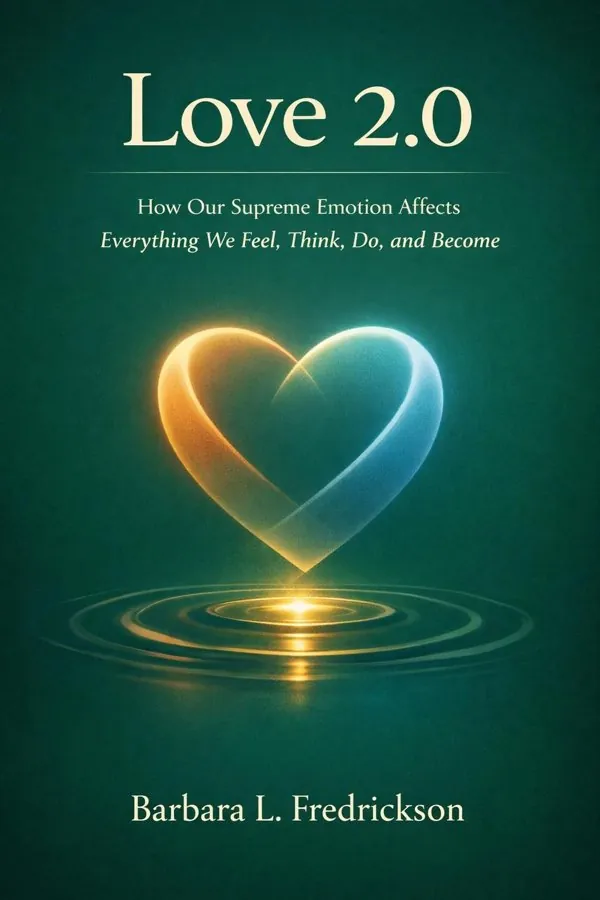
Love 2.0: How Our Supreme Emotion Affects Everything We Feel, Think, Do, and Become: Summary & Key Insights
 10 min7 chaptersAudio available
What Is Love 2.0: How Our Supreme Emotion Affects Everything We Feel, Think, Do, and Become About?
Love 2.0: How Our Supreme Emotion Affects Everything We Feel, Think, Do, and Become by Barbara L. Fredrickson is a positive_psych book spanning 7 pages. In this groundbreaking work, psychologist Barbara L. Fredrickson explores the science of love as a dynamic emotional experience that broadens our awareness and builds our capacity for connection. Drawing on decades of research in positive psychology, she reveals how micro-moments of love can transform our health, relationships, and sense of purpose, offering practical insights into cultivating emotional resilience and well-being.
This FizzRead summary covers all 7 key chapters of Love 2.0: How Our Supreme Emotion Affects Everything We Feel, Think, Do, and Become in approximately 10 minutes, distilling the most important ideas, arguments, and takeaways from Barbara L. Fredrickson's work. Also available as an audio summary and Key Quotes Podcast.
Love 2.0: How Our Supreme Emotion Affects Everything We Feel, Think, Do, and Become
In this groundbreaking work, psychologist Barbara L. Fredrickson explores the science of love as a dynamic emotional experience that broadens our awareness and builds our capacity for connection. Drawing on decades of research in positive psychology, she reveals how micro-moments of love can transform our health, relationships, and sense of purpose, offering practical insights into cultivating emotional resilience and well-being.
Who Should Read Love 2.0: How Our Supreme Emotion Affects Everything We Feel, Think, Do, and Become?
This book is perfect for anyone interested in positive_psych and looking to gain actionable insights in a short read. Whether you're a student, professional, or lifelong learner, the key ideas from Love 2.0: How Our Supreme Emotion Affects Everything We Feel, Think, Do, and Become by Barbara L. Fredrickson will help you think differently.
- ✓Readers who enjoy positive_psych and want practical takeaways
- ✓Professionals looking to apply new ideas to their work and life
- ✓Anyone who wants the core insights of Love 2.0: How Our Supreme Emotion Affects Everything We Feel, Think, Do, and Become in just 10 minutes
Want the full summary?
Get instant access to this book summary and 100K+ more with Fizz Moment.
Get Free SummaryAvailable on App Store • Free to download
Key Chapters
My foundational research on emotions began with a simple question: why do positive emotions matter? The answer unfolded into the broaden-and-build theory, which demonstrates that positive emotions—such as joy, gratitude, and love—broaden our momentary awareness and build enduring personal resources. Whereas fear narrows our focus for immediate survival, love opens our minds and hearts to possibilities, inviting curiosity and cooperation.
When applied to love, this theory reveals that it is not just about interpersonal affection; it is about how our brains and bodies evolve through connection. In each loving moment, your awareness expands beyond self-interest. You notice more details, see context with greater clarity, and respond with more flexibility. Love nourishes this cognitive openness. Through it, we build psychological strengths, social bonds, and even physical health.
I have found that love generates a ripple effect—once experienced, it predisposes you to share positivity again. This cycle amplifies awareness and fortifies emotional resilience. If you consistently engage in loving interactions, whether with family, friends, or strangers, your ability to recover from stress and to adapt to challenges strengthens. Love is, therefore, not just an emotion but an adaptive mechanism of human flourishing. It is the most efficient way our bodies and minds evolve toward health.
If love is not a permanent state but something that lives in moments, where should we look for it? The scientific answer lies in what I call ‘micro-moments of positivity resonance.’ These are brief, shared experiences of positivity, synchrony, and mutual care that occur when two people genuinely connect.
Imagine locking eyes with someone who truly sees you, sharing laughter with a stranger, or feeling warmth during a small act of kindness. In those seconds, your physiological systems align—your heart rhythms and neural activity subtly synchronize. This resonance activates the body’s calming and restorative capacities, sparking a cascade of beneficial effects.
Love, then, is not reserved for marriage or family bonds. It thrives in these micro-moments across everyday life. You may experience it with a barista, a colleague, or even a passerby. Once you grasp that love happens through shared neural and biological states, your world opens. You begin to notice opportunities for connection everywhere.
These micro-moments accumulate. Each one, though fleeting, strengthens your biological capacity for connection—like exercising a muscle. The more often you engage in love’s resonance, the more vivid your awareness becomes, the more resilient your body becomes, and the more generous your spirit grows. In truth, your health and happiness depend less on who you love long-term and more on how often you allow yourself to experience these moments of shared positivity.
+ 5 more chapters — available in the FizzRead app
All Chapters in Love 2.0: How Our Supreme Emotion Affects Everything We Feel, Think, Do, and Become
About the Author
Barbara L. Fredrickson, Ph.D., is a leading researcher in positive psychology and a professor at the University of North Carolina at Chapel Hill. Her work focuses on emotions, resilience, and human flourishing, and she is known for developing the broaden-and-build theory of positive emotions.
Get This Summary in Your Preferred Format
Read or listen to the Love 2.0: How Our Supreme Emotion Affects Everything We Feel, Think, Do, and Become summary by Barbara L. Fredrickson anytime, anywhere. FizzRead offers multiple formats so you can learn on your terms — all free.
Available formats: App · Audio · PDF · EPUB — All included free with FizzRead
Download Love 2.0: How Our Supreme Emotion Affects Everything We Feel, Think, Do, and Become PDF and EPUB Summary
Key Quotes from Love 2.0: How Our Supreme Emotion Affects Everything We Feel, Think, Do, and Become
“My foundational research on emotions began with a simple question: why do positive emotions matter?”
“If love is not a permanent state but something that lives in moments, where should we look for it?”
Frequently Asked Questions about Love 2.0: How Our Supreme Emotion Affects Everything We Feel, Think, Do, and Become
Love 2.0: How Our Supreme Emotion Affects Everything We Feel, Think, Do, and Become by Barbara L. Fredrickson is a positive_psych book that explores key ideas across 7 chapters. In this groundbreaking work, psychologist Barbara L. Fredrickson explores the science of love as a dynamic emotional experience that broadens our awareness and builds our capacity for connection. Drawing on decades of research in positive psychology, she reveals how micro-moments of love can transform our health, relationships, and sense of purpose, offering practical insights into cultivating emotional resilience and well-being.
More by Barbara L. Fredrickson
You Might Also Like

Don't Sweat the Small Stuff... and It's All Small Stuff
Richard Carlson
10 min
Option B
Sheryl Sandberg & Adam Grant
10 min
Hallelujah Anyway: Rediscovering Mercy
Anne Lamott
10 min
I Can Do It: How to Use Affirmations to Change Your Life
Louise Hay
10 min
The Coffee Bean: A Simple Lesson to Create Positive Change
Jon Gordon, Damon West
10 min
The Happiness Hypothesis: Finding Modern Truth in Ancient Wisdom
Jonathan Haidt
10 minBrowse by Category
Ready to read Love 2.0: How Our Supreme Emotion Affects Everything We Feel, Think, Do, and Become?
Get the full summary and 100K+ more books with Fizz Moment.