
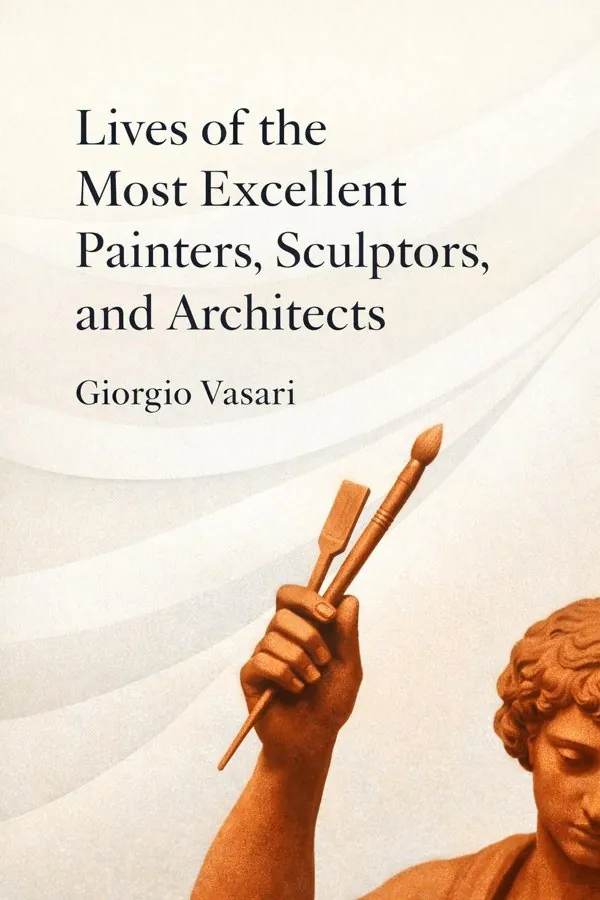
Lives of the Most Excellent Painters, Sculptors, and Architects: Summary & Key Insights
 10 min7 chaptersAudio available
What Is Lives of the Most Excellent Painters, Sculptors, and Architects About?
Lives of the Most Excellent Painters, Sculptors, and Architects by Giorgio Vasari is a art_history book spanning 7 pages. Originally published in 1550, Giorgio Vasari’s "Lives of the Most Excellent Painters, Sculptors, and Architects" is a foundational work of Renaissance art history. It presents detailed biographies of Italian artists from the 14th to the 16th centuries, including Giotto, Leonardo da Vinci, Michelangelo, and Raphael. Vasari, himself a painter and architect, combines historical narrative with critical commentary, offering insight into the development of artistic techniques and the cultural context of the Italian Renaissance.
This FizzRead summary covers all 7 key chapters of Lives of the Most Excellent Painters, Sculptors, and Architects in approximately 10 minutes, distilling the most important ideas, arguments, and takeaways from Giorgio Vasari's work. Also available as an audio summary and Key Quotes Podcast.
Lives of the Most Excellent Painters, Sculptors, and Architects
Originally published in 1550, Giorgio Vasari’s "Lives of the Most Excellent Painters, Sculptors, and Architects" is a foundational work of Renaissance art history. It presents detailed biographies of Italian artists from the 14th to the 16th centuries, including Giotto, Leonardo da Vinci, Michelangelo, and Raphael. Vasari, himself a painter and architect, combines historical narrative with critical commentary, offering insight into the development of artistic techniques and the cultural context of the Italian Renaissance.
Who Should Read Lives of the Most Excellent Painters, Sculptors, and Architects?
This book is perfect for anyone interested in art_history and looking to gain actionable insights in a short read. Whether you're a student, professional, or lifelong learner, the key ideas from Lives of the Most Excellent Painters, Sculptors, and Architects by Giorgio Vasari will help you think differently.
- ✓Readers who enjoy art_history and want practical takeaways
- ✓Professionals looking to apply new ideas to their work and life
- ✓Anyone who wants the core insights of Lives of the Most Excellent Painters, Sculptors, and Architects in just 10 minutes
Want the full summary?
Get instant access to this book summary and 100K+ more with Fizz Moment.
Get Free SummaryAvailable on App Store • Free to download
Key Chapters
In the beginning, I must remind you that all arts spring from imitation of nature and the desire to express divine harmony through matter. The Greeks and Romans achieved incomparable beauty in their statues and buildings, revealing balance, proportion, and the ideal human form as taught by nature herself. Yet with the collapse of that world, these principles fell into ruin. The barbarian invasions destroyed not just cities but the very sense of proportion and measure that sustained the arts. What survived of ancient skill languished for centuries, its techniques forgotten, its spirit dimmed.
The Middle Ages, for all their piety, misunderstood the nature of beauty. In their zeal for faith, artists turned away from realism, producing flat and rigid forms that concealed more than they revealed of divine truth. But as divine providence wills renewal, so it roused in Italy a hunger to restore that lost perfection. The remnants of antique sculpture and old Roman buildings whispered of what humanity once achieved, and slowly men began to imitate those noble forms again. I trace this awakening as the first dawn of the Renaissance: the rediscovery of what it means for art to serve both truth and grace.
When I speak of Cimabue, I speak of the first spark that broke the medieval gloom. He perceived that painting could depict the world as the eye sees it, not merely as convention dictated. His works, though still bound to stiff outlines, begin to breathe. But it was his pupil Giotto di Bondone who brought painting to life anew. Giotto, born a shepherd boy near Florence, looked directly at nature. His saints possessed weight and presence; his figures stood on solid ground. In him, art learned again to see humanity, to feel pity, joy, and divine awe.
Giotto’s frescoes in Assisi and Padua transformed sacred storytelling into a living tapestry. Through his hand, Christ’s suffering became real, and the gestures of mourners expressed genuine emotion. I regard Giotto as the true redeemer of Italian painting. From him grew a school of artists who strove to refine what he began: Orcagna, Andrea Pisano, and others who fused spiritual purpose with advancing technical mastery. Step by step, their efforts rebuilt what antiquity had known—that art must imitate life, and that form and feeling are inseparable.
+ 5 more chapters — available in the FizzRead app
All Chapters in Lives of the Most Excellent Painters, Sculptors, and Architects
About the Author
Giorgio Vasari (1511–1574) was an Italian painter, architect, and writer from Arezzo. He is regarded as the first art historian for his comprehensive biographical work on Renaissance artists. Vasari worked for the Medici family in Florence and designed notable buildings such as the Uffizi Gallery.
Get This Summary in Your Preferred Format
Read or listen to the Lives of the Most Excellent Painters, Sculptors, and Architects summary by Giorgio Vasari anytime, anywhere. FizzRead offers multiple formats so you can learn on your terms — all free.
Available formats: App · Audio · PDF · EPUB — All included free with FizzRead
Download Lives of the Most Excellent Painters, Sculptors, and Architects PDF and EPUB Summary
Key Quotes from Lives of the Most Excellent Painters, Sculptors, and Architects
“In the beginning, I must remind you that all arts spring from imitation of nature and the desire to express divine harmony through matter.”
“When I speak of Cimabue, I speak of the first spark that broke the medieval gloom.”
Frequently Asked Questions about Lives of the Most Excellent Painters, Sculptors, and Architects
Lives of the Most Excellent Painters, Sculptors, and Architects by Giorgio Vasari is a art_history book that explores key ideas across 7 chapters. Originally published in 1550, Giorgio Vasari’s "Lives of the Most Excellent Painters, Sculptors, and Architects" is a foundational work of Renaissance art history. It presents detailed biographies of Italian artists from the 14th to the 16th centuries, including Giotto, Leonardo da Vinci, Michelangelo, and Raphael. Vasari, himself a painter and architect, combines historical narrative with critical commentary, offering insight into the development of artistic techniques and the cultural context of the Italian Renaissance.
You Might Also Like
Studies In Impressionism
John Rewald
10 min
Art Since 1900: Modernism, Antimodernism, Postmodernism
Hal Foster, Rosalind E. Krauss, Yve-Alain Bois, Benjamin H. D. Buchloh
10 min
Art Since 1940: Strategies of Being
Jonathan Fineberg
10 min
Color and Meaning: Art, Science, and Symbolism
John Gage
10 min
Color: Travels Through the Paintbox
Victoria Finlay
10 min
Curatorial Activism: Towards an Ethics of Curating
Maura Reilly
10 minBrowse by Category
Ready to read Lives of the Most Excellent Painters, Sculptors, and Architects?
Get the full summary and 100K+ more books with Fizz Moment.