
Simon Sinek's Leadership Library
Books recommended by Simon Sinek, the visionary behind 'Start With Why'. Essential reading for leaders who want to inspire action.
 10 min read
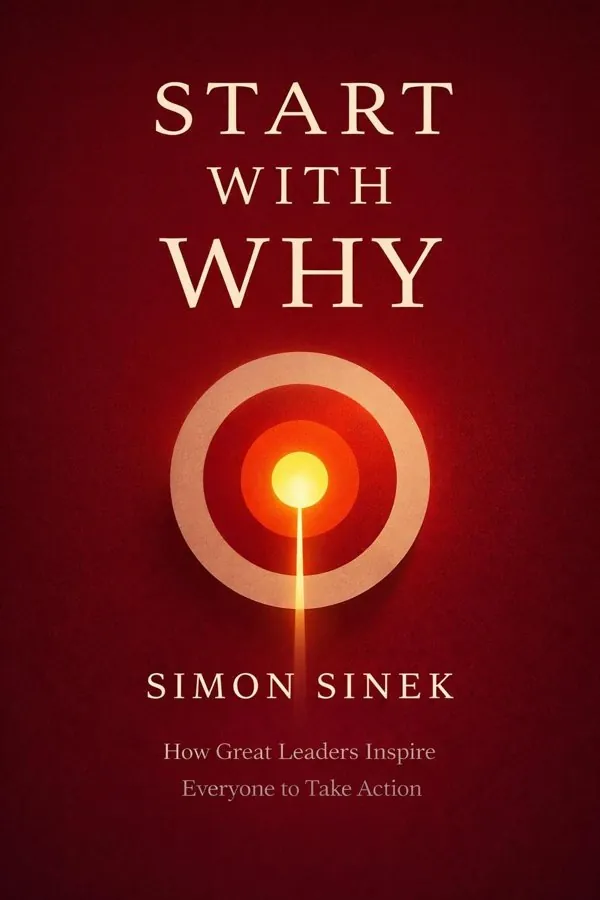
Start With Why
by Simon Sinek
Why do some leaders attract fierce loyalty while others struggle to gain genuine commitment, even when they offer better products or more resources? In Start With Why, Simon Sinek argues that the answer lies not in what organizations do, but in the deeper purpose that drives them. The book introduces a simple but powerful framework for understanding influence: the most inspiring leaders and companies think, act, and communicate from the inside out. They begin with why—the belief, cause, or mission that gives meaning to everything else. Sinek shows that when people connect to a clear purpose, they are more likely to trust, follow, and stay loyal over time. This matters in business, leadership, marketing, and even personal decision-making, because lasting success rarely comes from manipulation alone. It comes from inspiration. Drawing on examples from companies like Apple and leaders like Martin Luther King Jr., Sinek blends psychology, strategy, and storytelling into a memorable argument about how great leadership works. His authority comes from years of studying leadership patterns and helping organizations build cultures rooted in purpose rather than mere performance.
Key Takeaways
- 1The Golden Circle: Why, How, What — Most organizations know what they do, and many can explain how they do it, but very few can clearly articulate why they …
- 2Manipulation Creates Sales, Not Loyalty — It is surprisingly easy to get people to act once; it is much harder to make them believe. That is the difference betwee…
- 3People Buy Why You Do It — Human decisions are less rational than we like to believe. We often explain our choices with logic after the fact, but t…
 10 min read
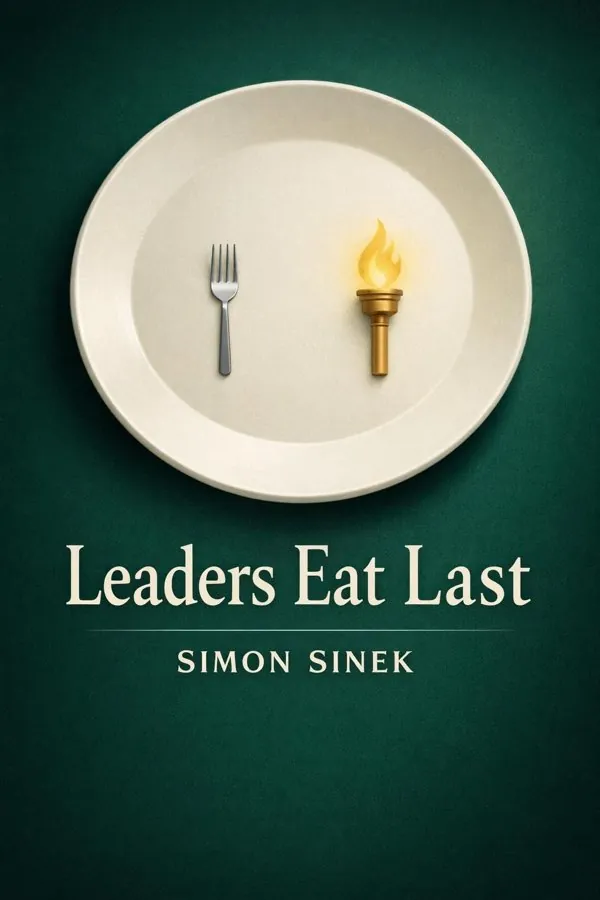
Leaders Eat Last
by Simon Sinek
In Leaders Eat Last, Simon Sinek argues that the best leaders do not lead by exerting power, demanding loyalty, or chasing short-term results. They lead by creating conditions in which people feel safe, trusted, and valued. When that happens, teams cooperate more freely, take smarter risks, and stay committed even under pressure. Drawing from military traditions, neuroscience, anthropology, and business case studies, Sinek shows that leadership is less about status and more about responsibility. His central metaphor comes from the U.S. Marine Corps practice in which officers eat after their troops, signaling that leaders place the needs of their people above their own comfort. What makes the book matter is its relevance to modern workplaces, where anxiety, isolation, and performance pressure often weaken trust from within. Sinek explains how human biology shapes behavior at work, why some cultures inspire devotion while others breed fear, and how leaders can strengthen belonging in a distracted, metrics-driven age. As a bestselling author, speaker, and leadership thinker known for Start With Why, Sinek brings together research and memorable stories to make a powerful case: when leaders protect people first, performance follows.
Key Takeaways
- 1The Circle of Safety Creates Trust — People perform at their best when they do not feel they are constantly defending themselves. One of Simon Sinek’s most p…
- 2Leadership Is A Biological Experience — Leadership is not just a philosophy; it is also chemistry. Sinek explains that human behavior at work is deeply shaped b…
- 3Cortisol Turns Work Into Survival — A workplace ruled by fear does not create excellence; it creates self-protection. Sinek highlights cortisol, the stress …
 10 min read
Good to Great
by Jim Collins
What separates a merely good company from one that becomes truly great? In Good to Great, Jim Collins tackles that question with unusual rigor, moving beyond inspirational slogans and management fads to study how enduring business excellence actually happens. Based on a five-year research project, Collins and his team examined companies that achieved extraordinary long-term results after years of ordinary performance, then compared them with similar firms that failed to make the leap. The result is a practical framework for transformation built on discipline, leadership, culture, and strategic clarity. This book matters because it challenges many popular assumptions about success. Great companies, Collins argues, are not built by celebrity CEOs, dramatic turnarounds, or lucky timing alone. Instead, they emerge when leaders combine humility with fierce resolve, place the right people in the right roles, confront brutal facts without losing faith, and focus relentlessly on what they can do better than anyone else. Jim Collins is one of the most respected voices in business research, known for combining data-driven analysis with memorable ideas. Good to Great remains a foundational read for executives, entrepreneurs, managers, and anyone interested in building organizations that last.
Key Takeaways
- 1Level 5 Leadership Drives Lasting Greatness — The most powerful leaders are often the least theatrical. One of Collins’s most surprising findings is that the companie…
- 2First Who, Then What — Great strategy begins with people, not plans. Collins argues that before a company decides exactly where to go, it must …
- 3Confront Brutal Facts Without Losing Faith — Hope is not a strategy, but pessimism is not leadership either. One of the most enduring ideas in Good to Great is the S…
 10 min read
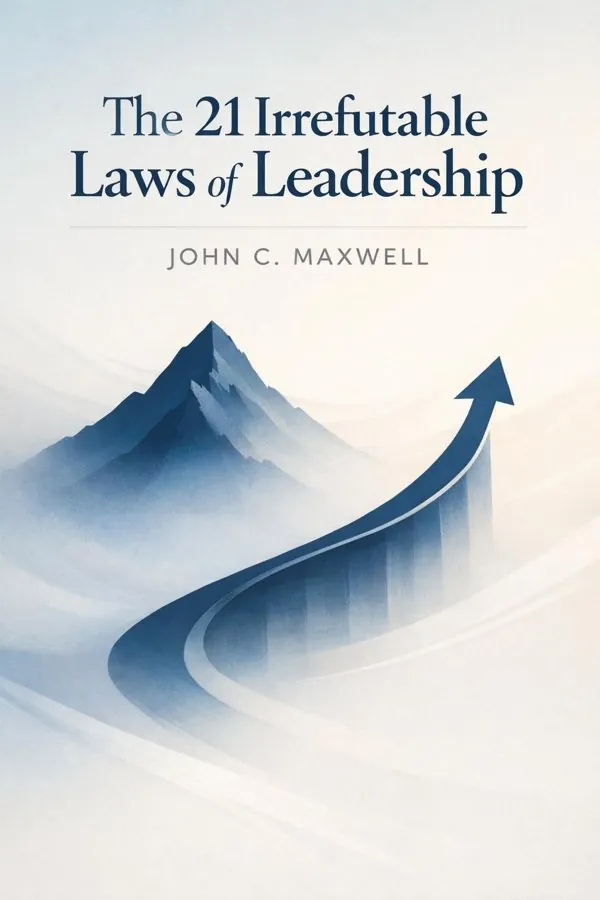
The 21 Irrefutable Laws of Leadership
by John Maxwell
What separates people who simply hold authority from those who truly lead? In The 21 Irrefutable Laws of Leadership, John C. Maxwell argues that leadership is not a mystery, a title, or a personality trait reserved for a gifted few. It is a set of principles that consistently shape how influence is built, how trust is earned, and how teams achieve lasting results. Drawing from decades of work as a speaker, coach, pastor, and leadership teacher, Maxwell distills his insights into twenty-one practical laws that apply across business, politics, sports, nonprofit work, and everyday life. The book matters because it moves leadership out of the realm of vague inspiration and into concrete practice. Maxwell shows that strong leadership is developed over time through intentional growth, credibility, connection, timing, and service. Whether you are leading a company, managing a small team, building a family culture, or trying to become more effective in your community, these laws offer a framework for improvement. Maxwell’s authority comes from years of training leaders worldwide, and his message remains relevant: if you want to raise your impact, you must raise your leadership.
Key Takeaways
- 1Leadership Ability Sets Your Upper Limit — Talent alone rarely determines how far a person or organization can go. Maxwell’s Law of the Lid argues that leadership …
- 2Influence Is the Real Test of Leadership — If no one is following, you are not leading. Maxwell’s Law of Influence cuts through common misconceptions by insisting …
- 3Leadership Is Built Through Daily Growth — Great leaders are rarely formed in dramatic moments. Maxwell’s Law of Process teaches that leadership develops daily, no…
 10 min read
Dare to Lead
by Brene Brown
In Dare to Lead, Brené Brown argues that the most effective leaders are not the toughest, loudest, or most controlling people in the room. They are the ones willing to choose courage over comfort. Drawing on years of research into vulnerability, shame, empathy, trust, and resilience, Brown shows that brave leadership is a learnable set of skills rather than an inborn personality trait. Her central claim is both simple and radical: you cannot build innovative, accountable, high-performing teams without honest conversations, emotional clarity, and the willingness to be seen when outcomes are uncertain. This book matters because modern organizations are often trapped between the pressure to perform and the fear of failure. In that environment, leaders frequently hide behind perfectionism, cynicism, and control. Brown makes the case that these defenses do not create strength; they destroy trust and block creativity. Instead, she offers practical tools for having hard conversations, building trust, clarifying values, and recovering from setbacks. For anyone leading a team, a company, a classroom, or a family, Dare to Lead is a deeply practical guide to creating cultures where people can do meaningful work with honesty, courage, and connection.
Key Takeaways
- 1The Call to Courage Begins Vulnerably — Courage does not begin with certainty; it begins the moment you step into uncertainty without hiding who you are. That i…
- 2The Armor That Blocks Leadership — What protects us can also imprison us. Brown uses the metaphor of armor to describe the habits people develop to avoid d…
- 3Rumbling with Vulnerability Changes Conversations — The hardest conversations are usually the most important ones. Brown calls the process of entering those conversations w…
 10 min read
Turn the Ship Around
by L. David Marquet
Turn the Ship Around by L. David Marquet is one of the most influential modern books on leadership because it challenges a deeply ingrained assumption: that organizations perform best when one brilliant leader gives orders and everyone else follows them. Drawing on his experience as commander of the nuclear-powered submarine USS Santa Fe, Marquet tells the story of inheriting one of the worst-performing vessels in the U.S. Navy and helping transform it into one of the best. His method was not based on tighter control, harsher discipline, or personal heroics. Instead, he shifted authority outward, teaching sailors at every level to think, decide, and take responsibility. What makes this book so powerful is that it is not abstract theory. Marquet writes from lived experience in one of the highest-stakes environments imaginable, where mistakes can have serious consequences. Yet his lessons apply far beyond the military. Executives, managers, teachers, entrepreneurs, and team leaders can all learn from his leader-leader model. The book matters because it shows that better leadership is not about creating more obedient followers, but about building more capable leaders throughout the system.
Key Takeaways
- 1The Myth of the All-Knowing Leader — Many organizations quietly depend on a dangerous fantasy: that the person at the top should have the answers. Marquet ar…
- 2Leading Without Perfect Technical Mastery — One of the book’s most humbling lessons is that leadership does not begin with certainty. When Marquet took command of t…
- 3From Leader-Follower to Leader-Leader — The most radical idea in Turn the Ship Around is that the goal of leadership is not to produce better followers. It is t…
 10 min read
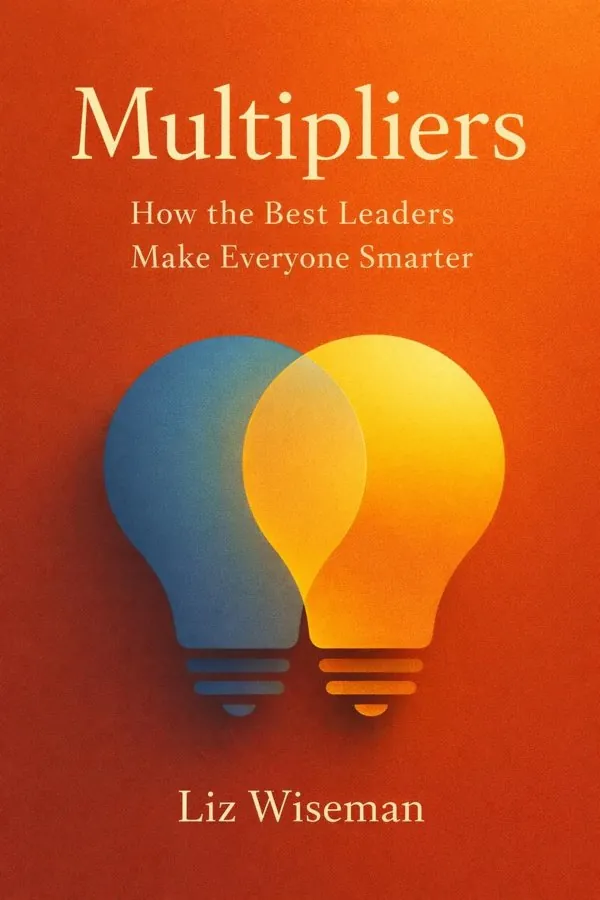
Multipliers
by Liz Wiseman
What if the most important measure of leadership is not how smart you are, but how much intelligence you can draw out of others? In Multipliers, leadership researcher and executive advisor Liz Wiseman argues that the strongest leaders are not the ones with all the answers. They are the ones who create the conditions for other people to think boldly, contribute fully, and grow beyond what they thought possible. Based on extensive research across industries and supported by vivid case studies, Wiseman contrasts two leadership styles: Multipliers, who amplify capability and ownership, and Diminishers, who drain energy, suppress initiative, and accidentally leave talent underused. The book matters because most organizations do not suffer from a lack of intelligence; they suffer from a failure to access the intelligence they already have. Wiseman, founder of the Wiseman Group and a widely respected thinker on leadership and talent development, brings practical credibility to this insight. Multipliers is both a diagnosis and a playbook, showing leaders how to shift from controlling and rescuing to challenging, trusting, and unlocking the full power of their teams.
Key Takeaways
- 1Distinguishing the Two Types of Leaders — A leader can be brilliant and still make everyone around them less effective. That is the unsettling insight at the hear…
- 2The Five Disciplines of the Multiplier — Great leadership often looks mysterious from a distance, but Wiseman shows that it can be broken into repeatable discipl…
- 3From Accidental Diminisher to Intentional Multiplier — Many leaders do not diminish others because they are arrogant or controlling; they do it because they are capable, commi…
 10 min read
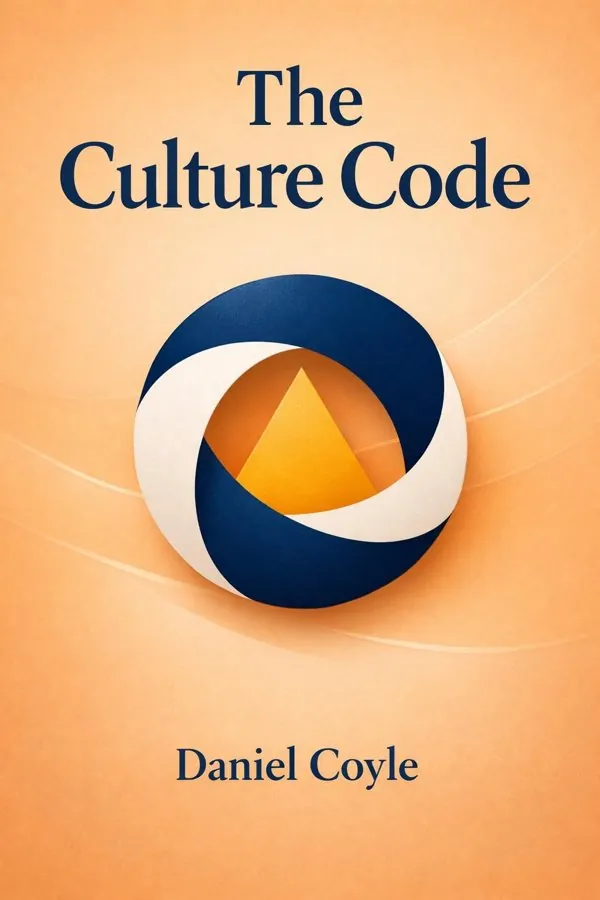
The Culture Code
by Daniel Coyle
What makes certain groups consistently outperform others, even when they do not seem to have more talent, money, or experience? In The Culture Code, Daniel Coyle argues that the answer lies in culture: the shared habits, signals, and behaviors that shape how people relate, trust, and work together. Drawing on visits to elite organizations such as Pixar, the San Antonio Spurs, Navy SEAL teams, and successful businesses, Coyle looks beneath the surface of high performance to uncover the patterns that make great groups thrive. The book matters because culture is often treated as a vague idea—something inspirational but hard to define. Coyle makes it concrete. He shows that strong cultures are not built through slogans or perks, but through repeatable actions that create safety, encourage vulnerability, and clarify purpose. These small moments determine whether people speak up, take risks, learn from failure, and commit to a shared mission. As a journalist and bestselling author focused on performance and teamwork, Coyle brings both storytelling skill and research-driven insight. The result is a practical guide for leaders, managers, coaches, and anyone who wants to build a stronger, more connected team.
Key Takeaways
- 1The Skill of Building Safety — Great cultures begin with a simple human need: the need to feel safe with one another. Before people can innovate, chall…
- 2Signals of Connection Shape Behavior — Culture is not built in grand speeches; it is built in tiny signals that people exchange every day. One of Coyle’s most …
- 3The Skill of Sharing Vulnerability — Strong cultures are not held together by displays of perfection. They are strengthened when people feel able to admit un…
 10 min read
Extreme Ownership
by Jocko Willink
What if the biggest obstacle to better leadership wasn’t your team, your market, or your circumstances—but your willingness to take responsibility? That is the central challenge of *Extreme Ownership*, a leadership classic by former U.S. Navy SEAL officers Jocko Willink and Leif Babin. Drawing on hard-won lessons from their deployment in Ramadi, Iraq, the authors argue that leadership is the decisive factor in whether teams succeed or fail. Their message is direct: leaders must own everything in their world, from communication breakdowns and unclear priorities to poor execution and weak morale. What makes this book so powerful is that it doesn’t stay on the battlefield. Willink and Babin show how the same principles apply in companies, startups, sports teams, and everyday life. The stakes may be different, but the patterns are the same: confusion spreads when leaders are unclear, trust collapses when ego takes over, and performance improves when accountability starts at the top. As ex-Navy SEAL officers who later co-founded the leadership consulting firm Echelon Front, the authors bring both combat experience and real-world business application. *Extreme Ownership* matters because it turns leadership from a vague ideal into a practical discipline anyone can apply.
Key Takeaways
- 1Combat Leadership Context — The leadership principles in *Extreme Ownership* were not developed in a classroom or corporate workshop. They were forg…
- 2Extreme Ownership Principle — Extreme Ownership is the book’s core idea: leaders must take full responsibility for everything within their sphere of i…
- 3No Bad Teams, Only Bad Leaders — One of the book’s most memorable and uncomfortable ideas is that team performance reflects leadership quality. “No bad t…
 10 min read
Give and Take
by Adam Grant
Give and Take argues that success is shaped not only by talent, effort, and ambition, but by the way we deal with other people. Adam Grant, an organizational psychologist at Wharton, divides social behavior into three broad styles: takers, who try to get more than they give; matchers, who aim for fairness and equal exchange; and givers, who contribute to others without constantly keeping score. What makes the book so compelling is Grant’s central finding: although givers can be exploited and sometimes end up at the bottom, they are also disproportionately represented at the very top. In the long run, generous people often build deeper trust, stronger networks, better collaboration, and more meaningful careers. Drawing on research in psychology, economics, management, and real-world case studies, Grant challenges the assumption that ruthless self-interest is the surest route to achievement. Instead, he shows that thoughtful generosity can become a powerful competitive advantage when paired with boundaries and self-awareness. For leaders, entrepreneurs, salespeople, teachers, and anyone working with others, Give and Take offers a practical and refreshing framework for building success by creating value for the people around you.
Key Takeaways
- 1Defining the Three Reciprocity Styles — Every workplace runs on hidden rules of exchange. Some people instinctively ask, “What can I get?” Others ask, “What’s f…
- 2Why Givers Rise and Fall — The most surprising insight in Give and Take is that givers often occupy both ends of the success spectrum. They are ove…
- 3Networking Through Generosity, Not Self-Promotion — Many people think networking is about collecting contacts, impressing strangers, or staying visible to powerful people. …
Want the full summary?
Get instant access to this book summary and 100K+ more with Fizz Moment.
Get Free SummaryAvailable on App Store • Free to download
About This List
Books recommended by Simon Sinek, the visionary behind 'Start With Why'. Essential reading for leaders who want to inspire action.
This list features 10 carefully selected books. With FizzRead, you can read AI-powered summaries of each book in just 15 minutes. Get the key takeaways and start applying the insights immediately.
Ready to start reading?
Get instant access to all 10 book summaries and 100K+ more with FizzRead.