
LeBron James' Playbook: Books the King Reads Off the Court
LeBron James is known for reading before big games. His picks range from classic fiction to business strategy, reflecting his mindset as both an athlete and entrepreneur.
 10 min read
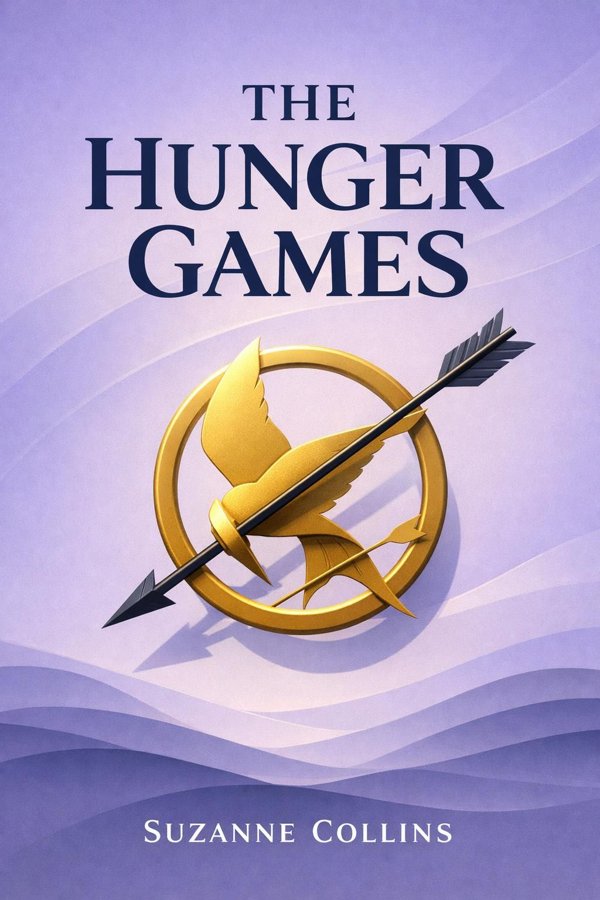
The Hunger Games
by Suzanne Collins
The Hunger Games is a gripping dystopian novel that turns survival into spectacle and asks what happens when power feeds on fear. Set in the nation of Panem, the story follows sixteen-year-old Katniss Everdeen, a girl from impoverished District 12 who volunteers to take her younger sister’s place in the annual Hunger Games, a televised event in which children are forced to kill one another for the Capitol’s entertainment. What begins as a fight to stay alive becomes a moral and political awakening, as Katniss discovers that even small acts of compassion can challenge a brutal system. The novel matters because it blends fast-paced storytelling with sharp insight into inequality, propaganda, media manipulation, trauma, and resistance. Suzanne Collins brings unusual authority to these themes through her background as a television writer and her deep interest in war, myth, and the psychology of survival. The result is a book that feels both cinematic and unsettlingly plausible: an unforgettable story about how oppressive systems endure, and how ordinary people begin to push back.
Key Takeaways
- 1Panem and the Capitol’s Grip — Oppression works best when it feels inevitable. That is the first truth The Hunger Games reveals through Panem, a nation…
- 2Katniss in District 12 — Survival can sharpen a person, but it can also isolate them. Before Katniss ever enters the arena, her life in District …
- 3The Reaping and Sacrificial Love — The most radical act in a cruel system may begin as a private act of love. The Reaping, where one boy and one girl from …
 10 min read
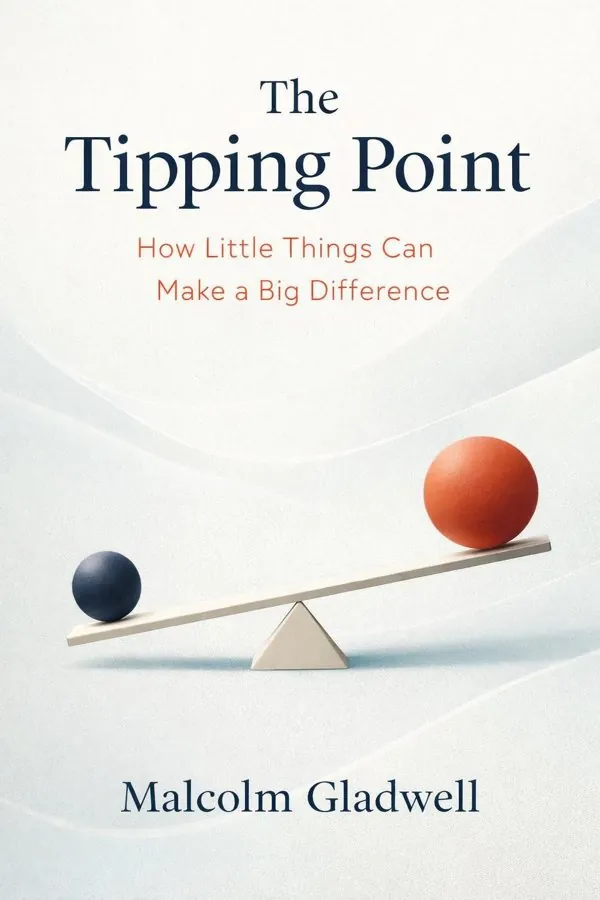
The Tipping Point
by Malcolm Gladwell
Why do some ideas explode into popularity while others disappear unnoticed? Why does one product become a craze, one message transform behavior, or one neighborhood suddenly change? In The Tipping Point, Malcolm Gladwell argues that social change often behaves like an epidemic: it starts small, spreads through specific channels, and then, at a certain moment, tips into rapid, widespread adoption. Rather than seeing trends as mysterious or random, Gladwell shows that they can often be traced to recognizable forces. Drawing on stories from public health, marketing, crime reduction, and everyday life, he introduces three core principles: the Law of the Few, the Stickiness Factor, and the Power of Context. Together, these explain why the right people, the right message, and the right environment can trigger outsized results. Gladwell writes with the instincts of a journalist and the curiosity of a social scientist. As a longtime New Yorker writer known for translating research into memorable narratives, he brings both authority and accessibility to the subject. The result is a book that changes how you think about influence, momentum, and the hidden mechanics of social change.
Key Takeaways
- 1The Law of the Few — Big social shifts often begin with surprisingly few people. One of Gladwell’s central claims is that influence is not ev…
- 2Connectors Bridge Worlds and Audiences — A message spreads faster when it can jump from one social world to another. Connectors matter because they occupy the sp…
- 3Mavens Turn Information into Momentum — People rarely act on information alone, but trusted information often starts the process. Gladwell’s Mavens are the data…
 10 min read
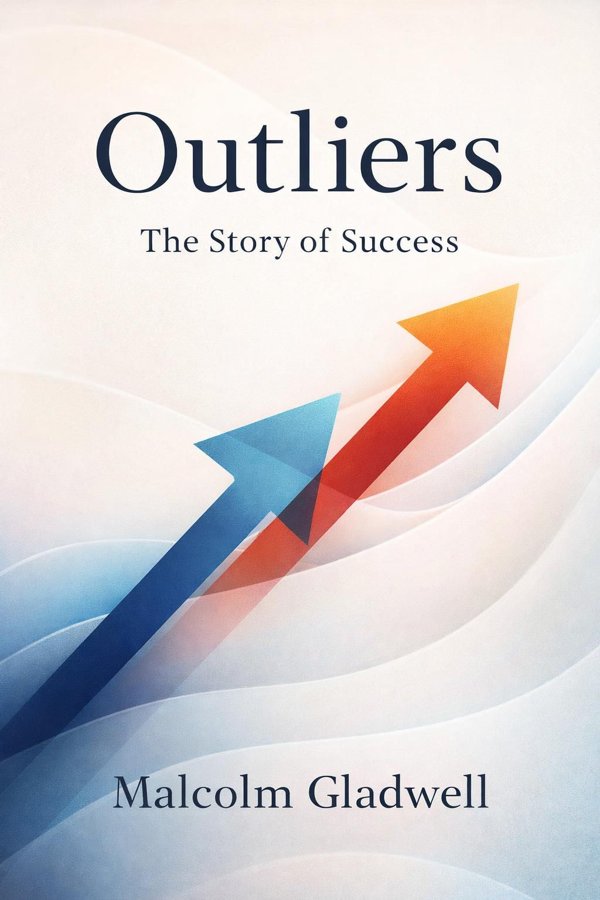
Outliers
by Malcolm Gladwell
Why do some people rise to extraordinary heights while others, who seem just as smart or hardworking, never get the same chance? In Outliers, Malcolm Gladwell challenges the comforting myth that success is purely a matter of talent and grit. Instead, he shows that exceptional achievement usually grows from a powerful mix of opportunity, timing, cultural inheritance, family background, and sustained practice. The result is a book that changes how you think about winners—not as isolated geniuses, but as products of environments that made their success possible. Gladwell is uniquely suited to tell this story. As a longtime writer for The New Yorker and the bestselling author of books like The Tipping Point, Blink, and David and Goliath, he has built a reputation for turning research and case studies into memorable, thought-provoking stories. In Outliers, he uses examples from hockey, technology, aviation, education, and math to reveal the hidden architecture behind success. This book matters because it doesn’t just explain why some people make it big. It also asks a more important question: if opportunity shapes outcomes so strongly, how can we build fairer systems that help more people thrive?
Key Takeaways
- 1Chapter One: The Matthew Effect—Why Early Advantage Leads to Success — One of Gladwell’s most memorable insights in Outliers is that success often begins with small, almost invisible advantag…
- 2Chapter Two: The 10,000-Hour Rule—Practice Depends on Opportunity — Gladwell popularized the idea that world-class mastery often requires around 10,000 hours of deliberate practice. But hi…
- 3Chapter Three: The Trouble with Genius—Why IQ Isn’t a Golden Ticket — Gladwell argues that intelligence matters, but only up to a point. Once someone reaches a high enough level of cognitive…
 10 min read
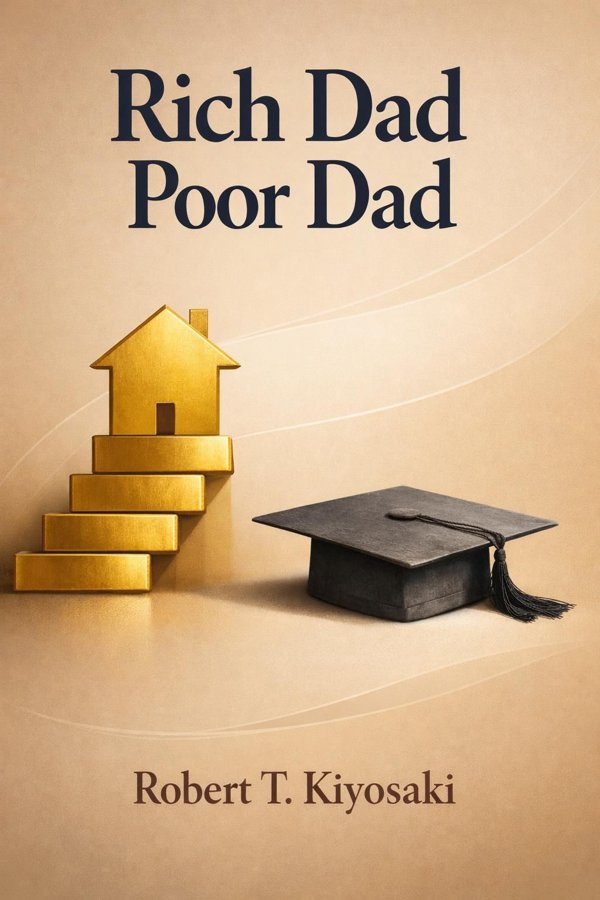
Rich Dad Poor Dad
by Robert Kiyosaki
Why do some people work hard for decades and still feel financially trapped, while others build wealth that seems to grow on its own? In Rich Dad Poor Dad, Robert T. Kiyosaki tackles that question by challenging one of the most deeply accepted beliefs in modern life: that a good education, a stable job, and years of hard work automatically lead to financial security. Through the memorable contrast between his “poor dad,” a highly educated employee, and his “rich dad,” an entrepreneur and investor, Kiyosaki argues that the real divide is not income alone, but financial mindset and financial education. This book matters because it reframes money as a skill set, not just a salary. Instead of teaching readers to chase paychecks, it encourages them to understand assets, cash flow, taxes, business structures, and the emotional habits that shape financial decisions. Kiyosaki, best known for his Rich Dad series, became a leading voice in personal finance by making wealth-building concepts accessible to everyday readers. Whether you agree with all his views or not, the book remains influential because it pushes people to think differently about work, risk, and long-term freedom.
Key Takeaways
- 1Two Fathers: A Divide in Philosophy — At the heart of Rich Dad Poor Dad is a powerful contrast: two intelligent, well-meaning father figures offered Robert Ki…
- 2Childhood Lessons: Understanding the Game of Money — One of the book’s most memorable stories begins when Kiyosaki and his friend Mike ask Rich Dad how to become rich. Inste…
- 3The Misconception of Hard Work: Effort Doesn’t Equal Wealth — Kiyosaki challenges a deeply comforting myth: that hard work alone creates wealth. He does not dismiss effort; instead, …
 10 min read
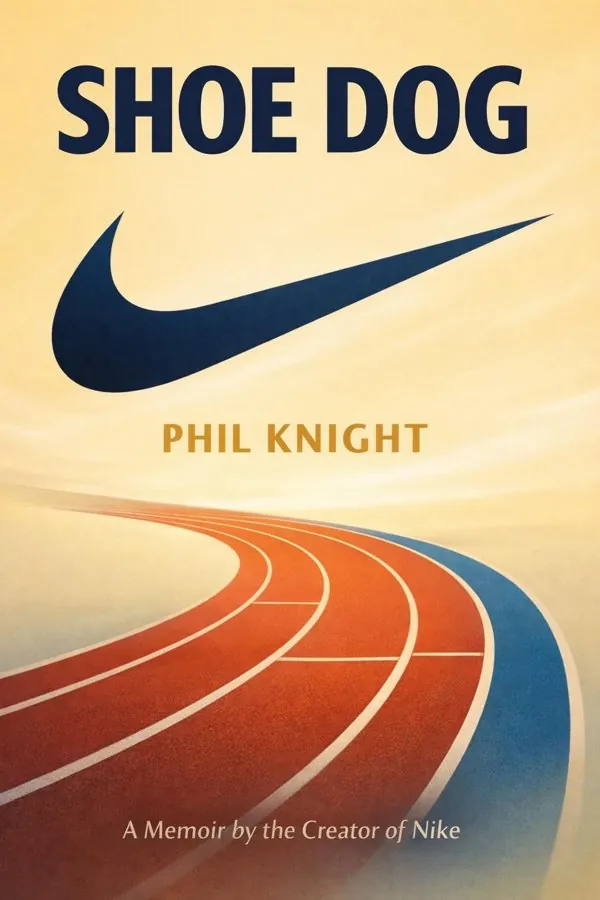
Shoe Dog
by Phil Knight
Shoe Dog es una memoria escrita por Phil Knight, fundador de Nike, que narra la historia de cómo transformó un pequeño préstamo de $50 en una de las marcas más reconocidas del mundo. El libro describe los desafíos, fracasos y triunfos que enfrentó mientras construía la empresa desde sus humildes comienzos como Blue Ribbon Sports hasta convertirse en un gigante global. Con humor, humanidad y franqueza, Knight ofrece una mirada íntima al espíritu emprendedor y la perseverancia detrás del éxito de Nike.
Key Takeaways
- 1The Crazy Idea: From Post-College Doubt to Bold Vision — After finishing my MBA at Stanford, I found myself drifting, restless. The world seemed vast and full of possibilities, …
- 2Building Blue Ribbon Sports: Hustle, Partnership, and Persistence — When I returned to Oregon, my grand dream shrunk to the size of a car trunk. I began selling Onitsuka Tiger shoes at tra…
- 3Breaking Away: Conflict with Onitsuka and the Birth of Nike
 10 min read
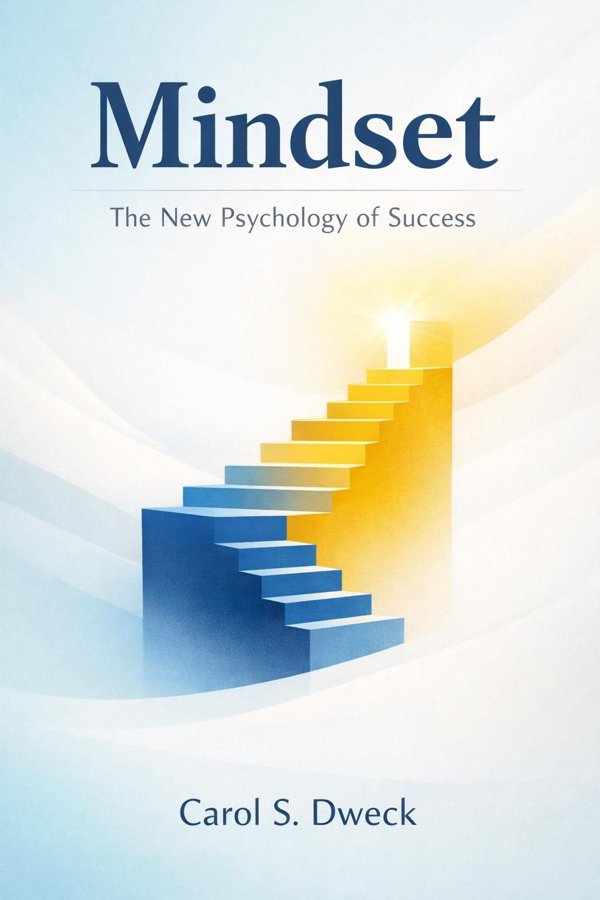
Mindset
by Carol Dweck
Why do some people bounce back from failure, while others shut down after one setback? Why do certain students, athletes, and professionals keep improving long after their early talent stops carrying them? In Mindset, psychologist Carol S. Dweck offers a powerful answer: the stories we tell ourselves about ability shape nearly everything we do. At the center of the book is a simple but life-changing distinction between a fixed mindset—the belief that intelligence, talent, and character are largely set—and a growth mindset, the belief that these qualities can be developed through effort, strategy, and feedback. That idea sounds straightforward, but its implications are profound. It affects how we handle criticism, how we parent, how we teach, how we lead, and even how we love. Drawing on decades of research in motivation and personality, Dweck shows that success is not just about natural gifts. It is also about how people interpret challenge, effort, and failure. This book matters because it replaces the myth of effortless genius with a more hopeful, practical truth: people can change, improve, and become more capable over time.
Key Takeaways
- 1The Nature of Mindset: Fixed versus Growth — From childhood onward, people absorb beliefs about what ability means. A child who hears “You’re so smart” may start to …
- 2Inside the Fixed Mindset: The Need to Prove — The fixed mindset often hides behind ambition. On the surface, it can look like confidence, high standards, or competiti…
- 3Discovering the Growth Mindset: The Power to Develop — The growth mindset is not blind optimism or the idea that anyone can become anything overnight. It is a practical belief…
Want the full summary?
Get instant access to this book summary and 100K+ more with Fizz Moment.
Get Free SummaryAvailable on App Store • Free to download
About This List
LeBron James is known for reading before big games. His picks range from classic fiction to business strategy, reflecting his mindset as both an athlete and entrepreneur.
This list features 6 carefully selected books. With FizzRead, you can read AI-powered summaries of each book in just 15 minutes. Get the key takeaways and start applying the insights immediately.
Ready to start reading?
Get instant access to all 6 book summaries and 100K+ more with FizzRead.