
Arianna Huffington's Wellness Reading
Books recommended by Arianna Huffington on sleep, wellness, and redefining success beyond burnout.
 10 min read
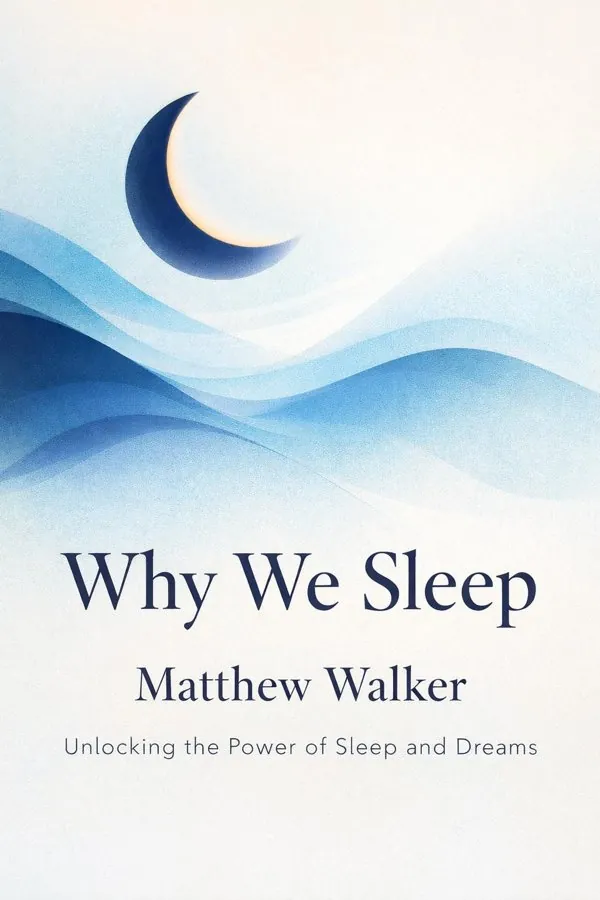
Why We Sleep
by Matthew Walker
What if the most powerful performance enhancer, mood stabilizer, memory booster, and long-term health intervention isn’t a supplement, a productivity hack, or a complicated wellness routine—but sleep? In *Why We Sleep*, neuroscientist Matthew Walker makes a compelling case that sleep is not a passive state of rest. It is one of the most active, essential, and life-preserving processes in the human body. Far from being wasted time, sleep is when the brain organizes memories, the body repairs itself, emotions are regulated, and countless biological systems reset for the next day. Walker brings both scientific authority and urgency to the topic. As a professor of neuroscience and psychology at the University of California, Berkeley, and founder and director of the Center for Human Sleep Science, he has spent years studying how sleep shapes human health and performance. His central message is both simple and profound: the modern tendency to cut sleep short comes at a steep cost. This book matters because it connects sleep to nearly everything readers care about—focus, energy, mental health, disease prevention, learning, relationships, and longevity—and offers a persuasive reminder that better sleep can change your life.
Key Takeaways
- 1The Evolution and Purpose of Sleep — Sleep is not a strange quirk of biology—it is one of its oldest and most carefully protected features. Walker emphasizes…
- 2Stages and Architecture of Sleep — Walker shows that sleep is not one uniform state but a precisely organized process made up of repeating cycles. Over the…
- 3Sleep and the Brain — One of Walker’s strongest arguments is that sleep is essential for a healthy, high-performing brain. During the day, the…
 10 min read
Meditations
by Marcus Aurelius
What does it mean to stay calm, just, and fully human in a world full of pressure, conflict, ego, and loss? That is the enduring question at the heart of Meditations, the private journal of Roman emperor Marcus Aurelius. Written in Greek and never intended for publication, these reflections are not polished philosophy lectures. They are personal reminders from one of the most powerful men in the world trying to govern not only an empire, but also his own mind. That tension is exactly why this book still matters. Meditations remains one of the clearest guides to Stoic philosophy because it speaks directly to everyday struggles: dealing with difficult people, accepting change, resisting vanity, and acting with integrity when no one is watching. Marcus Aurelius is remembered as both a Roman emperor and a Stoic philosopher, a rare figure often described as a philosopher-king. His reflections on virtue, discipline, mortality, and inner peace have influenced readers for centuries. If you want practical wisdom rather than abstract theory, Meditations offers a deeply human blueprint for living with clarity, resilience, and moral purpose.
Key Takeaways
- 1Book I: Lessons from Those Who Shaped Me — The opening book of Meditations is an extraordinary act of gratitude. Instead of launching into abstract arguments, Marc…
- 2Book II: Accepting Fate and Living Rationally — Book II opens with one of the most quoted passages in Stoic philosophy: a morning reminder that we will meet interfering…
- 3Book III: Integrity Beyond Fame — In Book III, Marcus Aurelius turns his attention to time, mortality, and the danger of living for approval. He reminds h…
 10 min read
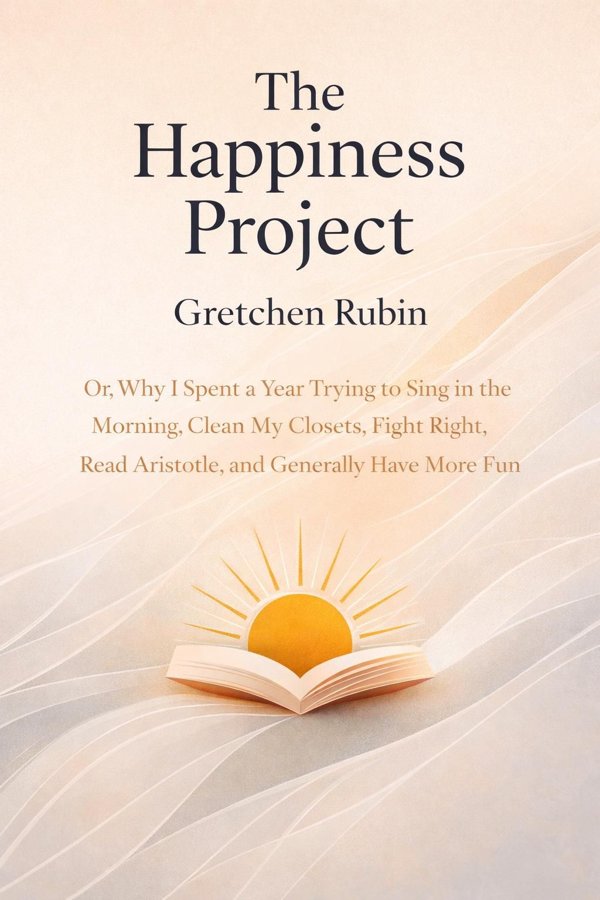
The Happiness Project
by Gretchen Rubin
What if happiness is not a vague feeling you wait for, but a practical project you can actively build? In The Happiness Project, Gretchen Rubin turns that question into a year-long experiment. Rather than chasing a dramatic life overhaul, she examines the ordinary texture of everyday life: sleep, clutter, marriage, friendship, work, parenting, play, money, spirituality, and gratitude. Month by month, she chooses a theme, studies what philosophers and researchers have said about it, and then tests specific habits in her own home and routines. The result is a rare blend of memoir, self-help, and behavioral observation. What makes the book matter is its realism. Rubin does not present happiness as constant cheerfulness or deny the frustrations of real life. Instead, she argues that small, repeatable actions can make life lighter, warmer, and more meaningful. Her authority comes not from abstract theory alone, but from disciplined personal experimentation, combined with wide reading in psychology, literature, and moral philosophy. The Happiness Project resonates because it offers something many readers need: a thoughtful, workable way to feel more awake, grateful, and connected without pretending they must become someone entirely new.
Key Takeaways
- 1Energy Is the Foundation of Happiness — Happiness often feels emotional, but Rubin begins with a sharper truth: your mood is deeply shaped by your physical stat…
- 2Marriage Improves Through Small Daily Gestures — Love rarely collapses because of one huge event; more often, it thins through repeated small irritations, neglect, and u…
- 3Satisfaction Grows When Work Feels Chosen — Many people think happiness at work comes only from finding the perfect job. Rubin offers a more subtle insight: joy in …
 10 min read
Daring Greatly
by Brené Brown
What if the qualities you’ve been taught to hide—uncertainty, emotion, risk, and the fear of being judged—are actually the gateway to a better life? In *Daring Greatly*, Brené Brown makes a bold and deeply practical case that vulnerability is not weakness but the foundation of courage, connection, creativity, and leadership. This idea matters because so many people spend their lives trying to appear composed, competent, and in control, only to feel disconnected, exhausted, and unseen. Brown’s research-driven approach cuts through self-help clichés and gives language to experiences many people have felt but struggled to name: shame, perfectionism, scarcity, and emotional armoring. As a research professor at the University of Houston known for her work on vulnerability, shame, courage, and empathy, Brown brings both credibility and compassion to the subject. *Daring Greatly* is important because it doesn’t simply ask readers to “open up.” It shows how vulnerability changes the way we love, parent, lead, create, and recover from failure. If you’ve ever wanted deeper relationships, more meaningful work, or the courage to show up as your real self, this book offers a powerful roadmap.
Key Takeaways
- 1The Vulnerability Myth — One of the book’s central arguments is that vulnerability has been misunderstood. Most people hear the word and think of…
- 2Understanding Shame — Brown makes a crucial distinction between shame and guilt. Guilt says, “I made a mistake,” while shame says, “I am a mis…
- 3The Arena Metaphor — Brown draws heavily on Theodore Roosevelt’s famous “Man in the Arena” passage to frame what it means to live courageousl…
 10 min read
The Gifts of Imperfection
by Brene Brown
In The Gifts of Imperfection, Brené Brown argues that a meaningful life does not come from flawless performance, constant self-improvement, or earning approval. It comes from what she calls “Wholehearted living”: showing up as we are, embracing vulnerability, and choosing courage over control. Drawing on years of research into shame, authenticity, belonging, and human connection, Brown reveals why so many people feel trapped by perfectionism, comparison, and the pressure to be enough—and how they can break free. Rather than offering empty encouragement, she presents ten practical guideposts for cultivating a more grounded, joyful, and authentic life. These guideposts include self-compassion, resilience, gratitude, intuition, creativity, rest, and meaningful connection. The book matters because it speaks directly to a modern struggle: the exhaustion of trying to be impressive instead of real. Brown’s authority comes from her work as a research professor who has spent years studying the emotional patterns that shape our lives. Her gift is translating rigorous research into deeply human guidance that readers can apply every day.
Key Takeaways
- 1Perfectionism Is a Heavy Emotional Armor — One of the book’s most liberating insights is that perfectionism is not the same as healthy striving. Many people believ…
- 2Wholehearted Living Begins With Vulnerable Courage — A powerful life is not built by avoiding uncertainty; it is built by entering it with courage. Brown defines Wholehearte…
- 3Authenticity Requires Releasing the Need to Please — Authenticity sounds simple, but in practice it can feel radical. Brown describes authenticity as the daily choice to let…
 10 min read
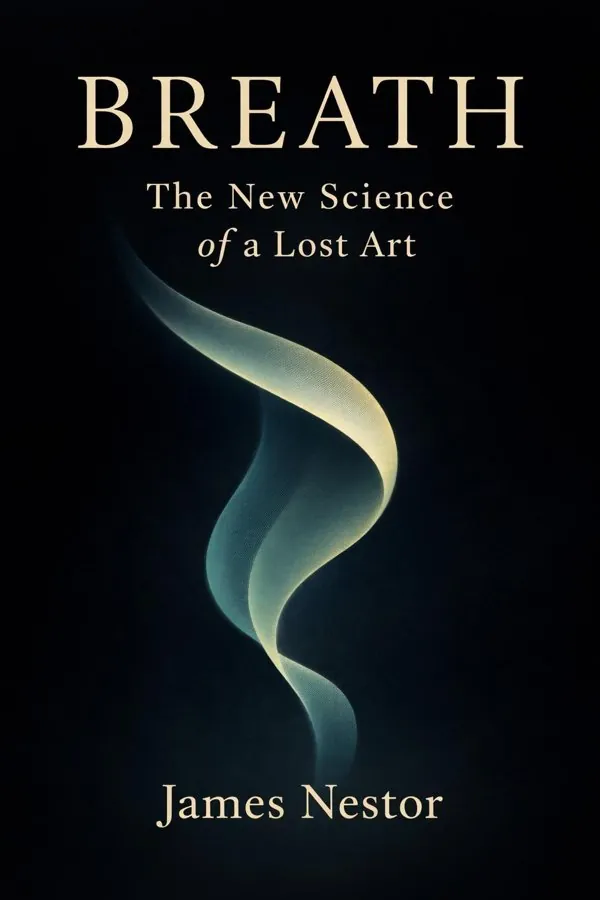
Breath
by James Nestor
What if one of the most powerful tools for better health, sharper focus, deeper sleep, and longer life were something you already do every moment of the day? In Breath, journalist James Nestor argues that breathing is not just automatic background biology but a skill that modern people have largely forgotten how to use well. Drawing on scientific studies, ancient traditions, medical history, and his own immersive experiments, Nestor explores how the way we inhale and exhale shapes everything from anxiety and posture to athletic performance, immunity, and sleep quality. The book’s central claim is strikingly simple: many modern illnesses are worsened not by how much air we take in, but by how poorly we breathe. Nestor is a compelling guide because he combines rigorous reporting with curiosity and personal testing. He interviews pulmonologists, orthodontists, researchers, and breathing teachers, then translates complex physiology into clear, memorable lessons. Breath matters because it reframes health through a basic daily act most people ignore. It invites readers to see breathing not as passive survival, but as an active, trainable pathway to resilience and well-being.
Key Takeaways
- 1A Forgotten Function Shapes Modern Health — One of the book’s most unsettling insights is that something as ordinary as breathing can quietly undermine health when …
- 2Ancient Cultures Knew Breath Was Power — Long before modern laboratories measured oxygen saturation or heart rate variability, ancient traditions treated breath …
- 3Modern Life Made Us Worse Breathers — A surprising argument in Breath is that breathing problems are not just behavioral; they are partly anatomical consequen…
 10 min read
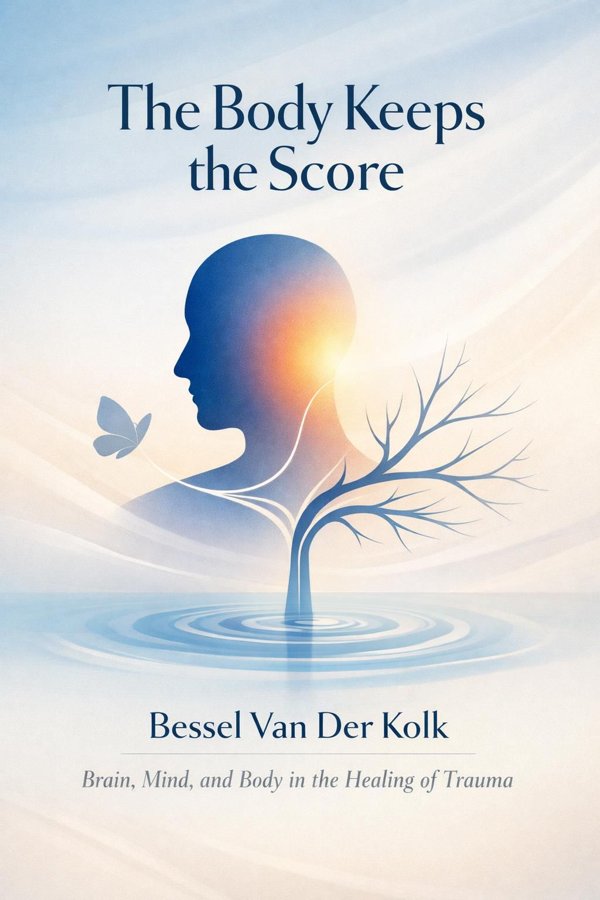
The Body Keeps the Score
by Bessel van der Kolk
What if trauma is not just something you remember, but something your body continues to live? That is the central, unforgettable insight of *The Body Keeps the Score*. In this influential psychology classic, Bessel van der Kolk explains why traumatic experiences do not simply fade with time or disappear through willpower. Instead, they can reshape the brain, dysregulate the nervous system, and alter how people feel, think, relate, and even move through everyday life. The result is often a life organized around survival rather than presence, trust, or joy. What makes this book so important is that it does more than describe trauma’s damage—it offers a hopeful, science-based map for recovery. Van der Kolk draws on decades of work as a psychiatrist, researcher, and educator, including his experience founding the Trauma Center in Brookline, Massachusetts. With clarity and compassion, he bridges neuroscience, clinical stories, and practical treatment approaches. For readers trying to understand PTSD, childhood abuse, chronic stress, or emotional dysregulation, this book provides both language and direction. It shows that healing is possible, but only when we address the body as seriously as we address the mind.
Key Takeaways
- 1Early Research on Trauma — One of the book’s most powerful contributions is its account of how trauma finally became visible to modern psychiatry. …
- 2The Brain in Trauma — Van der Kolk explains trauma through a clear neurological lens: trauma changes how the brain detects danger, stores memo…
- 3Body–Mind Connection — A central message of *The Body Keeps the Score* is that trauma is not just remembered intellectually—it is carried physi…
 10 min read
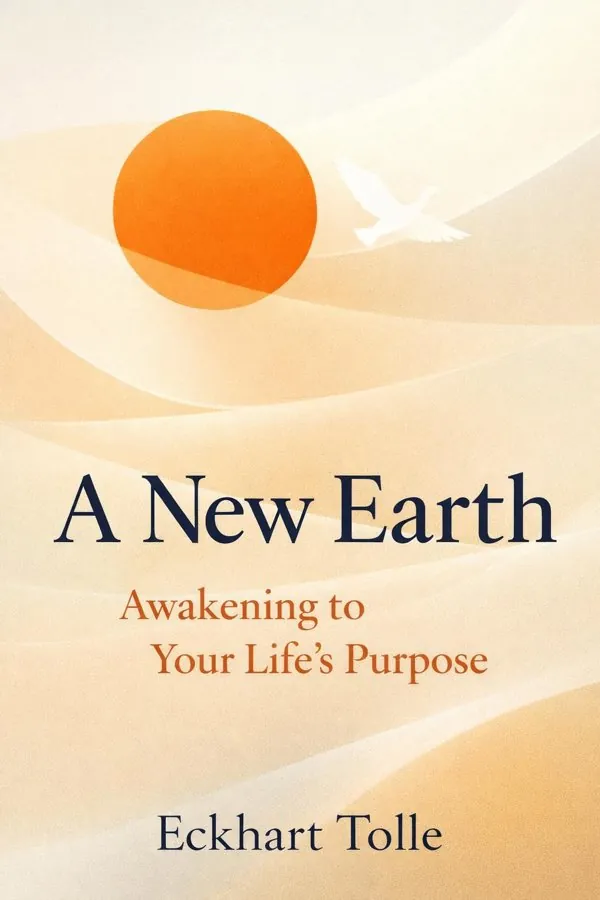
A New Earth
by Eckhart Tolle
A New Earth is Eckhart Tolle’s bold and accessible exploration of what keeps human beings trapped in conflict, anxiety, and dissatisfaction—and what it would take to move beyond those patterns. At the center of the book is a simple but far-reaching claim: much of human suffering is created by the ego, the false sense of self built from thought, status, memory, and identification with form. Tolle argues that real transformation does not begin with changing the outer world alone, but with awakening to a deeper consciousness beneath compulsive thinking. What makes this book matter is its scope. It is both an intensely personal guide to inner peace and a sweeping diagnosis of humanity’s collective crises, from destructive relationships to social conflict and environmental imbalance. Tolle connects everyday emotional habits with the larger destiny of the planet, suggesting that inner awakening is not a luxury but an evolutionary necessity. Tolle writes with the authority of a teacher whose work has helped millions rethink their relationship to thought, presence, and identity. Following the impact of The Power of Now, A New Earth expands his message into a practical vision for personal and collective awakening.
Key Takeaways
- 1The Flowering of Human Consciousness — Human beings may be more technologically advanced than ever, yet inwardly many still live in confusion, fear, and confli…
- 2Ego: The False Self We Defend — Much of what people call “me” is actually a story they are constantly trying to maintain. Tolle’s central insight is tha…
- 3The Pain-Body Feeds on Unconscious Emotion — Some emotional reactions feel larger than the immediate moment because they are. Tolle introduces the “pain-body” as an …
Want the full summary?
Get instant access to this book summary and 100K+ more with Fizz Moment.
Get Free SummaryAvailable on App Store • Free to download
About This List
Books recommended by Arianna Huffington on sleep, wellness, and redefining success beyond burnout.
This list features 8 carefully selected books. With FizzRead, you can read AI-powered summaries of each book in just 15 minutes. Get the key takeaways and start applying the insights immediately.
Ready to start reading?
Get instant access to all 8 book summaries and 100K+ more with FizzRead.