
Adam Grant's Favorite Reads
The books that organizational psychologist Adam Grant recommends for rethinking work, creativity, and success.

 10 min read
Think Again
by Adam Grant
In this book, organizational psychologist Adam Grant explores the importance of rethinking and unlearning in a rapidly changing world. He argues that intelligence is not just about thinking and learning but also about the ability to question one’s own beliefs and update them when presented with new evidence. Through engaging research and stories, Grant shows how individuals and organizations can benefit from cultivating mental flexibility and intellectual humility.
Key Takeaways
- 1Part I – Individual Rethinking — At the heart of individual rethinking lies an uncomfortable truth: we love our own ideas more than we love truth itself.…
- 2The Joy of Being Wrong — If individual rethinking begins with humility, it flourishes through the joy of being wrong. The phrase may sound parado…
 10 min read
Originals
by Adam Grant
What makes someone challenge the default, question accepted wisdom, and push a new idea into the world when everyone else seems content to follow the script? In Originals, organizational psychologist Adam Grant explores exactly that question. Rather than treating creativity as a mysterious gift reserved for a few rare geniuses, Grant shows that originality is a set of behaviors, decisions, and habits that ordinary people can develop. The book examines how original thinkers spot opportunities for change, manage fear and risk, persuade skeptical audiences, and build cultures that welcome fresh thinking instead of punishing it. What makes the book especially valuable is its evidence-based approach. Grant draws on research in psychology, sociology, business, and history, while also using memorable stories from entrepreneurs, activists, executives, and artists. He argues that originality is not about reckless boldness or constant rebellion. It is about improving the status quo in intelligent, strategic ways. As one of the most influential organizational psychologists of his generation, Adam Grant brings both academic rigor and practical insight to the topic. Originals matters because in a world shaped by conformity, progress depends on people willing to think differently and act on it.
Key Takeaways
- 1Originality Begins With Questioning Defaults — Most people accept the world as it is; original thinkers ask why it has to stay that way. That simple difference is at t…
- 2Creative People Generate Many Bad Ideas — The people with the best ideas are rarely the ones with only a few ideas; they are usually the ones with the most ideas …
- 3Risk Is Often Smaller Than It Looks — Originals are not fearless gamblers; they are often skilled risk managers. One of the most surprising arguments in the b…
 10 min read
Give and Take
by Adam Grant
Give and Take argues that success is shaped not only by talent, effort, and ambition, but by the way we deal with other people. Adam Grant, an organizational psychologist at Wharton, divides social behavior into three broad styles: takers, who try to get more than they give; matchers, who aim for fairness and equal exchange; and givers, who contribute to others without constantly keeping score. What makes the book so compelling is Grant’s central finding: although givers can be exploited and sometimes end up at the bottom, they are also disproportionately represented at the very top. In the long run, generous people often build deeper trust, stronger networks, better collaboration, and more meaningful careers. Drawing on research in psychology, economics, management, and real-world case studies, Grant challenges the assumption that ruthless self-interest is the surest route to achievement. Instead, he shows that thoughtful generosity can become a powerful competitive advantage when paired with boundaries and self-awareness. For leaders, entrepreneurs, salespeople, teachers, and anyone working with others, Give and Take offers a practical and refreshing framework for building success by creating value for the people around you.
Key Takeaways
- 1Defining the Three Reciprocity Styles — Every workplace runs on hidden rules of exchange. Some people instinctively ask, “What can I get?” Others ask, “What’s f…
- 2Why Givers Rise and Fall — The most surprising insight in Give and Take is that givers often occupy both ends of the success spectrum. They are ove…
- 3Networking Through Generosity, Not Self-Promotion — Many people think networking is about collecting contacts, impressing strangers, or staying visible to powerful people. …
 10 min read
Quiet
by Susan Cain
What if the traits you’ve been told to outgrow—quietness, caution, thoughtfulness, a need for solitude—are actually some of your greatest strengths? In Quiet, Susan Cain challenges one of the most deeply embedded assumptions in modern life: that the boldest voice in the room is the most capable, creative, or worthy of attention. With warmth, research, and sharp cultural analysis, she shows how workplaces, schools, and even social norms are often built around an extroverted model of success, leaving millions of introverts feeling misunderstood or underestimated. This book matters because it doesn’t merely defend introverts; it reframes how we think about talent, leadership, collaboration, and human potential. Cain draws on psychology, neuroscience, history, and real-life stories to explain why some people flourish through stimulation and sociability, while others do their best thinking in calmer, quieter conditions. As an American author, lecturer, and former corporate lawyer known for her influential work on introversion and leadership, Cain brings both credibility and empathy to the subject. Quiet is ultimately a powerful invitation to stop confusing volume with value—and to build a world where reflective people can thrive on their own terms.
Key Takeaways
- 1The Extrovert Ideal: A Cultural Obsession — At the center of Quiet is Susan Cain’s idea of the “Extrovert Ideal,” the belief that the most admirable person is socia…
- 2The Biological and Psychological Roots of Introversion — Cain makes a crucial distinction: introversion is not a flaw, a fear, or a social failure. It is a temperament, shaped i…
- 3The Power of Solitude — One of Quiet’s most important arguments is that solitude is not the same as loneliness. Solitude can be a source of crea…
 10 min read
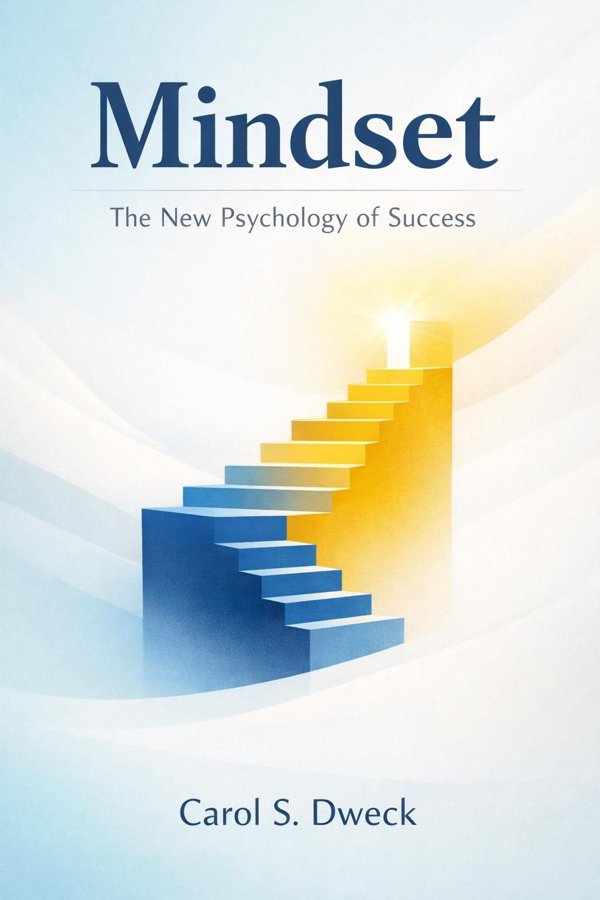
Mindset
by Carol Dweck
Why do some people bounce back from failure, while others shut down after one setback? Why do certain students, athletes, and professionals keep improving long after their early talent stops carrying them? In Mindset, psychologist Carol S. Dweck offers a powerful answer: the stories we tell ourselves about ability shape nearly everything we do. At the center of the book is a simple but life-changing distinction between a fixed mindset—the belief that intelligence, talent, and character are largely set—and a growth mindset, the belief that these qualities can be developed through effort, strategy, and feedback. That idea sounds straightforward, but its implications are profound. It affects how we handle criticism, how we parent, how we teach, how we lead, and even how we love. Drawing on decades of research in motivation and personality, Dweck shows that success is not just about natural gifts. It is also about how people interpret challenge, effort, and failure. This book matters because it replaces the myth of effortless genius with a more hopeful, practical truth: people can change, improve, and become more capable over time.
Key Takeaways
- 1The Nature of Mindset: Fixed versus Growth — From childhood onward, people absorb beliefs about what ability means. A child who hears “You’re so smart” may start to …
- 2Inside the Fixed Mindset: The Need to Prove — The fixed mindset often hides behind ambition. On the surface, it can look like confidence, high standards, or competiti…
- 3Discovering the Growth Mindset: The Power to Develop — The growth mindset is not blind optimism or the idea that anyone can become anything overnight. It is a practical belief…
 10 min read
Grit
by Angela Duckworth
Why do some people keep going when progress is slow, failure is embarrassing, and success may take years, while others with equal or greater talent lose momentum? In Grit, psychologist Angela Duckworth offers a powerful answer: what matters most is not raw ability alone, but a rare combination of sustained passion and persistent effort. She calls this quality grit, and her central claim is both challenging and hopeful. Challenging, because it means success usually demands more patience and discipline than we like to admit. Hopeful, because grit is not reserved for a gifted few. Duckworth brings unusual credibility to the topic. A professor at the University of Pennsylvania, founder of Character Lab, and MacArthur Fellow, she has spent years studying why some people thrive in demanding environments. Drawing from research on students, athletes, cadets, teachers, and professionals, she shows that long-term achievement often comes from sticking with meaningful goals long after the initial excitement fades. For anyone pursuing mastery, raising resilient kids, leading a team, or simply trying not to quit too soon, Grit matters because it reframes success. It shifts the conversation from “How talented are you?” to “How committed are you to becoming better over time?”
Key Takeaways
- 1Chapter One: Defining Grit — The Twin Engines of Passion and Perseverance — Duckworth defines grit as the combination of passion and perseverance directed toward long-term goals. That distinction …
- 2Chapter Two: The Science Behind It — Why Grit Predicts Success — One of Duckworth’s most compelling contributions is showing that grit can predict long-term success better than many tra…
- 3Chapter Three: The Talent Trap — Why Effort Beats Natural Advantage — Duckworth challenges one of the most popular myths about achievement: that the naturally talented are destined to win. T…
 10 min read
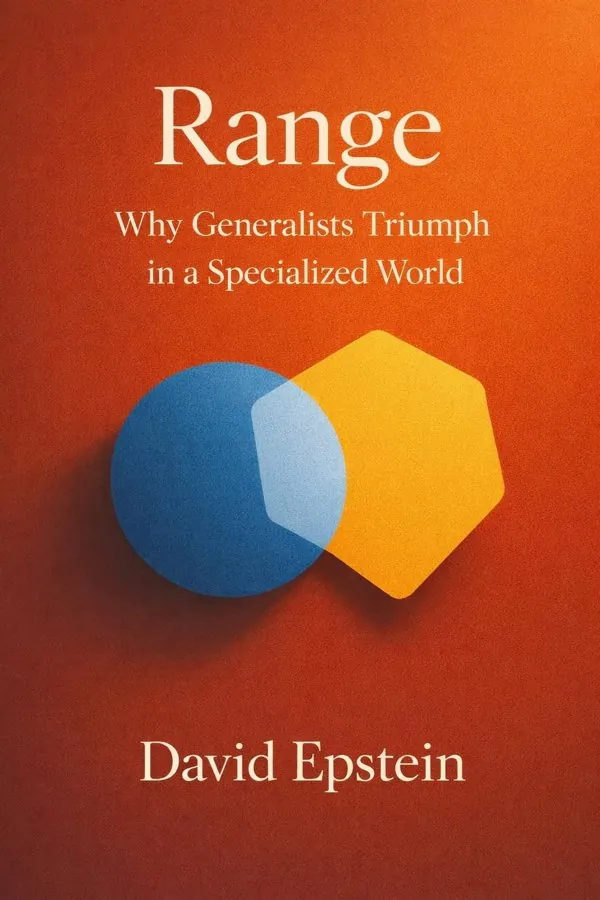
Range
by David Epstein
In Range, David Epstein makes a persuasive case against one of modern culture’s most cherished beliefs: that the surest path to success is early specialization. Drawing from sports, science, education, technology, and the arts, he argues that in many of today’s most important fields, people who explore widely, test different interests, and build knowledge across domains often outperform those who commit narrowly from the start. Rather than treating wandering as weakness, Epstein shows that breadth can be a major competitive advantage. The book matters because the world most of us work in is not stable, predictable, or neatly rule-bound. Careers shift, industries change, and the hardest problems rarely fit inside one discipline. In that environment, creativity, adaptability, and the ability to connect ideas matter as much as technical depth. Epstein, a journalist known for translating research on performance and human potential into compelling stories, brings together evidence and vivid examples to challenge conventional ideas about expertise. Range is both a critique of the specialization myth and a practical guide for thinking differently about learning, career development, and what real long-term excellence looks like.
Key Takeaways
- 1Early Specialization Is Not Always Best — We often assume that the sooner you specialize, the greater your chances of becoming world-class. Epstein opens by chall…
- 2Kind and Wicked Learning Environments — Not all expertise develops under the same conditions, and this distinction changes everything. Epstein uses psychologist…
- 3The Sampling Period Builds Better Masters — The pressure to decide early can make exploration feel like procrastination, but Epstein argues the opposite: a sampling…
 10 min read
The Culture Code
by Daniel Coyle
What makes certain groups consistently outperform others, even when they do not seem to have more talent, money, or experience? In The Culture Code, Daniel Coyle argues that the answer lies in culture: the shared habits, signals, and behaviors that shape how people relate, trust, and work together. Drawing on visits to elite organizations such as Pixar, the San Antonio Spurs, Navy SEAL teams, and successful businesses, Coyle looks beneath the surface of high performance to uncover the patterns that make great groups thrive. The book matters because culture is often treated as a vague idea—something inspirational but hard to define. Coyle makes it concrete. He shows that strong cultures are not built through slogans or perks, but through repeatable actions that create safety, encourage vulnerability, and clarify purpose. These small moments determine whether people speak up, take risks, learn from failure, and commit to a shared mission. As a journalist and bestselling author focused on performance and teamwork, Coyle brings both storytelling skill and research-driven insight. The result is a practical guide for leaders, managers, coaches, and anyone who wants to build a stronger, more connected team.
Key Takeaways
- 1The Skill of Building Safety — Great cultures begin with a simple human need: the need to feel safe with one another. Before people can innovate, chall…
- 2Signals of Connection Shape Behavior — Culture is not built in grand speeches; it is built in tiny signals that people exchange every day. One of Coyle’s most …
- 3The Skill of Sharing Vulnerability — Strong cultures are not held together by displays of perfection. They are strengthened when people feel able to admit un…
 10 min read
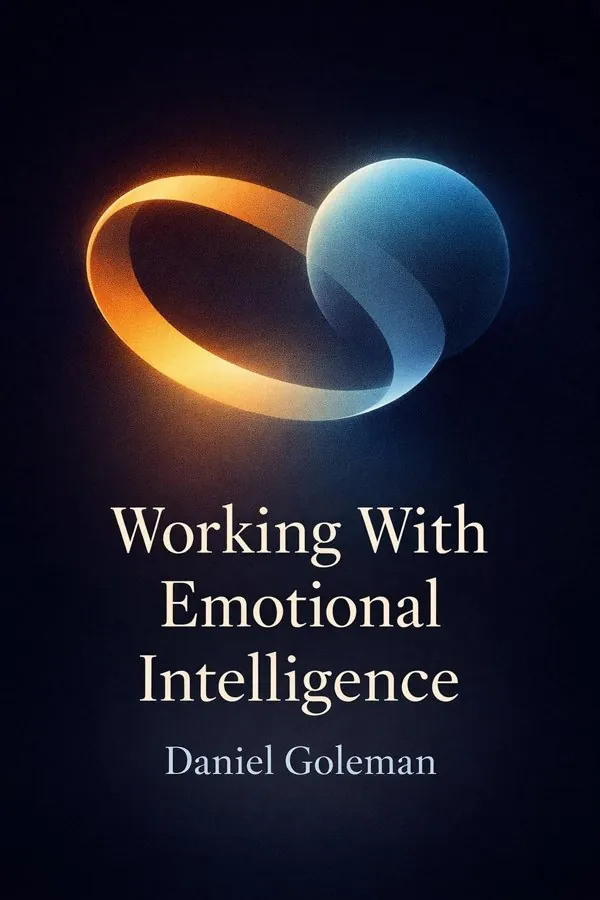
Emotional Intelligence
by Daniel Goleman
Why do some brilliant people stall in their careers while others with only average technical ability become trusted leaders, strong collaborators, and top performers? Daniel Goleman’s Emotional Intelligence answers that question by shifting the focus from raw IQ to the human abilities that shape success at work. In this influential follow-up to his original work on emotional intelligence, Goleman shows that professional excellence depends not just on what you know, but on how well you understand yourself, manage your reactions, read other people, and build productive relationships. Drawing on research from psychology, neuroscience, and organizational behavior, Goleman argues that workplace performance is deeply tied to five core capacities: self-awareness, self-regulation, motivation, empathy, and social skills. These are not vague personality traits or feel-good ideals. They are measurable competencies that affect hiring, leadership, teamwork, customer relationships, and organizational culture. The book matters because it challenges one of the most common myths in business: that technical competence alone creates success. Goleman, an American psychologist, science journalist, and former New York Times writer best known for his work on emotional intelligence, makes a compelling case that EQ is often the hidden advantage behind influence, resilience, and long-term career growth.
Key Takeaways
- 1The New Yardstick — One of Goleman’s most powerful arguments is that the old way of judging talent is incomplete. For years, organizations t…
- 2The Emotional Competence Framework — Goleman makes emotional intelligence practical by breaking it into five core dimensions: self-awareness, self-regulation…
- 3Self-Awareness — Self-awareness is the foundation of emotional intelligence because you cannot manage what you do not notice. Goleman des…
 10 min read
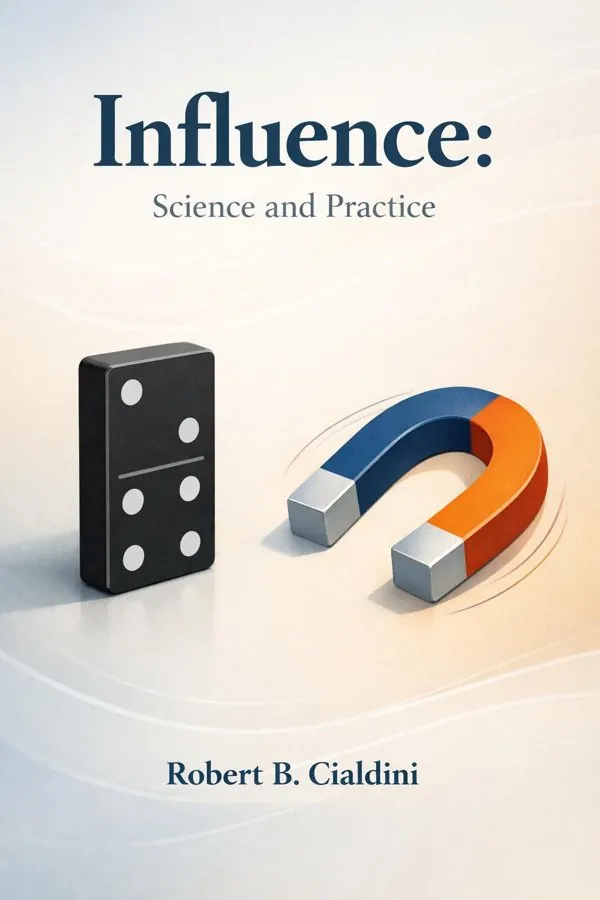
Influence
by Robert Cialdini
Why do people say yes when they would prefer to say no? Why do intelligent, careful individuals still fall for pressure, urgency, and persuasive framing? In Influence, Robert B. Cialdini answers these questions by uncovering the hidden psychological patterns that shape everyday decisions. Drawing on decades of research in social psychology, as well as undercover fieldwork in sales, fundraising, advertising, and compliance professions, Cialdini explains how persuasion often works not through logic alone, but through reliable mental shortcuts. He identifies six core principles of influence—reciprocity, commitment and consistency, social proof, liking, authority, and scarcity—and shows how they operate in business, relationships, politics, and consumer behavior. What makes the book so enduring is its balance of scientific rigor and practical usefulness. It helps readers become both more persuasive and more resistant to manipulation. Whether you work in marketing, negotiation, leadership, or simply want to make better decisions in a world full of influence attempts, this book offers a framework that remains remarkably relevant. Influence is not just about persuasion; it is about understanding human behavior under pressure.
Key Takeaways
- 1Weapons of Influence and Automaticity — Much of persuasion succeeds not because people are foolish, but because people are busy. Cialdini begins with a crucial …
- 2Reciprocity Creates Powerful Obligation — A small favor can create a surprisingly large sense of debt. That is the essence of reciprocity, one of the oldest and m…
- 3Commitment Shapes Future Behavior — People do not just want to make decisions; they want to appear consistent with them. Cialdini explains that once individ…
Want the full summary?
Get instant access to this book summary and 100K+ more with Fizz Moment.
Get Free SummaryAvailable on App Store • Free to download
About This List
The books that organizational psychologist Adam Grant recommends for rethinking work, creativity, and success.
This list features 10 carefully selected books. With FizzRead, you can read AI-powered summaries of each book in just 15 minutes. Get the key takeaways and start applying the insights immediately.
Ready to start reading?
Get instant access to all 10 book summaries and 100K+ more with FizzRead.