
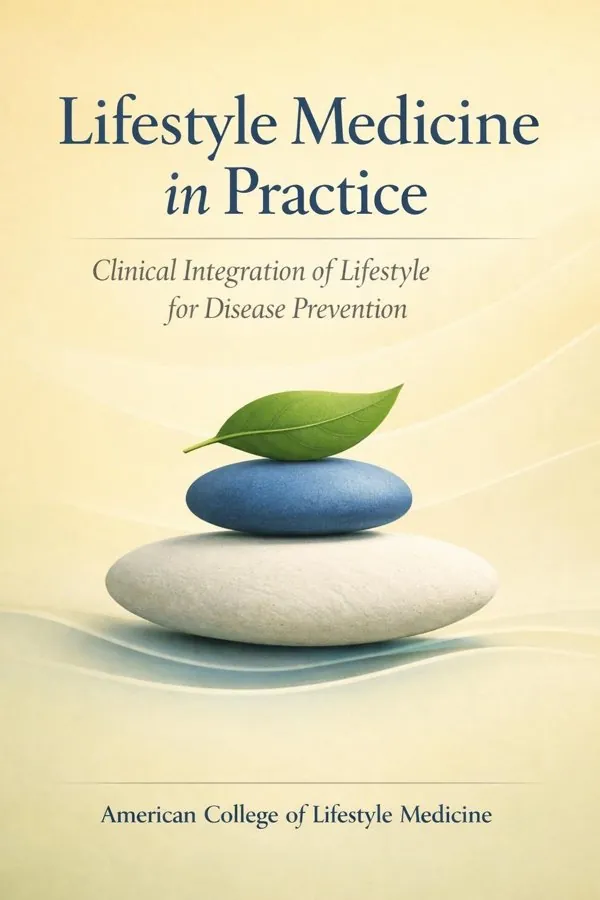
Lifestyle Medicine in Practice: Clinical Integration of Lifestyle for Disease Prevention: Summary & Key Insights
by American College of Lifestyle Medicine
 10 min9 chaptersAudio available
Key Takeaways from Lifestyle Medicine in Practice: Clinical Integration of Lifestyle for Disease Prevention
The most radical idea in modern healthcare may also be the most obvious: daily habits can alter the course of disease as powerfully as many medical treatments.
Many healthcare systems are excellent at responding to disease once it is advanced, but far less effective at creating health before illness takes hold.
Food is one of the most frequent exposures in human life, which means it is also one of the most influential medical variables.
The body is designed for movement, and when movement disappears from daily life, disease often fills the gap.
Patients do not live in laboratory conditions.
What Is Lifestyle Medicine in Practice: Clinical Integration of Lifestyle for Disease Prevention About?
Lifestyle Medicine in Practice: Clinical Integration of Lifestyle for Disease Prevention by American College of Lifestyle Medicine is a health_med book spanning 6 pages. What if the most powerful tools for preventing and treating chronic disease were already available in every clinic, but too often underused? Lifestyle Medicine in Practice: Clinical Integration of Lifestyle for Disease Prevention argues exactly that. Created by the American College of Lifestyle Medicine, this practical volume shows clinicians how to move beyond symptom control and address the root causes of many modern illnesses through evidence-based lifestyle interventions. Rather than treating nutrition, exercise, sleep, stress, and social connection as secondary advice, the book places them at the center of care. Its importance is hard to overstate. Chronic conditions such as cardiovascular disease, type 2 diabetes, obesity, hypertension, and some cancers are strongly shaped by everyday behaviors and environments. Yet many healthcare systems still prioritize reactive treatment over preventive action. This book offers a clinical bridge between research and real-world practice, showing how to assess lifestyle factors, counsel patients effectively, build interdisciplinary support, and sustain behavior change over time. The American College of Lifestyle Medicine brings unusual authority to this subject as a leading professional organization devoted to education, certification, and the clinical advancement of lifestyle medicine worldwide.
This FizzRead summary covers all 9 key chapters of Lifestyle Medicine in Practice: Clinical Integration of Lifestyle for Disease Prevention in approximately 10 minutes, distilling the most important ideas, arguments, and takeaways from American College of Lifestyle Medicine's work. Also available as an audio summary and Key Quotes Podcast.
Lifestyle Medicine in Practice: Clinical Integration of Lifestyle for Disease Prevention
What if the most powerful tools for preventing and treating chronic disease were already available in every clinic, but too often underused? Lifestyle Medicine in Practice: Clinical Integration of Lifestyle for Disease Prevention argues exactly that. Created by the American College of Lifestyle Medicine, this practical volume shows clinicians how to move beyond symptom control and address the root causes of many modern illnesses through evidence-based lifestyle interventions. Rather than treating nutrition, exercise, sleep, stress, and social connection as secondary advice, the book places them at the center of care.
Its importance is hard to overstate. Chronic conditions such as cardiovascular disease, type 2 diabetes, obesity, hypertension, and some cancers are strongly shaped by everyday behaviors and environments. Yet many healthcare systems still prioritize reactive treatment over preventive action. This book offers a clinical bridge between research and real-world practice, showing how to assess lifestyle factors, counsel patients effectively, build interdisciplinary support, and sustain behavior change over time.
The American College of Lifestyle Medicine brings unusual authority to this subject as a leading professional organization devoted to education, certification, and the clinical advancement of lifestyle medicine worldwide.
Who Should Read Lifestyle Medicine in Practice: Clinical Integration of Lifestyle for Disease Prevention?
This book is perfect for anyone interested in health_med and looking to gain actionable insights in a short read. Whether you're a student, professional, or lifelong learner, the key ideas from Lifestyle Medicine in Practice: Clinical Integration of Lifestyle for Disease Prevention by American College of Lifestyle Medicine will help you think differently.
- ✓Readers who enjoy health_med and want practical takeaways
- ✓Professionals looking to apply new ideas to their work and life
- ✓Anyone who wants the core insights of Lifestyle Medicine in Practice: Clinical Integration of Lifestyle for Disease Prevention in just 10 minutes
Want the full summary?
Get instant access to this book summary and 100K+ more with Fizz Moment.
Get Free SummaryAvailable on App Store • Free to download
Key Chapters
The most radical idea in modern healthcare may also be the most obvious: daily habits can alter the course of disease as powerfully as many medical treatments. This book begins by grounding lifestyle medicine in decades of epidemiology, clinical trials, and public health research. The case is not based on wishful thinking or generic wellness advice. It is built on strong evidence showing that nutrition quality, physical activity, restorative sleep, stress regulation, avoidance of harmful substances, and social connectedness influence the incidence, progression, and even reversal of chronic disease.
The text makes a crucial distinction between lifestyle medicine and loosely defined self-help. Lifestyle medicine is a clinical discipline. It uses validated assessment tools, measurable outcomes, and interventions tied to specific conditions. For example, dietary patterns rich in whole plant foods are associated with improved cardiometabolic health. Regular movement lowers blood pressure, improves insulin sensitivity, and reduces mortality risk. Sleep restoration affects inflammation, appetite regulation, mood, and cognition. These are not isolated findings; they form a coherent, interlocking body of evidence.
Importantly, the book also shows that lifestyle factors rarely operate alone. A patient with hypertension may also have poor sleep, high stress, sedentary habits, and social isolation. Treating one variable while ignoring the others limits results. Lifestyle medicine therefore treats health behavior as a system rather than a single instruction.
For clinicians, this evidence base creates confidence. It allows them to move from vague encouragement to targeted, credible recommendations. For healthcare leaders, it justifies redesigning care pathways around prevention and behavior support. The practical takeaway is simple: begin treating lifestyle assessment as a core diagnostic activity, not an optional add-on.
Many healthcare systems are excellent at responding to disease once it is advanced, but far less effective at creating health before illness takes hold. One of the book’s central arguments is that integrating lifestyle medicine requires a change in clinical mindset. Instead of asking only, “How do we manage this disease?” clinicians should also ask, “What conditions helped create it, and how can we change them?”
This shift transforms the patient encounter. A routine visit becomes more than medication review and symptom tracking. It includes lifestyle history, readiness assessment, and collaborative planning. The authors describe how lifestyle questions can be embedded into intake forms, annual checkups, chronic disease visits, and follow-up appointments. Rather than overwhelming the clinician, integration can happen through simple workflows: brief screening for diet quality, physical activity, sleep, stress, substance use, and social support; referral pathways to health coaches, dietitians, or exercise professionals; and consistent tracking of behavioral goals.
The book emphasizes that integration works best when lifestyle medicine is normalized within the system. Electronic health records can include lifestyle metrics. Team-based care can distribute responsibility. Group visits can extend support efficiently. Even short appointments can become more meaningful if clinicians focus on one high-impact behavior and revisit it consistently.
A practical example is a primary care practice managing prediabetes. Instead of escalating immediately to medication alone, the clinic can pair medical evaluation with nutrition counseling, walking prescriptions, sleep screening, and weekly check-ins. Over time, this creates a care culture centered on prevention.
The actionable takeaway: redesign one part of your workflow so lifestyle factors are assessed and addressed every time, not only when there is extra time.
Food is one of the most frequent exposures in human life, which means it is also one of the most influential medical variables. The nutrition chapter frames dietary change not as a matter of perfection or ideology, but as a practical, evidence-based tool for disease prevention and treatment. The book highlights eating patterns centered on minimally processed, nutrient-dense foods, especially vegetables, fruits, legumes, whole grains, nuts, and seeds, while reducing ultra-processed foods, excess sodium, refined sugars, and unhealthy fats.
What makes the discussion useful is its clinical realism. Patients do not eat nutrients in isolation, and they rarely change because they were handed a list of forbidden foods. The authors encourage clinicians to focus on patterns, substitutions, and sustainability. For a patient with hypertension, this may mean replacing packaged snacks with fruit and unsalted nuts, increasing potassium-rich foods, and learning easy home-prepared meals. For someone with type 2 diabetes, the conversation might center on fiber, satiety, portion awareness, and reducing sugary beverages before tackling more advanced changes.
The text also recognizes barriers such as cost, culture, cooking confidence, food insecurity, and time pressure. Effective nutrition counseling therefore requires respect for the patient’s context. Clinicians are encouraged to ask what the patient currently eats, what matters to them, what resources they have, and what one change feels realistic this week. Referral to registered dietitians and community food supports can greatly improve follow-through.
The key message is that nutrition counseling is not separate from medical care; it is medical care. The actionable takeaway: replace generic advice like “eat better” with one specific food-based change the patient can start immediately and measure at the next visit.
The body is designed for movement, and when movement disappears from daily life, disease often fills the gap. This book presents physical activity not merely as fitness promotion, but as a frontline treatment for prevention, recovery, and long-term function. Exercise improves blood pressure, blood glucose, mood, sleep, mobility, and cardiovascular health. It reduces risk for numerous chronic conditions while also enhancing quality of life, especially in aging populations.
A major strength of the book is its flexible approach. Patients often assume exercise means intense workouts, gym memberships, or athletic performance. The authors challenge this misconception by emphasizing that all movement counts. Walking, resistance training, gardening, stair climbing, stretching, and short movement breaks during the day can each have meaningful clinical value. For a sedentary patient, the goal is not perfection but progression.
The clinical application is straightforward. Clinicians can assess current activity levels, identify barriers, and prescribe movement in concrete terms. A provider might recommend ten minutes of brisk walking after meals for someone with insulin resistance, chair exercises for a patient with mobility limitations, or two weekly strength sessions for an older adult at risk of sarcopenia. Safety and personalization matter, but so does encouragement. Many patients have internalized failure from past exercise attempts. A supportive, achievable plan rebuilds confidence.
The book also underscores the importance of reducing sedentary time. Even patients who exercise formally may still spend most of the day inactive. Encouraging standing breaks, walking meetings, or brief mobility intervals can complement structured activity.
The actionable takeaway: write physical activity as a specific prescription, including type, duration, frequency, and starting level, rather than offering exercise as a vague recommendation.
Patients do not live in laboratory conditions. They live in families, jobs, neighborhoods, schedules, and emotional realities that profoundly shape health. One of the book’s most valuable contributions is its insistence that stress, sleep, and social connection are not peripheral concerns. They are major determinants of clinical outcomes.
Chronic stress affects blood pressure, inflammation, immune function, mood, coping behaviors, and adherence. Poor sleep can worsen insulin resistance, appetite regulation, depression, cognition, and cardiovascular risk. Social isolation is associated with higher morbidity and mortality, while healthy relationships can improve resilience and recovery. When clinicians ignore these domains, they often mistake downstream symptoms for isolated disease processes.
The authors recommend practical ways to address these issues in everyday care. Stress can be screened through simple questions about overwhelm, irritability, or emotional burden, followed by brief interventions such as breathing exercises, mindfulness referrals, counseling, or stress-reduction planning. Sleep discussions can include bedtime routines, screen exposure, sleep duration, sleep apnea risk, and stimulant use. Social connection can be explored by asking who supports the patient, whether they feel lonely, and what communities they belong to.
Consider a patient with poorly controlled hypertension. If the clinician focuses only on medication titration but misses night-shift work, fragmented sleep, financial stress, and isolation, control may remain elusive. Addressing those factors may unlock better outcomes than another prescription alone.
The broader lesson is that healing requires attention to the lived context of the patient. The actionable takeaway: add one routine question about stress, one about sleep, and one about social support to every chronic disease follow-up.
Knowledge alone rarely changes behavior. Most patients already know they should eat better, move more, sleep enough, and manage stress. The true challenge is converting intention into sustained action amid real-life barriers. This book treats behavior change as a clinical skill, not a matter of patient willpower.
The authors emphasize motivational interviewing, shared decision-making, and stage-appropriate coaching. Instead of lecturing, effective clinicians listen for readiness, ambivalence, values, and obstacles. A patient may resist dietary change not because they do not care, but because they cook for a large family, work two jobs, or feel ashamed after repeated attempts. In such cases, empathy is more useful than urgency.
The book advocates for SMART goals: specific, measurable, achievable, relevant, and time-bound. Rather than saying, “Exercise more,” a clinician might ask, “Would you be willing to walk for 15 minutes after dinner on Monday, Wednesday, and Friday?” The patient then helps shape the plan, which increases ownership. Follow-up is equally important. Behavior change grows through repetition, troubleshooting, and reinforcement.
The text also highlights the power of multidisciplinary support. Health coaches, psychologists, dietitians, exercise specialists, nurses, and community health workers can all contribute to sustained change. This reduces the burden on the physician and gives patients multiple avenues of encouragement.
Perhaps the most important insight is that relapse should be expected, not moralized. Setbacks are part of the process. The clinician’s role is to help patients learn from them, adjust, and continue.
The actionable takeaway: in your next patient conversation, replace advice-giving with one collaborative question that invites the patient to choose the behavior they feel most ready to change.
No single clinician, no matter how committed, can deliver comprehensive lifestyle medicine alone. The book repeatedly underscores that effective implementation depends on teamwork. Chronic disease is complex, and the behaviors driving it are shaped by biology, psychology, environment, education, and access. That means the best care model is interdisciplinary by design.
In practical terms, this includes physicians, nurse practitioners, physician assistants, registered dietitians, behavioral health professionals, physical therapists, exercise professionals, health coaches, and community partners. Each brings a different strength. A physician may identify the diagnosis and establish medical safety. A dietitian can translate nutrition science into meal routines. A psychologist can address stress, emotional eating, and self-efficacy. A health coach can maintain accountability between visits. Community programs can create affordable access to food, exercise, or peer support.
The book also suggests that team-based care improves both outcomes and feasibility. Clinicians often avoid lifestyle counseling because they feel constrained by short appointments. Shared workflows solve this problem. One team member can perform lifestyle screening, another can provide in-depth counseling, and another can monitor progress remotely. Group visits and shared medical appointments can efficiently support patients with common goals such as weight reduction, diabetes prevention, or blood pressure control.
This approach is particularly powerful in underserved settings. Partnerships with community organizations, faith groups, food assistance networks, and local wellness programs can extend the reach of the clinic beyond its walls.
The deeper message is that behavior change thrives in systems of support, not isolated instructions. The actionable takeaway: map your current referral network and identify at least two professionals or community resources that can help patients implement lifestyle changes after they leave your office.
A good clinical idea fails when the system around it does not support execution. The book’s implementation and ethics discussion moves lifestyle medicine from theory into operational reality. It asks hard questions: How do clinicians document lifestyle care? How is progress measured? What happens when patients face structural barriers? How do we avoid blaming individuals for conditions shaped by poverty, trauma, food access, discrimination, or unsafe environments?
The authors make clear that lifestyle medicine must be both evidence-based and ethically grounded. It cannot become a simplistic message that patients are solely responsible for their illness. Instead, clinicians must recognize social determinants of health and tailor recommendations accordingly. Advising fresh produce to someone in a food desert without discussing access is incomplete care. Recommending gym-based exercise to a patient with chronic pain, low income, or unsafe neighborhood conditions may be unrealistic. Ethical practice means combining aspiration with practicality.
System support matters too. Clinics need workflows, documentation standards, outcome measures, billing strategies, staff education, and leadership buy-in. Otherwise lifestyle medicine remains dependent on a few passionate individuals. The book encourages organizations to embed prevention metrics into quality improvement efforts and to evaluate outcomes such as weight trends, hemoglobin A1c, blood pressure, physical activity, and patient-reported behavior change.
The future of healthcare, the authors suggest, will belong to models that integrate prevention, personalization, and long-term support. Lifestyle medicine is not a side service; it is an organizing principle for better care.
The actionable takeaway: before recommending any lifestyle change, ask whether the patient has the access, resources, and support needed to implement it, and adapt the plan if they do not.
The same recommendation can inspire one patient and fail completely with another. That is why this book repeatedly returns to personalization. Lifestyle medicine is not a rigid formula applied identically to everyone. It is a framework for identifying the highest-value changes for each individual based on risk, preferences, readiness, culture, medical history, and life circumstances.
Personalization starts with assessment. A patient with obesity and sleep apnea may benefit most from sleep restoration and gradual weight-supportive nutrition changes before an ambitious exercise target. Another patient with depression and prediabetes may improve most by focusing first on daily walking and social support. The clinical art lies in identifying the leverage point that is both medically meaningful and realistically achievable.
The authors also stress cultural humility. Food traditions, family roles, work schedules, and beliefs about health influence whether advice will stick. Personalized care respects these factors instead of treating them as obstacles. For instance, rather than asking a patient to abandon familiar cuisine, a clinician can explore healthier preparation methods, portion shifts, and ingredient substitutions within that tradition.
Monitoring should be personalized as well. Some patients respond well to data such as step counts, weight logs, or glucose trends. Others do better with energy levels, sleep quality, mood, or functional improvements as markers of success. By broadening what counts as progress, clinicians can sustain motivation.
The big lesson is that adherence improves when care fits the person rather than the textbook. The actionable takeaway: identify the single lifestyle intervention most likely to create momentum for this specific patient, and make that the immediate focus instead of trying to change everything at once.
All Chapters in Lifestyle Medicine in Practice: Clinical Integration of Lifestyle for Disease Prevention
About the Author
The American College of Lifestyle Medicine (ACLM) is a leading professional medical society dedicated to advancing lifestyle medicine as an evidence-based foundation for preventing, treating, and sometimes reversing chronic disease. ACLM supports physicians and other health professionals through education, board certification pathways, conferences, clinical tools, and advocacy aimed at transforming healthcare from reactive treatment to proactive health creation. The organization promotes the core pillars of lifestyle medicine, including whole-food nutrition, regular physical activity, restorative sleep, stress management, avoidance of risky substances, and healthy social connection. By bringing together research, clinical standards, and practical implementation strategies, ACLM has become one of the most influential voices in the field. Its work helps clinicians integrate sustainable behavior change into everyday practice and supports a more preventive, patient-centered healthcare system.
Get This Summary in Your Preferred Format
Read or listen to the Lifestyle Medicine in Practice: Clinical Integration of Lifestyle for Disease Prevention summary by American College of Lifestyle Medicine anytime, anywhere. FizzRead offers multiple formats so you can learn on your terms — all free.
Available formats: App · Audio · PDF · EPUB — All included free with FizzRead
Download Lifestyle Medicine in Practice: Clinical Integration of Lifestyle for Disease Prevention PDF and EPUB Summary
Key Quotes from Lifestyle Medicine in Practice: Clinical Integration of Lifestyle for Disease Prevention
“The most radical idea in modern healthcare may also be the most obvious: daily habits can alter the course of disease as powerfully as many medical treatments.”
“Many healthcare systems are excellent at responding to disease once it is advanced, but far less effective at creating health before illness takes hold.”
“Food is one of the most frequent exposures in human life, which means it is also one of the most influential medical variables.”
“The body is designed for movement, and when movement disappears from daily life, disease often fills the gap.”
“Patients do not live in laboratory conditions.”
Frequently Asked Questions about Lifestyle Medicine in Practice: Clinical Integration of Lifestyle for Disease Prevention
Lifestyle Medicine in Practice: Clinical Integration of Lifestyle for Disease Prevention by American College of Lifestyle Medicine is a health_med book that explores key ideas across 9 chapters. What if the most powerful tools for preventing and treating chronic disease were already available in every clinic, but too often underused? Lifestyle Medicine in Practice: Clinical Integration of Lifestyle for Disease Prevention argues exactly that. Created by the American College of Lifestyle Medicine, this practical volume shows clinicians how to move beyond symptom control and address the root causes of many modern illnesses through evidence-based lifestyle interventions. Rather than treating nutrition, exercise, sleep, stress, and social connection as secondary advice, the book places them at the center of care. Its importance is hard to overstate. Chronic conditions such as cardiovascular disease, type 2 diabetes, obesity, hypertension, and some cancers are strongly shaped by everyday behaviors and environments. Yet many healthcare systems still prioritize reactive treatment over preventive action. This book offers a clinical bridge between research and real-world practice, showing how to assess lifestyle factors, counsel patients effectively, build interdisciplinary support, and sustain behavior change over time. The American College of Lifestyle Medicine brings unusual authority to this subject as a leading professional organization devoted to education, certification, and the clinical advancement of lifestyle medicine worldwide.
You Might Also Like

On Immunity
Eula Biss
10 min
The Three-Body Problem
Liu Cixin
10 min
Community Health Volunteer Toolkit: Training and Practical Activities
World Health Organization
10 min
Healing Back Pain: The Mind-Body Connection
John E. Sarno
10 min
Health Literacy for All: Practical Guides to Communicate Health Information (Compilations)
World Health Organization
10 min
The Complete Guide to Sports Supplements: An Evidence-Based Review
Anita Bean
10 minBrowse by Category
Ready to read Lifestyle Medicine in Practice: Clinical Integration of Lifestyle for Disease Prevention?
Get the full summary and 100K+ more books with Fizz Moment.