
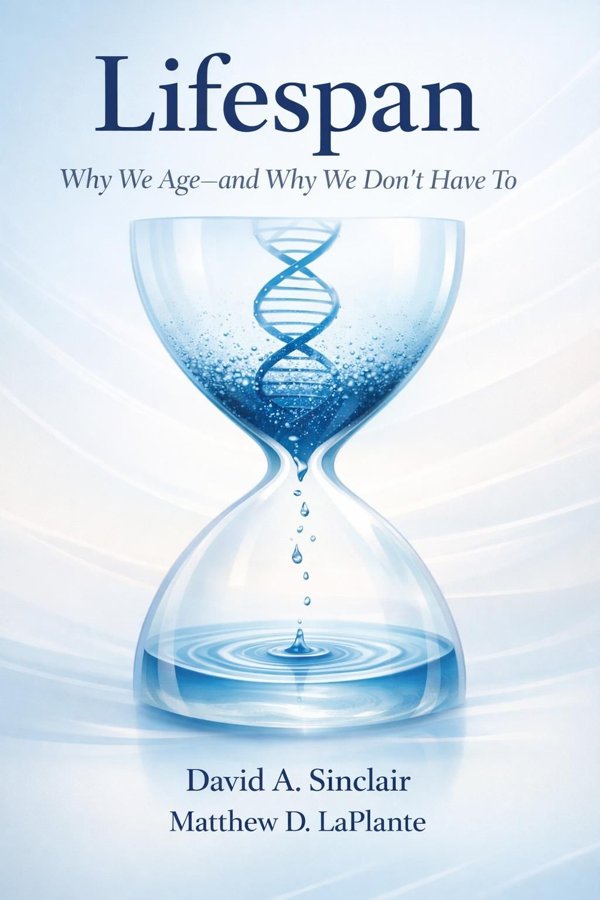
Lifespan: Why We Age—and Why We Don't Have To: Summary & Key Insights
by David A. Sinclair, Matthew D. LaPlante
 10 min9 chaptersAudio available
What Is Lifespan: Why We Age—and Why We Don't Have To About?
Lifespan: Why We Age—and Why We Don't Have To by David A. Sinclair, Matthew D. LaPlante is a life_science book spanning 9 pages. In this groundbreaking work, Harvard geneticist David A. Sinclair argues that aging is a disease—and that it is treatable. Drawing on decades of research, Sinclair explains the biological mechanisms of aging and presents scientific advances that could extend human lifespan and healthspan. The book explores how lifestyle, genetics, and emerging technologies can slow or even reverse aspects of aging, offering a vision of a future where growing old no longer means decline.
This FizzRead summary covers all 9 key chapters of Lifespan: Why We Age—and Why We Don't Have To in approximately 10 minutes, distilling the most important ideas, arguments, and takeaways from David A. Sinclair, Matthew D. LaPlante's work. Also available as an audio summary and Key Quotes Podcast.
Lifespan: Why We Age—and Why We Don't Have To
In this groundbreaking work, Harvard geneticist David A. Sinclair argues that aging is a disease—and that it is treatable. Drawing on decades of research, Sinclair explains the biological mechanisms of aging and presents scientific advances that could extend human lifespan and healthspan. The book explores how lifestyle, genetics, and emerging technologies can slow or even reverse aspects of aging, offering a vision of a future where growing old no longer means decline.
Who Should Read Lifespan: Why We Age—and Why We Don't Have To?
This book is perfect for anyone interested in life_science and looking to gain actionable insights in a short read. Whether you're a student, professional, or lifelong learner, the key ideas from Lifespan: Why We Age—and Why We Don't Have To by David A. Sinclair, Matthew D. LaPlante will help you think differently.
- ✓Readers who enjoy life_science and want practical takeaways
- ✓Professionals looking to apply new ideas to their work and life
- ✓Anyone who wants the core insights of Lifespan: Why We Age—and Why We Don't Have To in just 10 minutes
Want the full summary?
Get instant access to this book summary and 100K+ more with Fizz Moment.
Get Free SummaryAvailable on App Store • Free to download
Key Chapters
The heart of my argument rests on what I call the Information Theory of Aging. Biology, at its core, is about information — not just genetic code but how that code is read and executed. Our DNA is astonishingly stable, like the hard drive storing the body’s instructions. Yet over time, the epigenetic software — the system that manages which genes are turned on or off — becomes corrupted.
Imagine a symphony in which every musician plays flawlessly, guided by a conductor who keeps everything in harmony. That conductor represents the epigenetic regulation. With age, the conductor’s signals falter. The musicians — your genes — still exist, but the coordination is lost. Cells begin to misread their roles, making errors that accumulate as tissue dysfunction, inflammation, and disease.
This theory shifts our focus from DNA damage to information loss. It tells us that aging isn’t simply wear and tear; it’s dysregulation of the code’s expression. And if the information that tells a cell how to function can be restored, then aging itself can be reversed. The experiments are striking: by inducing temporary damage and repairing it through key molecules, we’ve observed cells that regain their youthful behavior. It’s not science fiction — it’s a reframing of aging in terms of recoverable information, not inevitable decay.
In my lab, the quest to understand longevity led us to sirtuins — a family of genes that act as the guardians of cellular health. When I first began studying them, few could imagine their significance. Sirtuins regulate the body’s responses to stress and scarcity, maintaining genomic stability and efficiency. They are, in a sense, the mediators between adversity and adaptation.
Here’s the catch: these longevity pathways rely on a molecule called NAD+, a coenzyme essential for cell function. Without sufficient NAD+, sirtuins are silent; their protective roles diminish. As we age, NAD+ levels plummet, sirtuins lose activity, and cells start drifting toward dysfunction. This realization opened vast therapeutic possibilities.
Boosting NAD+ — whether through precursors like NMN or NR — appears to restore vitality to older cells. In animals, it improves endurance, responsiveness, and even reverses certain markers of aging. Humans are beginning to experience similar benefits. But what’s most profound is how it changes our view of stress. Moderation, fasting, and exercise aren’t just good habits; they’re signals to these ancient genes that trigger repair and renewal. Sirtuins interpret challenges as calls to strengthen the system. That’s why living slightly out of comfort — stretching limitation — activates longevity at the molecular level. It’s the biology of resilience made visible.
+ 7 more chapters — available in the FizzRead app
All Chapters in Lifespan: Why We Age—and Why We Don't Have To
About the Authors
David A. Sinclair is a professor of genetics at Harvard Medical School and a leading researcher in the field of aging and longevity. He is known for his pioneering work on sirtuins and NAD+ metabolism. Matthew D. LaPlante is a journalist and associate professor of journalism at Utah State University, specializing in science communication.
Get This Summary in Your Preferred Format
Read or listen to the Lifespan: Why We Age—and Why We Don't Have To summary by David A. Sinclair, Matthew D. LaPlante anytime, anywhere. FizzRead offers multiple formats so you can learn on your terms — all free.
Available formats: App · Audio · PDF · EPUB — All included free with FizzRead
Download Lifespan: Why We Age—and Why We Don't Have To PDF and EPUB Summary
Key Quotes from Lifespan: Why We Age—and Why We Don't Have To
“The heart of my argument rests on what I call the Information Theory of Aging.”
“In my lab, the quest to understand longevity led us to sirtuins — a family of genes that act as the guardians of cellular health.”
Frequently Asked Questions about Lifespan: Why We Age—and Why We Don't Have To
Lifespan: Why We Age—and Why We Don't Have To by David A. Sinclair, Matthew D. LaPlante is a life_science book that explores key ideas across 9 chapters. In this groundbreaking work, Harvard geneticist David A. Sinclair argues that aging is a disease—and that it is treatable. Drawing on decades of research, Sinclair explains the biological mechanisms of aging and presents scientific advances that could extend human lifespan and healthspan. The book explores how lifestyle, genetics, and emerging technologies can slow or even reverse aspects of aging, offering a vision of a future where growing old no longer means decline.
You Might Also Like
The Selfish Gene
Richard Dawkins
10 min
Awakenings
Oliver Sacks
10 min
Parasite Rex: Inside the Bizarre World of Nature's Most Dangerous Creatures
Carl Zimmer
10 min
The Atlas of Life on Earth
Various
10 min
The Book of Humans: The Story of How We Became Us
Adam Rutherford
10 min
The Horse
Wendy Williams
10 minBrowse by Category
Ready to read Lifespan: Why We Age—and Why We Don't Have To?
Get the full summary and 100K+ more books with Fizz Moment.