
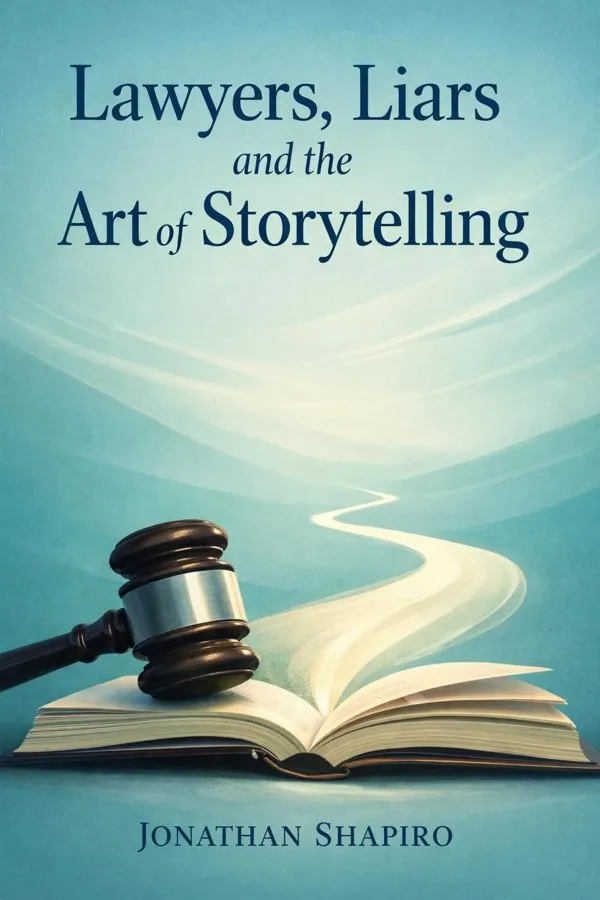
Lawyers, Liars and the Art of Storytelling: Using Stories to Advocate, Influence, and Persuade: Summary & Key Insights
 10 min11 chaptersAudio available
What Is Lawyers, Liars and the Art of Storytelling: Using Stories to Advocate, Influence, and Persuade About?
Lawyers, Liars and the Art of Storytelling: Using Stories to Advocate, Influence, and Persuade by Jonathan Shapiro is a communication book spanning 11 pages. In this insightful book, former federal prosecutor and television writer Jonathan Shapiro explores how storytelling is central to the practice of law. Drawing from his experiences in the courtroom and in Hollywood, Shapiro demonstrates how lawyers can use narrative techniques to craft compelling arguments, connect with juries, and reveal truth through story. The book blends legal insight, humor, and practical advice, making it a valuable resource for advocates, communicators, and anyone interested in the power of narrative persuasion.
This FizzRead summary covers all 11 key chapters of Lawyers, Liars and the Art of Storytelling: Using Stories to Advocate, Influence, and Persuade in approximately 10 minutes, distilling the most important ideas, arguments, and takeaways from Jonathan Shapiro's work. Also available as an audio summary and Key Quotes Podcast.
Lawyers, Liars and the Art of Storytelling: Using Stories to Advocate, Influence, and Persuade
In this insightful book, former federal prosecutor and television writer Jonathan Shapiro explores how storytelling is central to the practice of law. Drawing from his experiences in the courtroom and in Hollywood, Shapiro demonstrates how lawyers can use narrative techniques to craft compelling arguments, connect with juries, and reveal truth through story. The book blends legal insight, humor, and practical advice, making it a valuable resource for advocates, communicators, and anyone interested in the power of narrative persuasion.
Who Should Read Lawyers, Liars and the Art of Storytelling: Using Stories to Advocate, Influence, and Persuade?
This book is perfect for anyone interested in communication and looking to gain actionable insights in a short read. Whether you're a student, professional, or lifelong learner, the key ideas from Lawyers, Liars and the Art of Storytelling: Using Stories to Advocate, Influence, and Persuade by Jonathan Shapiro will help you think differently.
- ✓Readers who enjoy communication and want practical takeaways
- ✓Professionals looking to apply new ideas to their work and life
- ✓Anyone who wants the core insights of Lawyers, Liars and the Art of Storytelling: Using Stories to Advocate, Influence, and Persuade in just 10 minutes
Want the full summary?
Get instant access to this book summary and 100K+ more with Fizz Moment.
Get Free SummaryAvailable on App Store • Free to download
Key Chapters
The first and most liberating truth for any advocate is that a lawyer is a storyteller. Many of us resist this at first. We are trained to think in logic, precedent, and statute, not in plot, emotion, and character. But when a jury enters a courtroom, they are not robots parsing words—they are people listening for a story that makes sense. What they seek is not just information, but coherence. A good lawyer’s task is to make the facts mean something.
When I tried my early cases, I would often drown the jury in detail, as if the accumulation of fact could substitute for narrative shape. It never worked. Juries connect not to information, but to a narrative arc that answers basic human questions: Who are these people? What do they want? Why does what happened matter? Until you can answer those questions, you have not yet built a story—or a case.
The job, then, is to transform raw evidence into a living narrative. The evidence is your material; the story gives it purpose. The law provides boundaries, but the story animates meaning within those boundaries. And when done right, the two converge: the narrative becomes the vehicle that delivers justice.
In the writer’s room, I learned that every story must begin with empathy—the writer’s understanding of the character’s world. The same is true for advocacy. Before you can persuade, you must understand not only your client’s perspective but also your audience’s humanity. The storyteller-lawyer begins by listening, by building a bridge between lived experience and legal argument. And that, in the end, is the heart of advocacy: making others see what you see, not by force, but by story.
Lawyers live at the edge of a paradox: they must tell persuasive stories without betraying the truth. The word ‘liars’ in my title is not an accusation but a warning. Every advocate must grapple with the dangerous power of narrative—the ability to shape perception. Stories can enlighten, but they can also distort. The art of storytelling in law lies in honoring truth while recognizing that every presentation of facts is, by nature, a form of interpretation.
When I was a prosecutor, I saw how two sides could tell utterly different stories drawn from the same evidence, each claiming the mantle of truth. This taught me that in the courtroom, truth is not absolute—it is experienced. Facts take on meaning through the frame we give them. The storyteller’s ethical duty is to frame without falsifying, to reveal truth through structure rather than conceal it through artifice.
Narrative is a selective act. We decide what to emphasize, what to leave out, what order to reveal events. These choices shape meaning. They are the very choices fiction writers make—but with infinitely higher stakes. A screenwriter may earn applause; a lawyer wins or loses freedom, fortune, even life itself. The moral dimension of legal storytelling, then, is profound. The advocate’s job is not to invent truth but to uncover the most human version of it and make it visible to those who must decide.
To tell the truth well means understanding how human beings process story. We believe not what is most logical, but what is most meaningful. A story built on emotional and moral coherence feels true, and that sense of truth moves juries. Telling the truth, therefore, is not just stating facts—it is giving those facts a story that the human heart can believe.
+ 9 more chapters — available in the FizzRead app
All Chapters in Lawyers, Liars and the Art of Storytelling: Using Stories to Advocate, Influence, and Persuade
About the Author
Jonathan Shapiro is an American lawyer, law professor, and television writer-producer known for his work on legal dramas such as 'The Practice' and 'Boston Legal'. A former federal prosecutor and law firm partner, Shapiro combines his legal expertise with storytelling craft to teach advocacy and communication. He has also served as a lecturer at UCLA School of Law and the University of Southern California.
Get This Summary in Your Preferred Format
Read or listen to the Lawyers, Liars and the Art of Storytelling: Using Stories to Advocate, Influence, and Persuade summary by Jonathan Shapiro anytime, anywhere. FizzRead offers multiple formats so you can learn on your terms — all free.
Available formats: App · Audio · PDF · EPUB — All included free with FizzRead
Download Lawyers, Liars and the Art of Storytelling: Using Stories to Advocate, Influence, and Persuade PDF and EPUB Summary
Key Quotes from Lawyers, Liars and the Art of Storytelling: Using Stories to Advocate, Influence, and Persuade
“The first and most liberating truth for any advocate is that a lawyer is a storyteller.”
“Lawyers live at the edge of a paradox: they must tell persuasive stories without betraying the truth.”
Frequently Asked Questions about Lawyers, Liars and the Art of Storytelling: Using Stories to Advocate, Influence, and Persuade
Lawyers, Liars and the Art of Storytelling: Using Stories to Advocate, Influence, and Persuade by Jonathan Shapiro is a communication book that explores key ideas across 11 chapters. In this insightful book, former federal prosecutor and television writer Jonathan Shapiro explores how storytelling is central to the practice of law. Drawing from his experiences in the courtroom and in Hollywood, Shapiro demonstrates how lawyers can use narrative techniques to craft compelling arguments, connect with juries, and reveal truth through story. The book blends legal insight, humor, and practical advice, making it a valuable resource for advocates, communicators, and anyone interested in the power of narrative persuasion.
You Might Also Like

Magic Words: The Science and Secrets Behind Seven Words That Motivate, Engage, and Influence
Tim David
10 min
Talking Across The Divide: How to Communicate with People You Disagree with and Maybe Even Change the World
Justin Lee
10 min
The Exceptional Presenter: A Proven Formula to Open Up! and Own the Room
Timothy J. Koegel
10 min
4 Essential Keys to Effective Communication in Love, Life, Work--Anywhere!: Including the 12-Day Communication Challenge!
Bento C. Leal III
10 min
Active Listening Techniques: 30 Practical Tools to Hone Your Communication Skills
Nisha Gupta
10 min
Bargaining for Advantage: Negotiation Strategies for Reasonable People
G. Richard Shell
10 minBrowse by Category
Ready to read Lawyers, Liars and the Art of Storytelling: Using Stories to Advocate, Influence, and Persuade?
Get the full summary and 100K+ more books with Fizz Moment.