
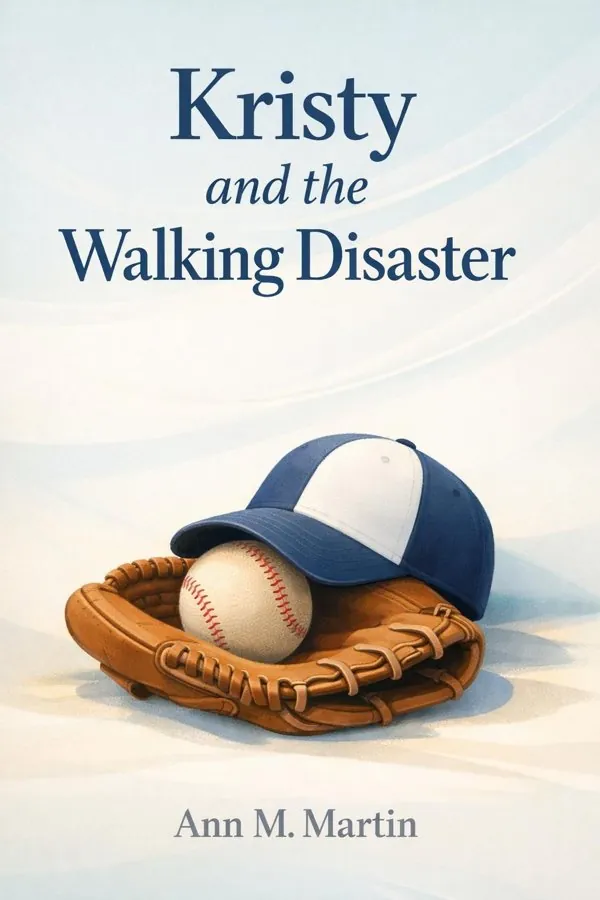
Kristy and the Walking Disaster: Summary & Key Insights
 10 min9 chaptersAudio available
Key Takeaways from Kristy and the Walking Disaster
Leadership often begins with noticing what others overlook.
A team is rarely difficult because of talent alone; it is difficult because people are different.
People often think ability comes first and confidence follows, but this story suggests the reverse is often true.
One of the most appealing dimensions of the story is that the Krushers are not built by Kristy alone.
Rivalries can bring out either insecurity or growth, depending on how people respond to them.
What Is Kristy and the Walking Disaster About?
Kristy and the Walking Disaster by Ann M. Martin is a bestsellers book spanning 3 pages. What begins as a simple idea—giving a group of younger kids a chance to play softball—turns into a lively story about leadership, patience, confidence, and growing up. In "Kristy and the Walking Disaster," Ann M. Martin follows Kristy Thomas as she organizes the Krushers, a neighborhood team made up of enthusiastic but inexperienced children, including many of her own younger siblings. With help from the Baby-Sitters Club, Kristy steps into the role of coach, manager, motivator, and problem solver. What she expects to be fun quickly becomes a lesson in how hard it is to guide people with different personalities, skill levels, and emotions. The book matters because it captures something timeless: real leadership is not about being in charge, but about helping others improve, belong, and believe in themselves. Beneath the softball practices and friendly rivalry is a thoughtful story about responsibility and empathy. Ann M. Martin, beloved creator of The Baby-Sitters Club series, has long been praised for turning everyday childhood experiences into meaningful, emotionally sharp stories. Here, she does it again, using sports and teamwork to show how character is built one small decision at a time.
This FizzRead summary covers all 9 key chapters of Kristy and the Walking Disaster in approximately 10 minutes, distilling the most important ideas, arguments, and takeaways from Ann M. Martin's work. Also available as an audio summary and Key Quotes Podcast.
Kristy and the Walking Disaster
What begins as a simple idea—giving a group of younger kids a chance to play softball—turns into a lively story about leadership, patience, confidence, and growing up. In "Kristy and the Walking Disaster," Ann M. Martin follows Kristy Thomas as she organizes the Krushers, a neighborhood team made up of enthusiastic but inexperienced children, including many of her own younger siblings. With help from the Baby-Sitters Club, Kristy steps into the role of coach, manager, motivator, and problem solver. What she expects to be fun quickly becomes a lesson in how hard it is to guide people with different personalities, skill levels, and emotions.
The book matters because it captures something timeless: real leadership is not about being in charge, but about helping others improve, belong, and believe in themselves. Beneath the softball practices and friendly rivalry is a thoughtful story about responsibility and empathy. Ann M. Martin, beloved creator of The Baby-Sitters Club series, has long been praised for turning everyday childhood experiences into meaningful, emotionally sharp stories. Here, she does it again, using sports and teamwork to show how character is built one small decision at a time.
Who Should Read Kristy and the Walking Disaster?
This book is perfect for anyone interested in bestsellers and looking to gain actionable insights in a short read. Whether you're a student, professional, or lifelong learner, the key ideas from Kristy and the Walking Disaster by Ann M. Martin will help you think differently.
- ✓Readers who enjoy bestsellers and want practical takeaways
- ✓Professionals looking to apply new ideas to their work and life
- ✓Anyone who wants the core insights of Kristy and the Walking Disaster in just 10 minutes
Want the full summary?
Get instant access to this book summary and 100K+ more with Fizz Moment.
Get Free SummaryAvailable on App Store • Free to download
Key Chapters
Leadership often begins with noticing what others overlook. Kristy does not start the Krushers because she wants glory or attention; she starts because she sees a need. The younger kids around her are energetic, eager, and full of interest, but they lack structure and encouragement. Instead of dismissing them as too young or too chaotic, Kristy imagines what they could become with guidance. That small act of observation becomes the foundation of the entire story.
Forming the Krushers is leadership in its most practical form. Kristy identifies a problem, creates a plan, recruits participants, and commits to following through. But what makes this meaningful is that her team is far from ideal. These are not polished athletes. They are kids with uneven skills, short attention spans, and strong emotions. By choosing to work with what she has rather than waiting for perfect conditions, Kristy shows an important truth: good leaders build opportunities instead of waiting for them.
This idea applies far beyond softball. In school, work, or family life, people often hesitate to begin because they do not have the perfect team, enough experience, or guaranteed success. Kristy’s example suggests that momentum matters more than perfection. A study group, neighborhood project, or family routine can start the same way—with one person deciding that enthusiasm deserves direction.
What follows is not smooth. Organizing people means handling schedules, misunderstandings, and expectations. Yet the act of beginning gives everyone something valuable: a shared purpose. The Krushers become more than a team. They become a place where younger kids feel seen and included.
Actionable takeaway: When you notice unused energy or overlooked potential in people around you, do not wait for ideal circumstances. Start something small, give it structure, and let leadership grow through action.
A team is rarely difficult because of talent alone; it is difficult because people are different. One of Kristy’s biggest challenges is not teaching the mechanics of softball but managing the wide range of personalities on the Krushers. Some kids are shy, some overexcited, some easily distracted, and others desperate to prove themselves. The team becomes a miniature lesson in human behavior.
Kristy learns that leadership is not one-size-fits-all. A louder kid may need boundaries, while a quieter one may need reassurance. One player responds to praise, another needs clearer instructions, and another simply needs patience after making mistakes. This is where the story becomes richer than a simple sports plot. It shows that helping a group succeed requires reading individuals carefully rather than forcing everyone into the same mold.
This lesson is deeply practical. In classrooms, offices, and families, conflict often arises when leaders assume everyone should respond the same way. A teacher may discover that one student thrives under pressure while another shuts down. A parent may realize one child needs independence while another needs routine. Effective leadership does not erase differences; it works with them.
Kristy does not master this instantly. She gets frustrated, makes assumptions, and occasionally tries to control too much. Those moments matter because they make her growth believable. She learns that organizing people is not just about assigning positions or making rules. It is about understanding motivation, emotion, and trust.
The Krushers improve not because every child changes into the same kind of player, but because Kristy gradually learns how to draw out each child’s strengths. That is the real art of leadership.
Actionable takeaway: The next time you lead a group, spend less time trying to make everyone act the same and more time figuring out what each person needs in order to do their best.
People often think ability comes first and confidence follows, but this story suggests the reverse is often true. The Krushers are beginners, and many of the younger kids lack both experience and self-belief. They do not just need drills; they need repeated chances to try, fail, laugh, and try again. Through practices, Kristy begins to understand that confidence is not a reward for excellence. It is often the condition that allows improvement to happen.
This is especially important with children, but it applies to all learners. A player who fears embarrassment will hesitate, avoid risks, and improve slowly. A player who feels safe enough to make mistakes becomes more willing to swing, catch, run, and listen. Kristy’s practices therefore become more than technical sessions. They are emotional training grounds where effort becomes normal and mistakes lose some of their sting.
The Baby-Sitters Club helps reinforce this environment. Their involvement adds warmth, humor, and encouragement, making the team feel supported rather than judged. That support matters. Beginners rarely flourish in environments built on criticism alone. They need signs that progress counts, even when results are uneven.
In everyday life, the same principle works for new habits and learning goals. A child learning to read, an adult learning a software tool, or a student trying public speaking all benefit from low-pressure repetition. The goal is not to be instantly impressive but to keep showing up long enough for confidence to grow.
Martin highlights how small successes accumulate. A better throw, a braver swing, or a moment of teamwork may seem minor, but together they transform how the kids see themselves. They stop acting like children pretending to be a team and start becoming one.
Actionable takeaway: If someone is struggling to improve, focus first on creating enough safety and repetition for confidence to develop. Skill often grows faster after fear begins to fade.
One of the most appealing dimensions of the story is that the Krushers are not built by Kristy alone. The Baby-Sitters Club plays a supporting role that reveals a powerful idea: meaningful projects often succeed because of collaborative help behind the scenes. Coaching, organizing, cheering, transporting, and encouraging all matter. Leadership may have one visible face, but success usually depends on many contributions.
The Baby-Sitters Club members bring their own styles and strengths. Some are naturally nurturing, some practical, some funny, and some calming. Their presence broadens the emotional life of the team. Instead of Kristy carrying every burden herself, the team benefits from a network of support. This reflects a mature lesson for readers: independence is admirable, but interdependence is often wiser.
This concept appears in many real-world situations. A school play depends on actors, but also costume helpers, teachers, stage managers, and families. A successful office project depends not only on the manager but on assistants, specialists, and communicators. Even within families, routines are stronger when responsibility is shared rather than hoarded.
Kristy’s experience suggests that asking for help is not a weakness in leadership. It is often a sign of good judgment. By involving others, she expands what the Krushers can become. More importantly, the younger kids receive care from multiple role models, not just one authority figure. That makes the experience richer and more stable.
The story quietly honors invisible work. Encouragement from the sidelines, practical planning, and emotional support may not look dramatic, but they shape the outcome. The Krushers are stronger because many people invest in them.
Actionable takeaway: When leading a project, identify where support from others could make the experience better. Shared effort not only reduces stress; it often creates a stronger, more resilient result.
Rivalries can bring out either insecurity or growth, depending on how people respond to them. In this story, the Bashers, led by Bart Taylor, serve as the Krushers’ main challenge. They are older, more skilled, and more confident, which makes them intimidating from the start. For Kristy and her team, facing the Bashers is not just about competition. It is about learning how to measure themselves against something stronger without giving up.
Bart’s team represents a common experience in life: confronting people who seem more polished, talented, or prepared. That can trigger envy, defensiveness, or discouragement. But Martin develops the rivalry with more nuance. The competition creates tension, yes, but it also creates perspective. The Krushers need an opponent to reveal what they lack and what they are capable of becoming.
Just as important, the rivalry grows into mutual respect. This matters because it pushes the story beyond a simple us-versus-them plot. Competitors do not always have to be enemies. Sometimes they sharpen each other. Bart may initially seem like an effortless star, but the challenge he presents gives Kristy a reason to think more seriously about coaching, discipline, and team morale. Likewise, the Krushers earn dignity by competing with heart, even when outmatched.
In practical terms, this idea applies to academics, sports, and careers. A stronger rival can feel threatening, but it can also become a benchmark. Instead of asking, “How do I beat them immediately?” a healthier question is, “What can I learn by competing with them?” That shift changes rivalry from humiliation into motivation.
The Bashers force the Krushers to define themselves. They may not be the strongest team, but they can still be organized, determined, and proud.
Actionable takeaway: When facing stronger competition, resist the urge to compare yourself harshly. Use the challenge to identify what you can learn, improve, and respect.
Anyone can feel like a leader when things are going well. The real test comes when plans fail, kids make errors, and frustration rises. "Kristy and the Walking Disaster" shows that mistakes are not side issues in coaching; they are the central terrain where character is formed. Dropped balls, missed plays, confusion, and emotional reactions all force Kristy to decide what kind of coach she wants to be.
At first, mistakes can seem like interruptions to progress. But the story reveals that they are actually the path to progress. A team of beginners cannot improve without visible errors. If every mistake becomes a source of blame, players tense up and stop taking healthy risks. If mistakes are ignored completely, the team never learns. Kristy must find a middle ground: accountability without humiliation.
This balance is useful in any mentoring situation. A manager guiding a new employee, an older sibling helping with homework, or a parent teaching responsibility faces the same challenge. People learn best when they know errors matter but do not define their worth. Correction works better when it is specific, calm, and future-focused.
The title itself hints at this idea. The "walking disaster" energy points to chaos, unpredictability, and imperfection. Yet the story does not treat disorder as proof of failure. Instead, it suggests that messy experiences often teach the most. Kristy grows because she cannot fully control the team. She has to adapt, regulate her emotions, and remember why she started in the first place.
By the end, mistakes become less embarrassing and more instructive. That shift transforms the emotional climate of the team. Players who are not terrified of messing up become more coachable, more engaged, and more resilient.
Actionable takeaway: The next time someone you are guiding makes a mistake, respond in a way that teaches the next step clearly while protecting their confidence enough to keep trying.
One of the most valuable lessons in the book is that winning is only one measure of success, and often not the most important one. On the surface, the Krushers seem easy to judge: are they good enough to beat the Bashers or not? But Martin gradually broadens the definition of achievement. Improvement, belonging, courage, and joy matter just as much as the final score.
This is not a sentimental attempt to pretend outcomes do not matter. Results do matter. Games have winners and losers. But the story invites readers to ask what kind of result truly lasts. A team can lose a game and still gain confidence, discipline, friendships, and self-respect. For young players especially, those gains may be more important than a temporary victory.
Kristy learns this through experience. Her early focus naturally includes performance and competition, but coaching younger children teaches her to notice quieter victories: a scared player trying anyway, a child learning to cooperate, a team showing sportsmanship, or a chaotic group becoming organized over time. These are genuine accomplishments, even if they do not look dramatic on a scoreboard.
This idea applies strongly to everyday goals. A student may not get the highest grade but may have studied more consistently than ever before. A beginner runner may not win a race but may complete a training plan for the first time. Parents, teachers, and leaders often shape motivation by deciding what they praise. If they recognize only final outcomes, people may miss the deeper growth taking place.
The story’s emotional payoff comes from this broader vision of success. The Krushers become meaningful not because they become unbeatable, but because they become real.
Actionable takeaway: Define success in at least two ways—outcome and growth. After any challenge, ask not only “Did we win?” but also “What did we build, learn, or strengthen?”
Responsibility can easily become overwhelming when someone tries to carry it alone. Kristy takes her role seriously, and at times that seriousness risks becoming pressure. What keeps the story warm rather than exhausting is friendship. The support of the Baby-Sitters Club reminds readers that even capable people need encouragement, humor, and perspective.
Friendship in this book is not just background comfort. It plays a functional role in helping Kristy manage stress, rethink problems, and stay grounded. Friends can challenge a leader’s blind spots, provide emotional relief, and remind them that a setback is not a disaster. That kind of support prevents responsibility from hardening into perfectionism.
This dynamic is easy to recognize in real life. Students balancing schoolwork often cope better when they can talk honestly with friends. Professionals handle demanding projects more effectively when they have colleagues they trust. Parents and caregivers are more resilient when they are supported rather than isolated. Friendship does not remove responsibility, but it makes it more sustainable.
Martin’s storytelling often excels at showing how friendships help children grow, and that strength is fully present here. Kristy may be in charge of the team, but she is still a young person learning as she goes. Her friends make space for that learning. They do not erase the challenges; they help her bear them.
The result is an important emotional truth: strong leaders are not those who never need support. They are often the ones who know how to accept it. Friendship creates resilience because it turns individual pressure into shared experience.
Actionable takeaway: If a responsibility is starting to feel heavier than it should, do not isolate yourself. Reach out to trusted friends or teammates and let support become part of how you lead.
A subtle but powerful theme in the book is that maturity is not only about becoming more capable yourself. It is also about learning to create space for others to develop. Kristy begins with a strong sense of initiative, but over time she learns that leadership is not simply directing younger kids. It is helping them become more confident, independent, and invested in the team.
This requires restraint as much as effort. It can be tempting for a leader to over-manage, especially when others are inexperienced. Doing everything yourself feels faster and safer. But it also keeps others dependent. Kristy gradually sees that part of coaching is stepping back enough for players to try, decide, and learn. That can be uncomfortable because it means accepting slower progress and messier results.
This lesson appears in many relationships. Teachers who answer every question too quickly may prevent students from thinking. Managers who never delegate keep teams weak. Parents who overprotect may unintentionally limit a child’s confidence. Helping others grow means tolerating some uncertainty while trusting the process of development.
The younger children on the Krushers are not just recipients of instruction. They are participants in their own growth. As they practice, play, and support one another, they become more than kids being managed. They become contributors. Kristy’s growth is tied to her ability to recognize that.
In that sense, the story is about growing up on both sides. The younger kids gain skills and courage, while Kristy gains a more mature understanding of responsibility. She starts by building a team and ends by helping create a community where others can improve.
Actionable takeaway: When you guide someone less experienced, ask yourself whether you are merely helping them succeed today or also helping them become more capable tomorrow.
All Chapters in Kristy and the Walking Disaster
About the Author
Ann M. Martin is an American author celebrated for her enormous impact on children’s literature, especially through The Baby-Sitters Club series. Born in Princeton, New Jersey, she developed a strong interest in writing and storytelling early in life and later worked in publishing before becoming a full-time author. Her books are known for their approachable style, memorable characters, and sensitive treatment of everyday issues in children’s lives, including friendship, family change, responsibility, and identity. Martin has written many novels beyond The Baby-Sitters Club, but that series remains her best-known achievement, selling millions of copies around the world and inspiring adaptations for television, film, and graphic novels. Her lasting popularity comes from her rare ability to make ordinary childhood experiences feel meaningful, emotionally honest, and deeply engaging.
Get This Summary in Your Preferred Format
Read or listen to the Kristy and the Walking Disaster summary by Ann M. Martin anytime, anywhere. FizzRead offers multiple formats so you can learn on your terms — all free.
Available formats: App · Audio · PDF · EPUB — All included free with FizzRead
Download Kristy and the Walking Disaster PDF and EPUB Summary
Key Quotes from Kristy and the Walking Disaster
“Leadership often begins with noticing what others overlook.”
“A team is rarely difficult because of talent alone; it is difficult because people are different.”
“People often think ability comes first and confidence follows, but this story suggests the reverse is often true.”
“One of the most appealing dimensions of the story is that the Krushers are not built by Kristy alone.”
“Rivalries can bring out either insecurity or growth, depending on how people respond to them.”
Frequently Asked Questions about Kristy and the Walking Disaster
Kristy and the Walking Disaster by Ann M. Martin is a bestsellers book that explores key ideas across 9 chapters. What begins as a simple idea—giving a group of younger kids a chance to play softball—turns into a lively story about leadership, patience, confidence, and growing up. In "Kristy and the Walking Disaster," Ann M. Martin follows Kristy Thomas as she organizes the Krushers, a neighborhood team made up of enthusiastic but inexperienced children, including many of her own younger siblings. With help from the Baby-Sitters Club, Kristy steps into the role of coach, manager, motivator, and problem solver. What she expects to be fun quickly becomes a lesson in how hard it is to guide people with different personalities, skill levels, and emotions. The book matters because it captures something timeless: real leadership is not about being in charge, but about helping others improve, belong, and believe in themselves. Beneath the softball practices and friendly rivalry is a thoughtful story about responsibility and empathy. Ann M. Martin, beloved creator of The Baby-Sitters Club series, has long been praised for turning everyday childhood experiences into meaningful, emotionally sharp stories. Here, she does it again, using sports and teamwork to show how character is built one small decision at a time.
More by Ann M. Martin




You Might Also Like

The Godfather
Mario Puzo
10 min
The Handmaid's Tale
Margaret Atwood
10 min
The Hunger Games
Suzanne Collins
10 min
The Nightingale
Kristin Hannah
10 min
The Seven Husbands of Evelyn Hugo
Taylor Jenkins Reid
10 min
Backwater Justice
Fern Michaels
10 minBrowse by Category
Ready to read Kristy and the Walking Disaster?
Get the full summary and 100K+ more books with Fizz Moment.