
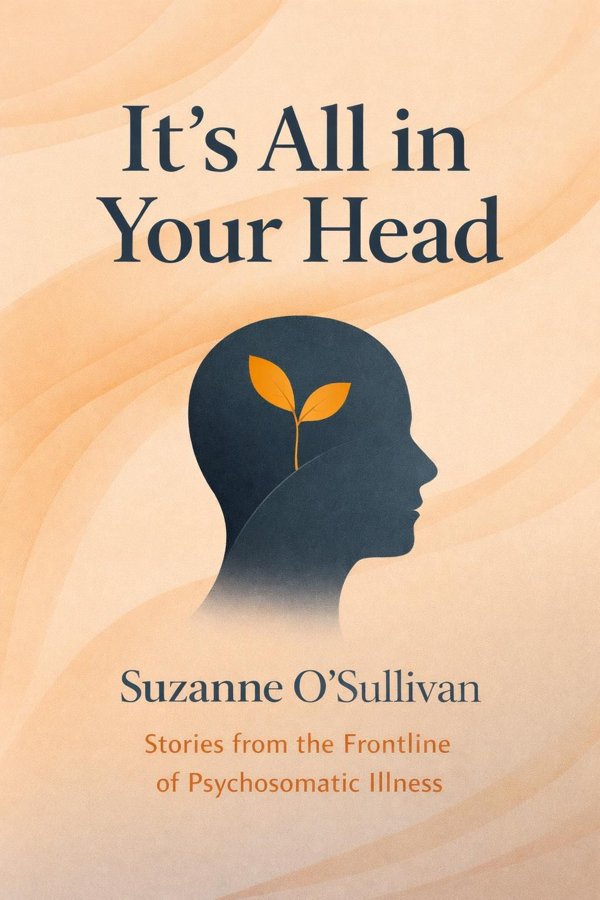
It's All in Your Head: Stories from the Frontline of Psychosomatic Illness: Summary & Key Insights
 10 min10 chaptersAudio available
What Is It's All in Your Head: Stories from the Frontline of Psychosomatic Illness About?
It's All in Your Head: Stories from the Frontline of Psychosomatic Illness by Suzanne O'Sullivan is a health_med book spanning 10 pages. Neurologist Suzanne O'Sullivan explores the mysterious world of psychosomatic illness, where the mind can produce real physical symptoms. Drawing on her clinical experience, she presents case studies of patients whose unexplained ailments reveal the complex interplay between body and mind, challenging conventional distinctions between mental and physical health.
This FizzRead summary covers all 10 key chapters of It's All in Your Head: Stories from the Frontline of Psychosomatic Illness in approximately 10 minutes, distilling the most important ideas, arguments, and takeaways from Suzanne O'Sullivan's work. Also available as an audio summary and Key Quotes Podcast.
It's All in Your Head: Stories from the Frontline of Psychosomatic Illness
Neurologist Suzanne O'Sullivan explores the mysterious world of psychosomatic illness, where the mind can produce real physical symptoms. Drawing on her clinical experience, she presents case studies of patients whose unexplained ailments reveal the complex interplay between body and mind, challenging conventional distinctions between mental and physical health.
Who Should Read It's All in Your Head: Stories from the Frontline of Psychosomatic Illness?
This book is perfect for anyone interested in health_med and looking to gain actionable insights in a short read. Whether you're a student, professional, or lifelong learner, the key ideas from It's All in Your Head: Stories from the Frontline of Psychosomatic Illness by Suzanne O'Sullivan will help you think differently.
- ✓Readers who enjoy health_med and want practical takeaways
- ✓Professionals looking to apply new ideas to their work and life
- ✓Anyone who wants the core insights of It's All in Your Head: Stories from the Frontline of Psychosomatic Illness in just 10 minutes
Want the full summary?
Get instant access to this book summary and 100K+ more with Fizz Moment.
Get Free SummaryAvailable on App Store • Free to download
Key Chapters
Alice was a young woman in her twenties when she began to experience seizures so violent that friends feared for her life. At first glance, her episodes seemed indistinguishable from epilepsy. Yet every scan and brainwave test I performed came back clear. No neurological abnormality, no observable lesion, nothing that could explain the repeated loss of control. For Alice, this was both a relief and a torment: how could she be so ill, yet told there was ‘nothing wrong’?
It is at this intersection that the concept of psychosomatic illness becomes most misunderstood. The mind can manifest distress through the body with startling power. When trauma, anxiety, or interpersonal conflict find no other outlet, the unconscious can convert psychological pain into physical expression. For Alice, seizures became her body’s language—a desperate signal of inner chaos.
Working with her required an immense shift in approach. As physicians, we are trained to chase pathology, to find the fault line in the physical. Yet psychosomatic symptoms remind us that the brain is both storyteller and conductor—it writes symptoms into our muscles, our vision, our trembling hands. Alice’s recovery began only when she allowed herself to accept that her seizures were real—but not neurological in origin. Through psychotherapy, she explored the conflicts and pressures that found expression in her body. Her story is a reminder that when medicine cannot find what it seeks in the body, we must listen even more carefully to the person.
Yvonne was paralyzed from the waist down when she came under my care, yet all her scans were pristine. No spinal cord lesion, no nerve damage—nothing to justify her immobility. Her paralysis began shortly after a traumatic series of events, and beneath her composed exterior lay years of grief, loss, and unresolved guilt. As we spoke, it became apparent that her body had become the stage for unspoken emotion.
For centuries, such conditions were labeled ‘hysteria,’ a term laden with misogyny and ignorance. Today we understand that conversion disorder—where emotional distress is converted into physical symptoms—is a powerful coping mechanism. Yvonne’s legs refused to move not because they were physically incapable, but because the mind, overwhelmed by trauma, had found a form of escape through the body.
It is not easy to persuade someone of this without seeming dismissive. Patients like Yvonne often feel accused of malingering. Yet caring for them demands that we believe them fully, that we affirm the reality of their suffering even as we challenge its cause. Recovery depends on rebuilding trust: between patient and doctor, and between the patient’s own mind and body. Gradually, through therapy and support, Yvonne began to understand her paralysis not as a mysterious punishment, but as a message from within. Healing, for her, meant translating that message into words before it needed to speak through her limbs again.
+ 8 more chapters — available in the FizzRead app
All Chapters in It's All in Your Head: Stories from the Frontline of Psychosomatic Illness
About the Author
Suzanne O'Sullivan is an Irish neurologist and author specializing in psychosomatic and neurological disorders. She has worked extensively in clinical neurology and has written award-winning books that bridge medical science and human experience.
Get This Summary in Your Preferred Format
Read or listen to the It's All in Your Head: Stories from the Frontline of Psychosomatic Illness summary by Suzanne O'Sullivan anytime, anywhere. FizzRead offers multiple formats so you can learn on your terms — all free.
Available formats: App · Audio · PDF · EPUB — All included free with FizzRead
Download It's All in Your Head: Stories from the Frontline of Psychosomatic Illness PDF and EPUB Summary
Key Quotes from It's All in Your Head: Stories from the Frontline of Psychosomatic Illness
“Alice was a young woman in her twenties when she began to experience seizures so violent that friends feared for her life.”
“Yvonne was paralyzed from the waist down when she came under my care, yet all her scans were pristine.”
Frequently Asked Questions about It's All in Your Head: Stories from the Frontline of Psychosomatic Illness
It's All in Your Head: Stories from the Frontline of Psychosomatic Illness by Suzanne O'Sullivan is a health_med book that explores key ideas across 10 chapters. Neurologist Suzanne O'Sullivan explores the mysterious world of psychosomatic illness, where the mind can produce real physical symptoms. Drawing on her clinical experience, she presents case studies of patients whose unexplained ailments reveal the complex interplay between body and mind, challenging conventional distinctions between mental and physical health.
You Might Also Like

On Immunity
Eula Biss
10 min
The Three-Body Problem
Liu Cixin
10 min
Community Health Volunteer Toolkit: Training and Practical Activities
World Health Organization
10 min
Healing Back Pain: The Mind-Body Connection
John E. Sarno
10 min
Health Literacy for All: Practical Guides to Communicate Health Information (Compilations)
World Health Organization
10 min
The Complete Guide to Sports Supplements: An Evidence-Based Review
Anita Bean
10 minBrowse by Category
Ready to read It's All in Your Head: Stories from the Frontline of Psychosomatic Illness?
Get the full summary and 100K+ more books with Fizz Moment.