
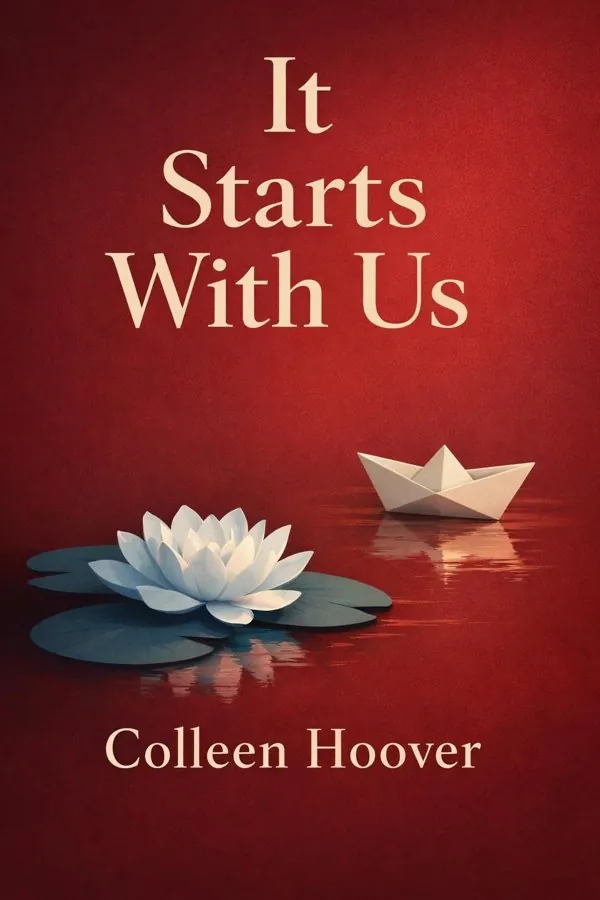
It Starts With Us: Summary & Key Insights
 10 min9 chaptersAudio available
Key Takeaways from It Starts With Us
A fresh start is rarely clean; more often, it is built inside the mess left behind.
Sometimes the right person arrives twice—once when you are too wounded to keep them, and once when you are strong enough to receive them.
Love without boundaries is not devotion; it is often the beginning of confusion.
Healing does not mean forgetting what happened; it means refusing to let the past make every future decision for you.
Some endings do not end contact; they only change the terms of it.
What Is It Starts With Us About?
It Starts With Us by Colleen Hoover is a romantic_relationships book spanning 4 pages. Before love can become a safe place, it must survive the past that once made safety feel impossible. In It Starts With Us, Colleen Hoover returns to Lily Bloom and Atlas Corrigan, picking up after the emotional fallout of It Ends With Us and shifting the focus from survival to healing. Lily is now a single mother determined to create a calm, stable life for her daughter while navigating a complicated co-parenting relationship with her ex-husband, Ryle. When Atlas reenters her life, their long-buried connection gets a second chance—but this time, love must coexist with boundaries, parenting, trauma recovery, and the realities of adulthood. What makes this novel resonate is that it does not pretend love alone fixes pain. Instead, it explores how trust is rebuilt slowly, how people protect their peace, and how healthy relationships are chosen day by day. Hoover, known for emotionally intense contemporary romance, brings her signature accessibility and heart to a story about second chances that feels less like fantasy and more like hard-won hope. This is a romance, but it is also a portrait of what it takes to start over.
This FizzRead summary covers all 9 key chapters of It Starts With Us in approximately 10 minutes, distilling the most important ideas, arguments, and takeaways from Colleen Hoover's work. Also available as an audio summary and Key Quotes Podcast.
It Starts With Us
Before love can become a safe place, it must survive the past that once made safety feel impossible. In It Starts With Us, Colleen Hoover returns to Lily Bloom and Atlas Corrigan, picking up after the emotional fallout of It Ends With Us and shifting the focus from survival to healing. Lily is now a single mother determined to create a calm, stable life for her daughter while navigating a complicated co-parenting relationship with her ex-husband, Ryle. When Atlas reenters her life, their long-buried connection gets a second chance—but this time, love must coexist with boundaries, parenting, trauma recovery, and the realities of adulthood. What makes this novel resonate is that it does not pretend love alone fixes pain. Instead, it explores how trust is rebuilt slowly, how people protect their peace, and how healthy relationships are chosen day by day. Hoover, known for emotionally intense contemporary romance, brings her signature accessibility and heart to a story about second chances that feels less like fantasy and more like hard-won hope. This is a romance, but it is also a portrait of what it takes to start over.
Who Should Read It Starts With Us?
This book is perfect for anyone interested in romantic_relationships and looking to gain actionable insights in a short read. Whether you're a student, professional, or lifelong learner, the key ideas from It Starts With Us by Colleen Hoover will help you think differently.
- ✓Readers who enjoy romantic_relationships and want practical takeaways
- ✓Professionals looking to apply new ideas to their work and life
- ✓Anyone who wants the core insights of It Starts With Us in just 10 minutes
Want the full summary?
Get instant access to this book summary and 100K+ more with Fizz Moment.
Get Free SummaryAvailable on App Store • Free to download
Key Chapters
A fresh start is rarely clean; more often, it is built inside the mess left behind. When Lily reenters the story, she is no longer the woman trapped in the immediate chaos of abuse, but she is not untouched by it either. She is a single mother, and her daughter Emmy has become both her greatest joy and her clearest reason to choose stability over confusion. Lily’s life is now structured around routines, predictability, and emotional safety. That shift matters because it shows that healing is not a dramatic breakthrough but a series of practical choices: where to live, how to communicate, what to tolerate, and what to refuse.
Her relationship with Ryle has changed form but not disappeared. Because they share a child, Lily cannot simply erase him from her life. This reality gives the novel much of its emotional truth. Leaving a harmful relationship does not always mean immediate freedom, especially when co-parenting is involved. Lily must learn to protect her peace while still managing contact, navigating difficult interactions, and staying focused on what benefits Emmy.
This part of the story offers a useful lens for real life. Many people imagine recovery as moving on emotionally first and handling logistics later, but often the opposite happens. Stability begins with ordinary systems: set pickup times, clear communication, supportive friendships, and boundaries that are simple enough to maintain under stress. Lily’s growth is visible not in grand speeches, but in her increased ability to pause, assess, and choose what aligns with the life she wants to build.
Actionable takeaway: If you are rebuilding after a painful relationship, start by creating small structures that protect your calm—clear routines, clear boundaries, and clear priorities.
Sometimes the right person arrives twice—once when you are too wounded to keep them, and once when you are strong enough to receive them. Atlas Corrigan’s return gives It Starts With Us its emotional center. He is no longer the vulnerable teenager Lily once knew. He has built a successful life as a restaurateur, developed emotional steadiness, and learned how to care for others without losing himself. Yet his strength does not make him distant; if anything, it makes him more capable of tenderness.
Atlas represents more than romantic nostalgia. He is a model of what safe love can look like after chaos. He listens carefully, respects Lily’s pace, and does not pressure her to choose him quickly just because their history is powerful. That patience matters. In many romances, reunion is fueled by urgency and grand declarations. Here, the real romance lies in restraint, consistency, and emotional reliability. Atlas does not try to rescue Lily; he simply shows up as someone trustworthy.
His perspective also broadens the story. Through him, readers see that people who survive hardship can still become grounded, successful, and deeply loving adults. He carries his own scars, but he does not weaponize them. Instead, he transforms them into empathy. This makes his connection with Lily feel earned rather than idealized.
In practical terms, Atlas’s role challenges a common misconception: chemistry is not enough. A meaningful relationship is built on timing, safety, communication, and mutual respect. Someone can be deeply loved and still not be right for your life. Someone else can feel right precisely because they bring peace rather than volatility.
Actionable takeaway: When evaluating a relationship, look beyond intensity and ask whether the person consistently makes your life feel safer, calmer, and more respected.
Love without boundaries is not devotion; it is often the beginning of confusion. One of the strongest ideas in It Starts With Us is that Lily and Atlas cannot simply fall into happiness without accounting for the real people and real tensions surrounding them. Lily’s history with Ryle, her responsibility to Emmy, and the emotional triggers tied to her past mean that any new beginning must be built carefully. The novel refuses to romanticize recklessness. Instead, it shows that mature love often looks like slowing down.
Lily has to decide not only what she wants, but what she can responsibly sustain. Dating Atlas is emotionally significant, but it also has consequences. Ryle’s jealousy and lingering attachment make the situation more volatile, and Lily must think like both a woman in love and a mother protecting her child’s environment. That dual awareness is what gives the story depth. Boundaries are not walls against love; they are the structure that allows love to exist without destroying peace.
Atlas also respects this framework. He does not treat Lily’s caution as rejection. He understands that patience is part of caring for someone with a complicated life. In healthy relationships, boundaries are not negotiated through guilt or pressure. They are discussed, honored, and revisited when circumstances change.
This idea has clear real-world relevance. People often struggle because they believe setting limits will ruin connection. In reality, unclear expectations create resentment faster than honest boundaries do. Whether the issue is communication with an ex, timing in a new relationship, or family involvement, naming limits early often prevents deeper conflict later.
Actionable takeaway: Define your non-negotiables before emotions escalate, and communicate them calmly. Healthy love grows stronger when both people know where the guardrails are.
Healing does not mean forgetting what happened; it means refusing to let the past make every future decision for you. This idea runs through the novel’s emotional arc. Lily cannot erase her trauma, and Atlas cannot erase his own difficult history. What they can do is choose how those experiences shape the way they move forward. Hoover presents healing not as a straight line, but as an active, imperfect process marked by fear, courage, setbacks, and renewed effort.
Importantly, the book avoids the simplistic notion that a new romance automatically heals old wounds. Atlas’s presence is comforting, but Lily still has to do the internal work of trusting again, managing anxiety, and believing that peace can last. Likewise, Atlas’s maturity did not appear magically; it is the result of enduring hardship and continuing to build a life anyway. Their relationship works not because they are unbroken, but because they are honest about what still hurts.
This is a useful distinction for readers. Many people wait to feel completely healed before allowing themselves joy, while others rush into new relationships hoping love will do the healing for them. The novel suggests a middle path: you can begin again while still carrying scars, as long as you remain self-aware and intentional. Recovery often involves allowing good things into your life without pretending the bad never happened.
The practical application is simple but powerful. Rather than asking, “How do I stop feeling affected by my past?” a more helpful question is, “How do I build habits, relationships, and beliefs that keep my past from running my present?” That shift moves healing from fantasy into action.
Actionable takeaway: Stop measuring recovery by how little you remember the pain; measure it by how often you choose peace, honesty, and self-respect despite it.
Some endings do not end contact; they only change the terms of it. One of the most grounded aspects of It Starts With Us is its portrayal of co-parenting after relational trauma. Lily and Ryle share Emmy, which means their connection cannot be reduced to a clean break. This creates ongoing emotional tension because Lily must remain engaged enough to parent effectively while staying detached enough to protect herself. That balancing act is exhausting, and the novel treats it with appropriate seriousness.
The book highlights how difficult it is to co-parent when one person has not fully accepted the emotional reality of the breakup. Ryle’s reactions affect not just Lily, but the atmosphere around everyone involved. This reinforces a crucial truth: when children are present, adult emotions do not stay private for long. Even when a parent tries to shield a child, instability in communication or conflict between adults can shape a child’s environment.
Lily’s challenge is not merely to avoid conflict, but to prevent conflict from defining the family structure. She has to think strategically, communicate clearly, and remain focused on Emmy’s well-being rather than getting pulled into every emotional current. That requires emotional discipline, not just good intentions.
For readers, this idea applies far beyond the novel. Many people assume co-parenting works if both people love the child. In reality, it also requires consistency, respectful communication, and strong boundaries around adult issues. The child’s needs must remain central even when the adults carry unresolved hurt.
Actionable takeaway: In any co-parenting dynamic, simplify communication, document agreements when needed, and keep every major decision anchored to one question: what creates the healthiest environment for the child?
If chaos has been your normal, peace can feel unfamiliar enough to be mistaken for boredom. One of the quiet achievements of It Starts With Us is its insistence that healthy love may not be the loudest love, but it is often the most sustaining. The relationship between Lily and Atlas is not driven by manipulation, volatility, or constant uncertainty. Instead, it is marked by reassurance, patience, and mutual care. That emotional tone is important because it reframes what romance can look like after trauma.
Many people are conditioned to associate strong love with emotional extremes—intense longing, painful conflict, dramatic reunions. Hoover gently disrupts that pattern. Atlas does not keep Lily guessing. He does not create insecurity to prove passion. His steadiness becomes romantic precisely because it is reliable. The novel suggests that real intimacy is built through consistency: remembering what matters, respecting emotional limits, showing up when promised, and creating room for honesty.
This idea has practical implications in everyday life. People leaving unhealthy relationships often struggle to trust calm experiences. They may wonder whether a respectful partner is too reserved or whether the absence of tension means the connection lacks depth. But safety is not the opposite of passion; often, it is what allows passion to develop without fear.
The book encourages readers to reconsider the signals they use to define chemistry. Butterflies can come from excitement, but they can also come from anxiety. A relationship worth building should not constantly destabilize you. Ideally, it should give you more clarity, not less.
Actionable takeaway: Pay attention to how your body and mind feel around someone over time. If you feel more grounded, respected, and secure, do not dismiss that calm—it may be the clearest sign of healthy love.
Your history explains you, but it does not have the authority to sentence you. This idea is embodied especially through Atlas, whose backstory reminds readers that painful beginnings do not eliminate the possibility of a meaningful future. He has endured neglect, loneliness, and instability, yet he grows into someone capable of emotional generosity and practical success. His life becomes evidence that people are not limited to becoming echoes of what hurt them.
Lily’s journey reflects a similar truth. Her experiences with abuse could have left her defined primarily by fear or self-doubt. Instead, while those experiences remain part of her, they do not become the whole story. She evolves into someone more discerning, more protective of her peace, and more committed to breaking harmful cycles. The title itself points toward this shift: what starts now matters as much as what happened before.
This message is especially powerful for readers who feel trapped by old patterns. Family history, past relationships, and childhood wounds can create powerful expectations about what kind of life is possible. The novel does not deny that these influences are real. It simply refuses to treat them as final. Change happens through repeated choices—who you trust, what you allow, what you believe you deserve, and what future you are willing to build.
In practical terms, this means identity should be examined with care. Statements like “I always choose the wrong people” or “My past makes healthy love impossible” can become self-fulfilling if repeated long enough. The book invites a more hopeful frame: the past may have trained certain instincts, but new experiences can train new ones.
Actionable takeaway: Replace fixed narratives about yourself with intentional ones. Instead of saying, “This is just who I am,” ask, “Who am I becoming through the choices I make next?”
A second chance is not powerful because it repeats the past; it matters only if the people involved have changed enough to make a different future possible. The reunion between Lily and Atlas works because it is not built solely on memory. Their teenage bond gives the relationship emotional weight, but adulthood gives it structure. They are no longer meeting as two young people overwhelmed by circumstances. They are meeting as adults who understand consequences, timing, and responsibility.
This distinction is essential. Many people are drawn to old loves because shared history feels meaningful. But history by itself cannot sustain a relationship. What matters is whether both individuals have developed the communication skills, self-knowledge, and emotional discipline needed for something healthy. Atlas’s maturity shows in his patience. Lily’s maturity shows in her caution. Neither mistakes longing for readiness.
The novel also suggests that second chances are not always about romance. They can be about giving yourself another chance at trust, at peace, at a life not organized around survival. In that sense, Lily’s biggest second chance is not simply with Atlas, but with the version of herself who gets to hope again.
Readers can apply this idea broadly. Revisiting an old opportunity—whether a relationship, a friendship, or a personal dream—should involve honest assessment. Has anything actually changed? Are both people healthier, clearer, and more accountable? If the answer is no, the second chance may just recreate the original wound.
Actionable takeaway: Before returning to someone or something from your past, identify what is truly different now. If growth is real, proceed slowly. If only feelings have returned, be careful.
Beginning again sounds hopeful in theory, but in practice it often feels terrifying. It Starts With Us captures this emotional paradox well. To start over is to accept uncertainty after having already been hurt. It means risking disappointment, trusting carefully, and believing that a better life is possible even when past experience argues otherwise. Lily’s journey shows that courage is not the absence of fear; it is the decision to move with fear rather than surrender to it.
What makes the novel compelling is that its hope feels earned. The characters do not arrive at healing through denial or fantasy. They work through difficult emotions, uncomfortable conversations, and messy realities. Starting over requires Lily to let herself imagine a life not defined by damage. It requires Atlas to remain open and patient even when the path is not simple. It requires both of them to believe that gentleness and joy are still available.
For readers, this idea extends beyond romance. Starting over can mean leaving an unhealthy environment, rebuilding after heartbreak, redefining family patterns, or simply deciding that the life you have endured is not the life you must keep living. New beginnings rarely come with guarantees, but they do come with possibility.
The novel’s deeper optimism lies here: healing is not reserved for perfect people with perfect circumstances. It belongs to ordinary people willing to choose differently, speak honestly, and protect what matters. That is why the story resonates. It offers not naive hope, but practiced hope.
Actionable takeaway: If you are facing a difficult new chapter, do not wait for certainty before beginning. Start with one brave decision that aligns with the life you want, then build from there.
All Chapters in It Starts With Us
About the Author
Colleen Hoover is an American author whose novels have become major bestsellers in contemporary romance and women’s fiction. Known for her emotionally immediate style, she writes stories that explore love, heartbreak, trauma, resilience, and personal transformation in a way that feels highly accessible to a broad readership. Hoover gained widespread recognition through books such as Slammed, Verity, and especially It Ends With Us, which became a cultural phenomenon and introduced many readers to her work. Her fiction often blends intense emotional stakes with memorable relationship dynamics, making her one of the most discussed popular authors of the past decade. With It Starts With Us, she continues to examine difficult emotional realities while offering readers a more hopeful vision of healing and second chances.
Get This Summary in Your Preferred Format
Read or listen to the It Starts With Us summary by Colleen Hoover anytime, anywhere. FizzRead offers multiple formats so you can learn on your terms — all free.
Available formats: App · Audio · PDF · EPUB — All included free with FizzRead
Download It Starts With Us PDF and EPUB Summary
Key Quotes from It Starts With Us
“A fresh start is rarely clean; more often, it is built inside the mess left behind.”
“Sometimes the right person arrives twice—once when you are too wounded to keep them, and once when you are strong enough to receive them.”
“Love without boundaries is not devotion; it is often the beginning of confusion.”
“Healing does not mean forgetting what happened; it means refusing to let the past make every future decision for you.”
“Some endings do not end contact; they only change the terms of it.”
Frequently Asked Questions about It Starts With Us
It Starts With Us by Colleen Hoover is a romantic_relationships book that explores key ideas across 9 chapters. Before love can become a safe place, it must survive the past that once made safety feel impossible. In It Starts With Us, Colleen Hoover returns to Lily Bloom and Atlas Corrigan, picking up after the emotional fallout of It Ends With Us and shifting the focus from survival to healing. Lily is now a single mother determined to create a calm, stable life for her daughter while navigating a complicated co-parenting relationship with her ex-husband, Ryle. When Atlas reenters her life, their long-buried connection gets a second chance—but this time, love must coexist with boundaries, parenting, trauma recovery, and the realities of adulthood. What makes this novel resonate is that it does not pretend love alone fixes pain. Instead, it explores how trust is rebuilt slowly, how people protect their peace, and how healthy relationships are chosen day by day. Hoover, known for emotionally intense contemporary romance, brings her signature accessibility and heart to a story about second chances that feels less like fantasy and more like hard-won hope. This is a romance, but it is also a portrait of what it takes to start over.
More by Colleen Hoover




You Might Also Like

Rebel
Beverly Jenkins
10 min
The Last Letter
Rebecca Yarros
10 min
A Thousand Boy Kisses
Tillie Cole
10 min
Aflame
Penelope Douglas
10 min
After The Bite
Lynsay Sands
10 min
Alchemised
SenLinYu
10 minBrowse by Category
Ready to read It Starts With Us?
Get the full summary and 100K+ more books with Fizz Moment.