
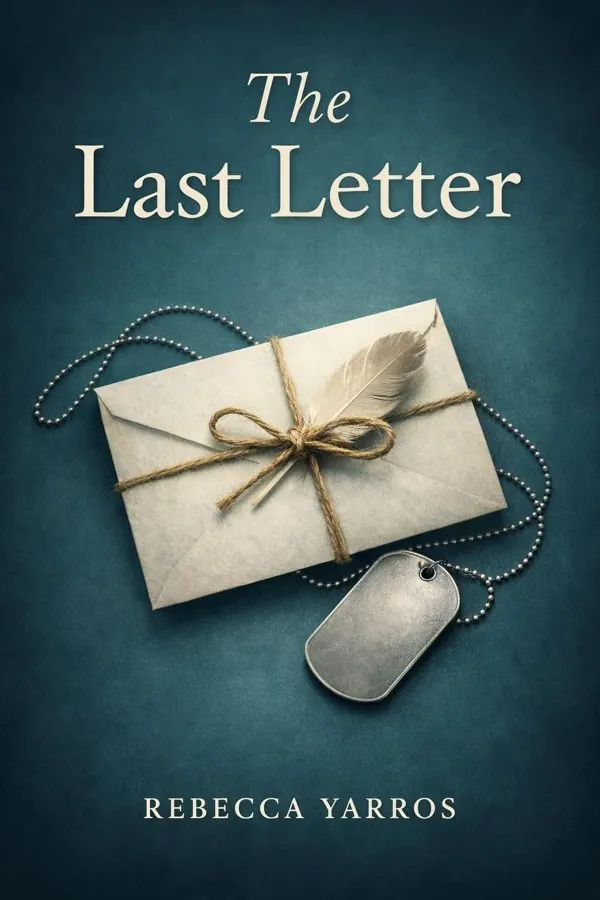
The Last Letter: Summary & Key Insights
 10 min9 chaptersAudio available
Key Takeaways from The Last Letter
Some of the deepest relationships begin long before two people ever share the same room.
A promise made in loyalty can become the hinge on which an entire life turns.
Grief is never contained to the person who experiences the loss most directly; it spills into every conversation, silence, and relationship around it.
Parenthood in The Last Letter is not idealized as gentle sentiment alone; it is shown as a relentless act of courage.
Trauma does not disappear because love arrives.
What Is The Last Letter About?
The Last Letter by Rebecca Yarros is a romantic_relationships book. Rebecca Yarros’s The Last Letter is an emotionally charged contemporary romance that blends love, grief, family, trauma, and resilience into a story that lingers long after the final page. At its center are Ella, a devoted single mother carrying more pain than she admits, and Beckett, a military man bound by loyalty, loss, and a promise that changes everything. What begins with letters and an unexpected connection becomes a deeply human story about what it means to show up for another person when life is at its most brutal. Set against the backdrop of military sacrifice and small-town struggles, the novel explores not just romantic love, but the fierce, messy, transformative love found in friendship, parenthood, and chosen family. Yarros writes with raw emotional honesty, drawing on her talent for portraying military life, personal grief, and hard-won hope with authenticity and heart. The Last Letter matters because it refuses easy answers: it shows that healing is never neat, love is rarely simple, and sometimes the people who save us are the ones we never expected to need.
This FizzRead summary covers all 9 key chapters of The Last Letter in approximately 10 minutes, distilling the most important ideas, arguments, and takeaways from Rebecca Yarros's work. Also available as an audio summary and Key Quotes Podcast.
The Last Letter
Rebecca Yarros’s The Last Letter is an emotionally charged contemporary romance that blends love, grief, family, trauma, and resilience into a story that lingers long after the final page. At its center are Ella, a devoted single mother carrying more pain than she admits, and Beckett, a military man bound by loyalty, loss, and a promise that changes everything. What begins with letters and an unexpected connection becomes a deeply human story about what it means to show up for another person when life is at its most brutal. Set against the backdrop of military sacrifice and small-town struggles, the novel explores not just romantic love, but the fierce, messy, transformative love found in friendship, parenthood, and chosen family. Yarros writes with raw emotional honesty, drawing on her talent for portraying military life, personal grief, and hard-won hope with authenticity and heart. The Last Letter matters because it refuses easy answers: it shows that healing is never neat, love is rarely simple, and sometimes the people who save us are the ones we never expected to need.
Who Should Read The Last Letter?
This book is perfect for anyone interested in romantic_relationships and looking to gain actionable insights in a short read. Whether you're a student, professional, or lifelong learner, the key ideas from The Last Letter by Rebecca Yarros will help you think differently.
- ✓Readers who enjoy romantic_relationships and want practical takeaways
- ✓Professionals looking to apply new ideas to their work and life
- ✓Anyone who wants the core insights of The Last Letter in just 10 minutes
Want the full summary?
Get instant access to this book summary and 100K+ more with Fizz Moment.
Get Free SummaryAvailable on App Store • Free to download
Key Chapters
Some of the deepest relationships begin long before two people ever share the same room. In The Last Letter, Rebecca Yarros uses written correspondence to show how emotional intimacy can form through honesty, attention, and the courage to reveal what is usually hidden. Letters strip away performance. Without the distractions of appearance, status, or first impressions, what remains is character, humor, pain, tenderness, and truth. That is exactly why the connection at the center of this novel feels so immediate and meaningful.
The story demonstrates that vulnerability is not weakness; it is the foundation of trust. Beckett and Ella are not drawn together by perfection. They are drawn together by exposure to one another’s burdens, hopes, and scars. Their bond grows because they are willing, even if indirectly at first, to be known. Yarros suggests that real closeness comes when people stop trying to seem impressive and start trying to be sincere.
This idea has a practical application far beyond romance. In everyday relationships, many people communicate efficiently but not intimately. They share schedules, opinions, and updates, but avoid fears, regrets, and emotional truths. The novel reminds readers that meaningful connection often requires slowing down and saying what actually matters. A heartfelt message, a thoughtful conversation, or a moment of emotional honesty can deepen a relationship more than months of surface-level interaction.
In personal life, this may look like telling a partner what you are afraid of instead of pretending everything is fine. In friendships, it could mean checking in with depth rather than habit. In family relationships, it may mean speaking gratitude while there is still time.
Actionable takeaway: choose one important relationship and replace one shallow interaction this week with honest communication that reveals something real about your inner life.
A promise made in loyalty can become the hinge on which an entire life turns. One of the emotional engines of The Last Letter is the way duty extends beyond formal obligation. Beckett is driven not only by military discipline or personal desire, but by a promise connected to someone he loved and lost. Yarros uses this commitment to explore how words spoken in grief or devotion can carry enormous moral weight.
The novel treats promises as more than plot devices. They reveal who a person is when circumstances become difficult. It is easy to make a vow in a moment of emotion; it is much harder to live with the consequences of keeping it. Beckett’s actions show that integrity often asks for sacrifice, discomfort, and emotional risk. In this way, the book invites readers to think carefully about the commitments they make and the values those commitments express.
At the same time, Yarros does not romanticize duty as something simple. Keeping a promise can complicate identity, relationships, and personal healing. Sometimes honoring the past means stepping into painful territory in the present. Yet the story suggests that there is dignity in carrying out what love required of you, especially when doing so becomes an act of service rather than self-protection.
Readers can apply this idea by reflecting on the promises they have inherited or chosen. A commitment to a child, a spouse, a friend, or a dying family member can quietly shape decisions for years. The important question is whether those promises are being honored consciously and generously, rather than resentfully or mechanically.
Actionable takeaway: write down one promise or responsibility that defines your life right now, then ask yourself what it would look like to fulfill it with greater intention, compassion, and honesty.
Grief is never contained to the person who experiences the loss most directly; it spills into every conversation, silence, and relationship around it. In The Last Letter, Rebecca Yarros portrays grief as a living force that reshapes how people love, trust, parent, and cope. Rather than presenting mourning as a stage to move through neatly, the novel shows it as something uneven, recurring, and deeply personal.
Both the emotional atmosphere and the characters’ choices are shaped by loss. Some characters withdraw. Others overfunction. Some become fiercely protective, while others seem emotionally distant because feeling too much would overwhelm them. This is one of the book’s strongest insights: grief does not look the same in every person, and misunderstanding someone’s grief response can create even more pain.
In practical terms, the novel encourages readers to become more compassionate interpreters of behavior. A person who seems impatient may actually be exhausted by sorrow. Someone who cannot talk may not be cold; they may simply be surviving. In families and romantic relationships, this matters enormously. Conflicts often intensify when grief goes unnamed. Naming it can transform judgment into empathy.
The story also suggests that grief and love remain tied together. To mourn deeply is evidence that something precious existed. That does not erase the suffering, but it gives it meaning. Healing does not require forgetting or "moving on" in a shallow sense. It requires learning how to carry absence without letting it destroy every remaining bond.
Actionable takeaway: when someone in your life seems difficult, distant, or emotionally unpredictable, pause before reacting and ask whether grief, fear, or unspoken pain may be shaping their behavior.
Parenthood in The Last Letter is not idealized as gentle sentiment alone; it is shown as a relentless act of courage. Ella’s role as a mother reveals how love often looks like persistence under impossible pressure. She is not simply nurturing; she is managing chaos, shielding her children, making decisions while exhausted, and carrying emotional burdens she cannot always share. Yarros portrays motherhood as active resilience rather than passive devotion.
This matters because the novel broadens the idea of romantic relationships by placing them within the real demands of family life. Love does not happen in a vacuum. Beckett’s growing connection with Ella must exist alongside responsibility, trauma, illness, and the practical needs of children. That tension gives the story emotional credibility. It asks a mature question: can love be strong enough to join a life that is already heavy, rather than arriving when everything is easy?
The book also highlights how children are not background elements in adult emotional stories. They shape priorities, expose character, and reveal whether someone is capable of sacrificial love. A person’s response to a child’s vulnerability often says more than any romantic declaration. Through this, Yarros suggests that true partnership includes caring for what your loved one loves most.
Readers can apply this lesson by recognizing that support often means entering another person’s reality, not asking them to escape it for your comfort. If someone you love is balancing caregiving, parenting, or family strain, compassion must be practical. Offer help, not just sympathy. Respect exhaustion. See invisible labor.
Actionable takeaway: if someone close to you carries family responsibilities, ask one specific question this week: "What is one practical thing I can take off your plate right now?"
Trauma does not disappear because love arrives. One of the most honest aspects of The Last Letter is its refusal to treat romance as a magical cure. Rebecca Yarros shows that military service, personal loss, fear, and emotional wounds continue to shape the characters even when they begin to care for one another deeply. Love may create safety, but safety alone does not erase pain.
This is an important distinction. In many love stories, emotional damage functions as a temporary obstacle that vanishes once the couple commits. Here, trauma remains part of the landscape. Characters react from instinct, carry guilt, avoid difficult truths, and struggle to trust hope because they have learned that hope can be dangerous. Yarros handles this with emotional realism, showing that healing is partial, nonlinear, and often uncomfortable.
For readers, the practical lesson is clear: when supporting someone who has been through trauma, patience matters more than pressure. You cannot demand openness on your timeline. You cannot interpret every withdrawal as rejection. And you cannot assume that affection eliminates deeply embedded fear. Healthy love makes room for triggers, setbacks, and gradual rebuilding.
This applies in romantic relationships, friendships, and families. If someone has lived through hardship, what they may need most is steadiness. Small consistencies—keeping your word, staying calm, listening without rushing to fix—can be more healing than dramatic declarations. The novel suggests that trustworthy presence is often more valuable than perfect language.
Actionable takeaway: replace the impulse to solve another person’s pain with one reliable act of consistency—show up when you said you would, listen fully, and let trust build through repeated care.
Not every life is healed by biology alone. The Last Letter powerfully explores the idea that chosen family can become as vital as, or even more sustaining than, the family people are born into. Through friendship, loyalty, caregiving, and shared pain, Yarros shows how people create networks of belonging that hold them together when formal structures fail.
This theme is especially meaningful in a story shaped by military bonds and emotional loss. The relationships around the central romance matter because they demonstrate that survival often depends on community. A trusted friend, a supportive neighbor, a fellow service member, or a devoted caregiver may become the person who keeps someone functional, grounded, and hopeful. Chosen family is not secondary in this novel; it is essential.
The book also challenges the idea that independence is the highest form of strength. Many characters are forced to accept help, and that acceptance is difficult because need can feel humiliating. Yet Yarros argues that interdependence is not failure. Letting others carry part of your burden is often the beginning of healing. Likewise, offering support can be one of the most meaningful expressions of love.
In real life, this concept invites readers to look beyond traditional definitions of family. The people who consistently show up, protect your children, check on your mental health, or tell you the truth with tenderness may be your real support system. Those relationships deserve gratitude and cultivation.
Actionable takeaway: identify the three people who function as your chosen family and intentionally strengthen those bonds through appreciation, reciprocity, and honest communication.
When life has repeatedly delivered pain, despair can begin to feel safer than hope. The Last Letter captures this emotional paradox with striking clarity. For characters who have lost deeply, expecting the worst becomes a defense mechanism. If you never believe happiness will last, you think you cannot be blindsided when it ends. Yarros uses this mindset to show that hope is not naive optimism; it is emotional risk.
This is one of the novel’s most resonant lessons. Choosing love, trust, or joy after heartbreak requires courage because it means becoming vulnerable to further loss. Beckett and Ella do not simply need to admit their feelings; they need to believe that a meaningful future is worth reaching for, even when the past has taught them otherwise. That makes hope an act of bravery rather than comfort.
Readers can apply this insight to many areas of life. After disappointment, it is tempting to become cynical about relationships, work, family, or even oneself. Cynicism can feel intelligent because it protects expectations. But it also closes the door to renewal. Healthy hope is not denial of pain. It is the decision not to let pain be the final authority.
Practically, this may mean allowing yourself to trust a new relationship, trying therapy after years of avoidance, reengaging with family after loss, or setting goals again after failure. Hope often begins in small permissions rather than dramatic transformations.
Actionable takeaway: notice one area where pessimism has become your shield, and take one small hopeful action there—send the message, make the appointment, accept the invitation, or imagine a better outcome without apologizing for it.
Saying what is true is important, but in The Last Letter, communication is shown to be far more complex than simple honesty. Timing, emotional readiness, intention, and what remains unsaid all shape how truth lands between people. Rebecca Yarros explores how misunderstandings do not always come from deception; often they come from fear, protection, guilt, or the mistaken belief that silence will spare someone pain.
This makes the novel especially relevant for readers interested in relationships. Many conflicts in life are not caused by lack of feeling but by lack of clear expression. People assume others understand their motives when they do not. They withhold information to avoid conflict, only to create larger wounds later. They wait for the perfect moment to speak and discover that delay has consequences. Yarros shows that love without communication becomes fragile, because people cannot respond to realities they are not allowed to see.
At the same time, the book recognizes that difficult truths require care. Blurting everything without empathy is not maturity. Good communication involves courage and consideration together. It asks not only "Is this true?" but also "How can I say this in a way that invites understanding rather than defensiveness?"
In real life, this applies to romantic conversations, family tensions, and even workplace dynamics. Clarity reduces emotional guesswork. Thoughtful honesty builds trust over time, especially when it is practiced early rather than only during crisis.
Actionable takeaway: identify one conversation you have been postponing, then prepare for it by writing down the truth you need to express, the outcome you hope for, and one compassionate way to frame it.
Grand gestures are memorable, but lasting love is usually built through repetition. One of the strongest emotional truths in The Last Letter is that love becomes believable when it takes practical form again and again. Presence, reliability, attentiveness, and service matter more than dramatic speeches on their own. Yarros presents love not as a single confession, but as a sequence of choices made under stress.
This is why the story resonates beyond its romance plot. The characters are tested by illness, grief, parenting demands, and emotional uncertainty. Under those conditions, affection is proven by who stays, who helps, who listens, and who keeps returning even when life is messy. The novel argues that devotion is measured less by intensity than by consistency.
This insight is useful in everyday relationships. Many people say they care, but dependable action is what creates security. In a romantic partnership, showing up may mean taking responsibility during a hard week, remembering important details, making room for another person’s children, or staying emotionally available during conflict. In friendship, it may mean checking in after the crisis has passed, not only during dramatic moments.
The story ultimately suggests that love is a verb before it is a feeling. Feelings inspire connection, but actions sustain it. People trust the ones who repeatedly make their care visible.
Actionable takeaway: choose one important person in your life and demonstrate love through one consistent habit—weekly check-ins, practical help, undistracted time, or following through on something they no longer want to beg for.
All Chapters in The Last Letter
About the Author
Rebecca Yarros is a bestselling American author known for writing emotionally intense novels that combine romance, hardship, and deeply human relationships. She has earned a devoted readership through stories that often explore military life, sacrifice, grief, resilience, and the healing power of love. Her work is praised for its raw emotional honesty, strong character bonds, and ability to balance heartbreak with hope. Yarros has written across contemporary romance and other popular fiction categories, establishing herself as a versatile and widely recognized voice in modern commercial fiction. A military spouse for many years, she has brought authenticity to stories involving service members and their families. That lived connection to military culture and emotional endurance is especially evident in The Last Letter, one of her most moving and memorable relationship-centered novels.
Get This Summary in Your Preferred Format
Read or listen to the The Last Letter summary by Rebecca Yarros anytime, anywhere. FizzRead offers multiple formats so you can learn on your terms — all free.
Available formats: App · Audio · PDF · EPUB — All included free with FizzRead
Download The Last Letter PDF and EPUB Summary
Key Quotes from The Last Letter
“Some of the deepest relationships begin long before two people ever share the same room.”
“A promise made in loyalty can become the hinge on which an entire life turns.”
“Grief is never contained to the person who experiences the loss most directly; it spills into every conversation, silence, and relationship around it.”
“Parenthood in The Last Letter is not idealized as gentle sentiment alone; it is shown as a relentless act of courage.”
“Trauma does not disappear because love arrives.”
Frequently Asked Questions about The Last Letter
The Last Letter by Rebecca Yarros is a romantic_relationships book that explores key ideas across 9 chapters. Rebecca Yarros’s The Last Letter is an emotionally charged contemporary romance that blends love, grief, family, trauma, and resilience into a story that lingers long after the final page. At its center are Ella, a devoted single mother carrying more pain than she admits, and Beckett, a military man bound by loyalty, loss, and a promise that changes everything. What begins with letters and an unexpected connection becomes a deeply human story about what it means to show up for another person when life is at its most brutal. Set against the backdrop of military sacrifice and small-town struggles, the novel explores not just romantic love, but the fierce, messy, transformative love found in friendship, parenthood, and chosen family. Yarros writes with raw emotional honesty, drawing on her talent for portraying military life, personal grief, and hard-won hope with authenticity and heart. The Last Letter matters because it refuses easy answers: it shows that healing is never neat, love is rarely simple, and sometimes the people who save us are the ones we never expected to need.
More by Rebecca Yarros
You Might Also Like
Rebel
Beverly Jenkins
10 min
A Thousand Boy Kisses
Tillie Cole
10 min
Aflame
Penelope Douglas
10 min
After The Bite
Lynsay Sands
10 min
Alchemised
SenLinYu
10 min
All Your Perfects
Colleen Hoover
10 minBrowse by Category
Ready to read The Last Letter?
Get the full summary and 100K+ more books with Fizz Moment.