
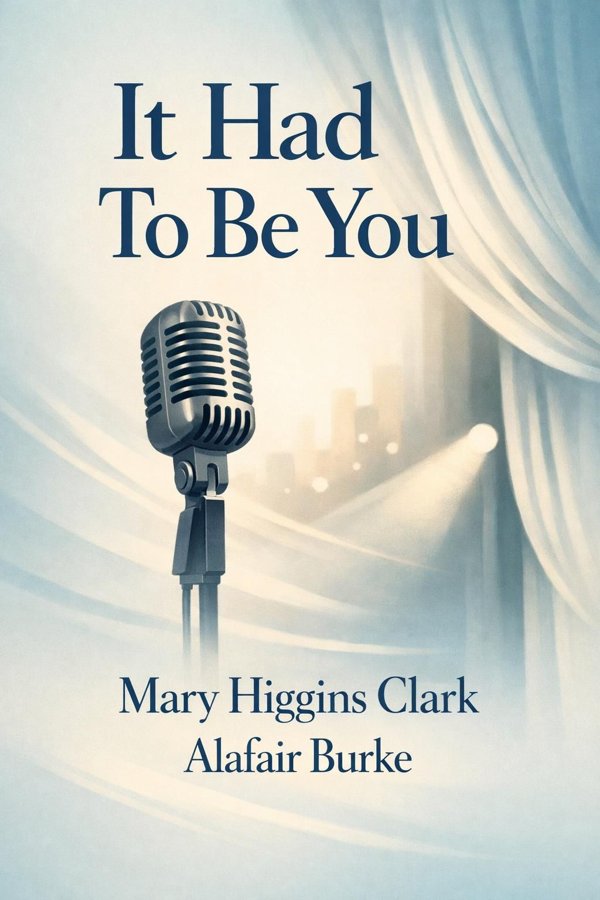
It Had To Be You: Summary & Key Insights
by Mary Higgins Clark, Alafair Burke
 10 min8 chaptersAudio available
Key Takeaways from It Had To Be You
A suspicious death becomes most unsettling when it happens in a place built to manufacture illusion.
Ambition rarely presents itself as villainy; it usually arrives dressed as hard work, talent, and deserved success.
Public glamour often depends on private disorder remaining invisible.
People do not usually collapse all at once; they bend under pressure until one final strain becomes too much.
The most interesting investigators in contemporary mysteries do more than solve crimes; they navigate the ethics of turning pain into narrative.
What Is It Had To Be You About?
It Had To Be You by Mary Higgins Clark, Alafair Burke is a mystery book spanning 4 pages. In It Had To Be You, the sixth installment in the Under Suspicion series, Mary Higgins Clark and Alafair Burke take readers behind Broadway’s glittering curtain to investigate a death that was never as accidental as it first appeared. Television producer Laurie Moran, whose true-crime series reopens cold cases for a national audience, turns her attention to the fatal fall of a talented young actress during rehearsals for a major musical. What looked like a tragic mishap soon reveals itself as something darker: a web of rivalry, desire, reinvention, and carefully hidden lies. What makes this novel compelling is not just the puzzle of who killed whom, but the way it exposes the emotional machinery of fame. In the theater, everyone performs, onstage and off, and that makes truth unusually difficult to isolate. Clark, long celebrated as the “Queen of Suspense,” and Burke, known for her psychologically sharp crime fiction, combine classic mystery structure with modern media awareness. The result is a polished, fast-moving story about ambition, image, and the dangerous lengths people will go to protect the roles they have created for themselves.
This FizzRead summary covers all 8 key chapters of It Had To Be You in approximately 10 minutes, distilling the most important ideas, arguments, and takeaways from Mary Higgins Clark, Alafair Burke's work. Also available as an audio summary and Key Quotes Podcast.
It Had To Be You
In It Had To Be You, the sixth installment in the Under Suspicion series, Mary Higgins Clark and Alafair Burke take readers behind Broadway’s glittering curtain to investigate a death that was never as accidental as it first appeared. Television producer Laurie Moran, whose true-crime series reopens cold cases for a national audience, turns her attention to the fatal fall of a talented young actress during rehearsals for a major musical. What looked like a tragic mishap soon reveals itself as something darker: a web of rivalry, desire, reinvention, and carefully hidden lies.
What makes this novel compelling is not just the puzzle of who killed whom, but the way it exposes the emotional machinery of fame. In the theater, everyone performs, onstage and off, and that makes truth unusually difficult to isolate. Clark, long celebrated as the “Queen of Suspense,” and Burke, known for her psychologically sharp crime fiction, combine classic mystery structure with modern media awareness. The result is a polished, fast-moving story about ambition, image, and the dangerous lengths people will go to protect the roles they have created for themselves.
Who Should Read It Had To Be You?
This book is perfect for anyone interested in mystery and looking to gain actionable insights in a short read. Whether you're a student, professional, or lifelong learner, the key ideas from It Had To Be You by Mary Higgins Clark, Alafair Burke will help you think differently.
- ✓Readers who enjoy mystery and want practical takeaways
- ✓Professionals looking to apply new ideas to their work and life
- ✓Anyone who wants the core insights of It Had To Be You in just 10 minutes
Want the full summary?
Get instant access to this book summary and 100K+ more with Fizz Moment.
Get Free SummaryAvailable on App Store • Free to download
Key Chapters
A suspicious death becomes most unsettling when it happens in a place built to manufacture illusion. At the center of It Had To Be You is the fatal fall of a young Broadway performer during a set change, a moment first understood as a terrible accident. She was gifted, admired, and poised for a major breakthrough, which makes her death feel especially cruel. Yet the more Laurie Moran examines the circumstances, the clearer it becomes that accidents often offer convenient cover for intention.
The novel uses this opening tragedy to establish a core mystery principle: the first explanation is often the safest one, not the truest one. In a high-pressure environment like Broadway, where technical mishaps are plausible and everyone is accustomed to chaos backstage, a murder can hide in plain sight. Clark and Burke show how settings shape assumptions. A fall from a catwalk in a theater sounds believable; that believability is precisely what protects the guilty.
The case also illustrates how public narratives harden quickly. Once a death is labeled accidental, witnesses remember events differently, institutions prioritize stability, and those with something to lose become invested in preserving the original story. Laurie’s role is to disrupt that consensus by asking what was overlooked, who benefited, and what details seemed too ordinary to examine.
In everyday life, this insight applies beyond crime. People often accept the most convenient explanation because it reduces uncertainty. Whether evaluating a workplace conflict, a public controversy, or a personal misunderstanding, it helps to revisit the “obvious” account and ask what assumptions support it.
Actionable takeaway: when a story seems neatly resolved from the start, pause and identify which facts are proven, which are inferred, and who benefits from the simplest version being believed.
Ambition rarely presents itself as villainy; it usually arrives dressed as hard work, talent, and deserved success. One of the novel’s strongest ideas is that a glamorous industry runs on overlapping ambitions, and those ambitions distort truth even when no one believes they are fully lying. In Laurie Moran’s investigation, nearly everyone connected to the victim has something to protect: a role, a reputation, a romance, a career opportunity, or a carefully curated image. As a result, interviews become performances.
Clark and Burke are especially effective at showing that deception is often partial. A suspect may tell the literal truth while omitting context. A colleague may sincerely grieve while still concealing resentment. A producer may defend the show while minimizing known tensions. This is what makes the mystery richer than a simple search for a malicious mastermind. The theater world rewards self-editing, and that habit carries into the investigation.
The novel also reveals how competition intensifies selective honesty. When many people are striving for the same scarce reward, transparency becomes risky. Characters rationalize withholding information because they fear scandal, lost income, or professional exile. In that sense, the book explores not only murder but the moral compromises of aspiration.
This dynamic is highly recognizable outside fiction. In offices, schools, creative industries, and even families, people often shape truth to preserve belonging or status. Understanding that motive can make us better listeners. Instead of asking only, “Is this person lying?” it may be more useful to ask, “What pressure makes full honesty difficult here?”
Actionable takeaway: when evaluating conflicting accounts, look for what each person stands to gain or lose. Motive does not prove guilt, but it often explains why truth arrives incomplete.
Public glamour often depends on private disorder remaining invisible. A major thread in It Had To Be You is the gap between the sparkling image of Broadway and the unstable, emotionally charged reality behind it. The world Laurie enters is full of elegant premieres, rising stars, and manufactured fantasy, yet beneath that polished surface are jealousy, insecurity, past affairs, career sabotage, and social maneuvering. The scandal is not merely that secrets exist; it is that the entire system depends on their careful management.
The novel treats show business as a perfect environment for hidden misconduct because attention itself is currency. When fame is at stake, people become strategic about proximity, loyalty, and silence. A cast member may stay quiet to protect a breakthrough opportunity. A manager may suppress rumors to avoid financial collapse. A lover may hide a connection to avoid public humiliation. In this ecosystem, scandal is never just personal; it is structural.
Laurie’s television program complicates this further. Her investigation threatens to convert buried history into content for a national audience. That pressure forces characters to choose between self-preservation and truth. Some speak to reclaim control of the narrative. Others resist because exposure could destroy everything they have built. The authors capture a modern reality: once private wrongdoing becomes publicly legible, the consequences spread far beyond the original act.
This idea resonates in any environment where reputation matters. Social media, corporate branding, politics, and community leadership all reward polish while discouraging vulnerability. The danger is not simply hypocrisy but the temptation to prioritize image over accountability until harm becomes irreversible.
Actionable takeaway: be cautious of systems that treat appearance as proof of integrity. When stakes are tied to reputation, examine what incentives exist to hide uncomfortable truths.
People do not usually collapse all at once; they bend under pressure until one final strain becomes too much. The novel’s later developments emphasize how emotional, professional, and romantic pressures accumulate over time, pushing characters toward reckless choices. Broadway in It Had To Be You is not only glamorous but exhausting: long rehearsals, intense competition, financial uncertainty, public scrutiny, and fragile hierarchies create a setting where ordinary frustrations can escalate into destructive behavior.
Clark and Burke understand that suspense becomes more believable when actions emerge from sustained tension rather than sudden melodrama. Characters are not defined by one emotion alone. Love blends with envy, admiration with resentment, loyalty with fear. The result is a portrait of people nearing their breaking points, where one insult, one betrayal, or one threatened exposure can trigger irreversible consequences.
This idea gives the mystery psychological depth. Solving the case requires more than identifying physical opportunity; Laurie must understand who was under enough strain to justify, in their own mind, a terrible act. The book suggests that crime often grows from rationalization. A person at the edge convinces themselves that they are protecting a future, correcting an injustice, or preventing a larger disaster.
Readers can apply this insight to real life by paying closer attention to cumulative stress. Whether in oneself or others, warning signs often appear before a crisis: irritability, secrecy, impulsiveness, extreme defensiveness, or obsessive concern about status and control. Understanding pressure does not excuse harmful behavior, but it can help explain how it develops.
Actionable takeaway: when conflict intensifies, look beyond the immediate trigger and assess the buildup beneath it. Preventing damage often depends on recognizing pressure before it reaches a breaking point.
The most interesting investigators in contemporary mysteries do more than solve crimes; they navigate the ethics of turning pain into narrative. Laurie Moran stands out because she is not a detective in the traditional sense but a television producer whose work revisits unsolved cases for public consumption. That role gives her access, visibility, and persuasive power, but it also creates tension. She must balance empathy for victims with the demands of storytelling, legal caution, and audience expectation.
In It Had To Be You, Laurie’s strength lies in disciplined curiosity. She listens carefully, notices emotional inconsistencies, and understands that people reveal themselves differently on and off camera. She is not driven by ego so much as by a need to restore coherence where grief and confusion have endured. This makes her particularly effective in a world like theater, where everyone knows how to perform.
The novel also uses Laurie to explore a modern form of investigation: collaborative, media-aware, and shaped by public attention. She is surrounded by researchers, executives, family concerns, and production deadlines. Solving the mystery is never a purely private intellectual exercise. It is embedded in systems of communication, entertainment, and risk. That makes her a distinctly current protagonist.
For readers, Laurie offers a useful model of inquiry. She does not force conclusions too early. She revisits assumptions, compares testimonies, and remains alert to emotional subtext. In a noisy information environment, those habits matter. Good judgment often depends less on quick certainty than on patient pattern recognition.
Actionable takeaway: approach difficult questions the way Laurie does—gather multiple perspectives, notice what changes between contexts, and resist the temptation to mistake confidence for truth.
One of the novel’s most subtle themes is that performance is not limited to the stage. Nearly every major character is engaged in some form of self-construction, presenting a version of themselves designed to earn love, admiration, opportunity, or forgiveness. In a theater setting, this theme becomes especially powerful because acting is both profession and metaphor. The same skills that make someone magnetic under the spotlight can also help them conceal motives offstage.
Clark and Burke suggest that reinvention is seductive because it promises escape from past failures. In the entertainment world, new names, new roles, new relationships, and new publicity campaigns can create the illusion of a fresh beginning. But buried history does not disappear simply because it is no longer visible. The mystery unfolds partly through the return of what characters believed they had successfully left behind.
This tension between identity and performance adds complexity to the suspects. A person may be kind in one context, calculating in another, and not see those versions as contradictory. That is what makes the novel psychologically believable. Human beings often confuse the selves they wish to be with the selves their choices reveal.
Outside the novel, the theme resonates strongly in the age of personal branding. Many people present curated versions of themselves online or at work, emphasizing attractive traits while suppressing vulnerability, regret, or inconsistency. Reinvention can be healthy when it reflects growth, but dangerous when it becomes denial.
Actionable takeaway: pay attention not only to what people say about who they are, but to what repeated behavior demonstrates. Identity is most truthfully measured through patterns, not presentation.
A strong mystery does not simply hide the culprit; it teaches readers how uncertainty works. It Had To Be You succeeds because it builds suspicion in layers, constantly shifting attention among plausible suspects without collapsing into randomness. Every new revelation reframes an earlier assumption. A secret romance changes the meaning of a conversation. A financial pressure alters the significance of a lie. A backstage grievance turns from petty drama into possible motive.
What makes this especially satisfying is the novel’s understanding that suspicion is social. Once the original story begins to crack, everyone starts reevaluating everyone else. Grief becomes suspect. Loyalty becomes strategic. Silence becomes incriminating. Laurie’s investigation intensifies this process because the promise of public exposure makes people defensive, reactive, and sometimes careless. Suspicion is not just a mental state in the novel; it is a force that changes behavior.
The book also demonstrates the importance of sequencing in discovery. Information matters, but timing matters too. A fact introduced too early may seem trivial; introduced later, it becomes decisive. Clark and Burke use this rhythm to maintain momentum while showing that truth is often assembled backward, with significance only becoming visible after context catches up.
Readers can apply this idea when dealing with complex information in real life. Whether assessing news, workplace rumors, or personal disputes, initial fragments are rarely self-explanatory. Meaning emerges through connection. Jumping to conclusions too quickly often hardens error into certainty.
Actionable takeaway: treat suspicion as a prompt for investigation, not a verdict. Collect context before assigning meaning, and be willing to revise your interpretation as new information appears.
The novel asks an important contemporary question: what happens when the pursuit of justice is inseparable from public storytelling? Laurie Moran’s show exists to reopen cold cases and bring answers to families, but it also packages those cases for viewers. That dual purpose creates both opportunity and unease. Media attention can revive forgotten evidence, pressure reluctant witnesses, and generate accountability. It can also sensationalize grief, simplify complexity, and turn trauma into spectacle.
In It Had To Be You, this tension is particularly sharp because the victim belonged to an image-driven world. Broadway already depends on publicity, so the investigation unfolds in a space where performance, coverage, and self-interest naturally overlap. Some characters want the spotlight because they believe it will clear them. Others fear that even innocence will not protect them from public suspicion. The novel shows that exposure can function as both remedy and threat.
Clark and Burke do not reject media-driven justice, but they present it as morally complicated. Laurie’s credibility comes from her seriousness and compassion, yet the framework she works within still requires editing, framing, and narrative pacing. Truth must survive the process of being made watchable. That challenge feels deeply relevant in an era of documentaries, viral accusations, and true-crime obsession.
For readers, the broader lesson is that visibility is powerful but not neutral. Public attention can uncover what private institutions ignore, but it can also distort priorities and reward drama over nuance. The responsible use of narrative matters.
Actionable takeaway: when engaging with real-world crime stories or public controversies, ask not only what is being revealed, but how it is being framed—and whose interests that framing serves.
All Chapters in It Had To Be You
About the Authors
Mary Higgins Clark (1927–2020) was an iconic American suspense writer whose bestselling novels earned her the title “Queen of Suspense.” Known for clear prose, relentless pacing, and mysteries centered on danger hidden within ordinary life, she became one of the most widely read crime authors of her generation. Alafair Burke is an American crime novelist, former prosecutor, and law professor whose work is praised for psychological insight, legal realism, and strong female protagonists. Their collaboration on the Under Suspicion series combines Clark’s classic storytelling instincts with Burke’s contemporary edge, producing mysteries that feel both familiar and modern. Together, they created Laurie Moran, a memorable investigator navigating cold cases in a media-saturated world.
Get This Summary in Your Preferred Format
Read or listen to the It Had To Be You summary by Mary Higgins Clark, Alafair Burke anytime, anywhere. FizzRead offers multiple formats so you can learn on your terms — all free.
Available formats: App · Audio · PDF · EPUB — All included free with FizzRead
Download It Had To Be You PDF and EPUB Summary
Key Quotes from It Had To Be You
“A suspicious death becomes most unsettling when it happens in a place built to manufacture illusion.”
“Ambition rarely presents itself as villainy; it usually arrives dressed as hard work, talent, and deserved success.”
“Public glamour often depends on private disorder remaining invisible.”
“People do not usually collapse all at once; they bend under pressure until one final strain becomes too much.”
“The most interesting investigators in contemporary mysteries do more than solve crimes; they navigate the ethics of turning pain into narrative.”
Frequently Asked Questions about It Had To Be You
It Had To Be You by Mary Higgins Clark, Alafair Burke is a mystery book that explores key ideas across 8 chapters. In It Had To Be You, the sixth installment in the Under Suspicion series, Mary Higgins Clark and Alafair Burke take readers behind Broadway’s glittering curtain to investigate a death that was never as accidental as it first appeared. Television producer Laurie Moran, whose true-crime series reopens cold cases for a national audience, turns her attention to the fatal fall of a talented young actress during rehearsals for a major musical. What looked like a tragic mishap soon reveals itself as something darker: a web of rivalry, desire, reinvention, and carefully hidden lies. What makes this novel compelling is not just the puzzle of who killed whom, but the way it exposes the emotional machinery of fame. In the theater, everyone performs, onstage and off, and that makes truth unusually difficult to isolate. Clark, long celebrated as the “Queen of Suspense,” and Burke, known for her psychologically sharp crime fiction, combine classic mystery structure with modern media awareness. The result is a polished, fast-moving story about ambition, image, and the dangerous lengths people will go to protect the roles they have created for themselves.
You Might Also Like



Browse by Category
Ready to read It Had To Be You?
Get the full summary and 100K+ more books with Fizz Moment.