
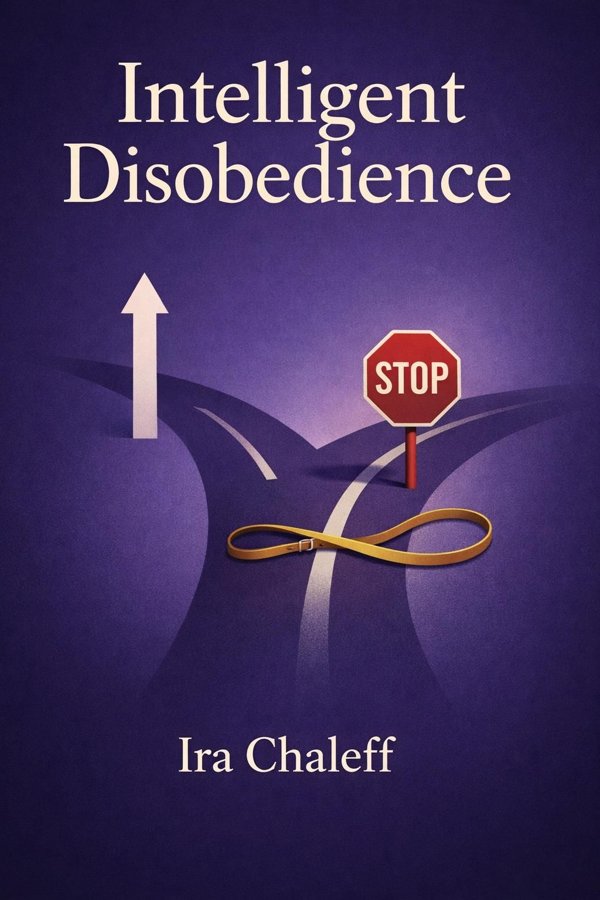
Intelligent Disobedience: Doing Right When What You're Told to Do Is Wrong: Summary & Key Insights
by Ira Chaleff
 10 min8 chaptersAudio available
What Is Intelligent Disobedience: Doing Right When What You're Told to Do Is Wrong About?
Intelligent Disobedience: Doing Right When What You're Told to Do Is Wrong by Ira Chaleff is a leadership book spanning 8 pages. In 'Intelligent Disobedience', Ira Chaleff explores the concept of courageously disobeying orders or norms when they conflict with ethical principles or the greater good. Drawing inspiration from guide dogs trained to disobey unsafe commands, Chaleff applies this metaphor to human behavior in organizations, government, and daily life. The book provides frameworks and real-world examples to help individuals recognize when to question authority and act with integrity.
This FizzRead summary covers all 8 key chapters of Intelligent Disobedience: Doing Right When What You're Told to Do Is Wrong in approximately 10 minutes, distilling the most important ideas, arguments, and takeaways from Ira Chaleff's work. Also available as an audio summary and Key Quotes Podcast.
Intelligent Disobedience: Doing Right When What You're Told to Do Is Wrong
In 'Intelligent Disobedience', Ira Chaleff explores the concept of courageously disobeying orders or norms when they conflict with ethical principles or the greater good. Drawing inspiration from guide dogs trained to disobey unsafe commands, Chaleff applies this metaphor to human behavior in organizations, government, and daily life. The book provides frameworks and real-world examples to help individuals recognize when to question authority and act with integrity.
Who Should Read Intelligent Disobedience: Doing Right When What You're Told to Do Is Wrong?
This book is perfect for anyone interested in leadership and looking to gain actionable insights in a short read. Whether you're a student, professional, or lifelong learner, the key ideas from Intelligent Disobedience: Doing Right When What You're Told to Do Is Wrong by Ira Chaleff will help you think differently.
- ✓Readers who enjoy leadership and want practical takeaways
- ✓Professionals looking to apply new ideas to their work and life
- ✓Anyone who wants the core insights of Intelligent Disobedience: Doing Right When What You're Told to Do Is Wrong in just 10 minutes
Want the full summary?
Get instant access to this book summary and 100K+ more with Fizz Moment.
Get Free SummaryAvailable on App Store • Free to download
Key Chapters
Before we can practice intelligent disobedience, we must first understand the immense power of obedience itself. Societies depend on it. Armies, corporations, and classrooms all function because people follow rules and directives. The trouble arises not with obedience in principle, but with its unexamined form—the reflexive compliance that overrides justice and conscience.
Psychologists such as Stanley Milgram have demonstrated how ordinary individuals will commit harmful acts simply because an authority figure instructs them to. His famous experiment showed participants administering what they thought were dangerous electric shocks to others, even as screams of pain filled the room—just because a lab coat told them to continue. This isn’t a story about cruelty; it’s about how authority tampers with our moral compass.
Organizations mirror this dynamic. Executives once followed corporate orders to manipulate data, hide defects, or bribe officials—actions they privately knew were wrong. The defense was always the same: “I was just following orders.” When obedience outweighs integrity, ethical collapse is never far behind.
In exploring these patterns, I don’t propose we abandon obedience; rather, we must learn its proper boundaries. Blind compliance erodes accountability and moral judgment. Intelligent disobedience restores them. My intention is to retrain our internal 'obedience reflex'—to ensure that our loyalty is always aligned with values, not just authority. Once this shift happens, both individuals and institutions can regain moral coherence.
The central tension of intelligent disobedience lies between obedience and morality. To disobey intelligently is to act from ethical clarity, not rebellion. It requires an understanding that commands are not absolute—they are instruments in service of higher principles such as safety, humanity, and justice.
Every guide dog learns this lesson practically: if the handler issues a command that leads into traffic, the dog must refuse. The dog’s training pairs obedience with moral responsibility—to protect rather than merely to comply. We too must cultivate that internal compass. In workplace settings, this means discerning when directives deviate from legal or ethical norms, and having the moral courage to raise concern or, if necessary, resist.
Moral disobedience operates from respect. It acknowledges the legitimate need for authority but asserts that true respect includes the right—and duty—to stop unethical acts. This creates a culture in which authority is balanced by integrity, not fear. The principle is simple yet profound: when obedience violates conscience, intelligent disobedience becomes ethical obligation.
I emphasize this not to glorify disobedience, but to redefine it as a professional and civic virtue. When we recognize authority as a human system—and therefore fallible—our responsibility grows, not shrinks. Each of us becomes a guardian of ethical standards. Ethical disobedience is how societies prevent the normalization of harm and maintain the trust that leadership fundamentally depends upon.
+ 6 more chapters — available in the FizzRead app
All Chapters in Intelligent Disobedience: Doing Right When What You're Told to Do Is Wrong
About the Author
Ira Chaleff is an author, speaker, and leadership consultant known for his work on courageous followership and ethical leadership. He is the founder of Executive Coaching & Consulting Associates and has advised organizations worldwide on developing responsible and ethical cultures.
Get This Summary in Your Preferred Format
Read or listen to the Intelligent Disobedience: Doing Right When What You're Told to Do Is Wrong summary by Ira Chaleff anytime, anywhere. FizzRead offers multiple formats so you can learn on your terms — all free.
Available formats: App · Audio · PDF · EPUB — All included free with FizzRead
Download Intelligent Disobedience: Doing Right When What You're Told to Do Is Wrong PDF and EPUB Summary
Key Quotes from Intelligent Disobedience: Doing Right When What You're Told to Do Is Wrong
“Before we can practice intelligent disobedience, we must first understand the immense power of obedience itself.”
“The central tension of intelligent disobedience lies between obedience and morality.”
Frequently Asked Questions about Intelligent Disobedience: Doing Right When What You're Told to Do Is Wrong
Intelligent Disobedience: Doing Right When What You're Told to Do Is Wrong by Ira Chaleff is a leadership book that explores key ideas across 8 chapters. In 'Intelligent Disobedience', Ira Chaleff explores the concept of courageously disobeying orders or norms when they conflict with ethical principles or the greater good. Drawing inspiration from guide dogs trained to disobey unsafe commands, Chaleff applies this metaphor to human behavior in organizations, government, and daily life. The book provides frameworks and real-world examples to help individuals recognize when to question authority and act with integrity.
More by Ira Chaleff
You Might Also Like

Extreme Ownership
Jocko Willink
10 min
Dare to Lead
Brene Brown
10 min
Leaders Eat Last
Simon Sinek
10 min
The 21 Irrefutable Laws of Leadership
John Maxwell
10 min
Start With Why
Simon Sinek
10 min
How to Lead When You're Not in Charge
Clay Scroggins
10 minBrowse by Category
Ready to read Intelligent Disobedience: Doing Right When What You're Told to Do Is Wrong?
Get the full summary and 100K+ more books with Fizz Moment.