
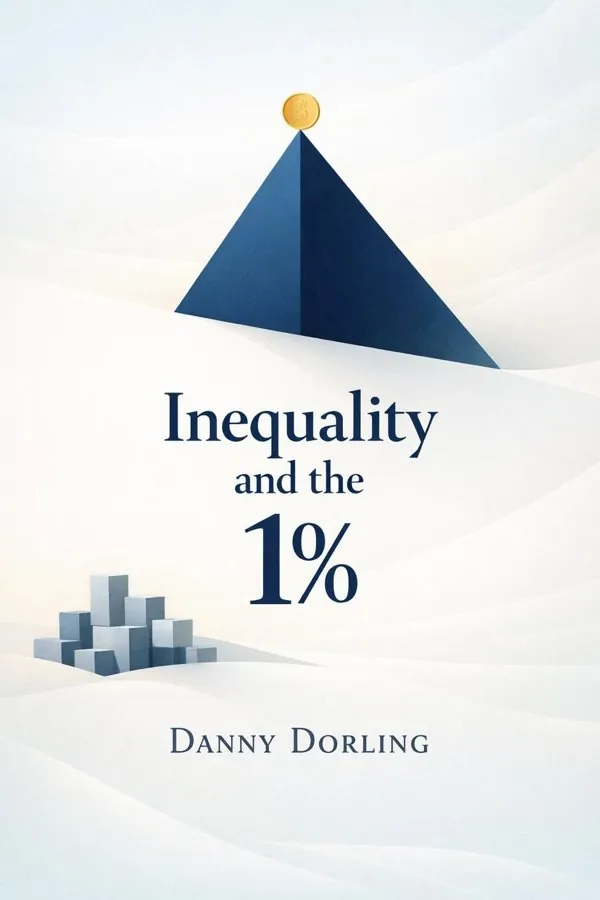
Inequality and the 1%: Summary & Key Insights
 10 min5 chaptersAudio available
What Is Inequality and the 1% About?
Inequality and the 1% by Danny Dorling is a sociology book spanning 5 pages. In 'Inequality and the 1%', leading geographer Danny Dorling examines the growing divide between the richest 1% and the rest of society. Drawing on extensive research, Dorling explores how the concentration of wealth and power among the elite affects social cohesion, democracy, and everyday life. He argues that inequality is not inevitable but a result of policy choices, and he calls for a fairer distribution of resources to create a more just and sustainable society.
This FizzRead summary covers all 5 key chapters of Inequality and the 1% in approximately 10 minutes, distilling the most important ideas, arguments, and takeaways from Danny Dorling's work. Also available as an audio summary and Key Quotes Podcast.
Inequality and the 1%
In 'Inequality and the 1%', leading geographer Danny Dorling examines the growing divide between the richest 1% and the rest of society. Drawing on extensive research, Dorling explores how the concentration of wealth and power among the elite affects social cohesion, democracy, and everyday life. He argues that inequality is not inevitable but a result of policy choices, and he calls for a fairer distribution of resources to create a more just and sustainable society.
Who Should Read Inequality and the 1%?
This book is perfect for anyone interested in sociology and looking to gain actionable insights in a short read. Whether you're a student, professional, or lifelong learner, the key ideas from Inequality and the 1% by Danny Dorling will help you think differently.
- ✓Readers who enjoy sociology and want practical takeaways
- ✓Professionals looking to apply new ideas to their work and life
- ✓Anyone who wants the core insights of Inequality and the 1% in just 10 minutes
Want the full summary?
Get instant access to this book summary and 100K+ more with Fizz Moment.
Get Free SummaryAvailable on App Store • Free to download
Key Chapters
To understand today’s divide, we must look back. After the Second World War, many Western countries experienced a period of remarkable equality. In Britain, Europe, and much of the industrialized world, the gap between rich and poor narrowed steadily from the 1940s through the 1970s. Taxation was progressive, social housing expanded, and education broadened. The 1% existed, but they were far less powerful than they are today. The growth that followed was widely shared, leading to better health, more stable communities, and stronger democracies.
But beginning in the late 1970s, this pattern reversed. The political ideologies of Thatcher in Britain and Reagan in the United States ushered in a new era—one defined by deregulation, privatization, and radically reduced taxation for the wealthy. The promise was that wealth would 'trickle down'; the result was that it pooled upward. Wages stagnated, while top salaries, property wealth, and financial assets soared. The financialization of the economy concentrated power in the hands of the few who controlled capital, not labor.
The postwar settlement had rested on a collective belief that fairness was both moral and functional—that broad prosperity served everyone. By contrast, the new orthodoxy celebrated individual success, often ignoring the collective costs. By tracing historical data, I found that as the share of income going to the top 1% rose, so did economic instability, housing insecurity, and a sense of alienation among ordinary people. In short, inequality came roaring back—and it has defined the world we now inhabit.
Who exactly are the 1%? In the early 21st century, they are not merely the fortunate few earning slightly above average salaries—they are individuals who command enormous wealth, often detached from the productive economy. Their power lies not only in their money but in their ability to shape institutions, culture, and policy to reinforce their position. Many among the 1% derive their fortunes from finance, property speculation, or corporate control, rather than innovation or labor.
The mechanisms of accumulation are self-reinforcing. High executive pay packages justified as 'market rates' create a cascade of comparison that inflates pay at the top while holding down wages elsewhere. Property ownership, particularly in global cities like London, becomes both a status symbol and a tax haven. Wealth, once amassed, generates more wealth through rents, dividends, and inheritance, while those without assets struggle to catch up. Governments have often assisted this process by reducing top tax rates and by designing financial systems in which returns to wealth far outpace growth in real wages.
Crucially, I argue that the rich are rarely content merely to enjoy their wealth—they work to protect it. Networks of influence develop, functioning through lobbying, campaign donations, and the revolving door between politics and business. In this way, the 1% not only benefit from inequality—they perpetuate it. Yet, we must see them not as exceptional individuals but as participants in a system built to reward accumulation and shield privilege. Recognizing this is essential if we hope to challenge the structures that make such vast disparities possible.
+ 3 more chapters — available in the FizzRead app
All Chapters in Inequality and the 1%
About the Author
Danny Dorling is a British social geographer and professor at the University of Oxford. His research focuses on inequality, housing, health, and education. Dorling is known for his accessible writing and his commitment to using data to reveal social injustices and advocate for progressive change.
Get This Summary in Your Preferred Format
Read or listen to the Inequality and the 1% summary by Danny Dorling anytime, anywhere. FizzRead offers multiple formats so you can learn on your terms — all free.
Available formats: App · Audio · PDF · EPUB — All included free with FizzRead
Download Inequality and the 1% PDF and EPUB Summary
Key Quotes from Inequality and the 1%
“To understand today’s divide, we must look back.”
“In the early 21st century, they are not merely the fortunate few earning slightly above average salaries—they are individuals who command enormous wealth, often detached from the productive economy.”
Frequently Asked Questions about Inequality and the 1%
Inequality and the 1% by Danny Dorling is a sociology book that explores key ideas across 5 chapters. In 'Inequality and the 1%', leading geographer Danny Dorling examines the growing divide between the richest 1% and the rest of society. Drawing on extensive research, Dorling explores how the concentration of wealth and power among the elite affects social cohesion, democracy, and everyday life. He argues that inequality is not inevitable but a result of policy choices, and he calls for a fairer distribution of resources to create a more just and sustainable society.
You Might Also Like
Between the World and Me
Ta-Nehisi Coates
10 min
Half the Sky
Nicholas D. Kristof, Sheryl WuDunn
10 min
Men Explain Things To Me
Rebecca Solnit
10 min
Rational Ritual
Michael Suk-Young Chwe
10 min
The New Jim Crow
Michelle Alexander
10 min
Beyond Culture
Edward T. Hall
10 minBrowse by Category
Ready to read Inequality and the 1%?
Get the full summary and 100K+ more books with Fizz Moment.