
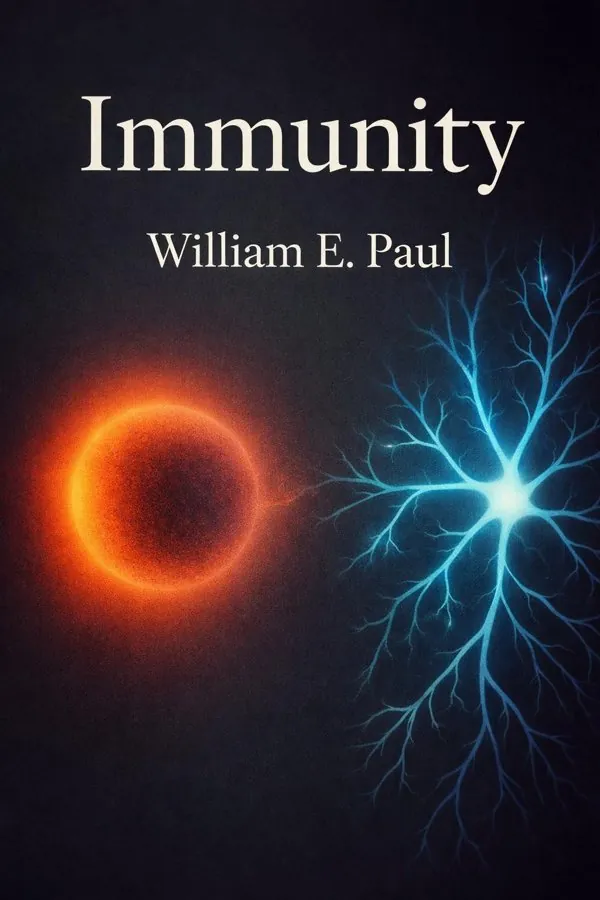
Immunity: Summary & Key Insights
 10 min9 chaptersAudio available
Key Takeaways from Immunity
Scientific revolutions often begin with a practical mystery long before anyone understands the mechanism.
Protection in the body does not come from a single organ or cell but from a distributed network that is always watching, signaling, and adapting.
The immune system succeeds because it combines speed with intelligence.
One of biology’s most astonishing achievements is that the body can recognize an almost unimaginable variety of threats without being genetically preprogrammed for each one.
The immune system’s greatest triumph is not merely defeating a threat once but remembering it.
What Is Immunity About?
Immunity by William E. Paul is a life_science book spanning 5 pages. What keeps the human body alive in a world filled with viruses, bacteria, parasites, toxins, and damaged cells? In Immunity, William E. Paul answers that question by guiding readers through the astonishing system that protects us from disease while constantly balancing precision and restraint. This is not just a book about white blood cells and vaccines; it is a story of scientific discovery, medical progress, and the fragile boundary between protection and self-destruction. Paul explains how the immune system identifies danger, remembers past encounters, and sometimes makes catastrophic mistakes in the form of allergy, autoimmunity, or immunodeficiency. He also shows how decades of laboratory research transformed medicine, making possible modern vaccination strategies, immune-based cancer therapies, and deeper understanding of infection. What gives the book unusual authority is Paul himself: one of the most influential immunologists of the modern era, a longtime NIH scientist, and a researcher whose work helped define immune regulation. The result is an accessible yet richly informed exploration of one of biology’s most elegant and consequential systems.
This FizzRead summary covers all 9 key chapters of Immunity in approximately 10 minutes, distilling the most important ideas, arguments, and takeaways from William E. Paul's work. Also available as an audio summary and Key Quotes Podcast.
Immunity
What keeps the human body alive in a world filled with viruses, bacteria, parasites, toxins, and damaged cells? In Immunity, William E. Paul answers that question by guiding readers through the astonishing system that protects us from disease while constantly balancing precision and restraint. This is not just a book about white blood cells and vaccines; it is a story of scientific discovery, medical progress, and the fragile boundary between protection and self-destruction. Paul explains how the immune system identifies danger, remembers past encounters, and sometimes makes catastrophic mistakes in the form of allergy, autoimmunity, or immunodeficiency. He also shows how decades of laboratory research transformed medicine, making possible modern vaccination strategies, immune-based cancer therapies, and deeper understanding of infection. What gives the book unusual authority is Paul himself: one of the most influential immunologists of the modern era, a longtime NIH scientist, and a researcher whose work helped define immune regulation. The result is an accessible yet richly informed exploration of one of biology’s most elegant and consequential systems.
Who Should Read Immunity?
This book is perfect for anyone interested in life_science and looking to gain actionable insights in a short read. Whether you're a student, professional, or lifelong learner, the key ideas from Immunity by William E. Paul will help you think differently.
- ✓Readers who enjoy life_science and want practical takeaways
- ✓Professionals looking to apply new ideas to their work and life
- ✓Anyone who wants the core insights of Immunity in just 10 minutes
Want the full summary?
Get instant access to this book summary and 100K+ more with Fizz Moment.
Get Free SummaryAvailable on App Store • Free to download
Key Chapters
Scientific revolutions often begin with a practical mystery long before anyone understands the mechanism. That is exactly how immunity entered human thought. Long before immune cells, antibodies, and cytokines had names, people noticed that surviving certain infections could provide future protection. This observation, once little more than folklore, became one of medicine’s most transformative insights. Paul traces how this empirical knowledge evolved from early practices such as variolation into Edward Jenner’s landmark use of cowpox to prevent smallpox, a breakthrough that showed disease could be prevented intentionally. From there, figures such as Louis Pasteur and Robert Koch pushed the story forward by linking microbes to disease and opening the door to scientific immunology.
What makes this history so important is that it shows how medicine advances: first through observation, then experimentation, then theory. Early immunologists debated whether immunity came from cells, soluble factors in blood, or some other process entirely. Over time, these competing ideas were refined into the modern understanding that immunity is a coordinated system involving both cellular and molecular defenses. The path was not linear; it was full of false starts, rival models, and conceptual leaps.
The practical application is clear today. Every vaccine campaign, every public health intervention, and every immunotherapy rests on this historical accumulation of insight. Understanding the past also helps readers appreciate why science can be slow, self-correcting, and occasionally contentious.
Actionable takeaway: When evaluating modern health claims, trust ideas grounded in cumulative evidence rather than quick certainty, because durable medical progress is built the same way immunology was—step by step.
Protection in the body does not come from a single organ or cell but from a distributed network that is always watching, signaling, and adapting. Paul presents the immune system as a living architecture composed of tissues, organs, circulating cells, and chemical messengers, all organized to distinguish threat from normal life. Bone marrow generates many immune cells. The thymus helps train T cells. Lymph nodes act as meeting places where antigens, antigen-presenting cells, and lymphocytes interact. The spleen monitors blood-borne threats, while barrier tissues such as skin, lungs, and gut form frontline zones of defense.
This organization matters because immune protection depends on location as much as power. A pathogen entering through the nose triggers different responses than one entering the bloodstream. Dendritic cells capture fragments of invaders and carry them to lymph nodes, where they help activate more specialized responses. B cells may produce antibodies, while T cells either coordinate the attack or kill infected cells directly. Cytokines then transmit instructions that amplify, regulate, or shut down inflammation.
Paul’s great insight is that the immune system is less like an army waiting for war and more like a dynamic information network. It senses, communicates, decides, and remembers. That is why disorders of immunity can arise not only from weak defenses but also from failures in coordination.
In practical terms, this helps explain everyday health experiences, from swollen lymph nodes during infection to why some vaccines require boosters to strengthen memory. It also clarifies why nutrition, sleep, and chronic stress can influence immune performance through the body’s interconnected systems.
Actionable takeaway: Think of immune health as system health—support the body’s overall regulation through sleep, recovery, and preventive care rather than looking for a single “immune booster.”
The immune system succeeds because it combines speed with intelligence. Paul explains this through the distinction between innate and adaptive immunity. Innate immunity is the body’s immediate defense: barriers, inflammatory responses, phagocytic cells, complement proteins, and pattern-recognition systems that identify broad signatures of danger. It does not need prior exposure to act. Adaptive immunity, by contrast, is slower to begin but far more precise. It recognizes highly specific molecular targets, expands selected populations of lymphocytes, and creates memory that allows faster and stronger responses upon re-exposure.
This two-part design solves a biological problem. If the body relied only on fast, generalized defenses, it would struggle against pathogens that evolve or hide inside cells. If it relied only on highly specific defenses, it would respond too slowly to many threats. Innate immunity buys time; adaptive immunity delivers tailored force and lasting protection.
A practical example is vaccination. A vaccine introduces antigens in a controlled way so the adaptive immune system can build memory without the full cost of disease. But vaccines also depend on innate signals to generate a strong response, which is why adjuvants and delivery methods matter. In infection, fever and inflammation may feel unpleasant, but they are often signs that innate immunity is actively shaping the battle while adaptive immunity ramps up.
Paul also helps readers see why some people become severely ill from the same pathogen that causes mild illness in others: differences in timing, balance, and regulation between these immune branches can profoundly affect outcome.
Actionable takeaway: When thinking about infection or vaccination, remember that effective immunity is not just about “strength” but about the right sequence—rapid early defense followed by precise, lasting immune memory.
One of biology’s most astonishing achievements is that the body can recognize an almost unimaginable variety of threats without being genetically preprogrammed for each one. Paul explores this puzzle through the logic of immune specificity. B cells and T cells carry receptors capable of binding distinct molecular patterns, and these receptors are generated through remarkable genetic rearrangements that create enormous diversity. In effect, the body prepares a vast library of possible recognition tools before it knows what exact infections it will face.
This diversity creates both power and risk. Most receptors will never be used, some will be ineffective, and some will mistakenly recognize the body’s own tissues. That is why selection and control are so important. When an antigen is encountered, only the lymphocytes with matching receptors are activated and expanded, a principle known as clonal selection. This allows the immune system to transform rare recognition into a large-scale defense.
The concept has many practical implications. Allergy can result when harmless substances are wrongly treated as threats. Autoimmune disease can emerge when self-reactive cells escape control. Monoclonal antibody drugs, by contrast, exploit specificity therapeutically by targeting one molecule with precision. Diagnostic blood tests also often depend on antigen-antibody recognition.
Paul makes clear that specificity is the foundation of both immunity’s brilliance and its fragility. The same mechanisms that let the body distinguish one viral protein from another must also be tightly governed to prevent damage.
Actionable takeaway: Appreciate that immune precision is real but never perfect, which is why personalized diagnosis matters when symptoms may reflect infection, allergy, autoimmunity, or another misdirected immune response.
The immune system’s greatest triumph is not merely defeating a threat once but remembering it. Paul shows that immunological memory is what turns survival into lasting protection and makes vaccination one of the most powerful tools in medicine. After infection or immunization, a fraction of activated B cells and T cells persist as memory cells. These cells are primed for speed, enabling the body to respond more effectively if the same pathogen appears again. In many cases, antibodies also remain in circulation, providing an additional layer of defense.
This principle explains why some childhood vaccines can protect for years and why booster doses are sometimes needed. Memory is not a magical switch; it varies depending on the pathogen, the quality of the initial response, and how the immune system was stimulated. Some infections induce durable immunity, while others mutate rapidly or evade immune recognition, requiring repeated vaccination or updated vaccine formulations.
The practical significance is enormous. Public health depends on immune memory not only at the individual level but across populations. Widespread vaccination reduces transmission, protects vulnerable people, and can even eliminate diseases. Memory also shapes clinical practice: physicians consider prior exposure, vaccination history, and antibody status when assessing risk.
Paul’s explanation reminds readers that memory is active biological engineering performed by the immune system itself. It transforms experience into preparedness.
Actionable takeaway: Keep your vaccinations current and understand boosters as a way of maintaining immune memory, not as a sign that vaccines failed, but as part of how long-term protection is sustained.
The same system that preserves life can become a source of illness when its judgment, restraint, or capacity is compromised. Paul devotes important attention to three broad categories of immune dysfunction: autoimmunity, allergy, and immunodeficiency. In autoimmunity, the immune system attacks self, as seen in conditions such as type 1 diabetes, lupus, or rheumatoid arthritis. In allergy, it responds excessively to substances that are usually harmless, such as pollen, foods, or insect venom. In immunodeficiency, the body lacks adequate defense, whether because of inherited defects, infection, medical treatment, or acquired disease.
These disorders reveal that health depends on more than strong immunity. The immune system must be accurate, proportionate, and well regulated. Too little response permits infection. Too much response creates inflammation and tissue damage. A response against the wrong target can become chronic disease.
Practical examples are everywhere. A child with recurrent unusual infections may need evaluation for immune deficiency. Seasonal allergies illustrate how a technically functional immune response can still be maladaptive. Autoimmune disorders often require treatments that suppress damaging immune activity while trying to preserve protection against real threats.
Paul’s deeper point is that the immune system is not a simple shield but a decision-making network vulnerable to error. Appreciating that complexity can reduce simplistic thinking about health and disease. Not every immune problem comes from weakness; some come from excess, confusion, or failed tolerance.
Actionable takeaway: If symptoms are recurrent, inflammatory, or unexplained, consider whether immune misregulation may be involved and seek expert evaluation rather than self-treating everything as infection.
Cells do not defend the body effectively by acting alone; they must communicate, negotiate, and regulate each other. Paul, whose own scientific work was central to cytokine biology, explains how these signaling molecules function as the language of the immune system. Cytokines are secreted proteins that influence cell growth, differentiation, activation, movement, and survival. They help determine whether an immune response intensifies, changes direction, resolves, or becomes pathological.
This signaling language is essential because immune responses unfold in stages and across many tissues. One set of cytokines may call cells to an infected site, another may stimulate B cells to produce antibodies, and others may restrain inflammation to prevent collateral damage. Problems arise when these messages are absent, mistimed, or excessive. In severe infection, for example, dysregulated cytokine release can contribute to systemic inflammation and organ injury. In chronic inflammatory disease, cytokines can sustain harmful immune activation over time.
The practical implications are profound. Some of the most effective modern drugs for autoimmune disease and inflammatory disorders work by blocking specific cytokines or their receptors. Laboratory measurement of cytokines can also aid research and disease monitoring. Paul’s treatment of this topic highlights how molecular detail leads directly to medical innovation.
Readers come away with a more sophisticated picture of immunity: not simply cells attacking invaders, but a network governed by signals, feedback loops, and context. That insight helps explain why treatments that fine-tune immune communication can be more effective than blunt suppression.
Actionable takeaway: Understand that inflammation is regulated by signaling pathways, which is why targeted therapies and professional diagnosis are often more effective than generalized attempts to “reduce inflammation” on your own.
Medicine becomes most powerful when it stops merely observing immunity and begins directing it. Paul shows how immunology moved from explanation to intervention, transforming the treatment of infectious disease and opening new possibilities in cancer care. Vaccines are the classic example: they train the immune system in advance, converting biological memory into population-level protection. But the modern story goes further. Scientists now design therapies that enhance, redirect, or release immune responses for clinical benefit.
Cancer illustrates the challenge. Tumors arise from the body’s own cells, so the immune system may fail to recognize them as dangerous or may be actively suppressed by the tumor environment. Immunotherapy seeks to overcome these barriers. By stimulating immune recognition or removing inhibitory brakes, clinicians can sometimes produce durable anti-cancer responses that were once unimaginable. Likewise, monoclonal antibodies can target diseased cells or immune pathways with striking precision.
The same principles inform work on chronic infections, emerging pathogens, and next-generation vaccines. Understanding antigen presentation, immune memory, and regulation allows scientists to build more effective interventions. Paul emphasizes that these advances are rooted in basic science. Discoveries that once seemed abstract—how T cells activate, how cytokines signal, how receptors recognize antigens—eventually became the foundation for lifesaving therapies.
For readers, this is one of the most hopeful sections of the book. It demonstrates that deep biological understanding is not academic luxury; it is the source of better medicine.
Actionable takeaway: View breakthroughs like vaccines and immunotherapies as evidence that basic research matters, and support evidence-based medicine that translates long-term science into real-world treatment.
To understand the future of medicine, you increasingly have to understand immunity. Paul argues that immunology is no longer a narrow specialty but a central framework for thinking about health, disease, and therapy. Infectious disease, transplantation, allergy, autoimmune illness, vaccine development, chronic inflammation, and cancer all depend on immune mechanisms. As research deepens, immunity is becoming one of the main interfaces between genetics, environment, metabolism, aging, and clinical care.
This future-facing perspective matters because many of the hardest medical problems involve complexity rather than simple cause and effect. Why does one person resist infection while another becomes critically ill? Why do some cancer patients respond dramatically to immunotherapy while others do not? Why do inflammatory disorders cluster with certain genetic backgrounds or environmental exposures? Immunology offers tools to approach these questions by focusing on regulation, variation, and biological context.
The practical applications are already visible in personalized medicine. Immune profiling, biomarker-guided treatment, targeted biologic drugs, and precision vaccine strategies all reflect a shift toward more individualized care. Paul’s broader contribution is to make readers see that the immune system is not a side issue in health but one of its master regulators.
For scientists, clinicians, and general readers alike, the book encourages intellectual humility. The immune system is powerful, adaptive, and still only partly understood. Yet every new layer of knowledge expands the possibility of preventing disease more effectively and treating it more precisely.
Actionable takeaway: Follow developments in immunology as developments in medicine itself, because many of tomorrow’s major health advances will come from learning how to modulate immune function with greater precision.
All Chapters in Immunity
About the Author
William E. Paul (1936–2015) was an American immunologist whose work helped define modern understanding of the immune system. He spent much of his career at the National Institutes of Health, where he became a leading figure in research on immune regulation, T cells, and cytokines, especially interleukin-4. Paul was known not only for his scientific discoveries but also for his leadership in shaping immunology as a discipline and mentoring generations of researchers. He served in major advisory and administrative roles and was widely recognized for bridging rigorous laboratory science with clear scientific communication. In Immunity, he brings together decades of firsthand experience to explain the history, logic, and medical importance of one of the body’s most complex and essential systems.
Get This Summary in Your Preferred Format
Read or listen to the Immunity summary by William E. Paul anytime, anywhere. FizzRead offers multiple formats so you can learn on your terms — all free.
Available formats: App · Audio · PDF · EPUB — All included free with FizzRead
Download Immunity PDF and EPUB Summary
Key Quotes from Immunity
“Scientific revolutions often begin with a practical mystery long before anyone understands the mechanism.”
“Protection in the body does not come from a single organ or cell but from a distributed network that is always watching, signaling, and adapting.”
“The immune system succeeds because it combines speed with intelligence.”
“One of biology’s most astonishing achievements is that the body can recognize an almost unimaginable variety of threats without being genetically preprogrammed for each one.”
“The immune system’s greatest triumph is not merely defeating a threat once but remembering it.”
Frequently Asked Questions about Immunity
Immunity by William E. Paul is a life_science book that explores key ideas across 9 chapters. What keeps the human body alive in a world filled with viruses, bacteria, parasites, toxins, and damaged cells? In Immunity, William E. Paul answers that question by guiding readers through the astonishing system that protects us from disease while constantly balancing precision and restraint. This is not just a book about white blood cells and vaccines; it is a story of scientific discovery, medical progress, and the fragile boundary between protection and self-destruction. Paul explains how the immune system identifies danger, remembers past encounters, and sometimes makes catastrophic mistakes in the form of allergy, autoimmunity, or immunodeficiency. He also shows how decades of laboratory research transformed medicine, making possible modern vaccination strategies, immune-based cancer therapies, and deeper understanding of infection. What gives the book unusual authority is Paul himself: one of the most influential immunologists of the modern era, a longtime NIH scientist, and a researcher whose work helped define immune regulation. The result is an accessible yet richly informed exploration of one of biology’s most elegant and consequential systems.
You Might Also Like
The Selfish Gene
Richard Dawkins
10 min
Awakenings
Oliver Sacks
10 min
Parasite Rex: Inside the Bizarre World of Nature's Most Dangerous Creatures
Carl Zimmer
10 min
The Atlas of Life on Earth
Various
10 min
The Book of Humans: The Story of How We Became Us
Adam Rutherford
10 min
The Horse
Wendy Williams
10 minBrowse by Category
Ready to read Immunity?
Get the full summary and 100K+ more books with Fizz Moment.