
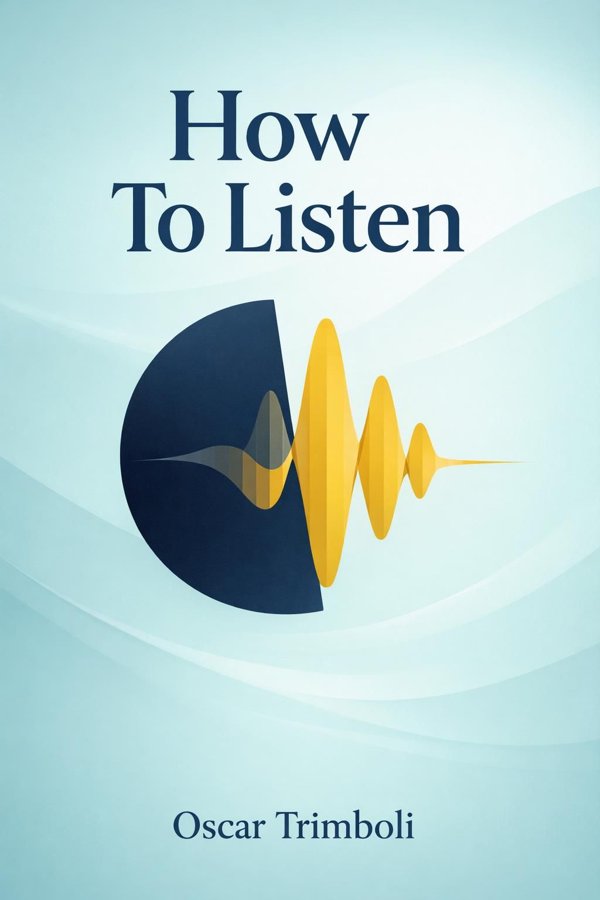
How To Listen: Discover The Hidden Key To Better Communication: Summary & Key Insights
 10 min7 chaptersAudio available
What Is How To Listen: Discover The Hidden Key To Better Communication About?
How To Listen: Discover The Hidden Key To Better Communication by Oscar Trimboli is a communication book spanning 7 pages. In this insightful guide, Oscar Trimboli explores the art and science of deep listening. Drawing on years of research and practical experience, he reveals how to move beyond hearing words to truly understand what others mean. The book offers actionable frameworks and exercises to help readers become more attentive, empathetic, and effective communicators in both personal and professional contexts.
This FizzRead summary covers all 7 key chapters of How To Listen: Discover The Hidden Key To Better Communication in approximately 10 minutes, distilling the most important ideas, arguments, and takeaways from Oscar Trimboli's work. Also available as an audio summary and Key Quotes Podcast.
How To Listen: Discover The Hidden Key To Better Communication
In this insightful guide, Oscar Trimboli explores the art and science of deep listening. Drawing on years of research and practical experience, he reveals how to move beyond hearing words to truly understand what others mean. The book offers actionable frameworks and exercises to help readers become more attentive, empathetic, and effective communicators in both personal and professional contexts.
Who Should Read How To Listen: Discover The Hidden Key To Better Communication?
This book is perfect for anyone interested in communication and looking to gain actionable insights in a short read. Whether you're a student, professional, or lifelong learner, the key ideas from How To Listen: Discover The Hidden Key To Better Communication by Oscar Trimboli will help you think differently.
- ✓Readers who enjoy communication and want practical takeaways
- ✓Professionals looking to apply new ideas to their work and life
- ✓Anyone who wants the core insights of How To Listen: Discover The Hidden Key To Better Communication in just 10 minutes
Want the full summary?
Get instant access to this book summary and 100K+ more with Fizz Moment.
Get Free SummaryAvailable on App Store • Free to download
Key Chapters
Before we can listen deeply, we must confront what stands in our way. The primary obstacle isn’t external noise—it’s internal. Our own thoughts, judgments, biases, and assumptions constantly interrupt the flow of another person’s message. We think ahead to how we’ll respond. We search for familiar patterns to validate our perspective. We multitask, believing we can process while distracted. But the brain can’t listen fully while it’s talking to itself.
When I ask participants in workshops to estimate how much time they spend preparing their replies while someone else is speaking, the answers are startling—often more than half the conversation. This mental rehearsal severs connection. We stop noticing tone, inflection, or pauses that reveal deeper truths. Technology compounds the problem: notifications, background noise, and information overload all fracture our attention. We have become masters of partial presence.
Deep listening requires noticing these barriers. The first act of great listening is awareness—recognizing when you’ve drifted inward or away. When you catch yourself judging or planning ahead, acknowledge it, then return to curiosity. I often tell people: listening isn’t about perfection; it’s about returning. Each time you refocus, you strengthen the muscle of attention.
Another barrier lies in our assumptions about others. We believe we know what they will say, so we stop noticing what they actually mean. Assumption turns dialogue into monologue. The antidote is humility—the willingness to be surprised. Ask yourself, “What else could be true here?” or “What might I be missing?” These simple shifts dissolve defensiveness and open the door to genuine discovery.
Once you begin to quiet the internal noise and recognize your biases, listening transforms from a reactive behavior into a deliberate practice. And that’s where the five levels come in.
Every great listener begins by tuning inward. Listening to others well depends on first recognizing your internal state. Your energy, emotions, and mental clutter shape how you hear. When I walk into a meeting, I ask myself, “What am I bringing into this conversation?” If I’m agitated, preoccupied, or fatigued, I can’t be fully present. Clearing internal distractions doesn’t mean ignoring them; it means acknowledging them deliberately so they don’t hijack your focus.
To listen to yourself, pause before entering dialogue. Take a breath. Notice your thoughts and physical sensations. Ask, “What do I need to set aside to give this person my full attention?” This moment of grounding creates space between stimulus and response—a space where empathy can grow.
People often overlook this step, assuming listening begins when someone starts talking. In reality, it begins the moment you decide to be available. Your internal silence prepares you to detect subtleties later: the tremor in someone’s voice, the pause that signals doubt, the shift in tone when truth emerges. Without self-awareness, these cues go unnoticed.
Listening to yourself also means understanding your triggers. When you recognize what phrases or attitudes make you defensive, you can respond intentionally instead of reactively. The goal is not neutrality but centered presence—being steady enough that another person’s storm doesn’t pull you off course. This self-listening becomes the foundation for every other level.
+ 5 more chapters — available in the FizzRead app
All Chapters in How To Listen: Discover The Hidden Key To Better Communication
About the Author
Oscar Trimboli is an Australian author, speaker, and leadership coach known for his work on communication and listening. He hosts the 'Deep Listening' podcast and has dedicated his career to helping individuals and organizations improve their listening skills to foster better understanding and collaboration.
Get This Summary in Your Preferred Format
Read or listen to the How To Listen: Discover The Hidden Key To Better Communication summary by Oscar Trimboli anytime, anywhere. FizzRead offers multiple formats so you can learn on your terms — all free.
Available formats: App · Audio · PDF · EPUB — All included free with FizzRead
Download How To Listen: Discover The Hidden Key To Better Communication PDF and EPUB Summary
Key Quotes from How To Listen: Discover The Hidden Key To Better Communication
“Before we can listen deeply, we must confront what stands in our way.”
“Every great listener begins by tuning inward.”
Frequently Asked Questions about How To Listen: Discover The Hidden Key To Better Communication
How To Listen: Discover The Hidden Key To Better Communication by Oscar Trimboli is a communication book that explores key ideas across 7 chapters. In this insightful guide, Oscar Trimboli explores the art and science of deep listening. Drawing on years of research and practical experience, he reveals how to move beyond hearing words to truly understand what others mean. The book offers actionable frameworks and exercises to help readers become more attentive, empathetic, and effective communicators in both personal and professional contexts.
You Might Also Like

Magic Words: The Science and Secrets Behind Seven Words That Motivate, Engage, and Influence
Tim David
10 min
Talking Across The Divide: How to Communicate with People You Disagree with and Maybe Even Change the World
Justin Lee
10 min
The Exceptional Presenter: A Proven Formula to Open Up! and Own the Room
Timothy J. Koegel
10 min
4 Essential Keys to Effective Communication in Love, Life, Work--Anywhere!: Including the 12-Day Communication Challenge!
Bento C. Leal III
10 min
Active Listening Techniques: 30 Practical Tools to Hone Your Communication Skills
Nisha Gupta
10 min
Bargaining for Advantage: Negotiation Strategies for Reasonable People
G. Richard Shell
10 minBrowse by Category
Ready to read How To Listen: Discover The Hidden Key To Better Communication?
Get the full summary and 100K+ more books with Fizz Moment.