
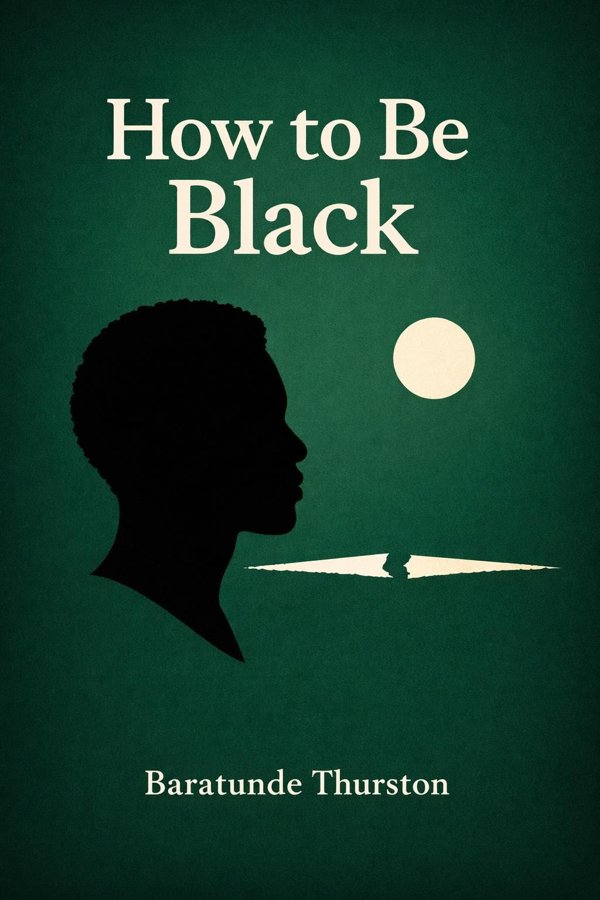
How to Be Black: Summary & Key Insights
 10 min7 chaptersAudio available
What Is How to Be Black About?
How to Be Black by Baratunde Thurston is a sociology book spanning 7 pages. A satirical memoir and social commentary by Baratunde Thurston, blending humor and insight to explore race, identity, and the experience of being Black in America. The book combines personal stories, cultural critique, and interviews with a diverse panel to challenge stereotypes and provoke thoughtful discussion about race and society.
This FizzRead summary covers all 7 key chapters of How to Be Black in approximately 10 minutes, distilling the most important ideas, arguments, and takeaways from Baratunde Thurston's work. Also available as an audio summary and Key Quotes Podcast.
How to Be Black
A satirical memoir and social commentary by Baratunde Thurston, blending humor and insight to explore race, identity, and the experience of being Black in America. The book combines personal stories, cultural critique, and interviews with a diverse panel to challenge stereotypes and provoke thoughtful discussion about race and society.
Who Should Read How to Be Black?
This book is perfect for anyone interested in sociology and looking to gain actionable insights in a short read. Whether you're a student, professional, or lifelong learner, the key ideas from How to Be Black by Baratunde Thurston will help you think differently.
- ✓Readers who enjoy sociology and want practical takeaways
- ✓Professionals looking to apply new ideas to their work and life
- ✓Anyone who wants the core insights of How to Be Black in just 10 minutes
Want the full summary?
Get instant access to this book summary and 100K+ more with Fizz Moment.
Get Free SummaryAvailable on App Store • Free to download
Key Chapters
I grew up in Washington, D.C., in a neighborhood where challenge was constant but resilience was inherited. My mother was the single most influential force in my life—a woman who believed in activism as a daily ritual and education as our way out. I often describe her as my first teacher in both comedy and conviction. She taught me to question authority, to run for positions of influence, and to hold my community accountable. Her choices—enrolling me in better schools, demanding excellence in the face of limited resources—were not just acts of parenting. They were political statements.
My childhood wasn’t one of perpetual struggle; it was an education in balance. Humor was our coping mechanism, and awareness our form of defense. When my mother exposed me to picket lines and to books about Malcolm X alongside computer camps, she was blending worlds. She wanted me to know how to move confidently across cultural borders while maintaining a clear sense of who I was. Those early lessons were less about surviving Blackness and more about shaping it deliberately.
Looking back, I realize that her approach created a foundation for everything in this book. I learned that being Black doesn’t mean being confined to stereotypes of resistance or style; it means embodying complexity, pride, and choice. That’s why my narrative begins here—because before we talk about race and comedy, we must talk about the home that made both possible.
When I entered Sidwell Friends School, a prestigious private institution better known for producing political legacies than social revolutions, I stepped directly into the paradox of representation. On one hand, I was granted opportunities largely inaccessible to kids from my block; on the other, I was suddenly seen as The Black Student—a singular representative of an entire demographic. Every interaction came with a footnote about expectation.
Sidwell was where I learned fluent code-switching long before I understood the term. In classrooms, I was expected to speak with articulate precision; outside them, I was reminded, sometimes mockingly, that I didn’t sound 'Black enough.' My existence was proof both of progress and of persistent misunderstanding. Humor helped me survive this terrain. Instead of fitting in, I played with the tension—learning when to laugh at the absurdity of being asked for insight on hip-hop trends simply because my melanin matched certain stereotypes.
More importantly, Sidwell was where I began to explore Blackness as multiplicity. It was the realization that I could love computer programming and stand-up comedy, read Baldwin and watch *Star Trek*, and still be authentically myself. Education became my lab for testing identities, and each experiment taught me that 'being Black' could intersect with privilege and ambition without losing its moral core. Those formative years taught me something essential: race is context, not destiny.
+ 5 more chapters — available in the FizzRead app
All Chapters in How to Be Black
About the Author
Baratunde Thurston is an American writer, comedian, and commentator known for his work on race, technology, and culture. He has served as Director of Digital for The Onion and co-founded the media company Cultivated Wit. His work often uses humor to address complex social issues.
Get This Summary in Your Preferred Format
Read or listen to the How to Be Black summary by Baratunde Thurston anytime, anywhere. FizzRead offers multiple formats so you can learn on your terms — all free.
Available formats: App · Audio · PDF · EPUB — All included free with FizzRead
Download How to Be Black PDF and EPUB Summary
Key Quotes from How to Be Black
“When I entered Sidwell Friends School, a prestigious private institution better known for producing political legacies than social revolutions, I stepped directly into the paradox of representation.”
Frequently Asked Questions about How to Be Black
How to Be Black by Baratunde Thurston is a sociology book that explores key ideas across 7 chapters. A satirical memoir and social commentary by Baratunde Thurston, blending humor and insight to explore race, identity, and the experience of being Black in America. The book combines personal stories, cultural critique, and interviews with a diverse panel to challenge stereotypes and provoke thoughtful discussion about race and society.
You Might Also Like
Between the World and Me
Ta-Nehisi Coates
10 min
Half the Sky
Nicholas D. Kristof, Sheryl WuDunn
10 min
Men Explain Things To Me
Rebecca Solnit
10 min
Rational Ritual
Michael Suk-Young Chwe
10 min
The New Jim Crow
Michelle Alexander
10 min
Beyond Culture
Edward T. Hall
10 minBrowse by Category
Ready to read How to Be Black?
Get the full summary and 100K+ more books with Fizz Moment.