
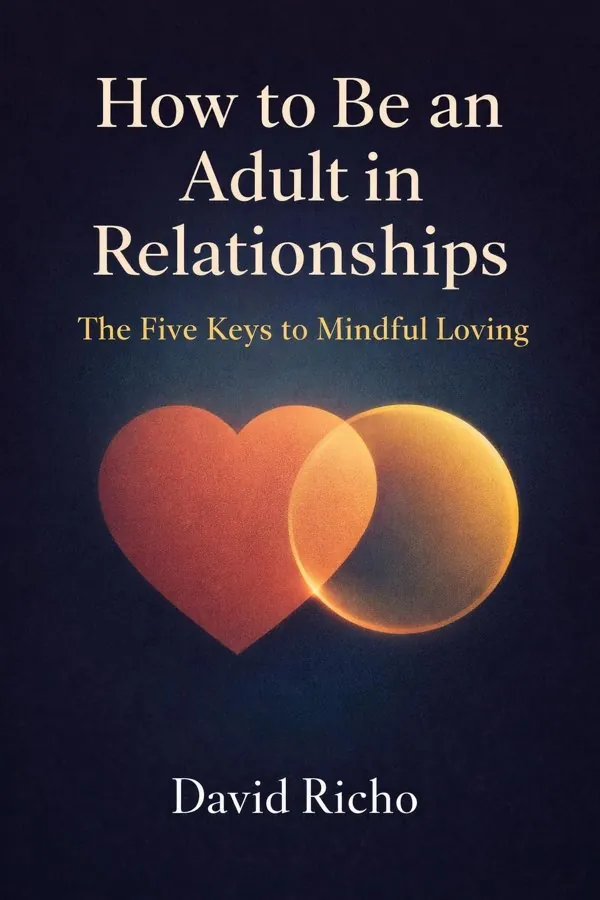
How to Be an Adult in Relationships: The Five Keys to Mindful Loving: Summary & Key Insights
by David Richo
 10 min5 chaptersAudio available
What Is How to Be an Adult in Relationships: The Five Keys to Mindful Loving About?
How to Be an Adult in Relationships: The Five Keys to Mindful Loving by David Richo is a relationships book spanning 5 pages. In this book, psychotherapist David Richo explores how mindfulness and emotional maturity can transform the way we love. He presents five key elements—attention, acceptance, appreciation, affection, and allowing—as the foundation for healthy, conscious relationships. Drawing from psychology, spirituality, and practical exercises, Richo guides readers toward developing self-awareness and compassion in their connections with others.
This FizzRead summary covers all 5 key chapters of How to Be an Adult in Relationships: The Five Keys to Mindful Loving in approximately 10 minutes, distilling the most important ideas, arguments, and takeaways from David Richo's work. Also available as an audio summary and Key Quotes Podcast.
How to Be an Adult in Relationships: The Five Keys to Mindful Loving
In this book, psychotherapist David Richo explores how mindfulness and emotional maturity can transform the way we love. He presents five key elements—attention, acceptance, appreciation, affection, and allowing—as the foundation for healthy, conscious relationships. Drawing from psychology, spirituality, and practical exercises, Richo guides readers toward developing self-awareness and compassion in their connections with others.
Who Should Read How to Be an Adult in Relationships: The Five Keys to Mindful Loving?
This book is perfect for anyone interested in relationships and looking to gain actionable insights in a short read. Whether you're a student, professional, or lifelong learner, the key ideas from How to Be an Adult in Relationships: The Five Keys to Mindful Loving by David Richo will help you think differently.
- ✓Readers who enjoy relationships and want practical takeaways
- ✓Professionals looking to apply new ideas to their work and life
- ✓Anyone who wants the core insights of How to Be an Adult in Relationships: The Five Keys to Mindful Loving in just 10 minutes
Want the full summary?
Get instant access to this book summary and 100K+ more with Fizz Moment.
Get Free SummaryAvailable on App Store • Free to download
Key Chapters
Every act of love begins with attention. To give attention is to say to another, 'I see you, I am with you, and I choose to be present with what is.' Most of us think we know how to listen, yet often our attention is half-hearted, scattered by impatience or fear. In mindful loving, attention is not passive observation; it is an active openness—the willingness to meet another person’s reality without interference.
Attention requires mindfulness. When we are mindful, we can hear not only the words another speaks but the feelings between them. We can sense the subtle shifts in tone, the silences where vulnerability hides. This depth of presence transforms how love feels. Instead of reacting automatically, we begin to respond compassionately. Instead of trying to fix or save, we simply witness—allowing the other to be, and in that allowing, offering profound care.
In relationships, lapses of attention often signal emotional absence. When a partner, friend, or family member feels unseen, they experience it as rejection. But when we give attention, we affirm their existence. I often tell my clients: attention is the purest form of love. It costs us nothing except presence, yet it nourishes the heart like nothing else.
Practicing attention involves slowing down. It means noticing the desires behind your partner’s anger, the fear under their silence, the hope inside their laughter. It means noticing your own responses as well—your impulses to withdraw, control, or please. Attention brings light to these patterns, allowing us to choose rather than repeat.
As we cultivate attention, we begin to see love itself differently. We realize that to truly love someone we must also attend to ourselves. Mindful loving grows when self-awareness meets compassion. In that space, relationships become not battlegrounds for unmet needs, but sanctuaries of shared awakening.
Once we have learned to pay attention, we face another challenge: can we accept what we see? Acceptance does not mean approval or passivity; it means relating to reality as it is, not as we wish it to be. Love falters when we seek to mold others into our image or fix their perceived flaws. To accept is to trust that each person’s path, including their struggles, has its own wisdom.
Much of our struggle with acceptance stems from childhood. When our caretakers withheld acceptance—when love felt conditional on performance or conformity—we learned to equate worth with compliance. As adults, we unconsciously reenact that dynamic, granting acceptance only when others behave as we expect. In mindful loving, we break this pattern. We offer acceptance as a gift of freedom: the other is not required to be different in order to be worthy of love.
Acceptance transforms conflict. When we no longer try to change others, we can listen more fully. We find that tension softens when judgment dissolves. This does not mean we agree with everything others do—it means we respect their autonomy and recognize the difference between healthy boundaries and control. Acceptance is not resignation; it is the soil in which growth naturally occurs.
To accept another, we must also accept ourselves. Our own imperfections, fears, and wounds are part of the human condition. When we meet them with compassion, we grow in humility and empathy. The more we embrace our own humanity, the more we can extend true acceptance to others. And in that mutual recognition, love becomes real—not an ideal, but a living, breathing presence that holds everything.
+ 3 more chapters — available in the FizzRead app
All Chapters in How to Be an Adult in Relationships: The Five Keys to Mindful Loving
About the Author
David Richo, Ph.D., is a psychotherapist, teacher, and author known for integrating Western psychology with Buddhist mindfulness practices. He has written extensively on personal growth, relationships, and spiritual development, and conducts workshops on emotional maturity and mindful living.
Get This Summary in Your Preferred Format
Read or listen to the How to Be an Adult in Relationships: The Five Keys to Mindful Loving summary by David Richo anytime, anywhere. FizzRead offers multiple formats so you can learn on your terms — all free.
Available formats: App · Audio · PDF · EPUB — All included free with FizzRead
Download How to Be an Adult in Relationships: The Five Keys to Mindful Loving PDF and EPUB Summary
Key Quotes from How to Be an Adult in Relationships: The Five Keys to Mindful Loving
“Every act of love begins with attention.”
“Once we have learned to pay attention, we face another challenge: can we accept what we see?”
Frequently Asked Questions about How to Be an Adult in Relationships: The Five Keys to Mindful Loving
How to Be an Adult in Relationships: The Five Keys to Mindful Loving by David Richo is a relationships book that explores key ideas across 5 chapters. In this book, psychotherapist David Richo explores how mindfulness and emotional maturity can transform the way we love. He presents five key elements—attention, acceptance, appreciation, affection, and allowing—as the foundation for healthy, conscious relationships. Drawing from psychology, spirituality, and practical exercises, Richo guides readers toward developing self-awareness and compassion in their connections with others.
More by David Richo

You Might Also Like

The 5 Love Languages
Gary Chapman
10 min
Men Are from Mars, Women Are from Venus
John Gray
10 min
She Comes First
Ian Kerner
10 min
No More Mr Nice Guy
Robert Glover
10 min
Hold Me Tight
Sue Johnson
10 min
Mating in Captivity
Esther Perel
10 minBrowse by Category
Ready to read How to Be an Adult in Relationships: The Five Keys to Mindful Loving?
Get the full summary and 100K+ more books with Fizz Moment.