
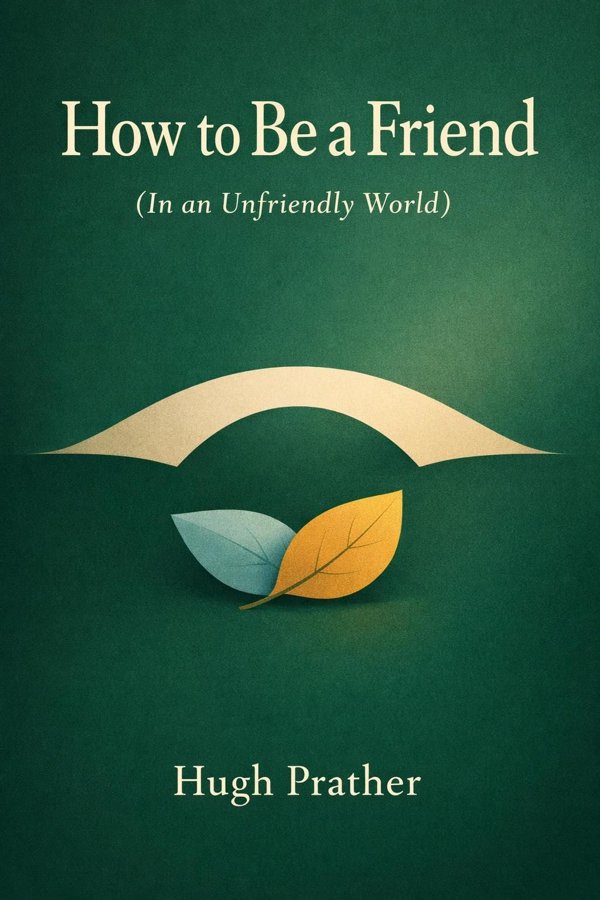
How to Be a Friend (In an Unfriendly World): Summary & Key Insights
by Hugh Prather
 10 min9 chaptersAudio available
What Is How to Be a Friend (In an Unfriendly World) About?
How to Be a Friend (In an Unfriendly World) by Hugh Prather is a relationships book spanning 9 pages. A practical and compassionate guide to building genuine friendships and maintaining kindness in a world often marked by hostility and misunderstanding. Hugh Prather offers reflections and advice on empathy, communication, and emotional honesty, encouraging readers to cultivate meaningful human connections.
This FizzRead summary covers all 9 key chapters of How to Be a Friend (In an Unfriendly World) in approximately 10 minutes, distilling the most important ideas, arguments, and takeaways from Hugh Prather's work. Also available as an audio summary and Key Quotes Podcast.
How to Be a Friend (In an Unfriendly World)
A practical and compassionate guide to building genuine friendships and maintaining kindness in a world often marked by hostility and misunderstanding. Hugh Prather offers reflections and advice on empathy, communication, and emotional honesty, encouraging readers to cultivate meaningful human connections.
Who Should Read How to Be a Friend (In an Unfriendly World)?
This book is perfect for anyone interested in relationships and looking to gain actionable insights in a short read. Whether you're a student, professional, or lifelong learner, the key ideas from How to Be a Friend (In an Unfriendly World) by Hugh Prather will help you think differently.
- ✓Readers who enjoy relationships and want practical takeaways
- ✓Professionals looking to apply new ideas to their work and life
- ✓Anyone who wants the core insights of How to Be a Friend (In an Unfriendly World) in just 10 minutes
Want the full summary?
Get instant access to this book summary and 100K+ more with Fizz Moment.
Get Free SummaryAvailable on App Store • Free to download
Key Chapters
One of Prather’s central insights is that we cannot be good friends until we are at peace with ourselves. He writes candidly about moments when his own defensiveness, confusion, or hidden resentment distorted his relationships. In his view, self-awareness is not a luxury—it is the foundation of friendship. Without honest self-reflection, we project our doubts onto others or demand affirmation in ways that suffocate authenticity.
Through gentle self-examination, Prather invites readers to notice patterns: the ways we withdraw when criticized, the need to control how we are perceived, or the habit of masking vulnerability with humor or intellectual distance. These patterns, he says, are not signs of failure but clues to where our fear lives. Friendship exposes those fears because it asks for emotional intimacy, and intimacy demands truth.
When we become more self-aware, we can tell the difference between genuine empathy and disguised neediness. We stop using friends to escape our own discomfort and start offering companionship out of fullness rather than emptiness. Prather repeatedly emphasizes that emotional clarity requires patience. One must listen inwardly as much as outwardly. It is easy to accuse others of being distant, but we must first ask whether we have truly made ourselves available.
In practice, self-awareness means allowing space for imperfection. Friendship does not thrive on constant analysis or guilt. It flourishes when we can say, “I was wrong,” or “I’m sorry,” without self-condemnation. By being honest about our emotions, we create room for genuine dialogue and healing. This emotional clarity transforms relationships from fragile agreements into resilient bonds rooted in mutual understanding.
+ 7 more chapters — available in the FizzRead app
All Chapters in How to Be a Friend (In an Unfriendly World)
About the Author
Hugh Prather (1938–2010) was an American writer, counselor, and spiritual teacher best known for his inspirational books on personal growth and relationships, including 'Notes to Myself'. His works emphasize self-awareness, compassion, and authenticity.
Get This Summary in Your Preferred Format
Read or listen to the How to Be a Friend (In an Unfriendly World) summary by Hugh Prather anytime, anywhere. FizzRead offers multiple formats so you can learn on your terms — all free.
Available formats: App · Audio · PDF · EPUB — All included free with FizzRead
Download How to Be a Friend (In an Unfriendly World) PDF and EPUB Summary
Key Quotes from How to Be a Friend (In an Unfriendly World)
“To Hugh Prather, friendship is not a social accessory or the result of circumstance—it is an intentional act of seeing another person as equally real and worthy.”
“One of Prather’s central insights is that we cannot be good friends until we are at peace with ourselves.”
Frequently Asked Questions about How to Be a Friend (In an Unfriendly World)
How to Be a Friend (In an Unfriendly World) by Hugh Prather is a relationships book that explores key ideas across 9 chapters. A practical and compassionate guide to building genuine friendships and maintaining kindness in a world often marked by hostility and misunderstanding. Hugh Prather offers reflections and advice on empathy, communication, and emotional honesty, encouraging readers to cultivate meaningful human connections.
You Might Also Like

The 5 Love Languages
Gary Chapman
10 min
Men Are from Mars, Women Are from Venus
John Gray
10 min
She Comes First
Ian Kerner
10 min
No More Mr Nice Guy
Robert Glover
10 min
Hold Me Tight
Sue Johnson
10 min
Mating in Captivity
Esther Perel
10 minBrowse by Category
Ready to read How to Be a Friend (In an Unfriendly World)?
Get the full summary and 100K+ more books with Fizz Moment.