
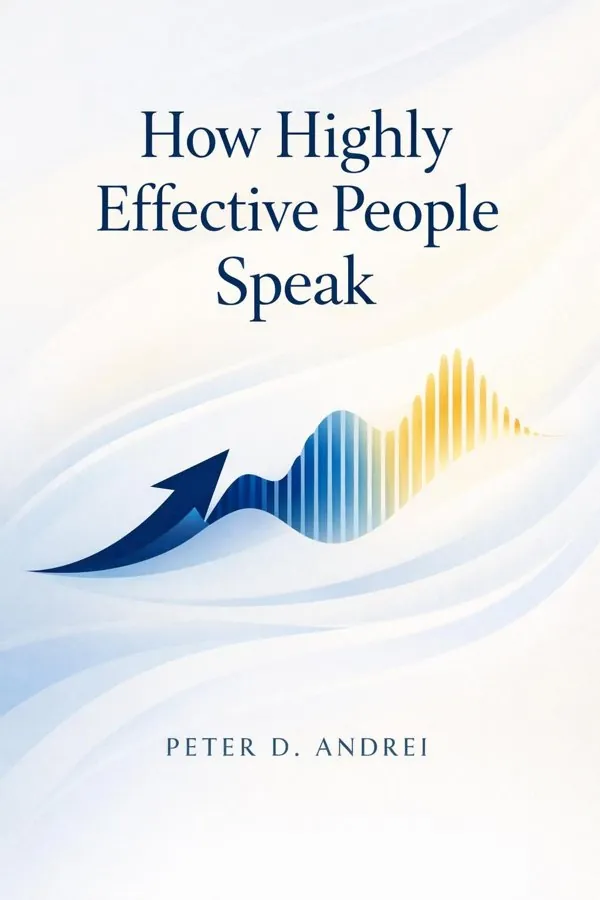
How Highly Effective People Speak: How High Performers Use Psychology to Influence With Ease: Summary & Key Insights
 10 min12 chaptersAudio available
What Is How Highly Effective People Speak: How High Performers Use Psychology to Influence With Ease About?
How Highly Effective People Speak: How High Performers Use Psychology to Influence With Ease by Peter D. Andrei is a communication book spanning 12 pages. This book explores the psychology and communication strategies used by highly effective individuals to influence others effortlessly. It provides practical techniques for improving persuasion, clarity, and confidence in speech, drawing on principles from behavioral psychology and leadership communication.
This FizzRead summary covers all 12 key chapters of How Highly Effective People Speak: How High Performers Use Psychology to Influence With Ease in approximately 10 minutes, distilling the most important ideas, arguments, and takeaways from Peter D. Andrei's work. Also available as an audio summary and Key Quotes Podcast.
How Highly Effective People Speak: How High Performers Use Psychology to Influence With Ease
This book explores the psychology and communication strategies used by highly effective individuals to influence others effortlessly. It provides practical techniques for improving persuasion, clarity, and confidence in speech, drawing on principles from behavioral psychology and leadership communication.
Who Should Read How Highly Effective People Speak: How High Performers Use Psychology to Influence With Ease?
This book is perfect for anyone interested in communication and looking to gain actionable insights in a short read. Whether you're a student, professional, or lifelong learner, the key ideas from How Highly Effective People Speak: How High Performers Use Psychology to Influence With Ease by Peter D. Andrei will help you think differently.
- ✓Readers who enjoy communication and want practical takeaways
- ✓Professionals looking to apply new ideas to their work and life
- ✓Anyone who wants the core insights of How Highly Effective People Speak: How High Performers Use Psychology to Influence With Ease in just 10 minutes
Want the full summary?
Get instant access to this book summary and 100K+ more with Fizz Moment.
Get Free SummaryAvailable on App Store • Free to download
Key Chapters
Every word we speak travels through the prism of human perception. In this section, I explore how our messages are filtered by cognitive biases—those invisible patterns that govern how people interpret reality. Listeners rarely hear your words objectively; they hear them through their beliefs, emotions, and expectations. Understanding this is the first step toward influence. High performers know that perception shapes persuasion, and that a great communicator must anticipate how psychology distorts language.
I draw here on principles from behavioral economics and neuroscience. The confirmation bias, for example, causes individuals to favor information that agrees with their existing worldview. When we ignore this bias, our arguments fall flat; when we speak within the listener’s framework, our ideas gain traction. Likewise, the halo effect impacts how credibility spreads—once someone perceives you as competent or trustworthy, every subsequent statement carries greater weight.
In practice, this means adjusting your message to match the emotional and cognitive state of your audience. If someone feels defensive, rational appeals will fail. You must address their feelings first, reflect understanding, and gradually lead them toward acceptance. Every conversation is a psychological negotiation. When you learn to perceive biases, you stop arguing to be right; you start communicating to be received.
Great persuasion is not improvisation—it’s design. Highly effective speakers organize their messages deliberately, guiding listeners through the mental steps that lead to agreement. Persuasion follows a rhythm: attention, understanding, conviction, commitment. You begin by capturing interest with relevance or emotional appeal, then build comprehension by connecting ideas to familiar concepts. Conviction arises when logic and evidence align with the listener’s emotions, and commitment follows when your message appeals to identity and values.
The structure I advocate echoes the proven patterns used by leaders, storytellers, and negotiators alike. Persuasive speech begins with empathy—stating what the listener already believes or desires—then introduces a meaningful problem or insight. Through contrast and resolution, you make your proposition not just logical but inevitable. The most powerful messages do not force a viewpoint; they lead the listener toward self-persuasion.
Examples abound in history and modern leadership. Consider how visionary figures do not present abstract ideas; they offer stories of transformation, making audiences see what could be, emotionally and vividly. In your own communication, this means learning to sequence your ideas like narrative arcs: establish tension, offer clarity, then deliver resolution. You’re not reciting facts; you’re orchestrating understanding.
+ 10 more chapters — available in the FizzRead app
All Chapters in How Highly Effective People Speak: How High Performers Use Psychology to Influence With Ease
About the Author
Peter D. Andrei is a communication strategist and author specializing in persuasive speaking and psychological influence. His work focuses on helping professionals develop high-impact communication skills for leadership and success.
Get This Summary in Your Preferred Format
Read or listen to the How Highly Effective People Speak: How High Performers Use Psychology to Influence With Ease summary by Peter D. Andrei anytime, anywhere. FizzRead offers multiple formats so you can learn on your terms — all free.
Available formats: App · Audio · PDF · EPUB — All included free with FizzRead
Download How Highly Effective People Speak: How High Performers Use Psychology to Influence With Ease PDF and EPUB Summary
Key Quotes from How Highly Effective People Speak: How High Performers Use Psychology to Influence With Ease
“Every word we speak travels through the prism of human perception.”
“Great persuasion is not improvisation—it’s design.”
Frequently Asked Questions about How Highly Effective People Speak: How High Performers Use Psychology to Influence With Ease
How Highly Effective People Speak: How High Performers Use Psychology to Influence With Ease by Peter D. Andrei is a communication book that explores key ideas across 12 chapters. This book explores the psychology and communication strategies used by highly effective individuals to influence others effortlessly. It provides practical techniques for improving persuasion, clarity, and confidence in speech, drawing on principles from behavioral psychology and leadership communication.
You Might Also Like

Magic Words: The Science and Secrets Behind Seven Words That Motivate, Engage, and Influence
Tim David
10 min
Talking Across The Divide: How to Communicate with People You Disagree with and Maybe Even Change the World
Justin Lee
10 min
The Exceptional Presenter: A Proven Formula to Open Up! and Own the Room
Timothy J. Koegel
10 min
4 Essential Keys to Effective Communication in Love, Life, Work--Anywhere!: Including the 12-Day Communication Challenge!
Bento C. Leal III
10 min
Active Listening Techniques: 30 Practical Tools to Hone Your Communication Skills
Nisha Gupta
10 min
Bargaining for Advantage: Negotiation Strategies for Reasonable People
G. Richard Shell
10 minBrowse by Category
Ready to read How Highly Effective People Speak: How High Performers Use Psychology to Influence With Ease?
Get the full summary and 100K+ more books with Fizz Moment.