
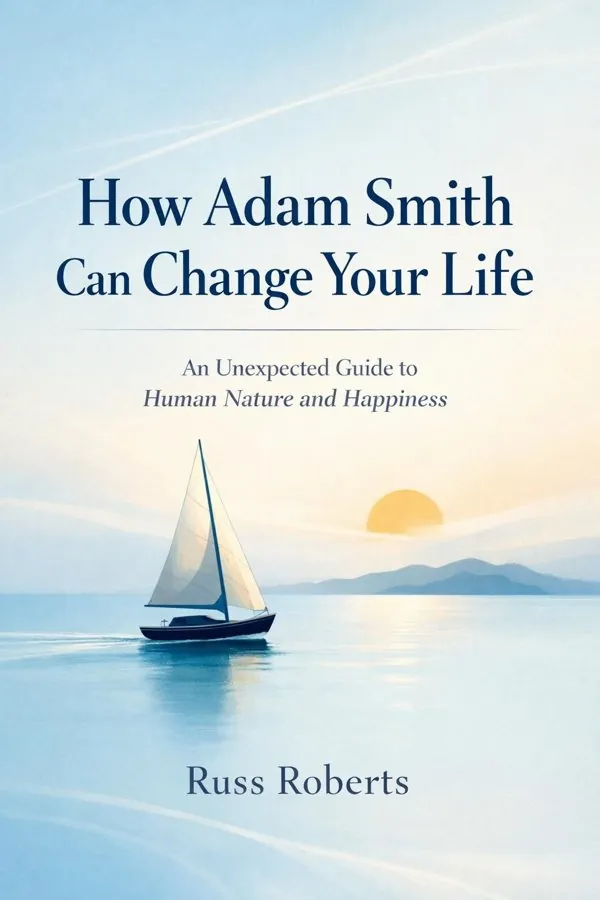
How Adam Smith Can Change Your Life: An Unexpected Guide to Human Nature and Happiness: Summary & Key Insights
by Russ Roberts
 10 min9 chaptersAudio available
What Is How Adam Smith Can Change Your Life: An Unexpected Guide to Human Nature and Happiness About?
How Adam Smith Can Change Your Life: An Unexpected Guide to Human Nature and Happiness by Russ Roberts is a economics book spanning 9 pages. In this book, economist Russ Roberts explores Adam Smith’s lesser-known work, 'The Theory of Moral Sentiments', and reveals how Smith’s insights into human nature, virtue, and happiness remain deeply relevant today. Roberts connects Smith’s ideas to modern life, showing how empathy, self-command, and moral reflection can lead to a more meaningful and fulfilling existence.
This FizzRead summary covers all 9 key chapters of How Adam Smith Can Change Your Life: An Unexpected Guide to Human Nature and Happiness in approximately 10 minutes, distilling the most important ideas, arguments, and takeaways from Russ Roberts's work. Also available as an audio summary and Key Quotes Podcast.
How Adam Smith Can Change Your Life: An Unexpected Guide to Human Nature and Happiness
In this book, economist Russ Roberts explores Adam Smith’s lesser-known work, 'The Theory of Moral Sentiments', and reveals how Smith’s insights into human nature, virtue, and happiness remain deeply relevant today. Roberts connects Smith’s ideas to modern life, showing how empathy, self-command, and moral reflection can lead to a more meaningful and fulfilling existence.
Who Should Read How Adam Smith Can Change Your Life: An Unexpected Guide to Human Nature and Happiness?
This book is perfect for anyone interested in economics and looking to gain actionable insights in a short read. Whether you're a student, professional, or lifelong learner, the key ideas from How Adam Smith Can Change Your Life: An Unexpected Guide to Human Nature and Happiness by Russ Roberts will help you think differently.
- ✓Readers who enjoy economics and want practical takeaways
- ✓Professionals looking to apply new ideas to their work and life
- ✓Anyone who wants the core insights of How Adam Smith Can Change Your Life: An Unexpected Guide to Human Nature and Happiness in just 10 minutes
Want the full summary?
Get instant access to this book summary and 100K+ more with Fizz Moment.
Get Free SummaryAvailable on App Store • Free to download
Key Chapters
Smith’s concept of the impartial spectator is one of his most beautiful gifts to moral philosophy. Imagine a wise observer inside your mind—a figure who watches your actions and judgments not with condemnation or flattery, but with calm understanding. This spectator represents the moral conscience we all possess, shaped by the society around us and refined through personal experience.
When Smith speaks of the impartial spectator, he’s describing the part of ourselves that examines our conduct from a moral distance, asking: would I approve of this if I saw it as another person? He insists that true self-awareness comes from being able to step outside the heat of emotion and see ourselves as others see us.
In daily life, I find this principle endlessly helpful. Before reacting to criticism, before seeking applause, I can pause and ask: what would my impartial spectator think? The answer is seldom harsh but often humbling. It reminds me that dignity comes not from triumphing over others but from being guided by fairness, empathy, and restraint.
Through the spectator’s eyes, Smith teaches self-growth. We learn how to rise above selfishness, how to cultivate virtues that endure beyond circumstance. Modern psychology echoes Smith’s insight: our moral compass strengthens when we practice perspective-taking. In a world that rewards spectacle over sincerity, Smith’s impartial spectator remains the anchor of moral sanity.
Adam Smith is often associated with the notion of self-interest, but what’s striking in *The Theory of Moral Sentiments* is how deeply he understands our capacity for sympathy. He begins his book not with competition or greed but with empathy—the ability to feel for and with others. We are, he writes, not indifferent creatures driven solely by gain. We are wired to care. When we see another suffer, we instinctively share their pain; when we witness joy, we partake in it. This emotional mirroring forms the very foundation of social life.
As I reflect on Smith’s view, it becomes clear that self-interest and sympathy are not enemies. They coexist within us, shaping a rich moral landscape. Self-interest drives us to pursue good lives, but sympathy reminds us that those lives are intertwined with others. Smith’s subtlety lies in understanding that genuine happiness depends on balancing these two forces.
Imagine the workplace: ambition can motivate excellence, but empathy maintains harmony. A successful business leader, in Smith’s moral economy, is not one who merely wins but one who earns the admiration of their peers through honorable conduct. Sympathy moderates self-interest—it keeps our pursuit of success humane, reminding us that relationships are wealth of a deeper kind.
+ 7 more chapters — available in the FizzRead app
All Chapters in How Adam Smith Can Change Your Life: An Unexpected Guide to Human Nature and Happiness
About the Author
Russ Roberts is an American economist, research fellow at Stanford University's Hoover Institution, and host of the popular podcast 'EconTalk'. He is known for his accessible writings on economics and moral philosophy, blending classical economic thought with contemporary insights.
Get This Summary in Your Preferred Format
Read or listen to the How Adam Smith Can Change Your Life: An Unexpected Guide to Human Nature and Happiness summary by Russ Roberts anytime, anywhere. FizzRead offers multiple formats so you can learn on your terms — all free.
Available formats: App · Audio · PDF · EPUB — All included free with FizzRead
Download How Adam Smith Can Change Your Life: An Unexpected Guide to Human Nature and Happiness PDF and EPUB Summary
Key Quotes from How Adam Smith Can Change Your Life: An Unexpected Guide to Human Nature and Happiness
“Smith’s concept of the impartial spectator is one of his most beautiful gifts to moral philosophy.”
“Adam Smith is often associated with the notion of self-interest, but what’s striking in *The Theory of Moral Sentiments* is how deeply he understands our capacity for sympathy.”
Frequently Asked Questions about How Adam Smith Can Change Your Life: An Unexpected Guide to Human Nature and Happiness
How Adam Smith Can Change Your Life: An Unexpected Guide to Human Nature and Happiness by Russ Roberts is a economics book that explores key ideas across 9 chapters. In this book, economist Russ Roberts explores Adam Smith’s lesser-known work, 'The Theory of Moral Sentiments', and reveals how Smith’s insights into human nature, virtue, and happiness remain deeply relevant today. Roberts connects Smith’s ideas to modern life, showing how empathy, self-command, and moral reflection can lead to a more meaningful and fulfilling existence.
More by Russ Roberts

You Might Also Like

Business Adventures
John Brooks
10 min
Nudge
Richard H. Thaler, Cass R. Sunstein
10 min
The Hitchhiker"s Guide to the Galaxy
Douglas Adams
10 minThe Muqaddimah
Ibn Khaldun
10 minThe Outsiders
William N. Thorndike
10 min
A Little History of Economics
Niall Kishtainy
10 minBrowse by Category
Ready to read How Adam Smith Can Change Your Life: An Unexpected Guide to Human Nature and Happiness?
Get the full summary and 100K+ more books with Fizz Moment.