
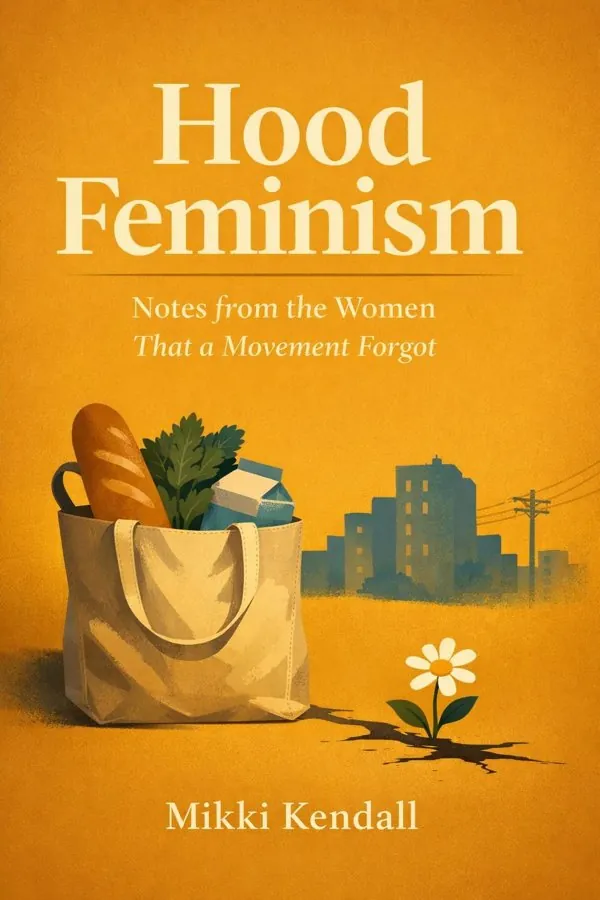
Hood Feminism: Notes from the Women That a Movement Forgot: Summary & Key Insights
 10 min10 chaptersAudio available
What Is Hood Feminism: Notes from the Women That a Movement Forgot About?
Hood Feminism: Notes from the Women That a Movement Forgot by Mikki Kendall is a sociology book spanning 10 pages. In 'Hood Feminism', Mikki Kendall challenges mainstream feminism for overlooking the basic needs and struggles of women of color, poor women, and marginalized communities. Through a series of essays, she argues that issues such as food insecurity, access to quality education, safe neighborhoods, and healthcare are fundamental feminist concerns. Kendall calls for a more inclusive and intersectional feminism that addresses the realities faced by all women, not just the privileged few.
This FizzRead summary covers all 10 key chapters of Hood Feminism: Notes from the Women That a Movement Forgot in approximately 10 minutes, distilling the most important ideas, arguments, and takeaways from Mikki Kendall's work. Also available as an audio summary and Key Quotes Podcast.
Hood Feminism: Notes from the Women That a Movement Forgot
In 'Hood Feminism', Mikki Kendall challenges mainstream feminism for overlooking the basic needs and struggles of women of color, poor women, and marginalized communities. Through a series of essays, she argues that issues such as food insecurity, access to quality education, safe neighborhoods, and healthcare are fundamental feminist concerns. Kendall calls for a more inclusive and intersectional feminism that addresses the realities faced by all women, not just the privileged few.
Who Should Read Hood Feminism: Notes from the Women That a Movement Forgot?
This book is perfect for anyone interested in sociology and looking to gain actionable insights in a short read. Whether you're a student, professional, or lifelong learner, the key ideas from Hood Feminism: Notes from the Women That a Movement Forgot by Mikki Kendall will help you think differently.
- ✓Readers who enjoy sociology and want practical takeaways
- ✓Professionals looking to apply new ideas to their work and life
- ✓Anyone who wants the core insights of Hood Feminism: Notes from the Women That a Movement Forgot in just 10 minutes
Want the full summary?
Get instant access to this book summary and 100K+ more with Fizz Moment.
Get Free SummaryAvailable on App Store • Free to download
Key Chapters
To understand the urgency behind hood feminism, we must look backward to the history of feminist movements that shaped our public consciousness. Traditional feminist waves—the suffragists, the second-wave feminists of the 1960s and 70s, and the contemporary iterations of third-wave and intersectional feminism—have often centered the experiences of white, middle-class women. The narrative of women's liberation was frequently couched in terms of access to education, reproductive freedom, and workplace equality, yet rarely did it address the survival struggles of Black women, Indigenous women, or poor women.
This exclusion did not occur by accident; it emerged from historical patterns of privilege and systemic racism that divided women’s movements. When early feminists argued for the right to vote or work, they did so from a vantage point that assumed stability, education, and property—the very things denied to women living in economic precarity. Black women, meanwhile, were organizing against both racial and gender oppression, often without being recognized as part of the feminist narrative. Their activism—through community schools, mutual aid societies, and civil rights movements—was feminist in spirit but rarely named as such.
By tracing this history, I want to reveal that the schism between mainstream and hood feminism is centuries old. Feminism was never meant to be the property of a select few, but that is what it became. Reclaiming its original purpose means acknowledging that the fight for equality cannot exclude the fight for survival. Feminism must remember its own forgotten women—the domestic workers, the caregivers, the mothers whose labor sustains communities yet remains invisible in feminist discourse.
If you’ve ever gone to bed hungry—or watched your children do so—you know instinctively that food is not merely nourishment but dignity. In 'Hood Feminism', I argue that food insecurity is one of the most pressing feminist issues of our time. Too often, mainstream feminism overlooks hunger because it’s considered a 'poverty issue' rather than a 'women’s issue.' But women, especially women of color, disproportionately bear the burden of feeding families on inadequate wages.
Food deserts, where access to affordable and nutritious food is scarce, are not natural occurrences; they are policy decisions rooted in racial and economic inequality. They exemplify how social structures fail to meet the basic needs of marginalized communities. A feminist movement that truly stands for equality must fight for food justice—by confronting wage disparities, advocating for living wages, and challenging the systemic neglect that forces mothers into impossible choices.
When I speak of food as a feminist issue, I am talking about autonomy—the ability to provide and care without dependence or shame. Feminism cannot be complete when women are denied the right to feed themselves. It can feel strange to hear that equality begins with a full stomach, but in reality, that is where every liberation movement must begin.
+ 8 more chapters — available in the FizzRead app
All Chapters in Hood Feminism: Notes from the Women That a Movement Forgot
About the Author
Mikki Kendall is an American writer, cultural critic, and activist known for her work on race, feminism, and social justice. She has written for major publications including The Washington Post, The Guardian, and Time, and is a frequent speaker on intersectional feminism and equity.
Get This Summary in Your Preferred Format
Read or listen to the Hood Feminism: Notes from the Women That a Movement Forgot summary by Mikki Kendall anytime, anywhere. FizzRead offers multiple formats so you can learn on your terms — all free.
Available formats: App · Audio · PDF · EPUB — All included free with FizzRead
Download Hood Feminism: Notes from the Women That a Movement Forgot PDF and EPUB Summary
Key Quotes from Hood Feminism: Notes from the Women That a Movement Forgot
“To understand the urgency behind hood feminism, we must look backward to the history of feminist movements that shaped our public consciousness.”
“If you’ve ever gone to bed hungry—or watched your children do so—you know instinctively that food is not merely nourishment but dignity.”
Frequently Asked Questions about Hood Feminism: Notes from the Women That a Movement Forgot
Hood Feminism: Notes from the Women That a Movement Forgot by Mikki Kendall is a sociology book that explores key ideas across 10 chapters. In 'Hood Feminism', Mikki Kendall challenges mainstream feminism for overlooking the basic needs and struggles of women of color, poor women, and marginalized communities. Through a series of essays, she argues that issues such as food insecurity, access to quality education, safe neighborhoods, and healthcare are fundamental feminist concerns. Kendall calls for a more inclusive and intersectional feminism that addresses the realities faced by all women, not just the privileged few.
You Might Also Like

Between the World and Me
Ta-Nehisi Coates
10 min
Half the Sky
Nicholas D. Kristof, Sheryl WuDunn
10 min
Men Explain Things To Me
Rebecca Solnit
10 min
Rational Ritual
Michael Suk-Young Chwe
10 min
The New Jim Crow
Michelle Alexander
10 min
Beyond Culture
Edward T. Hall
10 minBrowse by Category
Ready to read Hood Feminism: Notes from the Women That a Movement Forgot?
Get the full summary and 100K+ more books with Fizz Moment.