
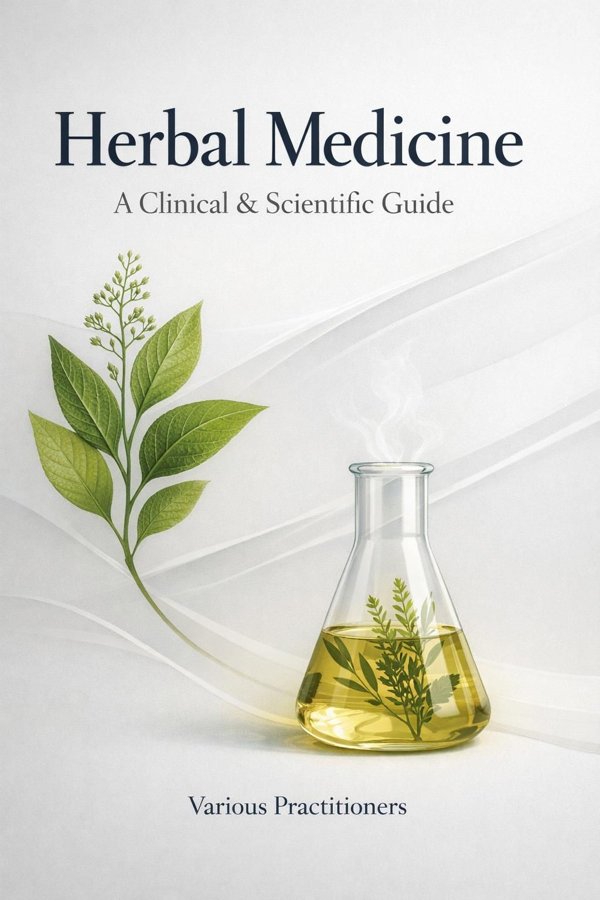
Herbal Medicine: A Clinical & Scientific Guide: Summary & Key Insights
 10 min6 chaptersAudio available
What Is Herbal Medicine: A Clinical & Scientific Guide About?
Herbal Medicine: A Clinical & Scientific Guide by Various Practitioners is a health_med book spanning 6 pages. This comprehensive guide provides an evidence-based overview of herbal medicine, integrating traditional knowledge with modern clinical and scientific research. It covers the pharmacology, therapeutic applications, safety profiles, and clinical efficacy of major medicinal plants used in contemporary practice.
This FizzRead summary covers all 6 key chapters of Herbal Medicine: A Clinical & Scientific Guide in approximately 10 minutes, distilling the most important ideas, arguments, and takeaways from Various Practitioners's work. Also available as an audio summary and Key Quotes Podcast.
Herbal Medicine: A Clinical & Scientific Guide
This comprehensive guide provides an evidence-based overview of herbal medicine, integrating traditional knowledge with modern clinical and scientific research. It covers the pharmacology, therapeutic applications, safety profiles, and clinical efficacy of major medicinal plants used in contemporary practice.
Who Should Read Herbal Medicine: A Clinical & Scientific Guide?
This book is perfect for anyone interested in health_med and looking to gain actionable insights in a short read. Whether you're a student, professional, or lifelong learner, the key ideas from Herbal Medicine: A Clinical & Scientific Guide by Various Practitioners will help you think differently.
- ✓Readers who enjoy health_med and want practical takeaways
- ✓Professionals looking to apply new ideas to their work and life
- ✓Anyone who wants the core insights of Herbal Medicine: A Clinical & Scientific Guide in just 10 minutes
Want the full summary?
Get instant access to this book summary and 100K+ more with Fizz Moment.
Get Free SummaryAvailable on App Store • Free to download
Key Chapters
At the core of all herbal medicine lies phytotherapy — the scientific study and clinical application of plant-based substances for healing. Understanding this discipline requires moving beyond traditional descriptions of herbs and entering the realm of chemistry, biochemistry, and pharmacognosy. Every plant is a complex laboratory of molecular artistry, producing secondary metabolites that serve ecological purposes and, in the human context, create physiological effects. These include alkaloids, flavonoids, terpenes, glycosides, tannins, and many other bioactive classes.
Pharmacognosy provides the framework to comprehend how these molecules are identified, classified, and evaluated. The process begins with sourcing and authentication, ensuring that the plant used corresponds accurately to its species and chemotype. The next step is extraction and isolation — techniques that determine the concentration and stability of active compounds. These are not mere laboratory procedures but forms of quality validation that ensure therapeutic consistency.
When we examine a medicinal plant scientifically, we ask questions akin to those asked of any pharmacological agent: How does it act? Where does it act? What dose produces a therapeutic effect? Unlike synthetic drugs that often target specific receptors with high precision, herbal compounds operate in a synergistic matrix — multiple constituents working together to influence complex human systems. This polypharmaceutical nature gives herbal medicine both its breadth and complexity. Modern science now applies rigorous tools such as HPLC, mass spectrometry, and cellular bioassays to translate traditional use into mechanistic understanding.
I believe that grasping these foundations helps practitioners bridge perception and evidence. Herbal medicine is not the opposite of modern science; it is science extended into nature. When handled with diligence, respect, and critical inquiry, it offers the precision of pharmacology blended with the holistic consciousness of traditional healing.
The relationship between plant chemistry and human physiology is at once intimate and intricate. To truly appreciate herbal medicine, one must see the human body not as a passive recipient but as a dynamic biochemical environment that interacts intelligently with plant molecules. Herbs exert effects through a wide range of mechanisms — modulation of enzymatic pathways, interaction with cellular receptors, influence on gene expression, and alteration of neurotransmitter dynamics.
Take for example the lignans and phenolic compounds found in milk thistle; their hepatoprotective action arises from stabilizing cell membranes and stimulating RNA synthesis in hepatocytes. Or consider ginkgo biloba, rich in terpene lactones and flavone glycosides, known for improving cerebral blood flow through vasodilatation and platelet function regulation. Each case illustrates how phytochemicals harmonize with human physiology, not through domination but through modulation.
This interaction reminds us that balance — not force — is often the essence of healing. Plants act as mediators of equilibrium within the body’s self-regulating systems. Adaptogens such as Rhodiola or Ashwagandha do not simply energize; they normalize stress responses by tuning endocrine and neuronal pathways toward stability. Anti-inflammatory herbs modulate rather than suppress immune activity, allowing the organism to maintain functional flexibility.
Our role as clinicians and researchers is to translate these nuanced effects into measurable outcomes. Through pharmacokinetic studies, receptor-binding experiments, and controlled trials, we seek to connect traditional claims with modern observation. This synergy forms the engine of progress — where cultural legacy meets biochemical literacy. When we understand herbal medicine as interaction rather than intervention, we respect the body’s innate intelligence and the plant’s subtle power to guide it gently toward homeostasis.
+ 4 more chapters — available in the FizzRead app
All Chapters in Herbal Medicine: A Clinical & Scientific Guide
About the Author
The contributing practitioners are experts in herbal medicine, pharmacognosy, and integrative health, bringing together clinical experience and scientific insight to advance the understanding of plant-based therapies.
Get This Summary in Your Preferred Format
Read or listen to the Herbal Medicine: A Clinical & Scientific Guide summary by Various Practitioners anytime, anywhere. FizzRead offers multiple formats so you can learn on your terms — all free.
Available formats: App · Audio · PDF · EPUB — All included free with FizzRead
Download Herbal Medicine: A Clinical & Scientific Guide PDF and EPUB Summary
Key Quotes from Herbal Medicine: A Clinical & Scientific Guide
“At the core of all herbal medicine lies phytotherapy — the scientific study and clinical application of plant-based substances for healing.”
“The relationship between plant chemistry and human physiology is at once intimate and intricate.”
Frequently Asked Questions about Herbal Medicine: A Clinical & Scientific Guide
Herbal Medicine: A Clinical & Scientific Guide by Various Practitioners is a health_med book that explores key ideas across 6 chapters. This comprehensive guide provides an evidence-based overview of herbal medicine, integrating traditional knowledge with modern clinical and scientific research. It covers the pharmacology, therapeutic applications, safety profiles, and clinical efficacy of major medicinal plants used in contemporary practice.
You Might Also Like
On Immunity
Eula Biss
10 min
The Three-Body Problem
Liu Cixin
10 min
Community Health Volunteer Toolkit: Training and Practical Activities
World Health Organization
10 min
Healing Back Pain: The Mind-Body Connection
John E. Sarno
10 min
Health Literacy for All: Practical Guides to Communicate Health Information (Compilations)
World Health Organization
10 min
The Complete Guide to Sports Supplements: An Evidence-Based Review
Anita Bean
10 minBrowse by Category
Ready to read Herbal Medicine: A Clinical & Scientific Guide?
Get the full summary and 100K+ more books with Fizz Moment.