
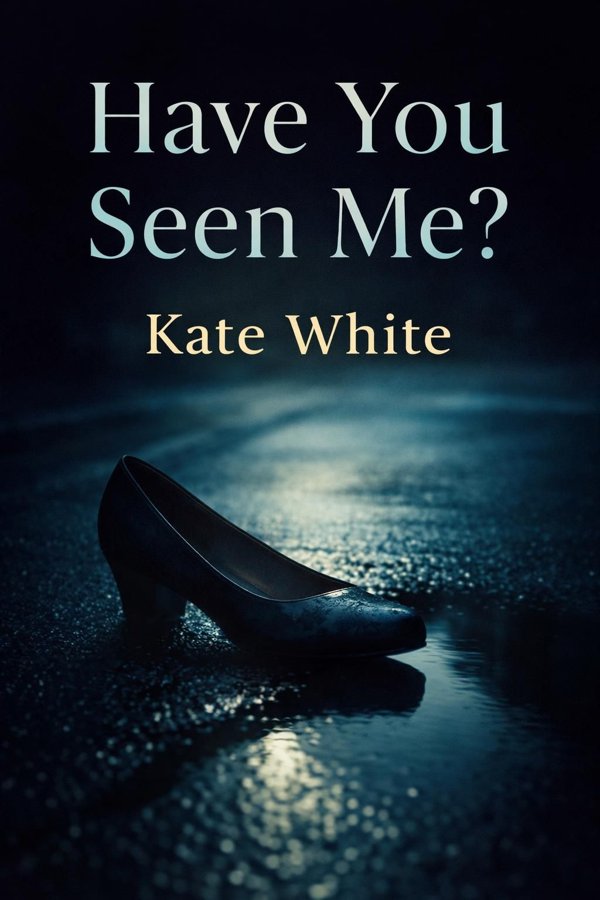
Have You Seen Me?: Summary & Key Insights
by Kate White
 10 min9 chaptersAudio available
Key Takeaways from Have You Seen Me?
Identity often feels permanent—until the day it disappears.
Home is supposed to answer the question of who we are, but Ally’s return to her own life only deepens the mystery.
Forgetting is not always absence; sometimes it is a form of protection.
Professional success can conceal private danger remarkably well.
When evidence is incomplete, intuition becomes a survival instrument.
What Is Have You Seen Me? About?
Have You Seen Me? by Kate White is a mystery book spanning 5 pages. What would remain of you if your memories vanished overnight? That unnerving question drives Kate White’s psychological thriller Have You Seen Me?, a fast-moving mystery about a woman who wakes up on a freezing New Jersey street with no memory of her name, her past, or how she got there. As Ally Linden struggles to reconstruct her life, each recovered detail brings not relief but new danger. The people around her seem familiar yet strangely unreliable, and the life she returns to is filled with secrets, pressure, and reasons to doubt what she is being told. The novel matters because it turns a classic suspense premise—amnesia—into a sharp exploration of identity, trust, and self-protection. White is especially skilled at showing how easily confidence can crumble when memory disappears, and how quickly ordinary relationships can become threatening. A bestselling suspense author and former editor-in-chief of Cosmopolitan, Kate White brings narrative pace, emotional tension, and a keen understanding of modern professional and personal life. The result is a thriller that is both entertaining and psychologically resonant, pulling readers into a world where the greatest mystery is not only what happened, but who can be believed.
This FizzRead summary covers all 9 key chapters of Have You Seen Me? in approximately 10 minutes, distilling the most important ideas, arguments, and takeaways from Kate White's work. Also available as an audio summary and Key Quotes Podcast.
Have You Seen Me?
What would remain of you if your memories vanished overnight? That unnerving question drives Kate White’s psychological thriller Have You Seen Me?, a fast-moving mystery about a woman who wakes up on a freezing New Jersey street with no memory of her name, her past, or how she got there. As Ally Linden struggles to reconstruct her life, each recovered detail brings not relief but new danger. The people around her seem familiar yet strangely unreliable, and the life she returns to is filled with secrets, pressure, and reasons to doubt what she is being told.
The novel matters because it turns a classic suspense premise—amnesia—into a sharp exploration of identity, trust, and self-protection. White is especially skilled at showing how easily confidence can crumble when memory disappears, and how quickly ordinary relationships can become threatening. A bestselling suspense author and former editor-in-chief of Cosmopolitan, Kate White brings narrative pace, emotional tension, and a keen understanding of modern professional and personal life. The result is a thriller that is both entertaining and psychologically resonant, pulling readers into a world where the greatest mystery is not only what happened, but who can be believed.
Who Should Read Have You Seen Me??
This book is perfect for anyone interested in mystery and looking to gain actionable insights in a short read. Whether you're a student, professional, or lifelong learner, the key ideas from Have You Seen Me? by Kate White will help you think differently.
- ✓Readers who enjoy mystery and want practical takeaways
- ✓Professionals looking to apply new ideas to their work and life
- ✓Anyone who wants the core insights of Have You Seen Me? in just 10 minutes
Want the full summary?
Get instant access to this book summary and 100K+ more with Fizz Moment.
Get Free SummaryAvailable on App Store • Free to download
Key Chapters
Identity often feels permanent—until the day it disappears. Have You Seen Me? opens with one of the most destabilizing scenes in contemporary suspense: Ally Linden comes to consciousness on a bitterly cold street in New Jersey, soaked, shaken, and unable to remember who she is. She does not know her name, where she lives, or why she is there. Even the objects on her body and the face in the mirror offer no comfort, because recognition has been severed from memory. This opening is more than a dramatic hook. It establishes the novel’s central terror: without memory, the self becomes a puzzle made of disconnected facts.
White uses Ally’s confusion to place the reader inside a state of radical vulnerability. Every decision becomes high stakes. Should Ally trust the police? Should she follow the tiny clues available to her? Should she reveal her condition to strangers? The scene also demonstrates how quickly modern life becomes dangerous when we cannot access the basic knowledge that usually protects us—addresses, passwords, routines, and names.
In practical terms, this opening highlights a broader truth about human life: we depend on memory not only for recollection but for judgment. When that foundation cracks, anxiety surges and dependence on others grows. Readers can relate this to less dramatic moments of disorientation—stress, burnout, illness, or emotional shock—when even familiar routines feel uncertain.
The key takeaway is simple: the loss of certainty reveals how much of personal safety depends on self-knowledge. White’s opening reminds us that knowing who we are is not abstract philosophy; it is a daily survival tool.
Home is supposed to answer the question of who we are, but Ally’s return to her own life only deepens the mystery. After piecing together enough clues to identify herself, she finds her way back to Manhattan and discovers that she has been missing for two days. Her apartment, workplace, and social circle confirm the facts of her identity, yet they do not restore the emotional certainty that should come with them. Instead of relief, she encounters an unsettling gap between the woman everyone expects her to be and the woman she currently feels herself becoming.
This is one of the novel’s smartest moves. White refuses to treat recovered identity as a simple solution. Learning your name and address is not the same as understanding your life. Ally sees evidence of a highly competent, polished professional, but she cannot inhabit that role naturally. Her colleagues react with concern, curiosity, and in some cases something less easy to define. Their responses imply that important events occurred before her disappearance, but because Ally lacks context, she cannot distinguish genuine care from manipulation.
The idea resonates beyond the thriller plot. Many people have had experiences of feeling estranged from their own lives—after trauma, grief, divorce, relocation, or career upheaval. Familiar settings can suddenly feel performative, as if we are playing a part we no longer fully recognize. White channels that feeling into suspense by making every ordinary encounter potentially revealing.
A practical way to apply this insight is to notice how much identity is shaped by environment and by other people’s expectations. We are not only who we remember ourselves to be; we are also who our workplaces, families, and partners mirror back to us.
The actionable takeaway: when a familiar environment feels wrong, do not dismiss the discomfort. Unease can be information, especially when appearances insist that everything is normal.
Professional success can conceal private danger remarkably well. When Ally returns to the financial firm where she works, she expects answers. What she finds instead is a social landscape filled with pressure, unreadable reactions, and subtle signs that her disappearance may connect to more than a personal crisis. The office becomes a crucial arena in the novel because it exposes how public competence and private vulnerability can exist side by side.
White understands workplace dynamics with unusual precision. She shows how colleagues communicate through tone, omission, status, and timing as much as through direct speech. Ally is forced to evaluate every interaction without the benefit of shared history. A sympathetic coworker may be trustworthy—or may simply know how to perform concern. A superior’s authority may provide structure—or conceal motive. Because Ally cannot remember prior tensions, professional politics become dangerous. She does not know whom she may have offended, what she may have discovered, or whether she was under pressure before she vanished.
This key idea broadens the novel’s suspense by showing that threat does not always arrive dramatically. Sometimes it appears in guarded conversations, missing context, or the sudden realization that institutional environments reward secrecy. Readers can apply this insight to everyday life by recognizing how often people rely on role-based trust. We assume that polished workplaces are rational and transparent, but they can also hide rivalry, ambition, and fear.
White’s portrayal is especially effective because it links external mystery with internal uncertainty. Ally is not just solving a crime-like puzzle; she is trying to understand the version of herself that functioned successfully in a high-pressure world.
The actionable takeaway: in tense environments, pay attention to patterns rather than surface professionalism. Consistency, transparency, and accountability matter more than polished appearances.
When evidence is incomplete, intuition becomes a survival instrument. One of Ally’s greatest challenges is that she cannot rely on memory to guide her choices, so she must interpret subtler signals: a person’s hesitation, a room’s emotional temperature, a detail that feels slightly off. White uses this uncertainty to explore a form of intelligence often dismissed as irrational. In reality, intuition is frequently the mind’s rapid processing of patterns before conscious explanation catches up.
Throughout the novel, Ally is repeatedly placed in situations where she lacks proof but senses risk. This creates some of the book’s strongest tension. Readers are asked to live in the uncomfortable gap between suspicion and confirmation. White does not suggest that intuition is infallible; in a thriller, fear can distort judgment. But she shows that ignoring instinct entirely can be just as dangerous, especially when one’s visible world refuses to make sense.
This has clear practical relevance. In everyday life, people often override their instincts to avoid seeming rude, dramatic, or paranoid. They stay in conversations that feel wrong, trust explanations that do not add up, or dismiss warning signs because nothing concrete has happened yet. The novel validates the idea that unease deserves attention. It may not be final evidence, but it is often the beginning of useful inquiry.
At the same time, White balances instinct with investigation. Ally does not survive by panicking; she survives by treating her intuition as a prompt to ask better questions and observe more carefully. That distinction matters. Intuition is strongest when paired with critical thinking.
The actionable takeaway: if something feels wrong, pause and investigate rather than rationalize it away. You do not need complete proof to take your own discomfort seriously.
The most frightening discoveries in Have You Seen Me? do not come only from missing events; they come from the realization that intimacy can coexist with concealment. As Ally reconnects with the people in her life, she must confront a painful possibility: those closest to us may know versions of us we do not know ourselves, and they may have reasons for hiding the truth. White uses this tension to examine the fragility of trust in romantic, social, and professional relationships.
The novel’s relationships are compelling because they are not painted in simple black and white. Concern can be genuine yet selective. Affection can exist alongside control. Familiarity can create safety, but it can also create the perfect cover for deceit. For Ally, every close bond becomes charged with uncertainty because she cannot verify shared history. She has to judge people by present behavior without fully understanding the past that connects them.
This idea gives the book emotional force beyond its plot mechanics. Many thrillers depend on secrets, but White roots secrecy in ordinary human behavior: avoiding conflict, preserving status, protecting desire, or burying shame. That makes the novel feel plausible. In real life, major betrayals are often built out of smaller habits of evasion. What is omitted matters as much as what is said.
Readers can apply this insight by paying attention to trust as a pattern rather than a feeling alone. A close relationship is not automatically an honest one. Reliability is demonstrated through openness, accountability, and consistency over time. When someone repeatedly controls information, changes stories, or makes you doubt your own perceptions, the relationship deserves scrutiny.
The actionable takeaway: evaluate trust by behavior, not familiarity. The longer you have known someone, the more important it becomes to notice whether their actions still earn your confidence.
Memory tells us where we have been, but choice determines who we become next. As Ally moves deeper into the mystery, the novel shifts from a search for lost facts to a more profound question: if you cannot fully remember your former self, do you have to return to that self unchanged? This is one of the book’s most interesting undercurrents. White suggests that identity is not just discovered; it is also rebuilt.
Ally’s journey forces her to compare evidence of her past with her present moral instincts. She learns things about her life that may not align with the person she wants to be. That tension gives the novel philosophical weight. The reader is invited to consider whether selfhood is a fixed archive or an active process of interpretation. Even if the past explains us, it does not have to imprison us.
This idea has strong real-world relevance. People often define themselves by history—career labels, old mistakes, past relationships, family roles. Yet major disruptions can create a strange opportunity: the chance to ask whether the inherited version of the self is still the truest one. In Ally’s case, the question arises under extreme circumstances, but the principle is universal. We are shaped by what has happened to us, but we are also shaped by what we decide to do once we know it.
White keeps this theme grounded in suspense. Reclaiming selfhood is not a sentimental exercise; it is necessary for survival. Ally must act, decide, and refuse passivity even before all answers arrive. That is what makes her more than a victim of circumstance.
The actionable takeaway: use the past as information, not a cage. When new truths emerge, ask not only what they explain, but what kind of person you now choose to be.
Suspense works best when danger strips away illusions, and in Have You Seen Me? fear becomes the force that pushes Ally from confusion into action. At first, her amnesia makes her dependent on others for explanation. But as inconsistencies multiply, she realizes that waiting passively to be told the truth is itself a risk. The novel therefore becomes not only a mystery about recovering memory, but a story about reclaiming agency under pressure.
White handles this progression effectively. Ally does not transform into a fearless heroine overnight. Her courage develops through necessity. She asks questions, tests stories, revisits places, and starts seeing herself as an investigator rather than merely a victim. That movement matters because it changes the emotional logic of the book. Fear is still present, but it no longer paralyzes her. Instead, it becomes useful information that demands response.
This is a valuable insight outside fiction as well. People often imagine agency as confidence, but in reality agency frequently begins before confidence arrives. It starts with small acts: documenting details, seeking help, verifying claims, setting boundaries, and refusing to ignore contradictions. White shows that uncertainty does not disqualify action. In fact, uncertainty often makes action more necessary.
The novel’s tension depends on Ally making choices in imperfect conditions. She rarely has the luxury of complete certainty. That reflects real life, where crucial decisions often must be made with partial information. Strength, then, is not perfect clarity but a willingness to move thoughtfully despite fear.
The actionable takeaway: do not wait to feel fully certain before protecting yourself. Agency grows through concrete steps, especially when circumstances are confusing or threatening.
Truth in a thriller is satisfying not because it explains everything neatly, but because it reveals what the protagonist has become while seeking it. In the final movement of Have You Seen Me?, Ally’s confrontation with the hidden reality behind her disappearance brings together the novel’s major themes: memory, deception, vulnerability, and self-recovery. The climax matters not only for its revelations but for the way it transforms uncertainty into earned clarity.
White builds this ending around more than plot mechanics. As answers surface, Ally is forced to see how her lost memories, the behavior of others, and her own instincts fit together. The confrontation confirms that danger was real, but it also proves that her fragmented perceptions had value. What once seemed like irrational fear becomes understandable in retrospect. This gives the resolution emotional credibility. Ally does not simply recover information; she regains confidence in her own judgment.
The return to self is therefore not a return to innocence. She cannot go back to the person she was before waking up on that street, because the experience has exposed how precarious identity and trust can be. Yet there is strength in that change. She emerges more alert, more self-directed, and less willing to live inside comforting assumptions.
Readers can draw a practical lesson from this structure. Clarity often arrives after a period when events seem incoherent. Looking backward, patterns become visible and instincts that seemed exaggerated may prove grounded. Resolution does not erase the pain of confusion, but it can convert it into knowledge.
The actionable takeaway: when a difficult period ends, do more than celebrate survival. Examine what the experience taught you about your instincts, your boundaries, and the kind of life you want to rebuild.
All Chapters in Have You Seen Me?
About the Author
Kate White is an American novelist, journalist, and former editor-in-chief of Cosmopolitan magazine. During her influential career in magazine publishing, she became known for shaping a bold, energetic editorial voice focused on ambition, relationships, and modern women’s lives. Alongside her media work, she built a successful fiction career writing suspense novels and mysteries that often feature intelligent, capable women navigating danger, secrets, and high-pressure environments. White is the author of several standalone psychological thrillers as well as the Bailey Weggins mystery series. Her writing is known for brisk pacing, sharp dialogue, contemporary settings, and twist-driven plots. That combination of editorial polish and storytelling instinct has made her a recognizable name in commercial suspense, especially among readers who enjoy psychologically layered mysteries with strong female protagonists.
Get This Summary in Your Preferred Format
Read or listen to the Have You Seen Me? summary by Kate White anytime, anywhere. FizzRead offers multiple formats so you can learn on your terms — all free.
Available formats: App · Audio · PDF · EPUB — All included free with FizzRead
Download Have You Seen Me? PDF and EPUB Summary
Key Quotes from Have You Seen Me?
“Identity often feels permanent—until the day it disappears.”
“Home is supposed to answer the question of who we are, but Ally’s return to her own life only deepens the mystery.”
“Forgetting is not always absence; sometimes it is a form of protection.”
“Professional success can conceal private danger remarkably well.”
“When evidence is incomplete, intuition becomes a survival instrument.”
Frequently Asked Questions about Have You Seen Me?
Have You Seen Me? by Kate White is a mystery book that explores key ideas across 9 chapters. What would remain of you if your memories vanished overnight? That unnerving question drives Kate White’s psychological thriller Have You Seen Me?, a fast-moving mystery about a woman who wakes up on a freezing New Jersey street with no memory of her name, her past, or how she got there. As Ally Linden struggles to reconstruct her life, each recovered detail brings not relief but new danger. The people around her seem familiar yet strangely unreliable, and the life she returns to is filled with secrets, pressure, and reasons to doubt what she is being told. The novel matters because it turns a classic suspense premise—amnesia—into a sharp exploration of identity, trust, and self-protection. White is especially skilled at showing how easily confidence can crumble when memory disappears, and how quickly ordinary relationships can become threatening. A bestselling suspense author and former editor-in-chief of Cosmopolitan, Kate White brings narrative pace, emotional tension, and a keen understanding of modern professional and personal life. The result is a thriller that is both entertaining and psychologically resonant, pulling readers into a world where the greatest mystery is not only what happened, but who can be believed.
You Might Also Like



Browse by Category
Ready to read Have You Seen Me??
Get the full summary and 100K+ more books with Fizz Moment.