
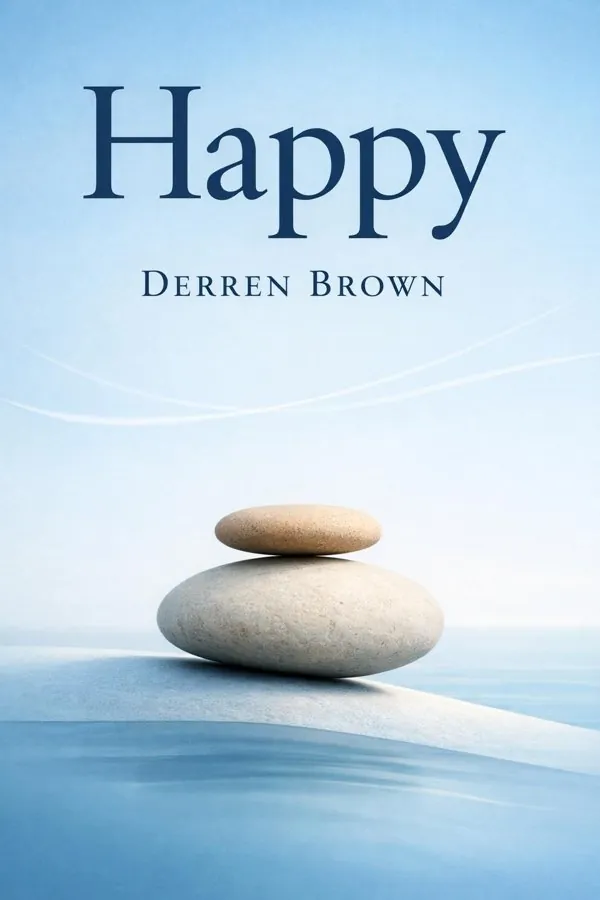
Happy: Why More or Less Everything Is Absolutely Fine: Summary & Key Insights
by Derren Brown
 10 min6 chaptersAudio available
What Is Happy: Why More or Less Everything Is Absolutely Fine About?
Happy: Why More or Less Everything Is Absolutely Fine by Derren Brown is a western_phil book spanning 6 pages. In 'Happy', Derren Brown explores the history and philosophy of happiness, drawing on Stoic ideas and modern psychology to challenge contemporary assumptions about what it means to live a good life. He argues that happiness is not a constant state to be achieved but a byproduct of living with acceptance, perspective, and purpose.
This FizzRead summary covers all 6 key chapters of Happy: Why More or Less Everything Is Absolutely Fine in approximately 10 minutes, distilling the most important ideas, arguments, and takeaways from Derren Brown's work. Also available as an audio summary and Key Quotes Podcast.
Happy: Why More or Less Everything Is Absolutely Fine
In 'Happy', Derren Brown explores the history and philosophy of happiness, drawing on Stoic ideas and modern psychology to challenge contemporary assumptions about what it means to live a good life. He argues that happiness is not a constant state to be achieved but a byproduct of living with acceptance, perspective, and purpose.
Who Should Read Happy: Why More or Less Everything Is Absolutely Fine?
This book is perfect for anyone interested in western_phil and looking to gain actionable insights in a short read. Whether you're a student, professional, or lifelong learner, the key ideas from Happy: Why More or Less Everything Is Absolutely Fine by Derren Brown will help you think differently.
- ✓Readers who enjoy western_phil and want practical takeaways
- ✓Professionals looking to apply new ideas to their work and life
- ✓Anyone who wants the core insights of Happy: Why More or Less Everything Is Absolutely Fine in just 10 minutes
Want the full summary?
Get instant access to this book summary and 100K+ more with Fizz Moment.
Get Free SummaryAvailable on App Store • Free to download
Key Chapters
Long before happiness became a trending topic or a measurable metric, philosophers wrestled with the same questions that still occupy us today. What does it mean to live well? How can a person meet life’s constant unpredictability with calm rather than despair? The ancient Greeks and Romans, particularly the Stoics, developed a remarkably mature view of these questions. They saw happiness not as pleasure or emotional ecstasy, but as living in harmony with nature and reason. For them, nature was not merely the physical world but the order of how things are—the inevitabilities of change, death, and imperfection. To live in accordance with nature meant accepting these realities and orienting one’s values around what can be chosen and controlled: virtue, reason, and perspective.
What strikes me most about the Stoics is their conceptual precision. Take Epictetus, once a slave, who taught that freedom resides in our inner judgments, not our external circumstances. One may lose fortune, health, or status, yet remain free if one’s mind is in accord with reason. Seneca, a statesman and playwright, wrote candidly about wealth and misfortune, warning that neither the palace nor the gutter guarantees happiness. Marcus Aurelius, an emperor, spent his nights reminding himself that each human being is transient and that even the mightiest rulers are forgotten within generations. Their voices hum with quiet agreement: the moment you stop resisting the nature of things, tranquility emerges.
Modern thinking, however, gradually drifted from this pragmatic philosophy. The Enlightenment introduced a newfound faith in progress and reason as tools for control. The industrial and digital eras intensified that belief, persuading us that we could design not just machines but our minds. Happiness became an item for purchase, optimized through productivity and self-help routines. Yet the ancient reminder remains unchanged: life cannot be managed like a spreadsheet. Its unpredictability is not the enemy; it is the soil in which maturity grows. Understanding this historical progression helps us see where our contemporary notion of happiness took a wrong turn—and, importantly, how we might reclaim its original depth.
When I first read the Stoics seriously, I found their words not austere, as stereotypes might suggest, but profoundly compassionate. They do not call for suppressing emotion but for examining it—to ask whether my distress arises from events themselves or from the stories I tell about them. The difference is subtle yet transformative. Epictetus’s central distinction between what is 'up to us' and what is 'not up to us' acts as the ground zero of emotional resilience. Everything outside our direct control—other people’s opinions, the outcome of efforts, even the weather—must be treated as indifferent. Our energies belong to our own thoughts, actions, and judgments.
Seneca wrote that virtue is sufficient for happiness because it allows us to respond to life’s blows with equilibrium. Virtue, in his usage, simply means the quality of living rationally and nobly. This doesn’t imply smug perfectionism. It instead means being awake to the idea that what happens externally cannot diminish the dignity of a mind that sees clearly. The Stoic sage, as Marcus Aurelius exemplified, is not emotionless but grounded, able to feel deeply without being consumed.
What I find so liberating here is that these insights dismantle the false narrative that our happiness depends on rearranging the world to suit our desires. The Stoic path demands internal engineering rather than external conquest. The paradox is that, in relinquishing control over the uncontrollable, you acquire control of yourself. That is where real happiness lives—not as pleasure but as poise.
+ 4 more chapters — available in the FizzRead app
All Chapters in Happy: Why More or Less Everything Is Absolutely Fine
About the Author
Derren Brown is a British mentalist, illusionist, and author known for his television specials and stage performances that blend psychology, suggestion, and magic. He has written several books on happiness, philosophy, and the human mind.
Get This Summary in Your Preferred Format
Read or listen to the Happy: Why More or Less Everything Is Absolutely Fine summary by Derren Brown anytime, anywhere. FizzRead offers multiple formats so you can learn on your terms — all free.
Available formats: App · Audio · PDF · EPUB — All included free with FizzRead
Download Happy: Why More or Less Everything Is Absolutely Fine PDF and EPUB Summary
Key Quotes from Happy: Why More or Less Everything Is Absolutely Fine
“Long before happiness became a trending topic or a measurable metric, philosophers wrestled with the same questions that still occupy us today.”
“When I first read the Stoics seriously, I found their words not austere, as stereotypes might suggest, but profoundly compassionate.”
Frequently Asked Questions about Happy: Why More or Less Everything Is Absolutely Fine
Happy: Why More or Less Everything Is Absolutely Fine by Derren Brown is a western_phil book that explores key ideas across 6 chapters. In 'Happy', Derren Brown explores the history and philosophy of happiness, drawing on Stoic ideas and modern psychology to challenge contemporary assumptions about what it means to live a good life. He argues that happiness is not a constant state to be achieved but a byproduct of living with acceptance, perspective, and purpose.
You Might Also Like
A Little History of Philosophy
Nigel Warburton
10 min
Areopagitica
John Milton
10 min
How To Think Like A Philosopher: Essential Principles For Clear Thinking
Peter Cave
10 min
Language, Truth and Logic
A. J. Ayer
10 min
The Age of Reason
Thomas Paine
10 min
The Essays
Michel De Montaigne
10 minBrowse by Category
Ready to read Happy: Why More or Less Everything Is Absolutely Fine?
Get the full summary and 100K+ more books with Fizz Moment.